Low Loss Material
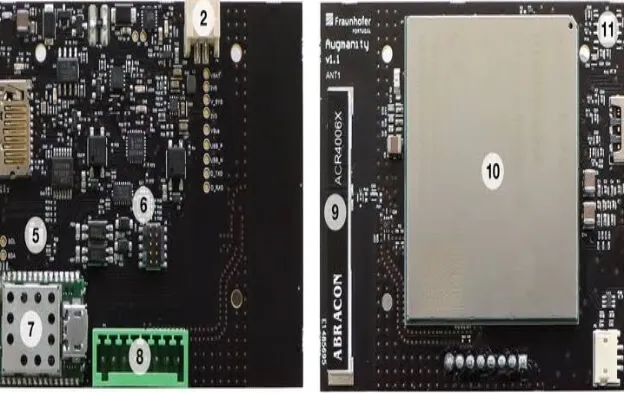
Low loss materials play a critical role in modern electronics design, particularly for printed circuit boards (PCBs) operating at high frequencies. These specialized substrates, characterized by their low dielectric constant and minimal dissipation factor, help reduce signal attenuation and maintain integrity in demanding applications such as RF and microwave systems. Engineers and designers often seek out low loss materials to optimize performance in telecommunications, aerospace, and automotive electronics, where even minor energy losses can degrade signal quality and system efficiency. Understanding the properties of low loss materials enables better decision-making during PCB fabrication. For instance, materials like PTFE-based laminates or advanced hydrocarbon ceramics offer superior thermal stability and low moisture absorption, making them ideal for high-speed data transmission in 5G networks or satellite communications. When selecting a low loss material, consider factors such as frequency range, board thickness, and environmental conditions to ensure compatibility with your project's requirements. Practical applications include designing multilayer PCBs for minimal insertion loss or integrating these materials into antenna arrays for enhanced bandwidth and reduced noise. This tag on low loss material gathers a collection of articles that delve into material comparisons, selection criteria, and real-world case studies. Readers interested in advancing their designs can find detailed discussions on testing methods, such as measuring dielectric properties with vector network analyzers, and best practices for layer stacking to minimize crosstalk. By applying these insights, you can achieve more reliable and efficient electronic systems tailored to high-performance needs.
Video Guide
No videos found for this tag.
Technical Articles

Get in Touch
Send Message
- Products & Service
- Company
- About AIVON
- Contact
- News
- Blog
- Certification
-


- Payment
-


2026 AIVON.COM All Rights Reserved