Help
  • FAQ
    browse most common questions
  • Live Chat
    talk with our online service
  • Email
    contact your dedicated sales:
0

Copper Core PCBs

Ideal for high-power, high-density applications requiring stable and reliable performance.

Get Copper Core PCB Quote
Copper Core PCBs

What is Copper Core PCB?

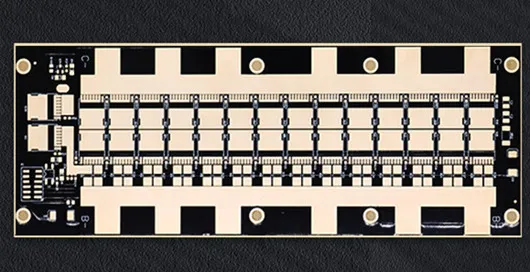
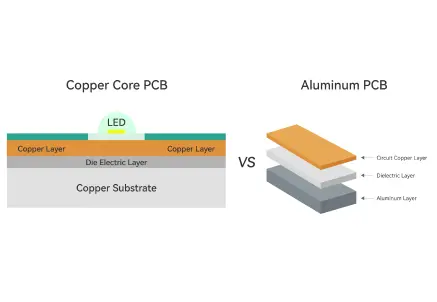
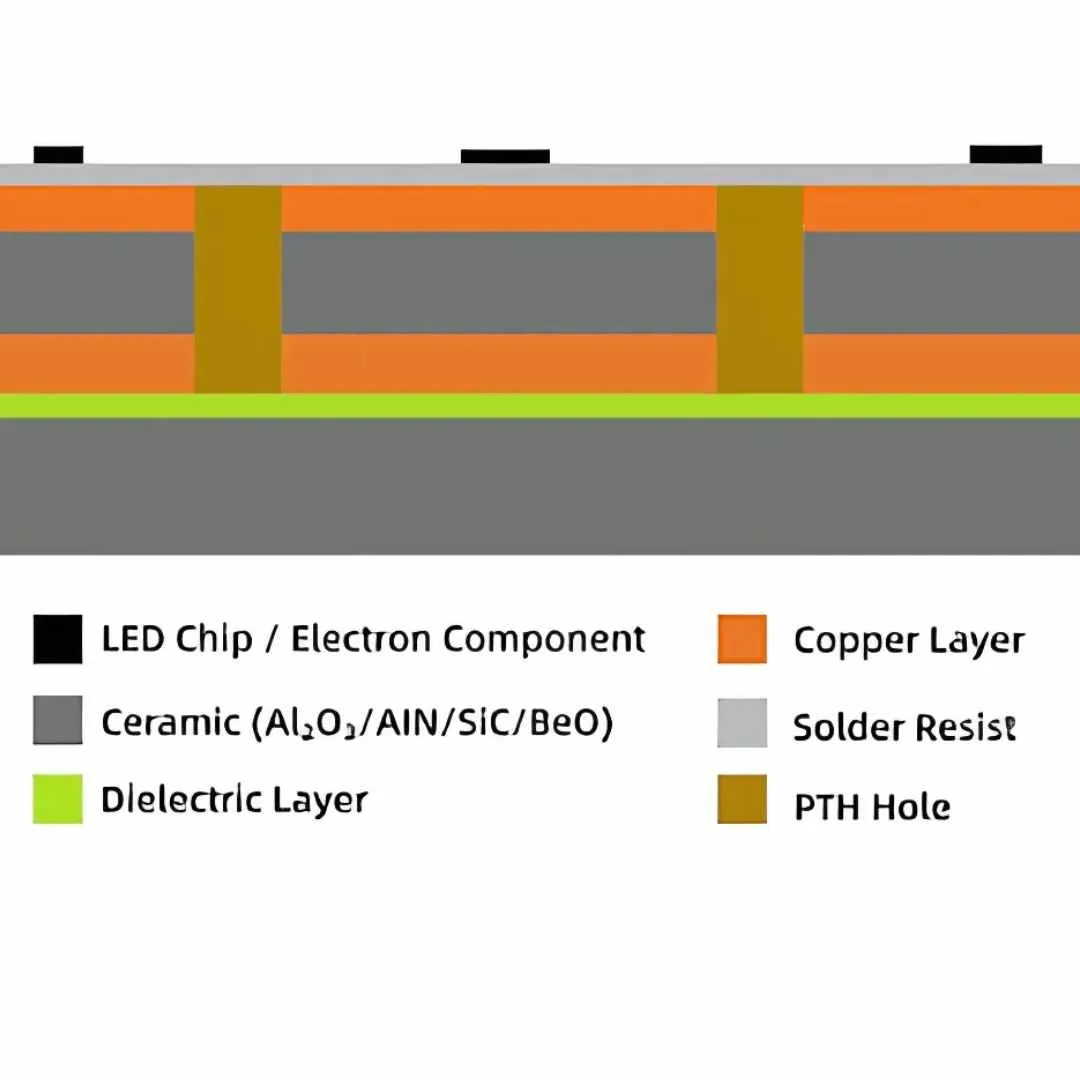
A copper base PCB is a high-thermal-conductivity circuit board that uses high-purity electrolytic copper (≥99.9%) as the core heat-conducting layer, combined with low-thermal-resistance insulating materials such as aluminum nitride ceramic, modified epoxy resin, or polyimide, and conductive copper foil. Through a dual design of direct heat conduction via the copper core and electrical isolation by the insulating layer, it effectively solves the heat dissipation challenges of high-power components, making it an ideal substrate for electronic devices with high power density and operation in high-temperature environments.

AIVON Copper Core PCB Solutions

1–8 Layer Copper Base PCB
  • A key material for solving heat dissipation challenges in high-power-density devices

    Layers:1–8

    Board Thickness:0.8–3.2 mm (Copper Thickness: 2.0–20 OZ)

    Minimum Mechanical Hole Diameter:0.15 mm (1.0 OZ)

    Aspect Ratio:≤ 12:1

    Surface Finish Options:ENIG, ENEPIG, Immersion Silver, Immersion Tin, OSP, Hot Air Solder Leveling, Electroplated Gold.

    Board Material Options:FR-4, M4, M6, M7, T2, T3

Thermo-Electric Separated Copper Base PCB
  • A new type of PCB designed to meet theheat dissipation requirements of high-power electronic devices.

    Layers:2

    Minimum Line Width/Spacing:4/4 MIL (1.0 OZ)

    Board Thickness:0.4–3.2 mm

    Board Material:Copper Base, Aluminum Base

    Pad-to-Board Surface Tolerance:±0.025 mm

Sandwiched Metal Core PCB
  • Excels inspace utilization, balanced heat dissipation, and structural stability.

    Layers:2

    Board Thickness:0.8–3.2 mm

    Minimum Line Width/Spacing:3/3 MIL (10 OZ)

    Surface Finish:ENIG (Electroless Nickel Immersion Gold)

Order Online

Advantages of AIVON's Copper Core PCB

High Thermal Conductivity Substrate

The metal base uses high-purity electrolytic copper (≥99.95%) with a thermal conductivity of 380–401 W/(m·K). It rapidly absorbs heat generated by electronic components, such as IGBTs or LED chips, acting like a “heat pipe.”

Large Heat Spreading Area

The metal base (1–3 mm thick) serves directly as aheat-dissipating surface, eliminating the need for additional heat sinks. Heat is quickly transferred to the air, significantly reducing component junction temperatures (e.g., lowering LED chip junction temperature from 120°C to below 80°C) and extending component life by30–50%.

Excellent Mechanical Strength

The copper core provides exceptional rigidity and structural support, reducing board warping or deformation during thermal cycling or mechanical stress. This ensures stable component placement and reliability in high-power and industrial applications.

High Electrical Conductivity

Copper’s conductivity reaches58 MS/m(close to silver at 62 MS/m), much higher than aluminum (37 MS/m) and iron (10 MS/m). This results in very lowohmic lossesduring current transmission—for example, reducing signal loss by10–15%in 5G base station RF modules.

Corrosion and Oxidation Resistance

Copper surfaces can be plated withnickel, tin, or treated with OSPto resist humidity, salt spray (e.g., marine environments), and chemical corrosion (e.g., industrial soldering environments), extending substrate lifespan—up to 5–8 years in outdoor applications.

Compatibility with Standard PCB Processes

Copper core PCBs can be processed using conventional PCB fabrication methods, including SMT assembly, through-hole mounting, and plating, allowing seamless integration into existing production lines without additional modifications.

Application of Copper Core PCB

Copper Core vs Aluminum Core

Copper core substrates offer outstanding thermal and electrical conductivity, typically reaching 380–401 W/m·K. This enables faster heat transfer and higher operational stability, making them ideal for high-power or high-precision devices such as IGBT modules, laser systems, and medical or industrial power equipment. Copper cores also provide excellent mechanical strength and reliability under thermal stress. However, their heavier weight and higher material cost make them less suitable for lightweight or budget-sensitive applications.


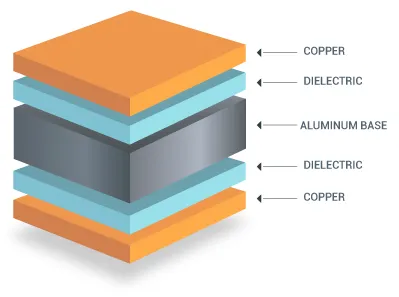
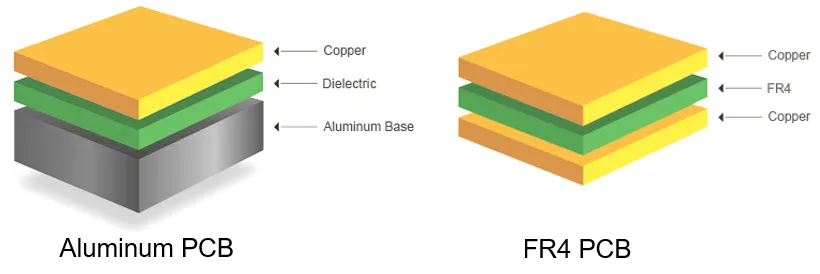
Aluminum core substrates, by contrast, deliver good thermal performance at a much lower cost. With a conductivity of around 200–237 W/m·K, they provide efficient heat dissipation for LED lighting, consumer electronics, communication equipment, and automotive systems. Aluminum is lighter and easier to process, offering a practical balance between performance, weight, and cost.


Copper cores are the better choice for high-performance and heat-intensive applications, while aluminum cores are more suitable for general-purpose or cost-efficient products requiring reliable but moderate heat management.

Copper Core PCBs FAQs

Q1: How Are Copper PCBs Made?
  • A1: Copper PCBs are produced by laminating a thin copper layer onto an insulating base material. The copper is then patterned through etching and plating to form electrical circuits. After drilling and adding protective coatings, the result is a durable board with excellent conductivity and heat dissipation.
Q2: What Role Does PCB Copper Balance Play in PCB Fabrication?
  • A2: Copper balance ensures that copper is evenly distributed across the PCB layers. A well-balanced design helps prevent board warping, uneven etching, and plating defects during manufacturing. Maintaining proper copper balance improves mechanical stability, dimensional accuracy, and overall product reliability.
Q3: What's copper PCB design requirements?
  • A3: Copper PCB design requires careful attention to trace width, spacing, copper thickness, and thermal management. Designers must ensure proper current-carrying capacity, heat dissipation, and mechanical stability. In multilayer boards, copper balance and grounding are also critical to prevent warping and ensure signal integrity.

View More about Copper Core PCBs

The Cost Breakdown of Metal Core PCBs: What Drives the Price?
MCPCB

The Cost Breakdown of Metal Core PCBs: What Drives the Price?

A technical guide to MCPCB cost factors. Compares aluminum PCB price and copper core PCB cost, detailing how materials, design, and volume impact thermal PCB pricing.

Read More
Comparing Aluminum vs Copper Core PCBs for Optimal Heat Dissipation
MCPCB

Comparing Aluminum vs Copper Core PCBs for Optimal Heat Dissipation

A technical guide comparing aluminum vs. copper core PCBs. Learn the differences in thermal conductivity, heat dissipation, and cost to optimize your high-power designs.

Read More
Beyond Aluminum: Exploring Advanced Materials for High-Power LED PCBs
MCPCB

Beyond Aluminum: Exploring Advanced Materials for High-Power LED PCBs

Explore advanced MCPCB materials for high-power LEDs. Compare ceramic, copper core, and IMS substrates on thermal conductivity, cost, and high-temperature performance.

Read More

Get in Touch

Send Message

2025 AIVON.COM All Rights Reserved
Intellectual Property Rights | Terms of Service | Privacy Policy | Refund Policy