










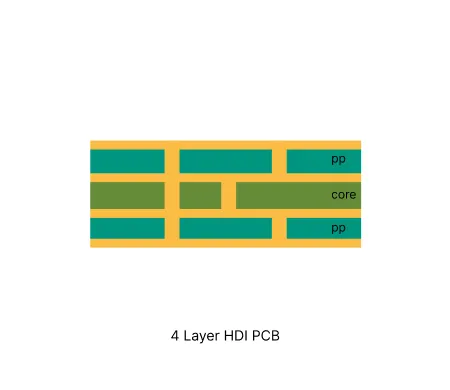
4 Layer HDI PCB
Discover how AIVON manufactures 4 Layer HDI PCBs, including microvia structures, fine-line routing requirements, sequential lamination processes, manufacturing challenges, and real production experience from customer orders.
From stack-up selection and microvia design rules to sequential lamination and real production cases. A complete HDI PCB solutions from 1+N+1 prototypes to volume builds.


An HDI PCB (High-Density Interconnect) is a board with higher wiring density than a conventional multilayer PCB. It uses laser-drilled microvias, blind and buried vias, and finer lines and spaces — typically ≤100 μm traces and microvias under 150 μm — instead of relying only on mechanically drilled through-holes.
Built as 1+N+1, 2+N+2, or any-layer stack-ups, HDI shortens signal paths and opens routing under fine-pitch BGAs. That is why it shows up in smartphones, 5G modules, automotive controllers, medical devices, and other compact, high-speed products.

HDI design is not just finer traces and smaller holes. Stackup, via architecture, routing and manufacturing limits have to be set together. This guide walks through 1+N+1, 2+N+2 and any-layer stackups; stacked versus staggered microvias and aspect-ratio limits; escape routing for 0.5 mm and 0.4 mm BGAs; impedance and return-path control on thin dielectrics; and DFM checks before the board goes to CAM. Rather than treating HDI features as isolated design rules, the guide connects layout decisions with the capabilities and tolerances of the manufacturing process. The goal is to help designers select an HDI structure that meets electrical and mechanical requirements while remaining practical to fabricate and inspect.

HDI production is defined by how laser microvias are formed, filled and stacked — not by treating the board as a standard multilayer with smaller drills. This guide covers 1+N+1 through any-layer structures; core versus RCC and laser-drillable prepreg; copper-filled and epoxy-filled microvias; sequential lamination risks such as registration and warpage; and the process controls AIVON holds in production, including blind-via dimple ≤25 μm and board warpage ≤0.75%. The guide connects these manufacturing controls with practical DFM considerations, helping designers understand which HDI structures can be produced consistently rather than only meeting the requirements on paper.
Discover how AIVON manufactures 4 Layer HDI PCBs, including microvia structures, fine-line routing requirements, sequential lamination processes, manufacturing challenges, and real production experience from customer orders.
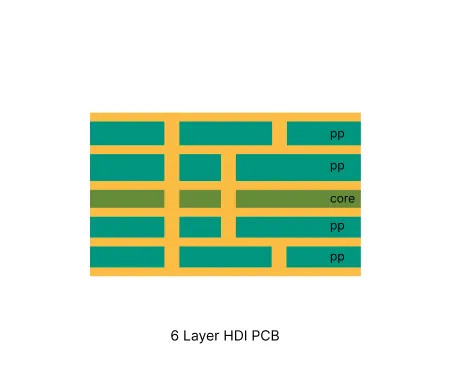
Discover how AIVON manufactures 6 Layer HDI PCBs, including advanced microvia technology, multilayer interconnection control, sequential lamination processes, manufacturing challenges, and real production experience from customer orders.
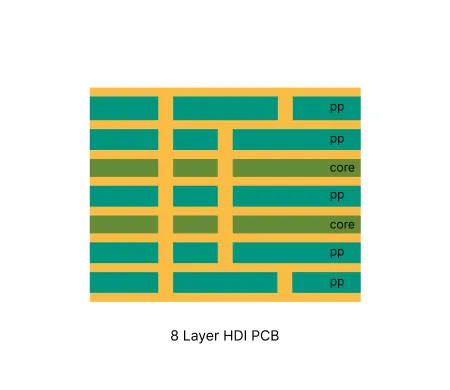
Discover how AIVON manufactures 8 Layer HDI PCBs, including high-density interconnect structures, complex stackup management, microvia reliability, manufacturing challenges, and real production experience from customer orders.
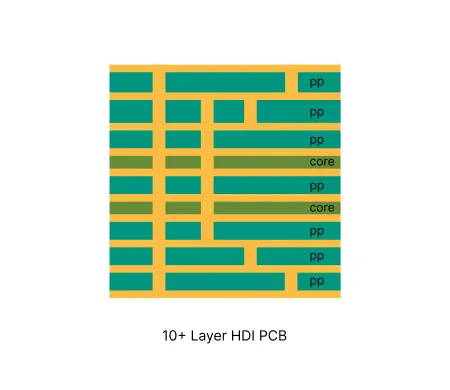
10+ layer HDI PCBs use sequential lamination and microvia technology to achieve high interconnect density in compact multilayer boards. Supports stacked or staggered microvias with laser-drilled structures. Compatible with high-Tg FR-4 and high-speed laminates.
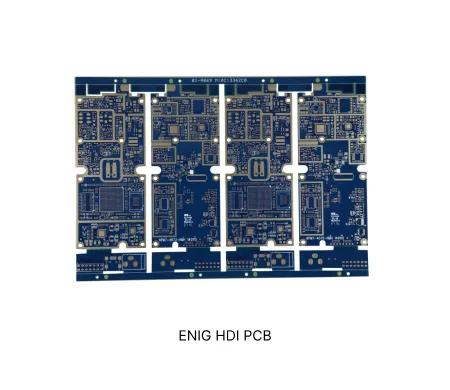
Discover how AIVON manufactures ENIG HDI PCBs, including microvia fabrication combined with ENIG surface finishing, fine-feature reliability requirements, manufacturing challenges, and real production experience from customer orders.
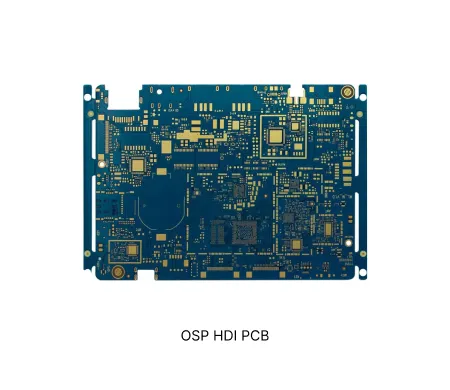
Discover how AIVON manufactures OSP HDI PCBs, including high-density structures with organic surface protection, copper surface reliability, manufacturing challenges, and real production experience from customer orders.
| Order ID | PCB Type | Layers | Dimensions | Solder Mask | Surface Finish | Quantity | Action |
|---|---|---|---|---|---|---|---|
| Loading... | |||||||
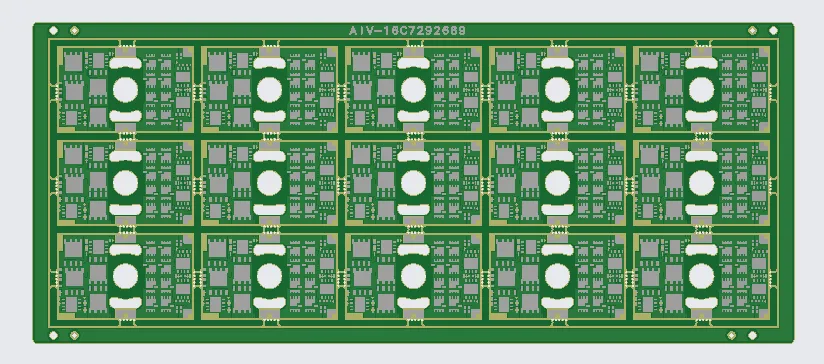 PCB Reliability
Senior PCB CAM engineer analyzes a real 16-layer HDI FR-4 board case with 2.2mm thickness. Discover critical stackup adjustments, resin via plugging, stamp hole panelization, and DFM solutions to prevent delamination, soldering defects, and production delays. Practical manufacturing insights for high-density PCB designers.
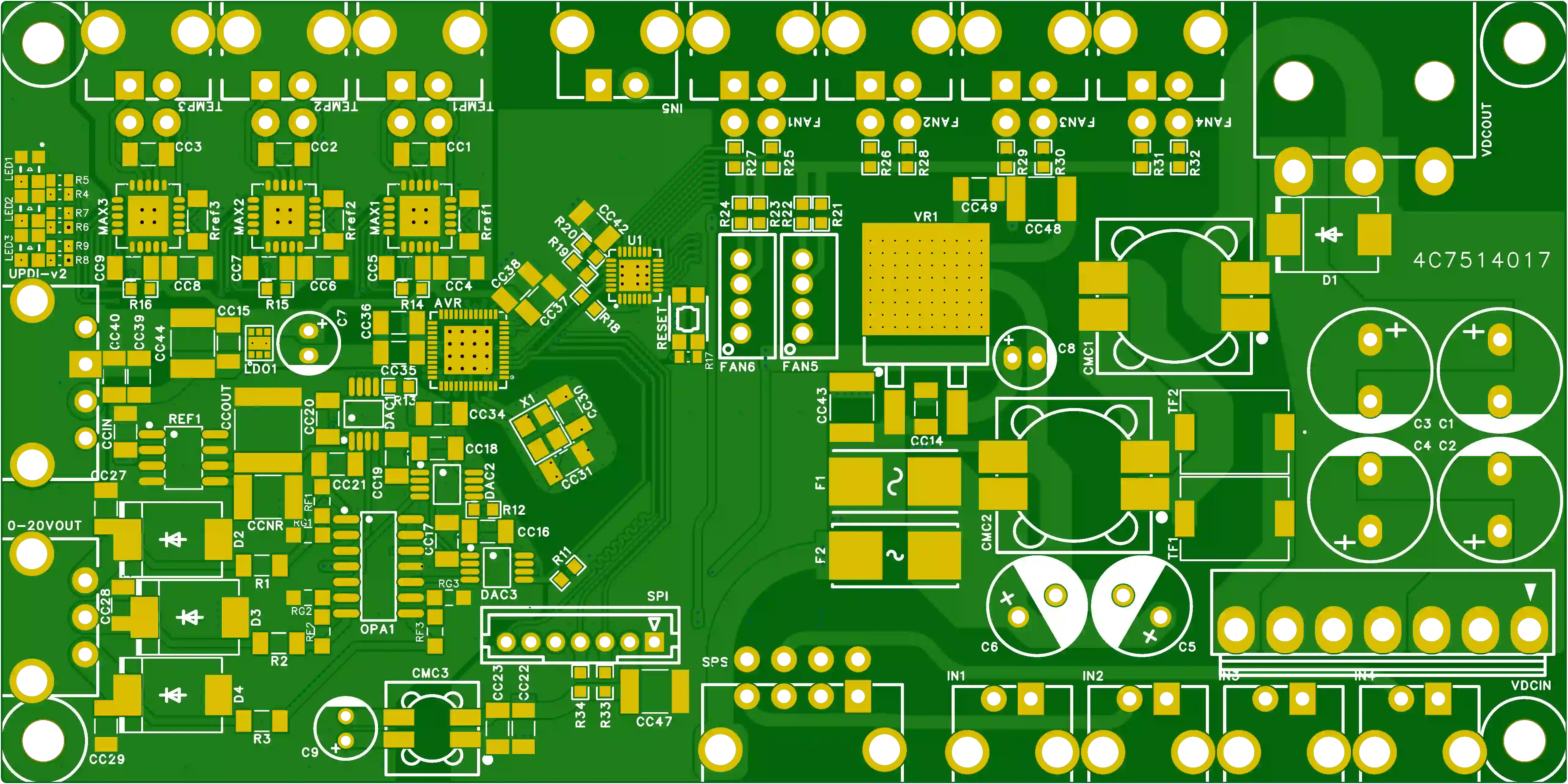 Design For Manufacturing (DFM)
As Senior CAM Auditor at AIVON, I investigated conflicting blind via sizes, soldermask vs SMT data, and plugging requirements in a 4-layer FR-4 HDI PCB. Discover how targeted Engineering Questions resolved data-to-manufacturing conflicts, ensured stackup accuracy, and prevented production risks before fabrication. Essential insights for designers on HDI via processing and CAM verification.
 Design For Manufacturing (DFM)
Discover real CAM engineering challenges in a thin 6-layer HDI PCB including solder mask bridge failures on tight SMD pads, low inner layer copper density causing resin starvation, 0.2mm laser blind vias, and panelization optimization. Learn practical DFM solutions and resolutions from our factory review.

HDI PCBs are used in compact control modules, PLCs, sensors, and automation equipment where high wiring density and reliable signal transmission are required within limited space.

High density interconnect PCBs support ADAS, infotainment, body control, and other automotive electronics that require compact layouts, high interconnect density, and reliable performance under demanding conditions.

HDI circuit boards are widely used in smartphones, wearables, tablets, and other compact devices where smaller board sizes, fine-pitch components, and high-density routing are essential.

HDI printed circuit boards are used in routers, switches, wireless communication equipment, and other high-speed systems where dense interconnections and controlled signal integrity are critical.

HDI PCBs enable compact designs for medical monitoring equipment, diagnostic devices, and portable medical electronics that require high functionality within a limited form factor.

HDI multilayer PCBs are used in avionics, navigation, communication, and control systems where space and weight are limited and reliable high-density interconnections are required.
AIVON engineers review HDI stack-up, microvia type and BGA escape before CAM. We flag 1+N+1 vs 2+N+2 vs any-layer choices, stacked vs staggered vias, and aspect-ratio or registration risks so the design is manufacturable before it enters the line.
HDI yield is decided by laser drilling, via fill and sequential lamination — not by shrinking a standard multilayer process. We control blind-via dimple, layer-to-layer registration and copper balance across build-up cycles, including any-layer constructions when the design requires them.
Every HDI board is checked through AOI and electrical test. Critical microvia builds can be verified by cross-section so fill quality, capture-pad registration and plating hold up in fine-pitch assembly — not only on a flying-probe netlist.
Sample builds use the tighter HDI window (including higher-order structures up to 6+N+6). Production runs stay inside the published standard limits so lead time does not slip when the same stack-up moves from first articles to volume.
High-Tg FR-4 for dimensional stability through multiple lamination cycles, plus high-speed and high-frequency laminates from suppliers such as Shengyi, Panasonic, Rogers and Isola when impedance or loss requires them. Material choice is set with the structure, not after Gerber release.
The same engineering rules apply from a 5-piece sample to a production lot: published structure limits, laser via size and registration. That keeps the board you qualified from drifting when quantity scales.

1+N+1 Structure: The most common entry-level HDI design. Features one laser-drilled microvia layer on each side of the core. Suitable for smartphones, tablets, and other compact consumer devices.
2+N+2 Structure: Includes two microvia layers on each side of the core. Offers higher wiring density and better signal integrity, ideal for 5G modules, high-speed communication, and automotive electronics.
3+N+3 and Higher Structures: Advanced HDI designs with multiple stacked vias for ultra-high density interconnections. Commonly used in high-performance computing, aerospace, and military systems.
Any-Layer HDI (ELIC): Every layer can be interconnected directly through laser vias. Enables maximum routing flexibility and miniaturization, often used in flagship smartphones and advanced IoT devices.
A1. Start from BGA pitch and how many build-up layers you need to escape the package — not from the highest structure the factory can run. 1+N+1 is enough for many first-order designs; 2+N+2 is the usual step when 0.5 mm devices need a second microvia layer; any-layer is for designs that must connect adjacent layers throughout the stack. AIVON builds up to 3+N+3 as standard and up to 6+N+6 on samples, including any-layer. Use the design guide to pick the lowest structure that routes the board.
A2. Standard production: minimum laser blind via 70 μm, blind-via aspect ratio 0.8:1 (60–200 μm). Samples: 60 μm vias and up to 1:1 aspect ratio. Laser hole position accuracy is ≤10 μm; layer-to-layer registration is ≤50 μm. If the dielectric is thicker than the via can support at these ratios, the stack-up has to change — do not only shrink the drill.
A3. Via-in-pad is typical at 0.5 mm BGA and usually required at 0.4 mm and below, so escape does not consume the fan-out ring. Those vias must be filled and planarized (copper fill or resin plug plus cap) or solder will sink and the pad will not stay flat. Stacked microvias also need a qualified fill; staggered vias are often the more stable choice when density allows. The manufacturing guide covers copper-fill vs epoxy-fill and the dimple limit held in production.
A4. No. Samples can use the tighter window: up to 6+N+6, 20 layers, 60 μm laser vias, 0.2 mm minimum thickness. Standard production stays at up to 3+N+3, 16 layers, 70 μm vias and 0.3–3.2 mm thickness. Qualify on the structure you will actually buy in volume, or plan a deliberate step-down after the first articles. Full limits are on the HDI capability page.
A5. The core is usually high-Tg FR-4 for stability through sequential lamination. High-speed and high-frequency laminates (Shengyi, Panasonic, Rogers, Isola, ITEQ and others) are used when loss or impedance needs them. Build-up layers use laser-drillable prepreg or RCC so the microvia ablates cleanly. Material should be locked with the stack-up before Gerber release, not after.


