Help
  • FAQ
    browse most common questions
  • Live Chat
    talk with our online service
  • Email
    contact your dedicated sales:
0

Flexible PCBs

AIVON Delivers High-Precision Flexible PCBs for Complex and Compact Applications

Get Flex PCB Quote
Flexible PCBs

What is Flexible PCB?

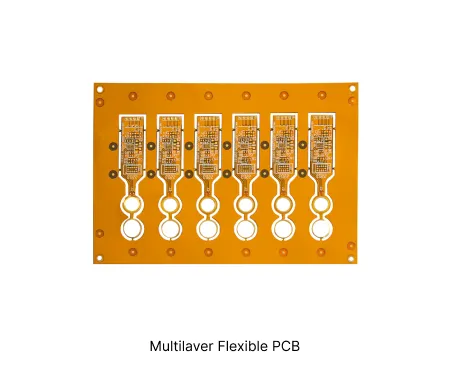
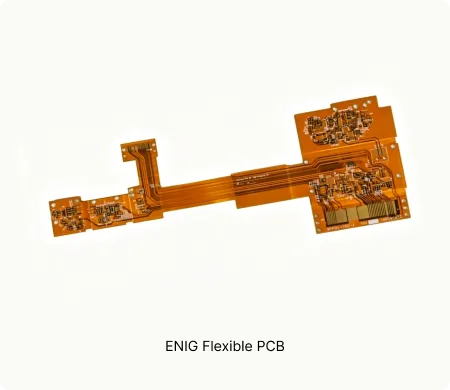
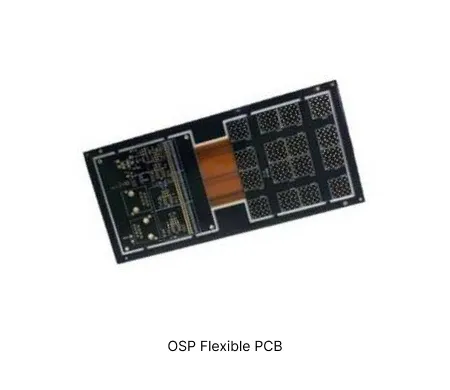
A Flexible PCB (Flex PCB) is a type of printed circuit board made from flexible materials like polyimide, allowing the board to bend and fold without breaking. It is ideal for compact electronic designs, wearables, and devices with moving parts. AIVON manufactures high-quality flexible PCBs with excellent durability, signal integrity, and space efficiency for demanding applications.

Features of Flexible PCBs

Space and Weight Saving
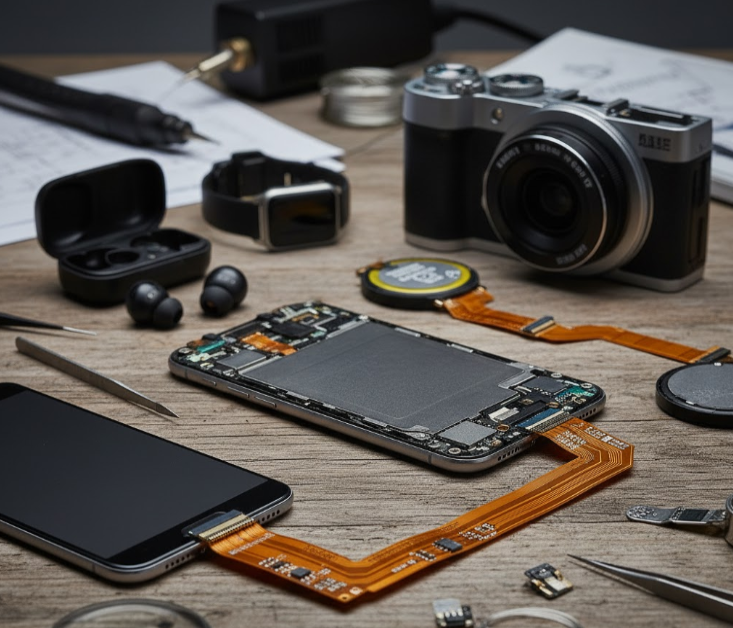
  • Flexible PCBs are exceptionally thin and lightweight, greatly reducing the overall size and mass of electronic assemblies compared with traditional rigid boards. By eliminating bulky connectors, wiring harnesses, and mechanical interfaces, they enable engineers to design slimmer and more compact products. This advantage is especially valuable in modern electronics where every millimeter counts. As a result, flexible circuits are widely used in portable and miniaturized devices such as smartphones, smartwatches, wearable health trackers, medical diagnostic instruments, and other applications that demand high functionality within limited space.

High Design Flexibility
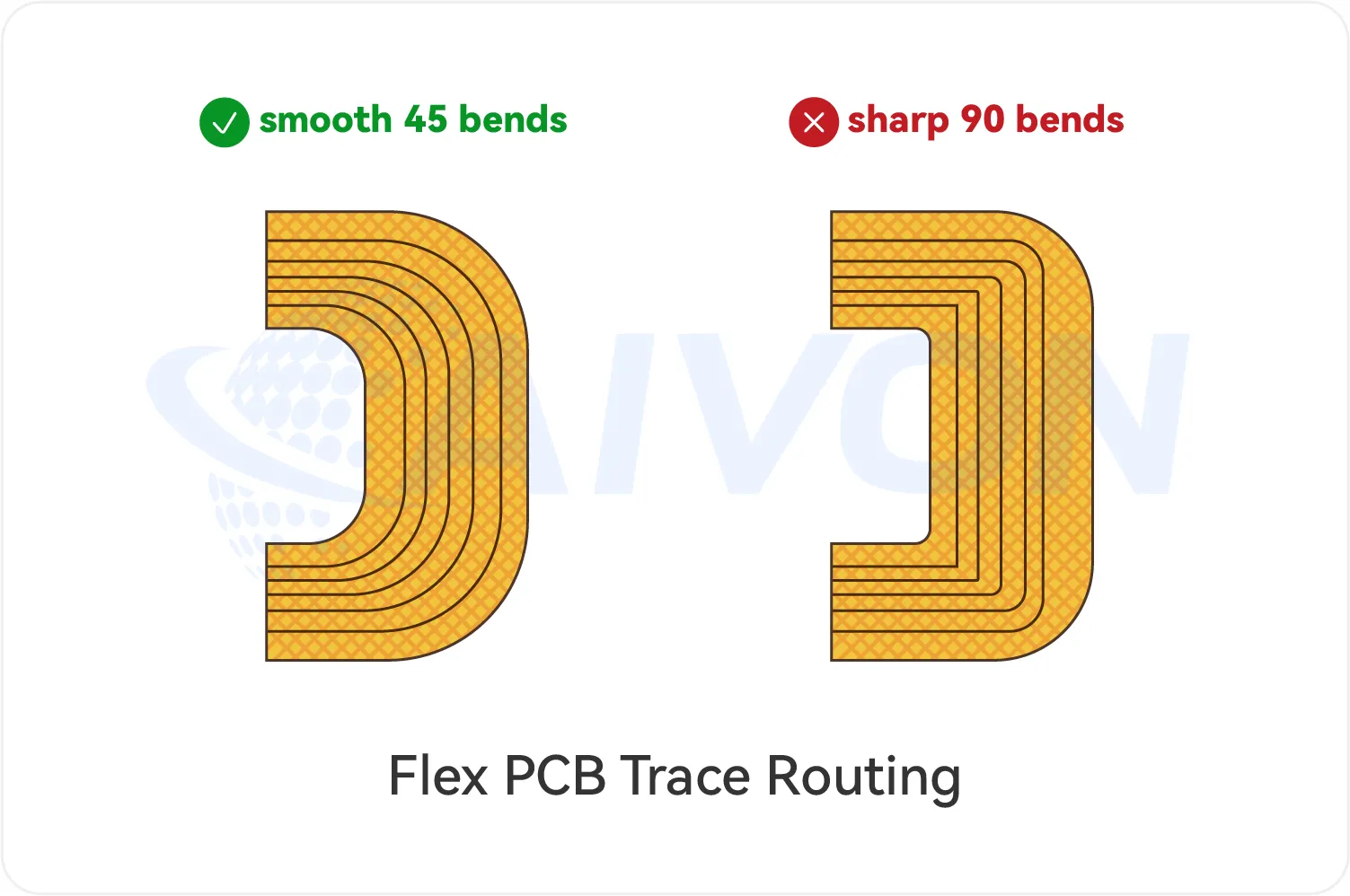
  • One of the most significant benefits of flexible PCBs is their ability to bend, fold, and twist without compromising performance. This mechanical adaptability allows flexible circuits to fit perfectly into irregular shapes, curved surfaces, or tightly confined spaces that rigid PCBs simply cannot accommodate. Engineers can create complex three-dimensional routing paths and integrate multiple functional layers while maintaining stable electrical performance and excellent signal integrity. This makes flexible PCBs ideal for dynamic applications such as foldable electronics, robotic arms, camera modules, and devices with moving parts.

Improved Reliability
  • Flexible PCBs inherently reduce the number of interconnects, solder joints, and mechanical connectors—components that often represent the weakest points in conventional electronics. Fewer connection points mean fewer opportunities for mechanical failure, open circuits, or intermittent contact issues. Their ability to absorb shock, vibration, and thermal expansion further enhances system durability. This robust structure leads to longer product life cycles, higher reliability in harsh environments, and improved performance consistency in both consumer electronics and high-reliability industries such as aerospace, automotive, and medical technology.
Excellent Heat Dissipation
  • Flexible PCBs utilize thin substrates and advanced material systems that promote efficient heat transfer away from critical components. Their improved thermal conductivity helps distribute and dissipate heat more evenly across the circuit, reducing hotspots that can degrade performance or shorten component lifespan. In high-density assemblies, flexible circuits offer superior thermal management, ensuring stable operating temperatures, preventing overheating, and enhancing long-term reliability. This makes them highly advantageous for compact electronic designs where heat buildup is a major concern.
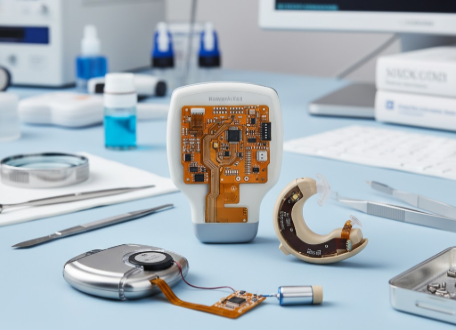

AIVON Flexible PCB Manufacturing Capabilities

Item Technical Capability
Layers 1–12 layers FPC (Rigid-flex: 2–12 layers)
Maximum Panel Size 250×900 mm (500×1200 mm special)
Minimum Drill Diameter 0.1 mm
Base Copper Thickness 12 μm / 18 μm / 35 μm / 70 μm
Insulation Thickness 12.5 μm / 25 μm / 50 μm
Minimum Board Thickness 0.09
Minimum Line Width & Spacing 0.045
Line Width Tolerance ±0.02 mm
Outline Tolerance (edge to edge) Precision ±0.05 mm / Standard ±0.1 mm
Electroplated Copper Thickness 1–3 μm
Electroless Plating Thickness 0.02–0.075 μm
Conductor to Outline Clearance 0.05 mm
Via Plugging Thickness 1–15 μm
Product Types 1–12 layer PCB / FPC flexible circuits, rigid-flex boards, blind via boards, buried via boards, via-in-pad, immersion gold boards
Maximum Board Size 250 mm × 700 mm
Maximum Board Thickness 0.45 ± 0.05

Order Online

Flexible PCB Applications

Flexible PCB vs Rigid PCB

1. Structure
Flexible PCBs use bendable polyimide substrates, allowing them to fold or twist, while rigid PCBs use fiberglass (FR4) for a solid, inflexible structure.
2. Design Flexibility
Flexible PCBs can fit 3D spaces and compact enclosures, ideal for dynamic or irregular layouts. Rigid PCBs are suitable for flat, fixed designs.
3. Durability
Flex PCBs absorb vibration and mechanical stress better, reducing joint failures. Rigid boards offer stability for static environments.
4. Weight and Thickness Flexible PCBs are lighter and thinner, enabling sleek, portable device designs.
5. Cost and Application
Rigid PCBs are more cost-effective for mass production. Flexible PCBs excel in high-performance, space-constrained applications such as wearables, medical, and automotive electronics.

Flexible PCBs FAQs

Q1: What materials are used in flexible PCBs?
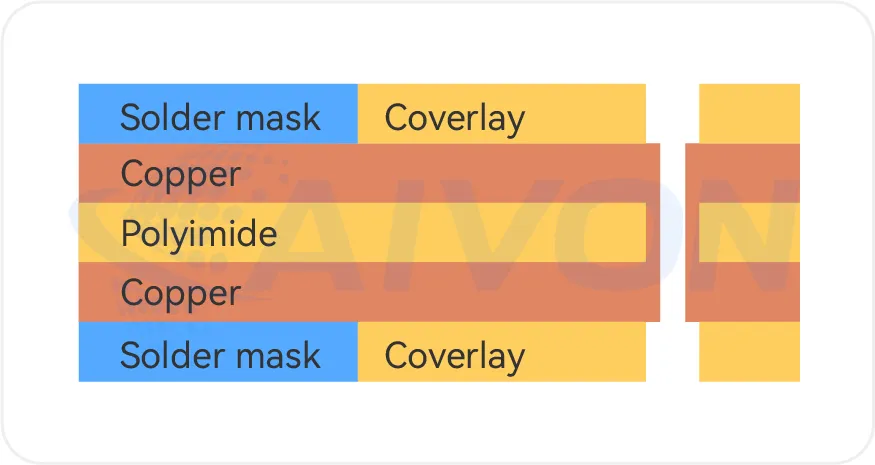
  • A1: Flexible PCBs typically use polyimide or polyester film as the base material, with copper foil for conductive layers and protective coverlays for insulation.
Q2: Does AIVON provide flexible PCB prototyping and PCB mass production?
  • A2: Yes. AIVON offers full-service flexible PCB solutions, including rapid prototyping, DFM review, small-batch runs, and large-scale mass production with strict quality control.
Q3: What is the minimum bend radius for flexible PCBs?
  • A3: The bend radius depends on thickness and layer count, typically 10 times the material thickness for single-layer boards to prevent cracking or delamination.

View More about Flexible PCBs

Embracing Eco-Friendly Electronics: The Rise of Bio-Based Flexible PCBs
Flexible PCBs

Embracing Eco-Friendly Electronics: The Rise of Bio-Based Flexible PCBs

Explore bio-based flexible PCBs as a sustainable solution in electronics. Learn about biodegradable substrates, their benefits, and how they reduce environmental impact in circuit board design.

Read More
Flexible PCBs for Smart Eyewear: Design, Materials, and Assembly
Flexible PCBs

Flexible PCBs for Smart Eyewear: Design, Materials, and Assembly

Explore the essentials of flexible PCBs for smart glasses, including material selection, flex PCB design rules, bending radius considerations, and the rigid-flex assembly process for wearable devices.

Read More
Flexible PCB Design for Wearable Health Tech: An Advanced Guide
Flexible PCBs

Flexible PCB Design for Wearable Health Tech: An Advanced Guide

Explore advanced techniques for designing flexible PCBs for wearable health devices, covering material selection, critical design considerations, and future trends in flex circuit technology.

Read More

Get in Touch

Send Message

2025 AIVON.COM All Rights Reserved
Intellectual Property Rights | Terms of Service | Privacy Policy | Refund Policy