Introduction
Who is "mobile"—physicians, nurses, or information? Why should information move? What role does mobile health play in hospital information management? This article addresses those questions. Conflicts between clinicians and patients occasionally occur. As a physician working in a hospital, I note that when such conflicts arise, many people may be involved. Large-scale involvement creates significant safety risks. Incidents affecting healthcare safety and quality carry high levels of risk.
What should IT do? Supporting hospitals to improve clinical safety and quality is a central challenge for IT. First, continuous improvement of clinical quality is a long-term core objective for any hospital. Second, clinical services should continuously improve so patient experience is also addressed. Third, modern hospital operations require refined management, not only in personnel, finance, and materials, but across many operational details.
Closed-Loop Management Ensures the Five Rights
Can IT be the solution for these three areas? The HIMSS electronic medical record maturity model defines levels from 0 to 7 beyond a narrow definition of electronic records. Level 6 focuses on safety and quality: all clinical information is recorded and structured, clinical decision support systems (CDSS) are in place, and closed-loop management exists. When a physician issues an order and the patient receives the therapy, the entire process becomes a closed loop that allows tracking and verification. Closed-loop management is designed to ensure the five rights: right patient, right time, right medication, right route, and right dose. This approach largely eliminates many medication errors. HIMSS created the EMR maturity model years ago and level 6 centers on safety and quality. I regard ensuring safety and quality as the ultimate goal of informatization, with standardization as the higher future direction.
1. What Is Closed-Loop Management?
Closed-loop management means that from outpatient or inpatient physician orders, through pharmacy dispensing or automated dispensers, to confirmation of patient identity and every step in between, the entire process is electronically and completely recorded. At any time it should be possible to audit each step to find where a problem occurred. In the HIMSS model level 6 is challenging to reach; even in advanced countries not many hospitals achieve this level. Our own evaluation last year reached only level 4; we may score higher in future evaluations, but I do not believe we have fully reached level 6 yet.
2. Mobile Health, Safety, and Quality
IT is only part of the solution to improve hospital quality and safety. Historically, the burden for quality and safety was placed primarily on physicians and nurses, which is unfair because they control only individual points in a larger system. Hospitals operate at three levels: 1) Hospital management systems, including supply management and quality control of consumables; structural adjustments here cannot be done by individual clinicians and require hospital-level effort. IT plays a critical role at this level and is as important as utilities such as water and power. 2) Processes: clinical care is delivered by teams and workflows, not by individuals, so rules and procedures are needed to ensure each person performs correct actions. 3) Measurability: quality improvements must be measurable. Claims that quality is better today than before are meaningful only if supported by data demonstrating how much improvement occurred. IT enables that measurement.
Why did Peking University People's Hospital implement mobile health? It was driven by safety and quality and addresses three levels: 1) It enables full traceability across the care continuum, closing gaps where the final step of medication administration was previously outside the information system. 2) It enables practical, targeted correction of individual performance by allowing identity matching for every treatment and medication at key points to prevent errors. 3) With tracking and traceability at every key point, we can perform scientific analysis to determine whether clinical quality improved and which adverse events were corrected, thereby guiding further clinical quality improvement. These are the three main ways mobile health intersects with clinical care.
Previously our informatization focused on administrative systems based on desktop computers, extending only to offices. Once staff left the office and moved to the bedside, there was no informatization. I proposed completing the last 20 meters of clinical informatization by extending systems to the bedside. How do errors occur? U.S. statistics on medication incidents without IT support show that 39% stem from physician prescribing errors (wrong dose, wrong drug choice, missed allergy information), 12% from nurses (transcription errors when a nurse interprets a physician's signature as authorization), 11% from pharmacy dispensing errors, and 38% from nurse administration errors. Implementing a mobile health system aims to eliminate these errors in practice rather than merely equipping nurses with tablets for appearance.
3. Prioritizing Mobile Nursing over Broader Mobile Health
In China I have not seen vendors that provide a complete electronic medication record covering every step: which pills were prescribed, when the pharmacist removed items from the shelf, which nurse received them, which nurse administered them to which patient, and confirmation that the patient took the medication. Where complete records exist they are often fragmented and incomplete. Many hospitals use automated medication packaging or dispensing machines that print barcodes and patient information, but administration often lacks identity verification. The clinical practice of "three checks and seven rights" is compromised in implementation. Packaging can be mixed up and errors may go unnoticed. In 2009 my hospital experienced a severe incident in which a wrong medication led to a patient death. Addressing such errors is necessary regardless of cost. For this reason, I believe mobile nursing should take priority within mobile health implementation.
Multiple Measures to Ensure Effective Mobile Nursing
We began mobile nursing in July 2010, covering operating room handoffs, blood product handovers, and medication administration in wards. The technology was PDA-based mobile devices; we selected industrial-grade Motorola devices because the hospital handles a high volume—more than 53,000 discharges per year—and industrial robustness was a key consideration.
Operationally, medication dispensing and preparation require two nurses with PDAs for double verification. Previously nurses were expected to perform the "three checks and seven rights," but in practice this was often uneven due to staffing and workload. Now nurses must verify against the patient's wristband and barcode; if verification fails, the system automatically alarms. The system detects mismatches such as wrong medication, non-existent orders, or orders outside their execution window (for example, a nighttime medication given at midday). These checks prevent timing and transcription errors.
For specimen collection, hospitals implementing ISO 15189 laboratory standards must ensure accurate sampling. After blood draw we must record when the sample was taken, ensure the nurse documents it, and avoid increasing nurse workload. PDAs automate these steps: they check whether a test is ordered, confirm the required tests, perform identity verification, and record the sample collection time.
During nursing assessments, staff scan the patient's wristband and use the bedside card scanner, which ensures the nurse actually visited the bedside. Admission registration timing is clarified: true admission time is when clinical staff first see the patient and scan the wristband, not the financial admission time recorded at registration. Previously admission times were rounded; with bedside scanning we record exact times such as 08:13 or 09:09.
Sterile supply and instrument tracking are managed with closed-loop procedures from cleaning and packaging through sterilization to patient use. We track which machine cleaned an item, who packaged it, which sterilizer processed it, and which staff issued it. At use, clinical staff scan the patient's wristband so if a packaged item leads to infection, the source can be traced.
Nursing documentation has been restructured to reduce nurse workload. Many records are now checkbox-based with minimal free-text entry. Nurses scan the patient wristband and follow a structured education checklist tailored to the diagnosis. Each item must be marked as completed and an end time recorded. This approach documents individual actions and enables supervision.
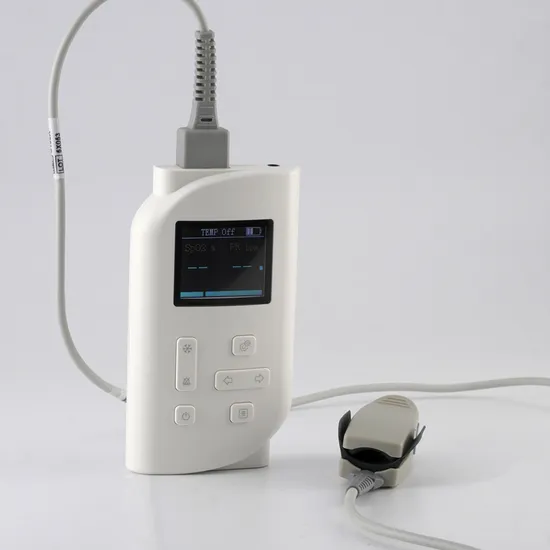
When an order is executed successfully, it appears to the ordering physician in real time. The system also supports vital sign collection, temperature charting, early-warning management for high-risk patients, and statistical analysis. By last month the system was deployed across clinical departments and produced extensive data. The remaining challenge is ensuring every nurse consistently uses the system so it actually improves quality. To address this we defined monitoring indicators.
With an inpatient census of about 1,700 beds, we monitor whether each patient had the required admission scan and whether expected workflows were completed. Daily completion rates are tracked, and cases that are incomplete are investigated for the reason. Individual corrective actions are taken and results are fed back to the nursing department for enforcement. Without such monitoring, usage rates could be partial and incidents would occur among the noncompliant subset. Our audits showed we did not achieve 100% compliance: some patients were transferred to the ICU without scanning, some entered the OR without scanning. Dispensing and administration must be scanned; incomplete cases fall into three categories: medication was prepared outside the ward, emergency resuscitation situations, and other critical circumstances where verification may be omitted. Identifying and understanding these exceptions makes the system more reliable.
Regarding health education, our statistics showed deficiencies: education is often only provided at initial admission and not repeated, so measured rates are misleading. Routine nursing documentation also follows defined frequencies, for example, level 1 nursing once per day and level 2 nursing twice per week.