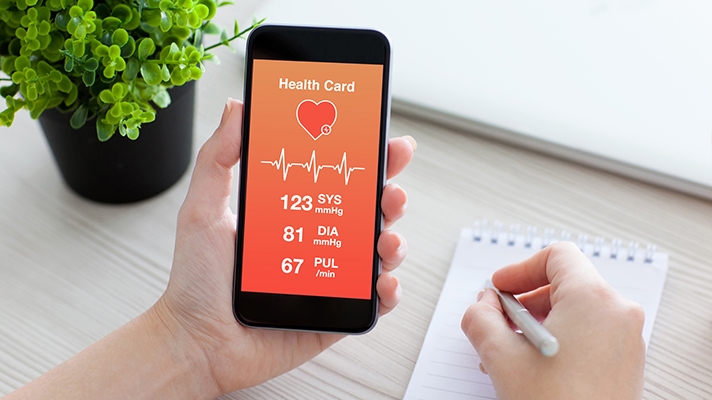
Medical device OEM manufacturers are developing higher-precision personal healthcare devices for treating and monitoring common conditions. These devices are designed for cost-effectiveness and to improve care. Microcontrollers (MCUs) play an important role in portable medical devices such as home blood pressure monitors, spirometers, pulse oximeters, and heart rate monitors. Most physiologic signals in these devices are analog and require amplification, filtering, and other front-end processing before measurement, monitoring, or display.
Integrating high-performance analog peripherals into ultra-low-power MCUs enables on-chip system solutions for portable medical electronics while extending battery life. This article describes several approaches to simplify the analog front end for battery-powered portable medical devices by combining high-performance peripherals such as operational amplifiers, ADCs, and DACs with low-power MCUs. The MCU provides digital filtering and processing and can display physiological data such as blood pressure, lung volume, heart rate, and blood oxygen saturation. Combining these peripherals with an MCU supports full device functionality and allows peripherals to be powered down into standby (current consumption at the peripheral level can be only a few milliamps) to meet power budgets.
One example is a 16-bit RISC CPU that provides the required signal-processing capability while consuming very low operating current, enabling multi-year battery life in these applications. The MCU integrates operational amplifiers, a 12-bit multichannel ADC, and dual 12-bit DACs as part of the analog signal chain. In addition to the integrated analog peripherals, the MCU includes 120 KB of on-chip flash and a universal serial communication interface (USCI). The following sections describe how the integrated analog peripherals support single-chip solutions for medical products.
Blood pressure monitor
The block diagram for a blood pressure monitor shows a bridge pressure transducer connected to an inflatable cuff. The transducer can be activated via a port pin and is only powered during pressure measurement to conserve energy. The transducer produces an mV-level output proportional to pressure; this signal must be amplified before digitization by the ADC. Korotkoff sounds are detected in the amplified signal to determine systolic and diastolic pressures. Three on-chip operational amplifiers can be used to build a high-gain differential amplifier that cancels common-mode noise. The amplified signal is routed internally to a 12-bit ADC. A DMA peripheral enables efficient data handling and fast execution of Korotkoff detection algorithms while filtering noise that would otherwise affect measurements. The 16-bit CPU executes these algorithms at modest MIPS levels.
The MCU also integrates a 160-segment LCD driver with a regulated charge pump to provide stable contrast, complementing the single-chip solution. The 120 KB low-power flash supports field firmware updates and can be used for data logging due to its in-system programmability. The USCI serial port can communicate with a PC or PDA to download logged data. Thanks to the MCU's ultra-low-power architecture, the solution draws less than 3 mA in measurement mode; in idle mode while maintaining the real-time clock and display, current remains below 3 mA.
PWM-driven DC motors control cuff inflation and deflation; this is the only subsystem that typically requires a 6 V motor supply. If motor supply demands cannot be met, the entire device could be powered from a single 3 V coin cell, though most small motors cannot be driven reliably from a high-impedance coin cell. A practical design example uses four low-cost AAA alkaline cells with a low-dropout regulator (LDO) to provide 3.3 V to the MCU. Assuming two measurements per day, the battery set can last approximately two years. The MCU can remain in an active display timing mode with very low current draw; viewing stored readings does not appreciably increase consumption. The integrated dual DACs can generate two sine waves phase-shifted by 180° to improve transducer performance.
Spirometer (PFT device)
Spirometers, or pulmonary function test (PFT) devices, measure lung volume by recording airflow over a defined exhalation time, typically reported in liters per minute. The sensor is usually a pneumatic differential pressure transmitter. Aside from the lack of an inflation motor, the spirometer design closely parallels the blood pressure monitor. Three MCU operational amplifiers can be used as the sensor amplifier for flow measurement. The rest of the spirometer is straightforward: the 12-bit ADC measures flow and compares it with stored calibration or normalization values. On-chip flash stores multiple calibration profiles so the design can accommodate different test conditions. The reference blood pressure monitor block diagram can serve as a starting point for a spirometer since the transmitter and front-end requirements are similar. Note that the spirometer does not require motor control. The MCU's low-power characteristics extend battery life, and the high integration reduces cost and improves system reliability.
Pulse oximeters and heart rate monitors
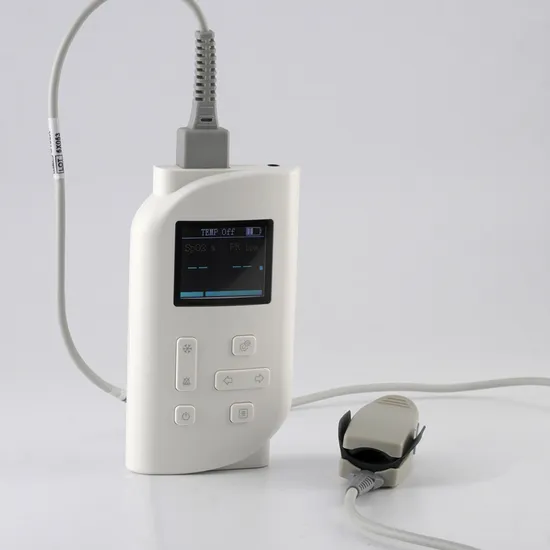
There are multiple techniques for heart rate and pulse oximetry. This section focuses on noninvasive optical plethysmography. Pulse oximeters use an external probe with an MCU to display blood oxygen saturation and pulse rate. The same sensor can be used for both heart rate detection and SpO2 measurement. The probe typically mounts on a fingertip, earlobe, or nasal site and contains two light-emitting diodes (LEDs): one emitting red light at about 660 nm and one emitting infrared light at about 940 nm. Light passes through tissue to a photodetector. Hemoglobin absorbs part of the light; the absorption differs by wavelength and by oxygenation state. By measuring absorption at the two wavelengths, the MCU can estimate the fraction of oxygenated hemoglobin. In addition, the transmitted light contains a pulsatile component caused by arterial blood volume changes with each heartbeat.
Both LEDs must be driven from constant-current sources to maintain stable brightness during measurement. A constant-current source with automatic gain control (AGC) feedback can be implemented using an internal DAC together with MCU software. The MCU selects the pulsatile absorption component attributable to arterial blood and separates it from absorption by non-pulsatile venous blood, capillaries, and other tissue pigments. Time-division multiplexing is commonly used: the red LED is turned on, then the infrared LED, then both are turned off; this cycle repeats several times per second to eliminate background noise. More advanced techniques use phase quadrature multiplexing to separate red and infrared signals by phase rather than time before recombining them. This can reduce artifacts from motion or electromagnetic interference because the phase relationship between the two LED signals differs when interference is present.
Average arterial oxygen saturation can be derived from the ratio of the two wavelengths' absorbances. Pulse rate is calculated from the number of LED cycles between successive pulsatile peaks; the pulse-rate average is typically computed over a time window that approximates the averaging used for SpO2. The MCU compares the measured ratio to calibration values stored in flash, which were obtained experimentally, and displays the oxygen saturation percentage. Typical SpO2 values range from 70% to 100%; values below 70% are estimated because data for very low oxygen saturation are limited.
A reference design based on the MSP430FG461x shows a complete analog front end that includes integrated operational amplifiers, ADC, and DAC. The DAC combined with an on-chip reference forms the LED constant-current driver. One operational amplifier serves as the photodiode I-to-V converter. The MCU implements AGC by adjusting LED brightness using the DAC and control software. The ADC digitizes the amplified and filtered signals, and the MCU software computes the averages and the ratio between red and infrared channels. The resulting SpO2 percentage is displayed on the LCD. ADC readings also contain heart rate information; software can compute a heart-rate average in about 5 seconds and display it on the LCD. A PWM output can drive a piezo buzzer to produce a short beep on each heartbeat, helping confirm correct sensor placement and signal acquisition.
Conclusion
For the described portable medical applications, an ultra-low-power microcontroller such as the MSP430FG461x can serve as a single-chip solution with several advantages. The high accuracy of the ADC meets the requirements of measurement applications. On-chip operational amplifiers and DACs support signal conditioning and automatic gain control. After selecting an appropriate MCU, system designers move on to software development. The MCU provides on-chip emulation and real-time debugging via a JTAG port. Multiple compilers and debuggers are available, and debug hardware can be inexpensive. Typical debug hardware requires only a simple level shifter to connect to a PC parallel port and does not require a traditional ICE. Full-featured real-time emulation can set breakpoints in on-chip hardware while maintaining full-speed operation. High integration and streamlined code development reduce system cost. Flash memory can be reprogrammed during debugging to shorten development cycles, and the 120 KB of in-system programmable flash can also be used for data logging.