










PCB Types
Printed circuit boards (PCBs) form the backbone of modern electronics, serving as the essential platform for connecting components in devices ranging from smartphones to industrial machinery. In our PCB Types category, we delve into the diverse array of PCB designs and configurations available today, exploring how each type addresses specific engineering challenges and performance needs. Whether you are a hobbyist building a prototype or an engineer optimizing for high-frequency applications, understanding these variations is crucial for selecting the right board for your project. The scope of PCB Types encompasses everything from single-layer boards ideal for simple circuits to complex multilayer designs that support advanced signal integrity and thermal management. We cover rigid, flexible, and rigid-flex PCBs, along with specialized options like high-density interconnect (HDI) and metal-core boards used in power electronics. This category highlights the practical value of these choices, such as enhancing durability in automotive systems or enabling compact designs in wearable technology. By examining real-world applications, from consumer gadgets to aerospace equipment, readers gain insights into how PCB selection influences reliability, cost efficiency, and overall system performance. Our articles provide comprehensive guides on evaluating PCB types for different environments, tutorials on assembly techniques, and best practices for material selection to avoid common pitfalls. We also share expert insights into emerging trends, such as eco-friendly substrates and advancements in 5G-compatible boards. These resources equip professionals and enthusiasts with the knowledge to innovate and troubleshoot effectively. As you navigate through the posts in this category, you will discover strategies to apply in your own designs, fostering a deeper appreciation for the technical nuances that drive electronic innovation.
Latest Blogs

Single-Layer vs Multilayer PCB: Key Differences in Design and Applications
Compare single layer and multilayer pcb from a manufacturing view. Learn when single-layer boards win on cost and simplicity versus when multilayer improves routing density, signal integrity, noise control, and board size.

8-Layer PCB vs 6-Layer PCB: When Should You Choose Eight Layers?
Compare 8 layer pcb vs 6 layer pcb from a manufacturing perspective. Learn when 6 layers suffice for cost and simplicity versus when 8 layers improve routing density, signal integrity, EMI control, and yield on high-density designs.

6-Layer PCB vs 4-Layer PCB: When Should You Use Six Layers?
Compare 6 layer pcb vs 4 layer pcb from a factory perspective. See when 4 layers win on cost and simplicity versus when 6 layers improve routing density, signal integrity, EMI control, and yield.

Fundamentals of Aluminum-Core PCBs and Common Manufacturing Defects
Explore aluminum-core PCB structures, manufacturing steps, quality checks, and common defects such as solder mask issues, poor legend printing, and reflow yellowing.
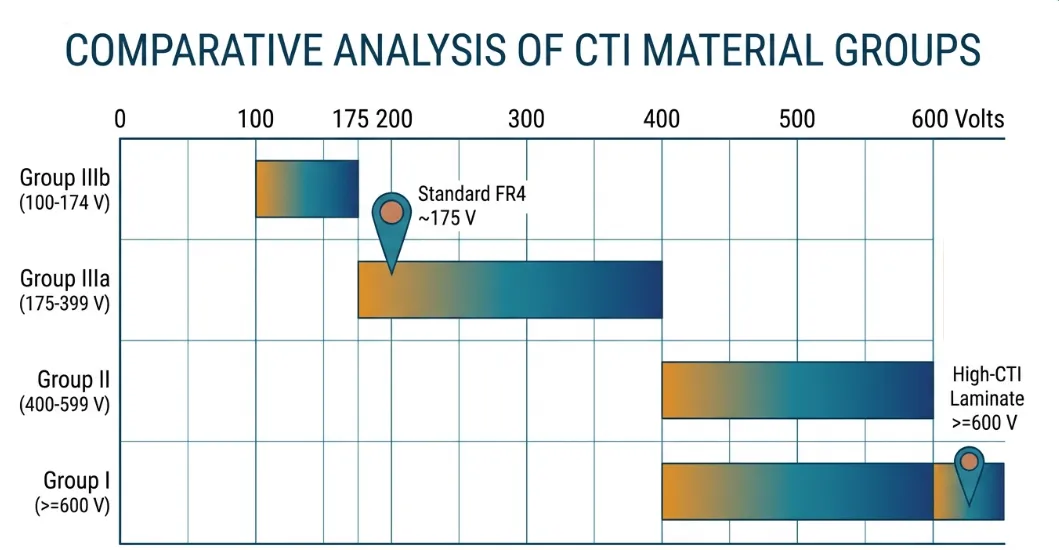
FR4 vs High-CTI FR4: Which Material Is Better for High-Voltage PCBs?
FR4 vs high CTI FR4 from the fab floor: IEC 60112 CTI groups, creepage vs clearance, tracking resistance, and cost. Keep standard FR4 when Group IIIa spacing fits; specify a high CTI FR4 PCB for compact high-voltage work.

Standard FR4 vs Low-Loss FR4: What Is the Difference?
Standard FR4 vs low loss FR4 from the fab floor: Dk/Df, insertion loss, frequency window, and material cost. Stay on commodity FR4 for short links; use mid/low-loss FR4 when length and rate make dielectric loss first-order.
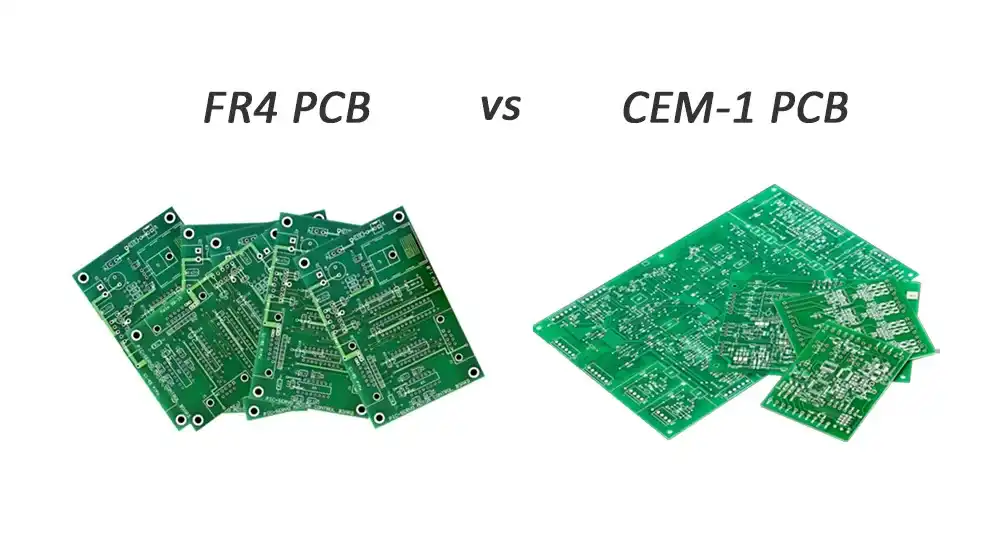
FR4 vs CEM-1 PCB: Material, Performance, and Cost Comparison
FR4 vs CEM-1 PCB from the fab floor: paper-core vs woven glass, punchability, PTH limits, Tg, and cost. Use CEM-1 for high-volume single-sided boards; choose FR4 when you need plated holes, layers, or reflow.
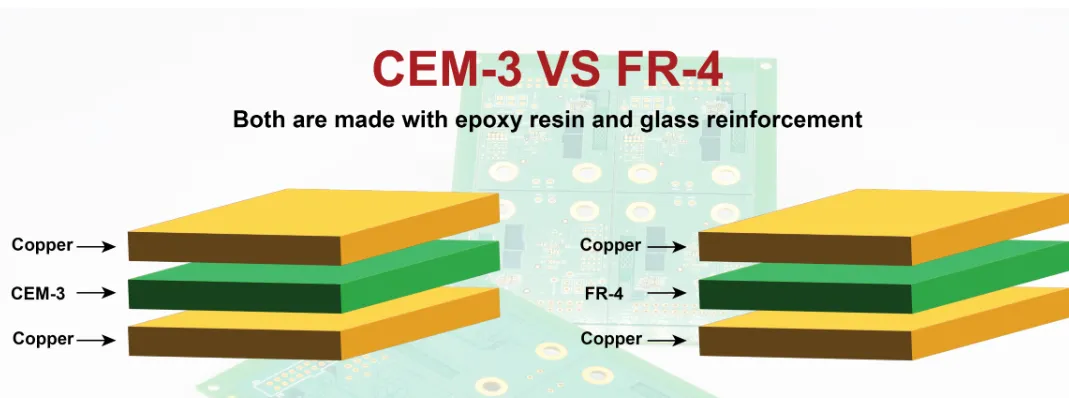
FR4 vs CEM-3 PCB: Which Laminate Should You Choose?
FR4 vs CEM-3 PCB from the fab floor: woven-glass vs glass-mat core, punching vs drilling, PTH and Tg limits, 5–15% volume cost, and when factories keep CEM-3 on 2-layer boards or stay on FR4.
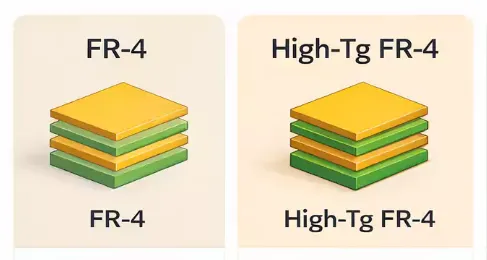
Standard FR4 vs High-Tg FR4: Which PCB Material Should You Choose?
Standard FR4 vs high Tg FR4 compared for cost, thermal reliability, and manufacturability. Learn which PCB material fits consumer boards versus multilayer lead-free production.

FR4 vs Rogers: Key Differences in PCB Performance and Cost
Compare FR4 vs Rogers PCB for Dk/Df, RF loss, thermal behavior, process difficulty, and cost. See when FR4 is enough and when Rogers or a hybrid stack-up is the better factory choice.
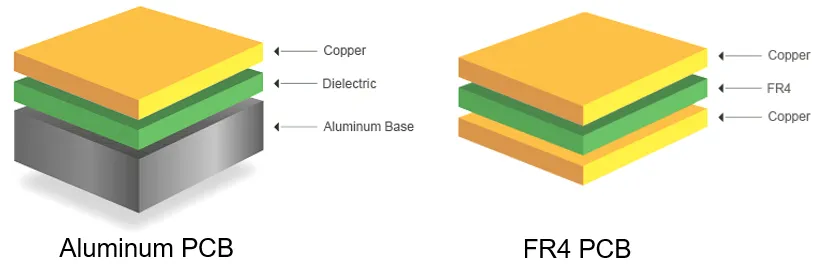
FR4 vs Aluminum PCB: Which Is Better for Thermal Management?
FR4 vs aluminum PCB thermal comparison from the fab floor: conductivity, heat path, insulation, structure, cost, and when IMS beats FR4 vias for LEDs and power.
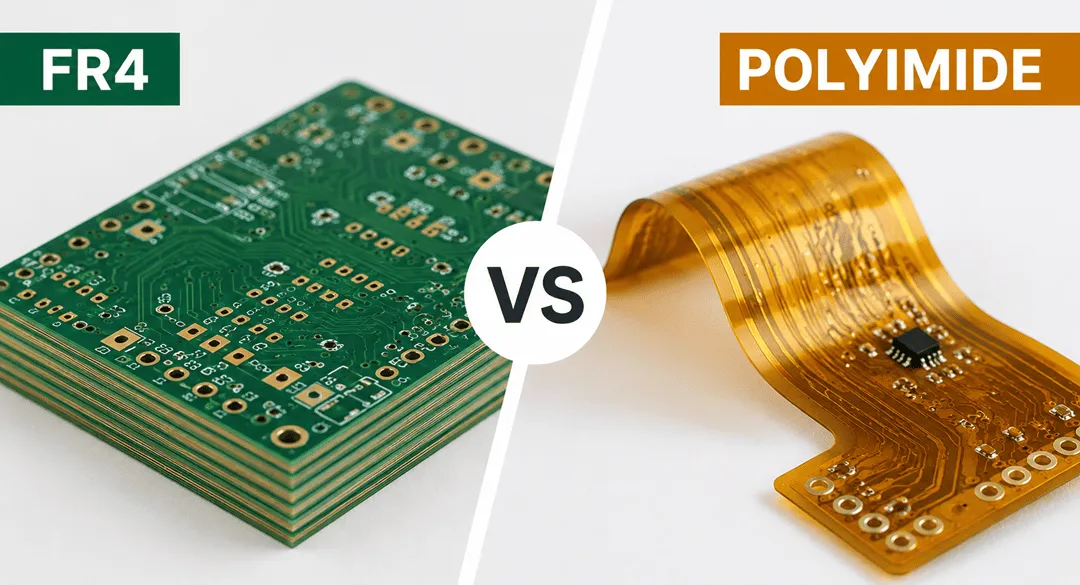
FR4 vs Polyimide PCB: Which Material Is Better for Your Application?
Compare FR4 vs polyimide PCB from a factory view. Choose FR4 for rigid, low-cost volume boards. Choose PI flex or rigid-flex when the circuit must bend or run hotter than high-Tg FR4.


