










-
 09:28
09:28
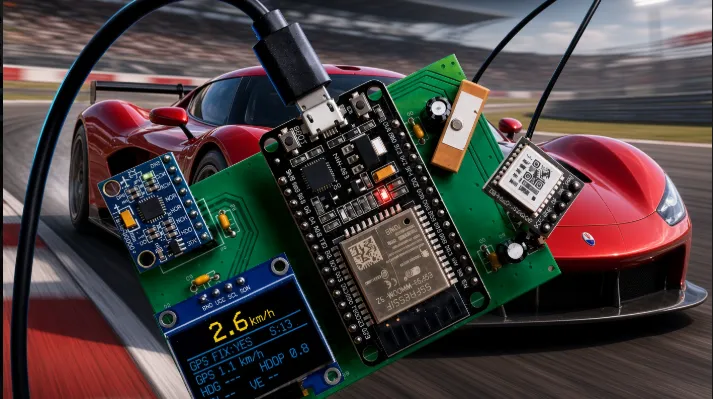
Custom 2-Layer PCB: ESP32 Dead Reckoning GPS Speedometer
This video follows the development of a GPS-aided dead-reckoning speedometer built around an ESP32 and a custom two-layer PCB, covering ATGM336H GPS speed measurement, MPU6050 motion sensing, Kalman-filter-based speed estimation, automatic IMU calibration, gravity compensation, GPS correction and re-anchoring, and zero-velocity updates. The custom EasyEDA PCB integrates GPS UART on GPIO16/17 and I²C-connected MPU6050 and SSD1306 devices on GPIO21/22, with removable headers, local decoupling, proper antenna placement, and a mechanically stable IMU seat supporting reliable operation. The OLED displays speed, GPS status, satellite count, heading, HDOP, and diagnostic messages, while real-world tests compare the estimated speed with a vehicle speedometer, demonstrating typical differences of 1–2 km/h at lower speeds and 3–4 km/h around 80 km/h.
-
 10:17
10:17
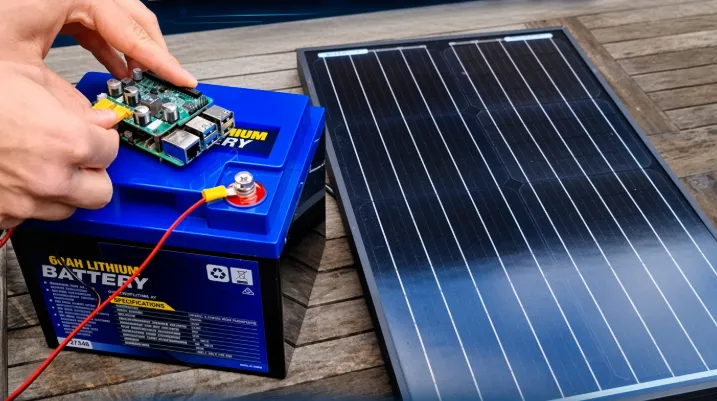
Kickstarter Solar HAT PCB: DFM Behind 514 Shipped PV Pi Units
This video provides a post-fulfillment production recap of the HAT project, covering how an initial 100-board plan grew into 514 completed and shipped units. Luke explains the evolution from Rev B through Rev D, including changes to silkscreen and connectors, the additional Rev C boards used for real-load testing, and the decision to keep in-house programming and electrical testing as production volume exceeded 500 units. The video also highlights the custom tester fixture designed by Matt, which enabled each board to be programmed and measured in roughly 30 seconds, along with practical manufacturing details such as silkscreen readability after lead-free HASL. Looking ahead, the team discusses remaining inventory, pre-orders, firmware and UX improvements, and future product tutorials, while crediting AIVON as the PCB sponsor supporting the tester and production-intent HAT builds.
-
 07:09
07:09
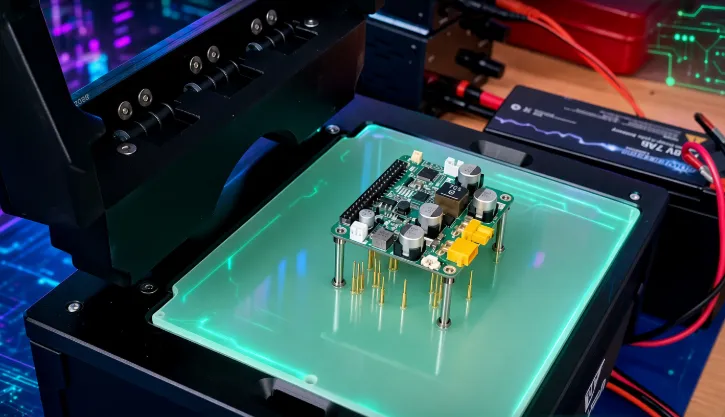
Custom Tester PCB: 2-Layer DFM That Shipped 500 Solar HATs
This video provides a production-floor walkthrough of a custom PCB functional testing process, showing how a Raspberry Pi Pico, dual 16-channel multiplexers, a bed-of-nails fixture, and an ST-Link work together to validate a multi-node power system. It demonstrates resistance and voltage checks, STM32 programming, UART communication, and simulated solar-panel and battery inputs using current-limited 24 V, 20 V, and 12.5 V supplies before running an MPPT charging cycle. The video also highlights a critical production challenge: test speed. By optimizing measurement settling times, the team reduced testing to approximately 23 seconds per board, making the process practical for 550-unit production. Alongside the testing workflow, viewers gain practical DFM and manufacturing insights into test-point placement, SMD capacitor selection, power-path design, and the importance of treating the 2-layer tester PCB with the same engineering rigor as the production HAT.
-
 12:09
12:09
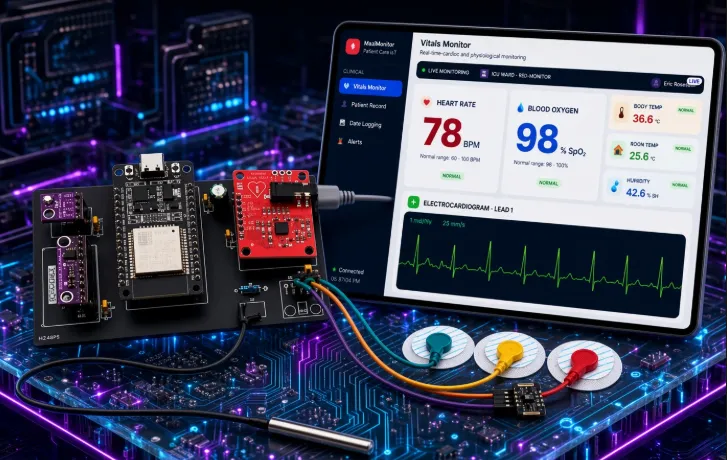
ESP32 Health Monitor PCB: 2-Layer FR-4 DFM for Clean ECG
This video follows the complete development journey of an ESP32-based vital signs monitoring station, from a breadboard prototype to a fully assembled 2-layer custom PCB with a live local dashboard. It demonstrates how ECG, heart rate, SpO₂, body temperature, room temperature, and humidity sensors are integrated into a compact ESP32 system, while covering the EasyEDA schematic, PCB layout, Gerber generation, AIVON fabrication, modular assembly, and firmware setup. Viewers also see the real-time web dashboard with patient records, alerts, interval logging, and data export, alongside practical PCB design and DFM lessons on routing, grounding, power integrity, and manufacturing quality that help ensure reliable sensor performance in a compact medical IoT device.
-
 10:21
10:21
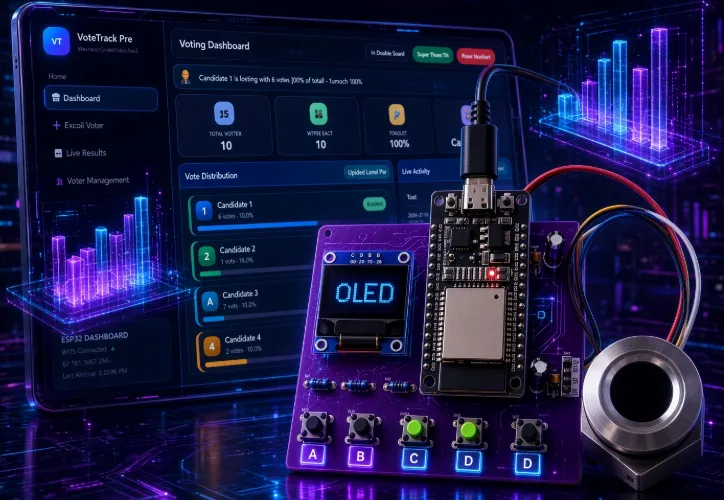
ESP32 Fingerprint Voting Machine Video: Custom 2-Layer PCB Delivers Reliable Biometrics
This KOL video follows the complete development journey of an ESP32-based fingerprint voting system, from early breadboard validation to a fully assembled custom PCB. Viewers see the schematic created in EasyEDA, the transition to a clean two-layer layout, PCB ordering and manufacturing with AIVON, final assembly, and reliable end-to-end operation. The demonstration covers voter enrollment through a self-hosted web interface, dual fingerprint capture, real-time fingerprint matching to prevent repeat voting, candidate selection using four push buttons, and a live dashboard with turnout, leading-candidate data, activity history, and CSV export. The project also highlights how thoughtful PCB design—including short UART and I²C routing, local decoupling, continuous ground pours, and secure mechanical mounting—improves reliability, assembly quality, and the transition from prototype to a finished system.


