What Is a Rogers PCB? Built for High-Frequency Signals
WHAT THIS VIDEO COVERS
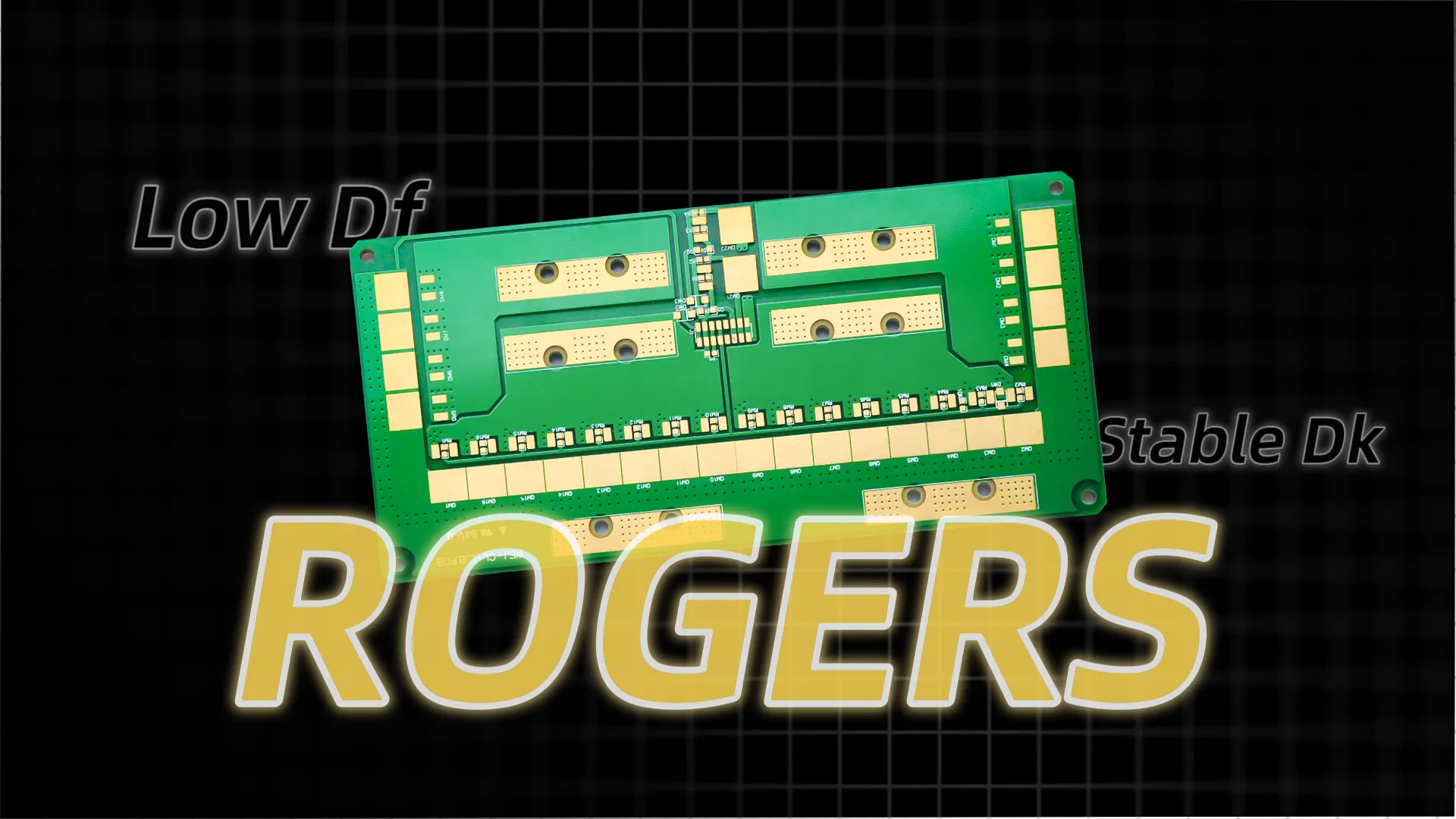
This video explains Rogers PCB technology and why it is the material of choice for high-frequency and RF designs. It covers the key advantages of Rogers laminates — low dielectric loss, stable dielectric constant, and consistent impedance — that allow signals to travel with minimal energy loss and distortion.
Unlike standard FR-4, Rogers materials maintain waveform integrity even at microwave frequencies, making them essential for applications where signal quality cannot be compromised. The video also addresses the structural similarities to conventional PCBs while highlighting the critical differences in material behavior, cost considerations, and tighter processing requirements.
Real-world examples include RF modules, antennas, and high-speed communication equipment used in aerospace, telecommunications, and industrial systems. For immediate pricing on Rogers-based designs, use our PCB quote tool. Engineers can review full specifications on our dedicated Rogers PCB page or explore related high-frequency solutions at high frequency PCB.
KEY HIGHLIGHTS
- Rogers materials provide low dielectric loss and stable dielectric constant for clean high-frequency signal transmission.
- Consistent impedance and reduced distortion outperform FR-4 in RF modules, antennas, and microwave applications.
- Higher cost and specialized processing are justified only when signal integrity at high frequencies is critical.
FAQ
Q1: How does Rogers material compare to FR-4 for high-frequency performance?
A1: Rogers laminates offer significantly lower dielectric loss and a more stable dielectric constant than standard FR-4. This results in less signal attenuation, better impedance control, and cleaner waveforms at microwave and RF frequencies, making Rogers the preferred choice when signal integrity is critical.
Q2: When should engineers choose Rogers PCB over standard FR-4 despite the higher cost?
A2: Engineers should select Rogers PCB when the design operates above a few GHz, involves RF modules, antennas, or high-speed communication systems where FR-4 would cause excessive signal loss, distortion, or impedance variation. It is typically used only when high-frequency performance requirements cannot be met with conventional materials.
Q3: What manufacturing processes are required to produce reliable Rogers PCBs?
A3: Reliable Rogers PCB production requires precise lamination control to preserve material properties, specialized drilling and etching parameters, and high-performance surface finishes such as ENIG. These tighter process controls ensure consistent dielectric performance and long-term reliability in demanding RF and microwave applications.
Why do some PCBs stay stable at very high frequencies?
That's often a Rogers PCB.
Rogers PCBs are designed for high-frequency and RF applications.
Unlike standard FR-4, Rogers materials have low dielectric loss and stable dielectric constant.
This means signals lose less energy as they travel.
Waveforms stay clean, and impedance remains consistent across the board.
Structurally, a Rogers PCB still looks familiar —copper layers on top, dielectric material in the middle.
The difference lies in the material itself.
Rogers laminates minimize high-frequency signal loss and distortion.
That's why Rogers PCBs are commonly used in RF modules, antennas, and high-speed communication systems.
The trade-off is higher cost and tighter processing requirements.
So engineers don't use Rogers by default —only when signal integrity at high frequency truly matters.