UAV navigation, positioning, and flight control rely on tightly integrated sensor suites, real-time control algorithms, and feedback loops that place exacting demands on printed circuit board design and fabrication. From GNSS receivers and MEMS inertial sensors to gyroscopes, accelerometers, and flight controllers, every component ultimately resides on one or more PCBs whose layout, material selection, stack-up, and manufacturing processes directly determine system accuracy, stability, and reliability in aerospace environments.
Sensor Integration and PCB Layout for Navigation and Positioning
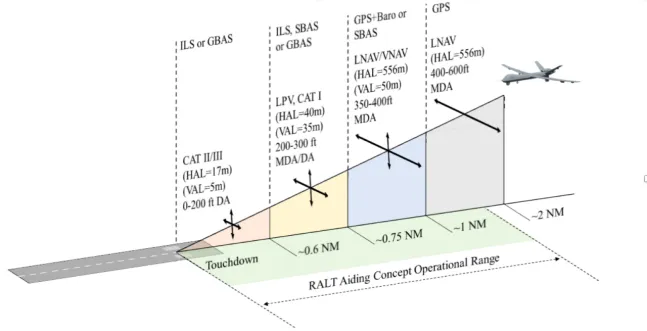
Modern UAV navigation combines global navigation satellite systems (GNSS) with inertial measurement units (IMUs) to overcome standalone GPS limitations such as urban canyon attenuation, jamming susceptibility, and meter-level errors. Techniques like real-time kinematic (RTK) positioning, precise point positioning (PPP), and radar-altimeter augmentation achieve centimeter- to decimeter-level accuracy when fused with MEMS sensors.
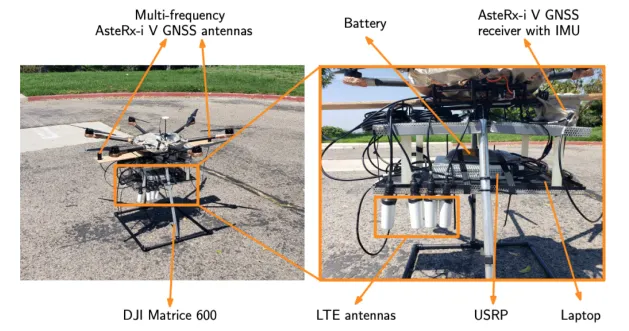
On the PCB, these sensors require careful placement and routing to preserve signal integrity. MEMS gyroscopes and accelerometers generate low-level analog or digital outputs that are highly susceptible to noise coupling from switching power supplies, digital clocks, and RF sections. Controlled-impedance traces, dedicated analog ground planes, and strategic via stitching minimize crosstalk and ground bounce. High-density interconnect (HDI) technology enables compact layouts that integrate GNSS modules, dual-antenna heading solutions, and radar altimeter interfaces within the tight weight and volume constraints of small UAV airframes.
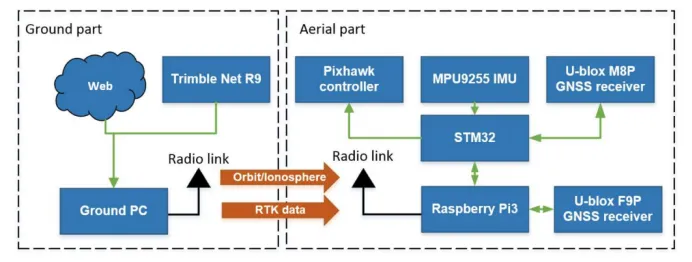
Loose coupling of RTK or PPP corrections with MEMS IMUs further demands synchronized sampling and low-latency data paths. PCBs supporting these architectures typically employ multilayer stack-ups with low-loss dielectrics, optimized copper weights for power distribution, and thermal vias to manage heat from continuous GNSS processing and inertial sensor bias compensation.
Gyroscopes, Inertial Sensors, and Flight Controller Hardware
Gyroscopes provide essential angular rate data for attitude determination (roll, pitch, yaw), while accelerometers measure linear acceleration. Together with magnetometers, barometers, and GNSS, they form the core of inertial navigation and sensor fusion on the flight controller PCB.
The flight controller—often an embedded microcontroller, FPGA, or system-on-chip—executes sensor fusion algorithms and generates actuator commands. PCB design must accommodate high-speed digital interfaces between sensors and the processor while maintaining isolation for analog front-ends. Proper decoupling, shielding cans over sensitive RF or analog sections, and careful power-plane segmentation prevent electromagnetic interference that could corrupt attitude estimates or destabilize control loops.
Material choices such as high-Tg laminates ensure dimensional stability across wide temperature ranges encountered in flight, while surface finishes like ENIG or immersion silver support reliable fine-pitch soldering of MEMS packages and BGA controllers.
Control Algorithms and Their PCB-Level Implementation
Flight control begins with proportional-integral-derivative (PID) loops that translate sensor errors into motor or servo commands. Distinguishing open-loop feedforward from closed-loop feedback is fundamental: the physical plant (motors, airframe) integrates acceleration into velocity and position, while the controller supplies corrective actions based on real-time error signals.
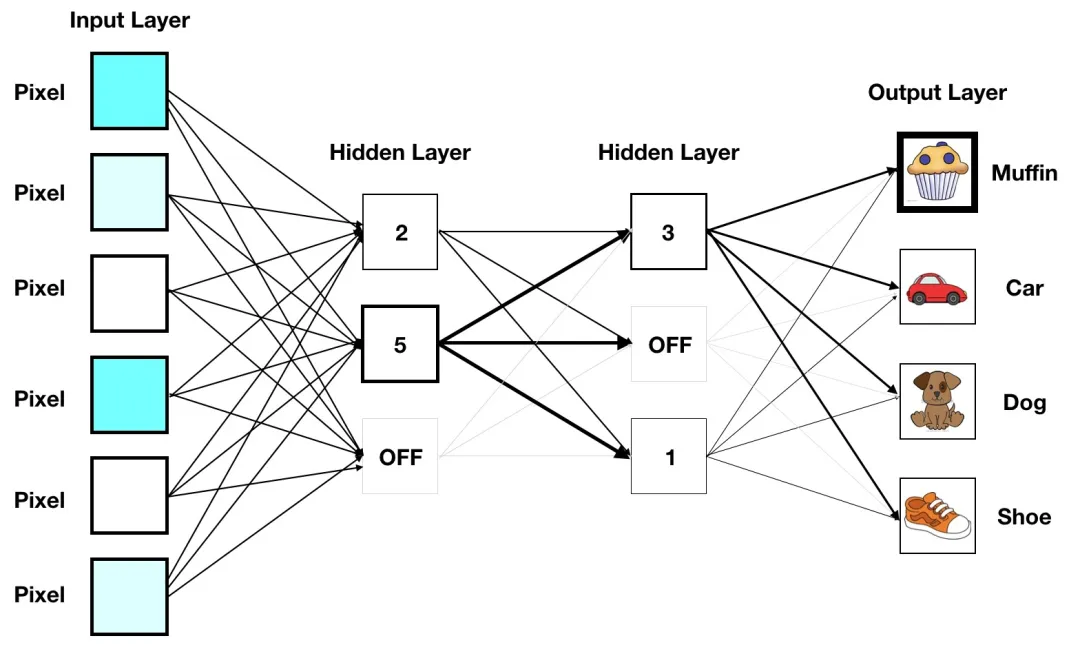
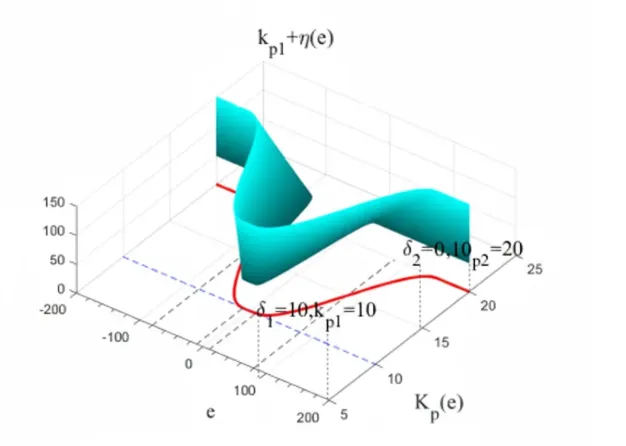
On the PCB, PID implementation requires sufficient computational headroom and deterministic timing. FPGAs or high-performance MCUs benefit from optimized clock distribution and low-jitter oscillators to maintain stable derivative terms. When fixed-gain PID proves insufficient for aggressive maneuvers or payload variations, nonlinear variable-gain (NLVG) PID structures or extremum-seeking adaptive algorithms can be deployed. These advanced controllers increase processing load, necessitating PCBs with enhanced thermal management—such as heavy copper planes, embedded heat spreaders, or metal-core constructions—to sustain performance without throttling.
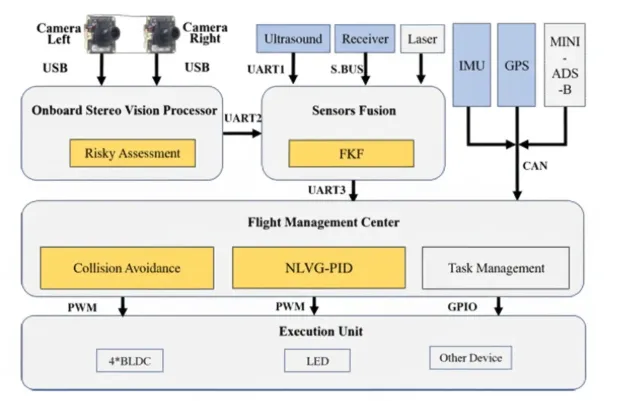
Feedback-based guidance systems, whether for waypoint navigation or obstacle avoidance, further rely on precise analog-to-digital conversion of sensor signals. Layout techniques that minimize loop inductance and provide clean reference voltages are critical for maintaining the accuracy of double-integrating accelerometers and rate gyros used in inertial guidance phases.
Signal Integrity, EMI/EMC, and Reliability in Contested Environments
UAVs operating near jamming sources or in dense electromagnetic environments require robust EMI/EMC performance at the board level. GNSS front-ends demand low-noise amplifiers and bandpass filtering, while control loops must reject conducted and radiated interference from motors and wireless telemetry.
PCB-level countermeasures include:
- Segregated power and signal domains with proper filtering
- Via fencing and ground stitching around RF sections
- Differential signaling for high-speed sensor buses
- Conformal coating and ruggedized laminates for vibration and thermal cycling resistance
Aerospace qualification further drives the use of controlled-expansion materials, outgassing-compliant laminates, and rigorous testing for shock, vibration, and thermal shock. These requirements directly influence stack-up design, via aspect ratios, and copper thickness selection during manufacturing.
Cross-industry parallels in automotive ADAS and industrial robotics validate similar approaches: sensor fusion PCBs in those domains also prioritize signal integrity, thermal performance, and long-term reliability under dynamic conditions.
Manufacturing Considerations for UAV Flight Electronics
Producing PCBs for UAV navigation and control systems requires specialized capabilities:
- High-mix, low-to-medium volume production with tight tolerances for impedance control
- Advanced drilling and via-in-pad technology for compact HDI designs
- Automated optical inspection and electrical testing to verify sensor interface integrity
- Traceability and documentation meeting aerospace quality standards
Future evolution toward reinforcement learning, deep-learning-based perception, and heterogeneous swarm coordination will increase onboard computational density, further emphasizing the need for advanced 3D packaging, embedded components, and high-reliability interconnects.
Conclusion
UAV navigation, positioning, and flight control systems achieve their required precision and autonomy through sophisticated sensor fusion and adaptive algorithms whose performance is fundamentally limited by PCB design and manufacturing quality. By optimizing layout for signal integrity, selecting appropriate materials for thermal and mechanical stability, and applying rigorous fabrication processes, PCB manufacturers directly enable the reliable operation of these systems in demanding aerospace applications. As control architectures continue to advance, the ability to deliver high-density, low-noise, ruggedized boards at scale remains central to unlocking greater UAV capability and mission effectiveness.