In 2023 the broader environment was turbulent, but technology trends continued to advance.
Large language models expanded AI applications, spatial computing gained attention with Vision Pro, electric vehicles continued closing the gap with internal combustion cars, and smartphones saw intense innovation. New hardware platforms emerged, HarmonyOS continued to grow, and AI chips advanced device capabilities. Overall, 2023 saw many significant events in the technology industry.
If counted from the re-release of the Samsung Galaxy Fold, foldable phones have existed for about four years. In terms of sales, foldables remain a niche segment, but the rapid growth over the past four years is notable.
Part of that growth is attributable to a small starting base, yet the continuous expansion of a category with prices around 10,000 RMB implies real consumer acceptance.
In 2023 foldable phones reached a new stage: thinner bodies, stable price ranges, and more mature product thinking all laid the groundwork for broader adoption.
With that in mind, it is useful to review the foldable phones released this year.
Vertical clamshells became the new mainstream
In 2023 the vertical-fold clamshell form factor expanded beyond Motorola, Samsung, and Huawei. Samsung demonstrated the market appeal of small foldables with the Flip series, but for some time Chinese smartphone manufacturers emphasized larger horizontal-fold models that offer more differentiated experiences rather than the higher-selling small clamshells.
That shifted this year as OPPO, vivo, and Transsion all introduced small clamshells, and Honor is expected to follow next year.
OPPO Find N2/N3 Flip
OPPO's first small foldable, the Find N2 Flip, went on sale on December 30 and generated strong sales, contributing to a year-over-year increase of over 300% in OPPO's foldable shipments. With a 28.4% market share it surpassed Huawei to lead the segment.
According to Counterpoint data, from January to May 2023 the Find N2 Flip held a 14.8% sales share and was the best-selling foldable in the first half of the year; its sales were roughly 50% higher than the Huawei Mate X3.
On August 29 OPPO followed with the Find N3 Flip, which continued to target female users, increased the outer-screen size and interaction capabilities, and strengthened imaging performance.
vivo X Flip
Earlier in late April vivo released the X Flip, which pushed the outer-screen "large screen" trend. As noted in reviews: "What makes the vivo X Flip stand out is the many possibilities the vertical-fold form brings."
Most clamshells had treated the outer display as a notification-only surface. The vivo X Flip uses a larger landscape outer screen and adapted more than 30 common apps, including WeChat, Xiaohongshu, and map apps, elevating the outer screen from "usable" to "practical."
Because the outer screen supports specific apps, it can also be a power-saving fallback: with 10% battery remaining the vivo X Flip advertises up to 10 hours of outer-screen standby for emergency use.
Transsion Phantom V Flip
In late September Transsion, known for its strong presence in Africa, entered the small clamshell market with the Phantom V Flip.
Compared with other vendors, the Phantom V Flip offered few standout features, but one notable element was its ring-shaped camera module and a circular outer screen inside the ring, which provided a distinct visual design and interaction approach. Pricing was another factor: at 49,999 Indian rupees (about 4,395 RMB at the time) the device was not particularly compelling for consumers in the Chinese market.
Samsung Galaxy Z Flip 5 and Motorola razr 40/40 Ultra
As the established leader in foldables, Samsung introduced the Galaxy Z Flip 5 in August, following the outer-screen enlargement trend and employing an irregular screen that almost covers the entire outer display.
Similarly, the Motorola razr 40 Ultra uses a nearly full-coverage punch-hole outer screen. However, unlike full-screen phones, the small outer display combined with a large camera module means the punch-hole design can more noticeably affect visual balance. Higher adaptation costs and camera placement may obstruct app content and reduce practical usability.
Android pushes large-screen foldables; software iteration continues
While several mainstream vendors launched small clamshells and are operating dual product lines, other manufacturers entered the foldable market as well. The most representative example from the Android ecosystem was Google’s Pixel Fold.
Google Pixel Fold
On May 10, Google unveiled the Pixel Fold at I/O. The device adopts a relatively short-and-wide screen/body ratio similar to the OPPO Find N series: unfolded it presents a 7.6-inch inner display with a 6:5 aspect ratio, and folded it becomes 17.4:9.
Design language follows the Pixel series and the hardware is flagship-class, but the critical advantage lies in software support. As the steward of Android, Google implemented foldable application adaptations and used its influence within the Android ecosystem and global market to encourage major internet companies and developers to optimize for foldables.
Transsion Phantom V Fold
Transsion also released a large foldable in mid-April, launching the Phantom V Fold in India at 100,000 Indian rupees (about 8,400 RMB at the time), making it the least expensive large foldable available then. The product’s highlights were limited, with a Dimensity 9000+ SoC and a 7.65-inch 2K inner display supporting up to 120Hz variable refresh.
vivo X Fold2, OPPO Find N3, Xiaomi MIX Fold 3
vivo, OPPO, and Xiaomi focused on incremental improvements across their foldable portfolios.
The vivo X Fold2, released in April, prioritized delivering an overall flagship-level experience while optimizing the foldable form for usability, for example by reducing thickness for a better grip.
If vivo's strategy was "flagship first, foldable second," Xiaomi leaned the other way: "foldable first, flagship next."
In mid-August Xiaomi launched the MIX Fold 3, introducing flagship imaging hardware, adding features like hover support, and maintaining a relatively thin body—an important advancement for the MIX Fold line.
OPPO’s Find N3, released in October, also emphasized improvements in imaging. The Find N3 became taller, with its height increasing from 132.2 mm to 153.4 mm, folded width from 72.6 mm to 73.3 mm, and folded thickness reduced from 7.4 mm to 6 mm. However, these changes also increased the weight: the glass version rose from 237 g to 245 g.
Honor: Magic V2, Magic Vs2, V Purse
Weight and thickness have been major obstacles for foldable adoption, but recent years have seen significant reductions. Some manufacturers prioritized other improvements while Honor continued to pursue extreme lightness.
With the Magic V2 in July, Honor reduced folded thickness to 9.9 mm. In October's Magic Vs2 the company further reduced weight from 231 g to 229 g, with a folded thickness of 10.8 mm.
The trade-offs included a non-metal middle frame at flagship price points and comparatively weaker imaging capabilities. The V Purse, which uses an outward-fold design, targets a "large-screen fashion" segment aimed at design-conscious female buyers. Whether V Purse will resonate with that audience and how large that market is remain uncertain.
Samsung Galaxy Z Fold 5, Huawei Mate X3 and X5
Over the past four years the foldable market evolved continuously, but Samsung remained the global leader while Huawei continued to lead in the Chinese market. In 2023 both companies largely pursued steady iteration.
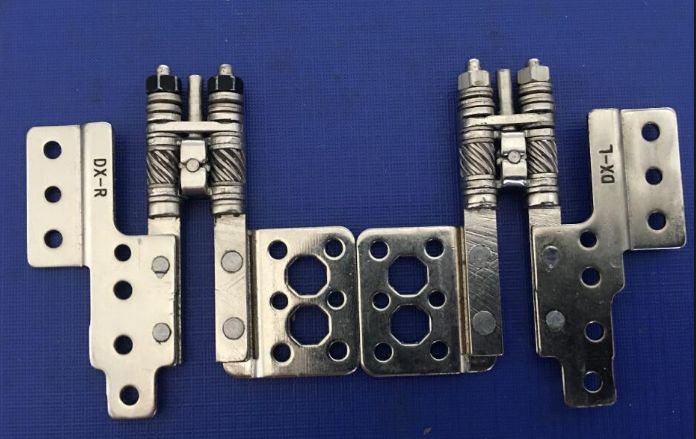
Samsung released the Galaxy Z Fold 5 on July 26 as a routine upgrade. One notable change was adopting a mainstream water-drop hinge design while maintaining water and dust resistance.
Huawei similarly achieved an IPX8 water resistance rating with the Mate X3 using a water-drop hinge, a capability many foldable vendors have not yet delivered. The Mate X5’s most significant change was the inclusion of Huawei’s self-developed Kirin SoC, restoring support for 5G in that product line.
Conclusion
Smartphone form factors are now highly mature. Beyond routine upgrades, most brands focus on imaging improvements, while foldables remain the most innovative smartphone form available. Foldables respond to an existing user demand for larger portable screens rather than a contrived need.
In 2023 foldable phones did not achieve a single qualitative leap, but they moved closer to a pivotal point between incremental and transformative change. Even small advances have practical value, and the improvements made this year will translate into better foldable experiences for a growing number of users.