The article "Inside Huawei’s Mate 60 Pro phone – beyond the AP SoC" reveals several useful technical findings. In laboratory tests using a radio communication tester, the phone demonstrated 5G capability and appears to use a modem that is likely 100% China-made, a configuration not previously seen in this combination.
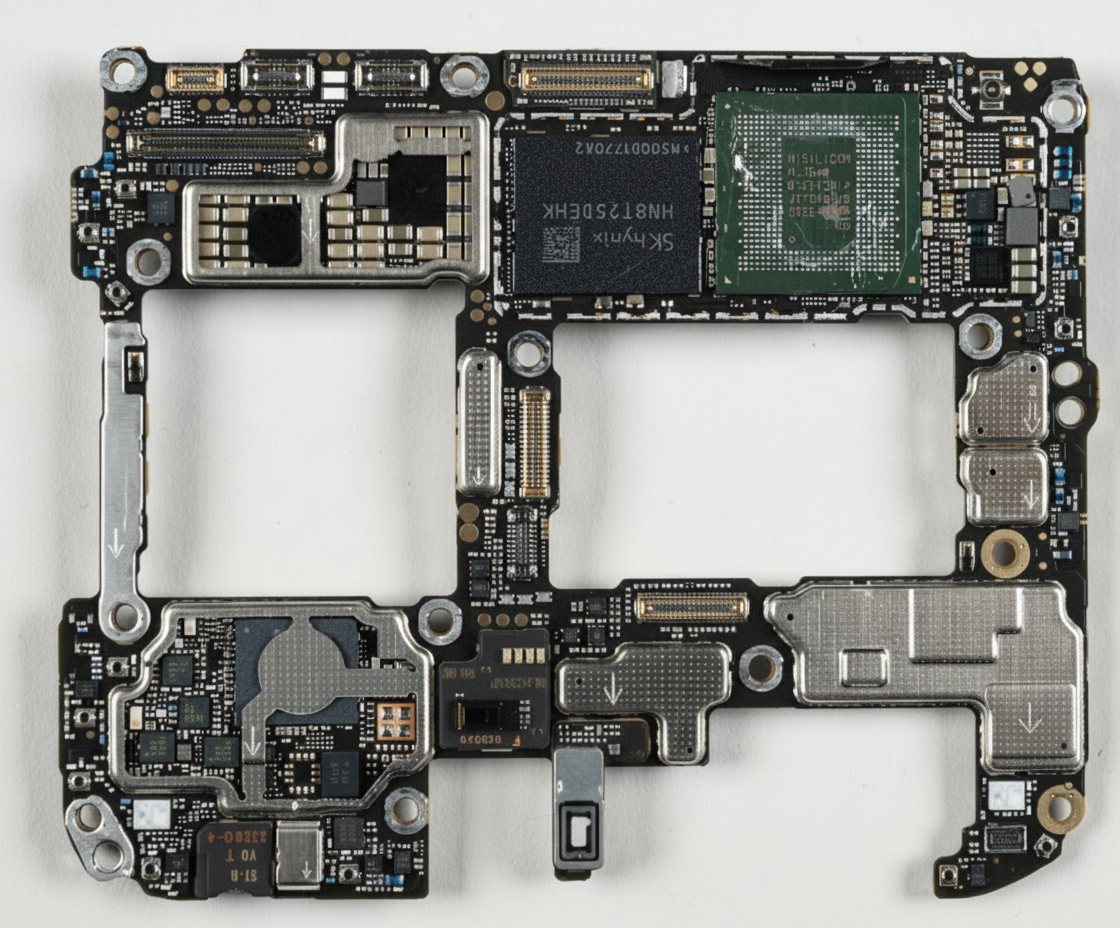
Teardown: main board
5G capability testing
Laboratory testing of the Huawei Mate 60 Pro using a radio communication tester evaluated its 5G performance. The modem was found to support only 3GPP Release 15, whereas most new phones as of late 2023 support Release 17. Unless a firmware update is provided, the Mate 60 Pro modem will not be compatible with Release 17 features, which may also affect the RF front end (RF FE) design. Compared with leading smartphones from 2023, this implementation may lag in some areas. Notably, the modem through to the RF front-end antennas and radio appears to be almost entirely China-made, which is unprecedented in this combination.
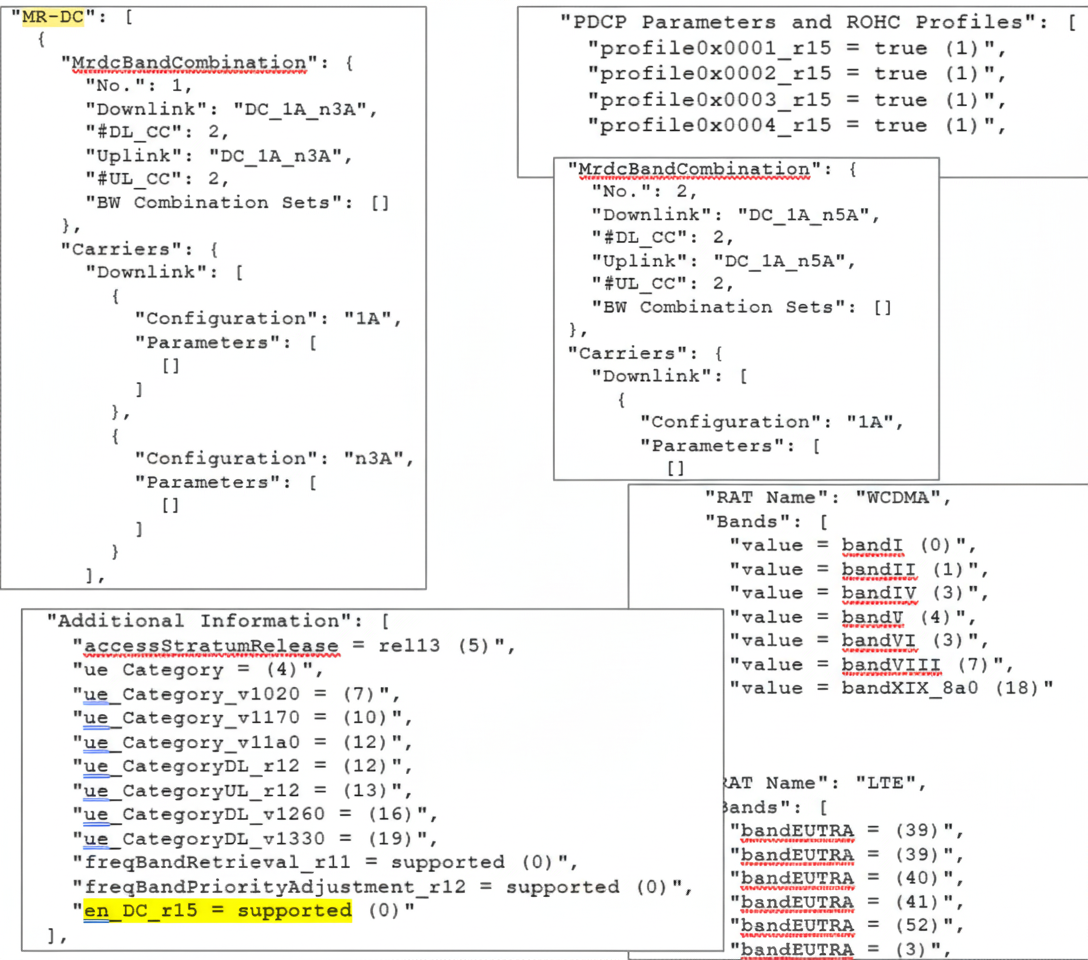
5G performance tests were performed using a Rohde & Schwarz CMW/CMX500 BTS emulator. Results show the device operates at 3GPP Rel.15. The RF front end appears to be designed and manufactured using China-made components.
Air interface — RF front end (RF FE)
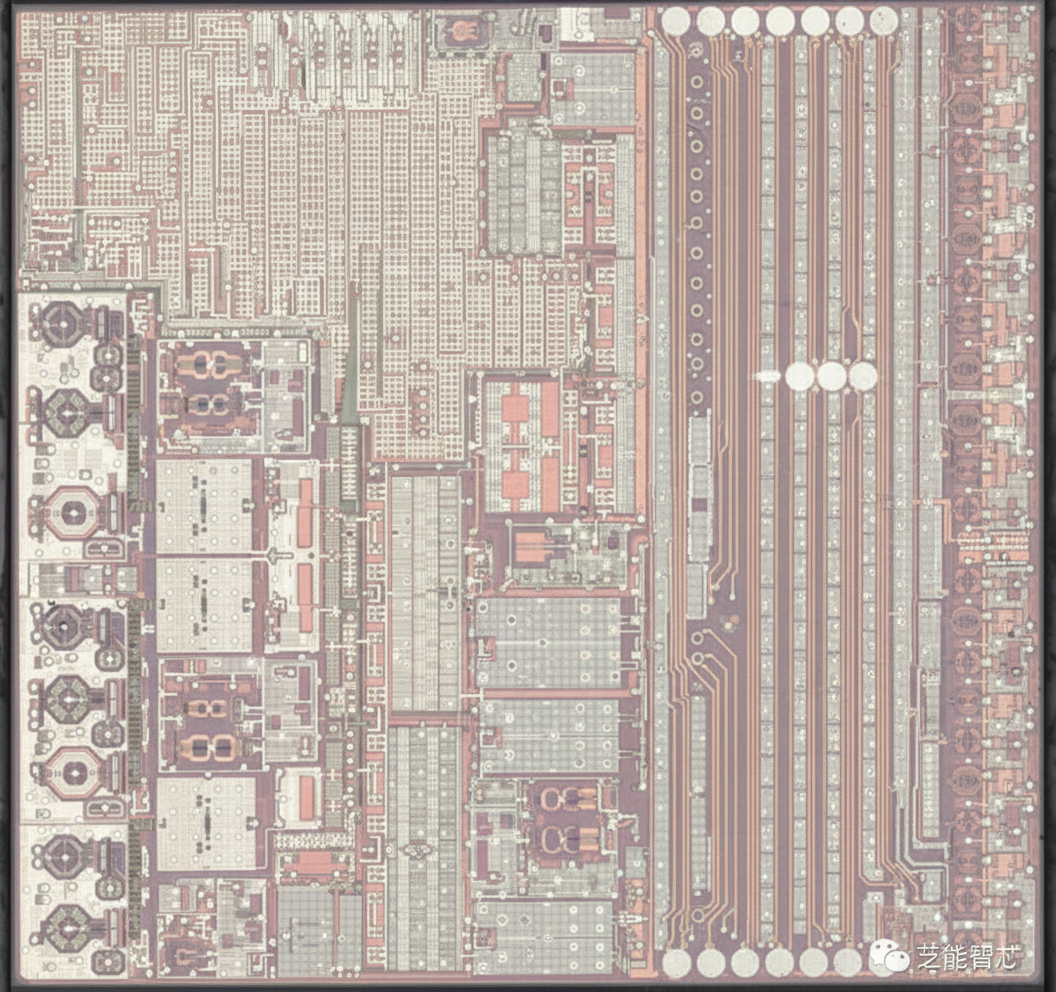
The Mate 60 Pro's RF front end appears to be constructed entirely from China-made components. This includes new power amplifier (PA) modules from suppliers such as OnMicro. The transmit and receive paths use China-made system-in-package (SiP) modules and RF integrated circuits (RFICs), including SAW filters, indicating a high level of integration and a compact overall design.
The phone uses only four RF FE SiP variants, which may indicate limitations in frequency-band combinations and carrier aggregation (CA), consistent with 3GPP Release 15 requirements. A new FR1 XCVR was introduced, supporting MIMO and 5G bands n41, n78, and n79 (UHB). This China-produced FR1 transceiver is relatively uncommon and appears in variants associated with Unisoc, which suggests it could be an evolution of HiSilicon Hi6365 design. Recently introduced signal trackers (ET/APT) also play a key role in this RF architecture.
Two-way satellite communication
The Mate 60 Pro offers two-way voice and data satellite communication, a novel capability in mainstream smartphones. This functionality is not compatible with 5G 3GPP non-terrestrial networks (NTN) as defined in Rel.17; the device is designated as a "satellite mobile device" rather than a standard "digital phone," reflecting its satellite-focused feature set.
Two hardware approaches exist: a single combined device integrating baseband (BB) and transceiver (XCVR) ICs, and a two-chip solution in certain model variants (separate BB IC and RF XCVR IC).
The satellite service connects to the Tiantong-1 satellite network operated by China Telecom and is limited to China Telecom SIM cards. By contrast, some other platforms, such as the Qualcomm Snapdragon 8 Gen 2 SoC, include dedicated hardware and processors for similar functions that are not integrated into the baseband and therefore appear as additional components.
NFC SoC
Preliminary evaluation of the near-field communication (NFC) SoC indicates a China-made solution rather than widely used options from NXP, STMicroelectronics, or Infineon. The Mate 60 Pro incorporates distinct NFC technical elements compared with those traditional suppliers.
Power and battery
The battery model used is ATL HB507181EHW-11, similar to the one in the Honor Magic Pro 5 but with slightly lower energy density (296 Wh/kg versus 306 Wh/kg). The Honor device uses a pure graphite anode rather than a graphite and silicon-oxide blend. The wireless charging solution is built around China-made ICs, and the power management IC (PMIC) appears consistent with previously observed HiSilicon devices.
Other features
Support for certain 5G network-specific features is limited to those affected in 3GPP Release 15. The available RF bandwidth and resulting data rate/throughput are limited to 100 MHz, compared with Release 17 implementations that can aggregate up to 320 MHz. Support is limited or absent for several advanced features, including cellular IoT enhancements, 5G positioning services, integrated access and backhaul (IAB), advanced 5G vehicle communication (V2X), 5G NR in unlicensed spectrum (LAA-like access without listen-before-talk), dynamic spectrum sharing, improvements for industrial IoT and uRLLC (time-sensitive networking is not supported), and the more advanced network slicing functions associated with standalone deployments. As a result, the device appears constrained to non-standalone connections that require a 4G anchor for control and uplink.
Summary
Internal analysis of the Huawei Mate 60 Pro reveals several technical innovations, particularly in 5G RF design and satellite communication, and demonstrates advances in China-based component integration. The device also shows limitations tied to its 3GPP Rel.15 implementation, which could be addressed in future revisions.