Overview
Although the Huawei Mate 60 Pro recently attracted attention in the smartphone market and influenced the high-end segment, the iPhone 15 series has also generated significant discussion. This article is a translation of a comprehensive teardown by the U.S. teardown site iFixit, focusing primarily on the iPhone 15 Pro Max with notes on other models. The iPhone 15 introduces a new charging port, a titanium frame, a periscope lens, and a revised repair-oriented internal design.
Design and Internal Architecture
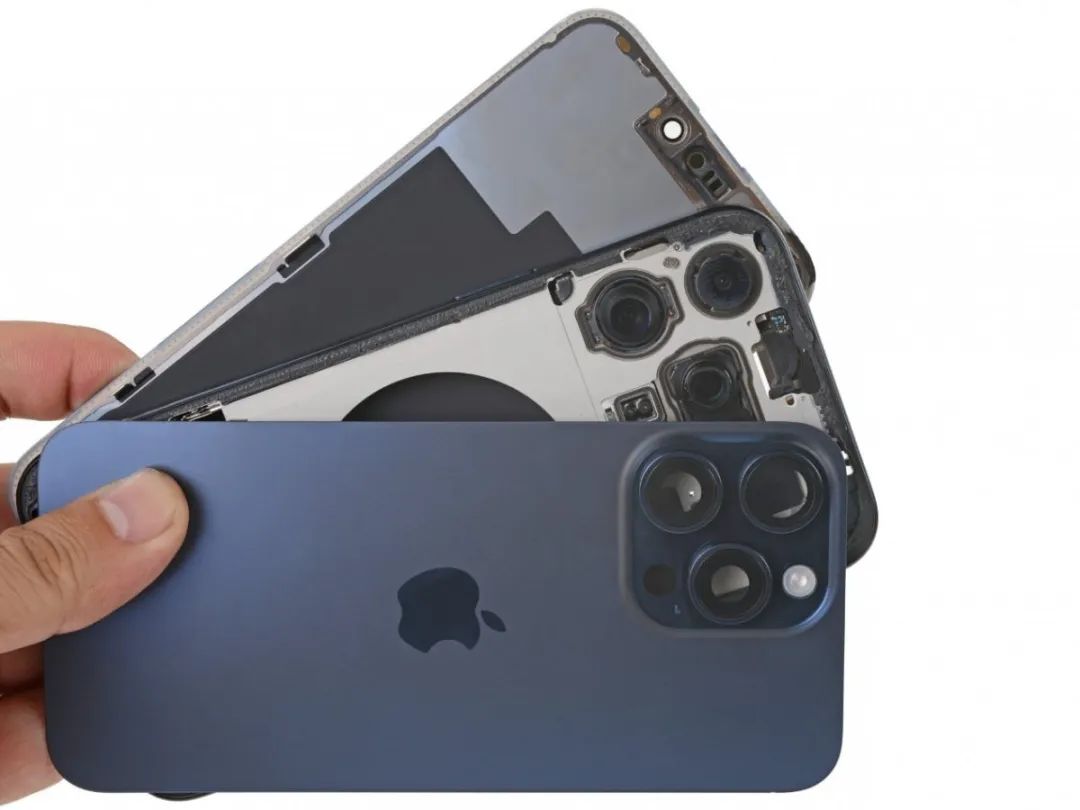
For years, smartphones were either opened from the front (making battery replacement difficult) or from the back (making screen replacement difficult). Apple addressed this on the standard iPhone 14 by enabling access from both front and back, which improved serviceability. The iPhone 15 and 15 Plus inherit that advance. The internal components remain mounted on a central midframe. The iPhone 15 Pro and Pro Max can also be opened from both directions, but in an inverted arrangement: internal structures are accessed primarily from behind the display rather than via the rear glass, although the rear glass is removable as on the iPhone 14.
This inverted layout increases the risk for repairs like battery replacement compared with the iPhone 14 because technicians must remove the expensive and fragile display rather than the rear glass. To access the battery and other components, the display must be heated and pried open, which raises the likelihood of damaging display cables. If a cable tears, it is preferable to sever a rear cover cable rather than damage the display. The iPhone 14 arrangement is slightly more repair-tolerant, but both are generally improved designs.
Source: iFixit
The display gasket around the screen is still present but its color has changed from black to white; the underlying design differs slightly from previous phones, and some technicians report it is marginally harder to separate from the frame. Many components in the iPhone 15 series use a modular approach; for example, the microphone is now a separate replaceable module.
USB-C
Apple's switch to USB-C followed regulatory pressure from European requirements for a common connector. The change brings compatibility benefits and increased accessory power output: the new USB-C port can supply up to 4.5 W to external devices, compared with about 0.3 W from the previous Lightning connector.
There were two major rumors about the new charging port. One rumor claimed the port would be serialized and locked to the mainboard, preventing independent replacement; inspection shows the ports can be swapped between devices while retaining full functionality. The other rumor suggested Apple would limit USB-C transfer rates on iPhone. That is not the case for A17-based Pro models: the A17 SoC integrates a USB 3 controller capable of USB 3.2 Gen 2 10 Gbps speeds. Non-Pro iPhone 15 models, which use the A16 Bionic, retain USB 2 speed parity with previous Lightning-equipped devices.
Batteries
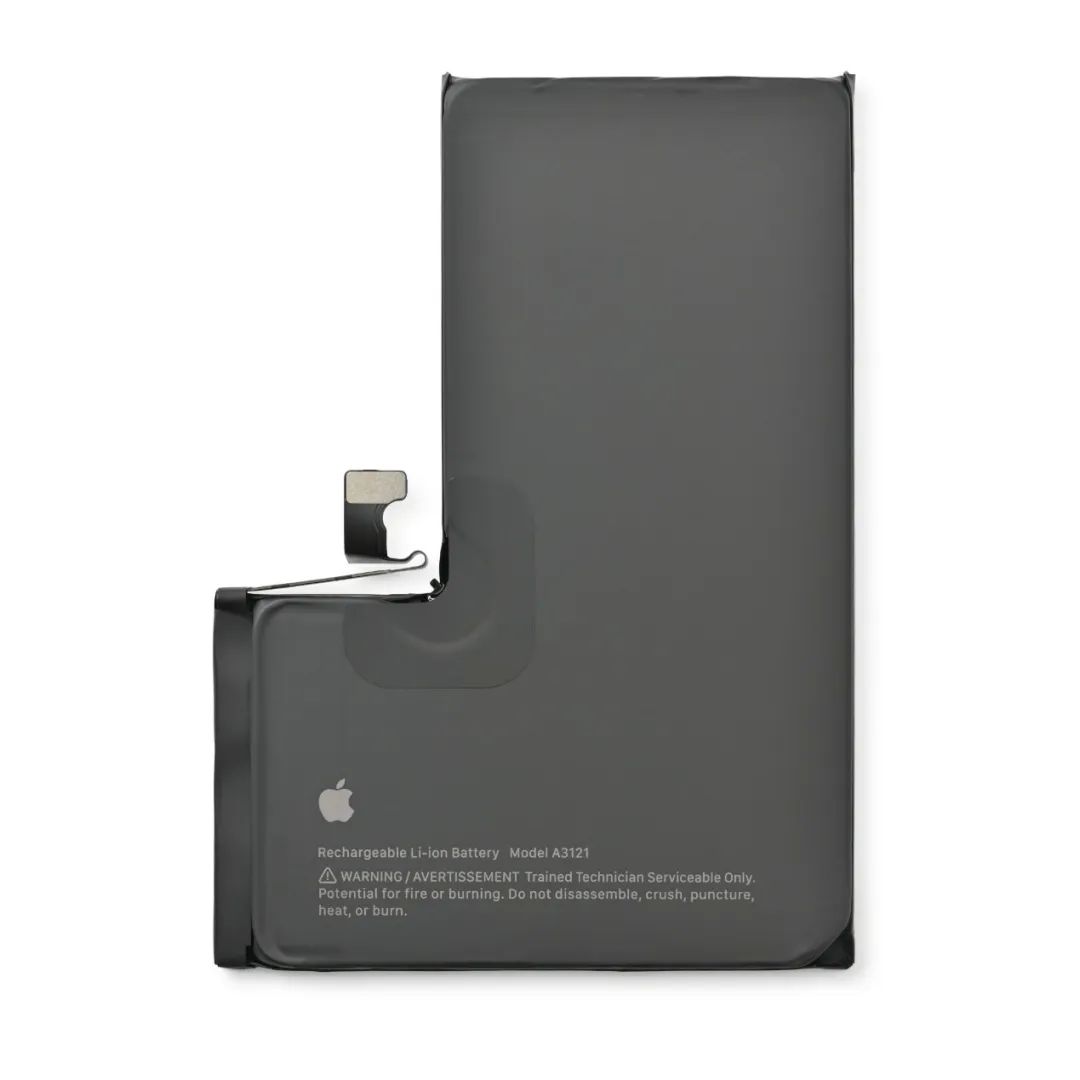
The iPhone 15 Pro Max battery measures 4422 mAh, up 2.3% from the iPhone 14 Pro Max's 4323 mAh. The iPhone 15 Pro battery is 3274 mAh, up 2.3% from the iPhone 14 Pro's 3200 mAh. Overall capacity gains are modest. That is notable because the A17 Pro SoC is relatively power-hungry; there have been reports of increased device heat and reduced battery life under heavy workloads.
Source: iFixit
Titanium Frame
The iPhone 15 Pro Max weighs 221 g, which Apple reports is 19 g lighter than the 14 Pro Max. Apple reduced frame mass by switching from stainless steel to a titanium outer chassis while retaining an aluminum midframe for mechanical complexity and component mounting. The titanium outer band is bonded to a new lower structure made from 100% recycled aluminum using a high-temperature mechanical process that appears to be solid-state diffusion bonding, producing a high-strength metal-to-metal bond.
Diffusion bonding involves heating dissimilar metals and pressing them together under very high force in a vacuum, typically at elevated temperatures. The process is complex and expensive, and is typically used for aerospace parts rather than high-volume consumer metal frames. There are recycling implications: recyclers typically handle steel and aluminum but may not process titanium; if titanium enters aluminum shredders, it can damage equipment. Titanium is hard and scratch-resistant, but coatings on titanium can be readily scratched.
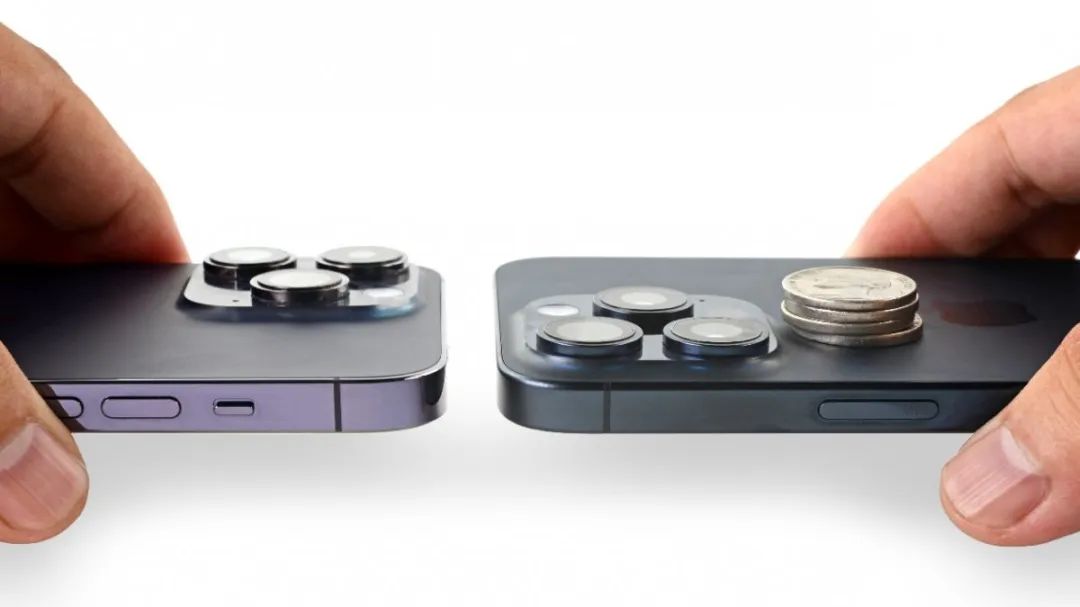
Source: iFixit
Electronic Components
Teardown confirms Apple is using Qualcomm's high-end Snapdragon X70 modem in these models; Qualcomm states the X70 includes AI-assisted beam management and antenna tuning. The Apple A17 Pro is a six-core application processor paired with a six-core GPU, likely located above SK Hynix DDR5 memory. The A17 Pro die is produced on TSMC's 3 nm process node, a leading-edge manufacturing step with constrained initial capacity and high cost.
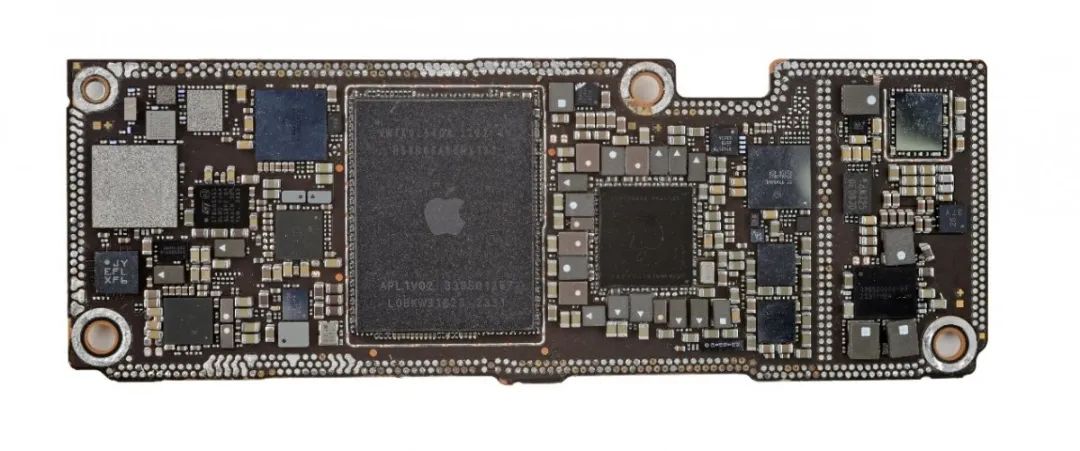
Source: iFixit
Camera System
The most notable camera upgrade is a "four-prism" periscope lens that extends optical zoom from roughly 2x to 5x. The term "four-prism" appears to be marketing nomenclature for the multi-element folded optical path used in the periscope module. Instead of moving multiple lens elements with voice-coil motors, Apple designed a compact periscope unit that reflects light multiple times to mimic a longer focal length within the thin smartphone form factor.
Aside from the periscope telephoto, the main and ultrawide sensors on the iPhone 15 Pro Max appear to be the same physical sizes as those on the 14 Pro Max, which suggests some image-quality gains may stem from A17 Pro image processing rather than larger sensors. A teardown also revealed the camera mounting screws are substantially larger than on prior models.
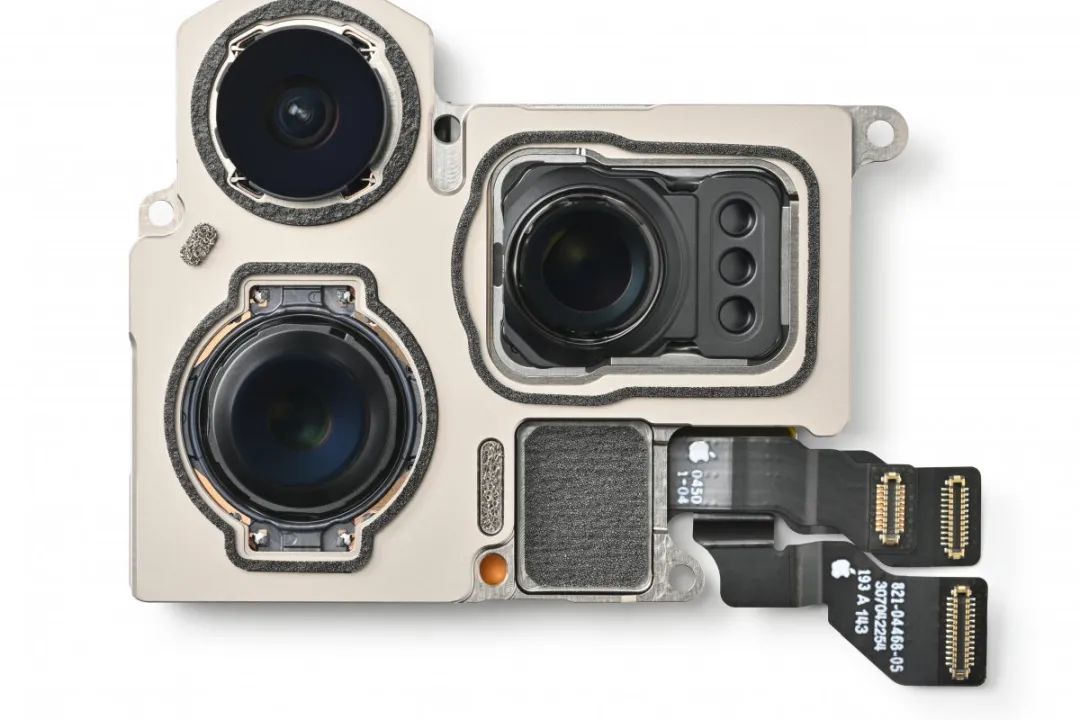
Source: iFixit
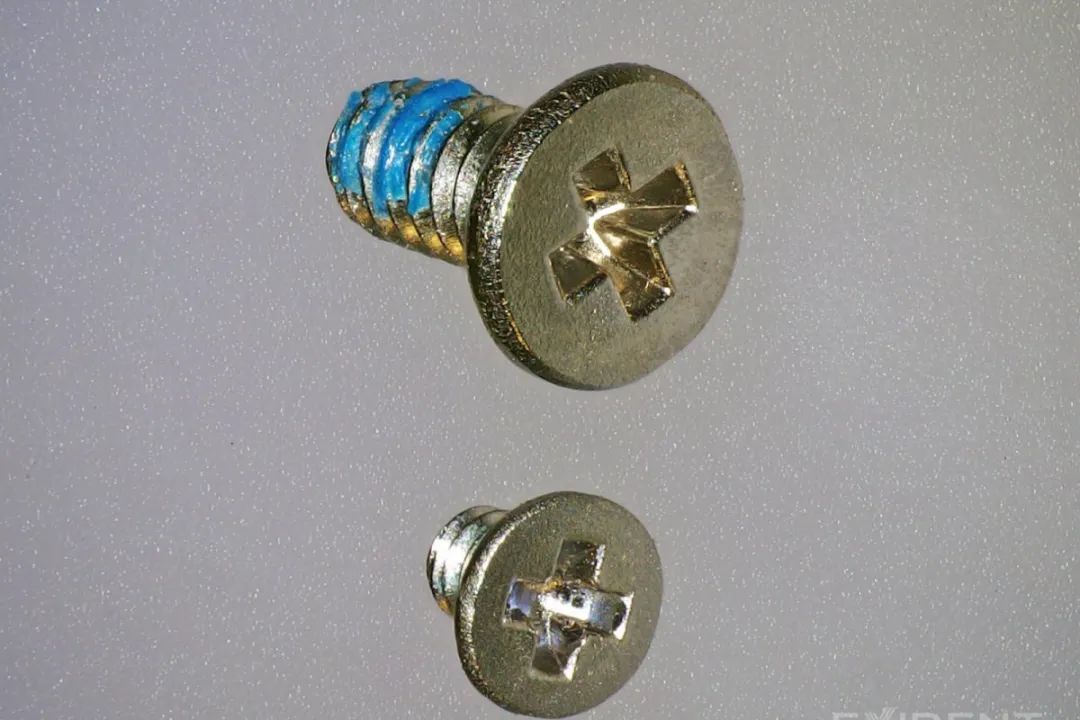
iPhone 15 camera screw (top); iPhone 14 camera screw (bottom). Source: iFixit
Part Pairing and Repair Restrictions
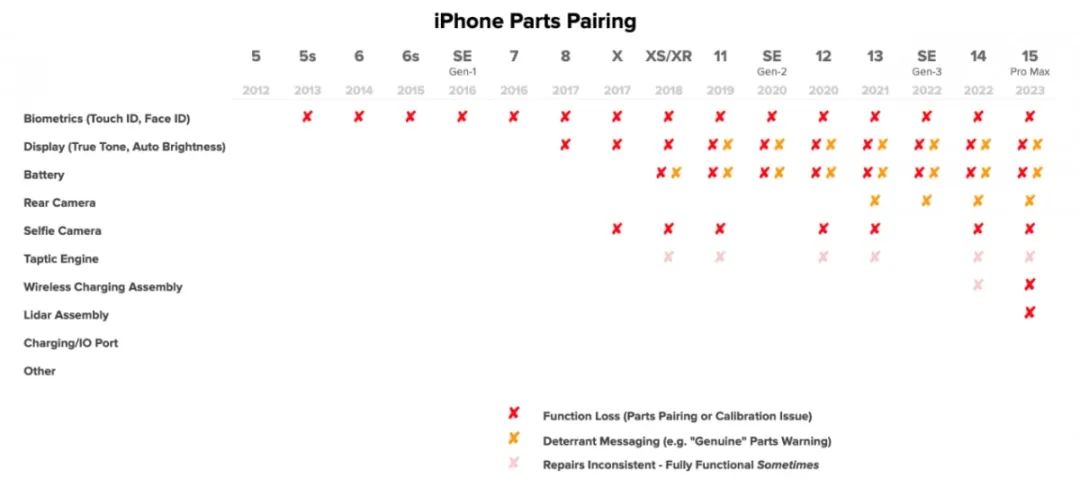
Although many components are modular, iFixit found part-pairing and software verification restrict replacements. Swapping certain modules between identical iPhone 15 Pro Max units caused camera instability and crashes. The behavior reproduced when replacing the LiDAR module between two iPhone 15 Pro Max units: the Camera app would initially load and then crash repeatedly. These findings indicate components require verification and pairing through Apple's configuration tools to operate fully. Without software pairing, parts may not function, function with reduced capability, or trigger persistent warnings.
Such pairing extends beyond mechanical compatibility and requires Apple system-level verification, which affects independent repair providers and has implications for electronic waste handling. Similar software-based restrictions have been observed on other Apple platforms, tightening repair options and increasing dependence on manufacturer-supported servicing.
Source: iFixit
Repairability
iFixit assigned the iPhone 15 Pro Max, iPhone 15 Pro, iPhone 15 Plus, and iPhone 15 a repairability score of 4. This score is preliminary and includes anticipated availability of service manuals and replacement parts, which Apple has not yet fully published but is expected to provide. Software-based restrictions on component replacement significantly reduce practical repairability; parts may require Apple verification to operate properly. These constraints limit independent repair options and affect device lifecycle management.