Introduction: materials and historical context
Since the Bronze Age, humans have advanced metalworking into a defining technology. Different metals and nonmetal elements have been combined and processed by casting, forging, welding, cutting, and additive manufacturing to produce the alloys that define each era. These techniques created equipment ranging from boilers and internal combustion engines to robotic arms, rocket nozzles, and submarine hulls.
For consumer electronics, materials such as the 7075 series aluminum alloy, often marketed as "aircraft-grade aluminum," are widely used in phones. Tensile strength for 7075 can reach around 570 MPa, with yield strength near 500 MPa. That strength helps prevent pocket-induced bending, though stronger steels exist in other industries; for example, hot-formed steels used in automobiles often exceed 1300 MPa for occupant protection.
Consumers can also encounter even higher-strength metals. In Huawei's Mate X5 foldable phone, some specialty steels used in the hinge achieve yield strengths of about 2200 MPa, among the highest that have been produced at scale.
Why foldables attract advanced materials and engineering
Foldable phones have become a key growth area in the smartphone industry, prompting manufacturers to explore high-performance steels, aluminum, titanium, and carbon fiber to meet competing design goals. One reason is that foldables offer larger displays and novel form factors, delivering practical benefits and new social signaling that have driven rapid adoption. For example, according to a recent IDC report, foldable phone shipments in the first half of this year in China reached 2.27 million units, a year-over-year increase of 102%.
Huawei has been a leading brand in China’s foldable segment. Fueled by the distribution and strong sales of Mate X3, Huawei achieved a 43% share of the Chinese foldable phone market in the second quarter.
Price changes have also broadened foldable adoption. IDC notes that more vertical-fold products entered lower price bands (around $400 to $600), and material cost reductions have made foldables more accessible. The share of foldables priced above $1,000 fell from 92.8% in Q2 last year to 54.6% this year.
Huawei’s dominance is particularly notable in the high-end segment. CINNO Research data show that in the first half of this year in China, Huawei accounted for 50% of foldable shipments priced above 10,000 RMB.
Huawei’s position in the high end is linked to product presentation—thinness and all-around capability—rooted in substantial technological investment. On the Mate X5, Huawei continues pursuing a technology-driven approach to foldable design.
Design priorities: thinness and all-around capability
Foldable phone development is a process of addressing design trade-offs and eliminating early-generation shortcomings. Different manufacturers prioritized different aspects such as thinness, unique dimensions, full flagship feature sets, or affordability. Successful progress requires correctly prioritizing trade-offs and applying appropriate technical solutions at the right time.
The fundamental requirement for a foldable is reliable folding. Early flexible displays existed years ago, but full product solutions were immature, leading to many design variations: Samsung’s inward fold, Huawei’s outward fold, and wide hinges from other manufacturers. Beyond making a screen bendable, products had to solve issues such as fold lifetime, crease visibility, and scratch resistance. Addressing those problems required innovations in materials and processes; examples include the dual-rotation waterdrop hinge introduced by Huawei for crease reduction in inward-fold designs, and Samsung’s early use of ultra-thin glass to improve fragility.
From merely being foldable to being usable, foldable phones advanced slowly. Above basic usability, delivering an experience comparable to straight-screen flagship phones became the next objective. A conceptual hierarchy for foldable phone requirements shows many layers of demand, with foundational requirements often harder to solve but crucial for wider adoption.
Huawei’s strategy for achieving both thinness and all-around capability on devices like the Mate X3 and Mate X5 includes multiple engineering levers.
First, thinness. Consumers perceive thinness as a premium attribute. Both Mate X3 and X5 achieve extremes such as a 5.3 mm unfolded thickness, 11.08 mm folded thickness, and roughly 240 g weight—nearly comparable to straight smartphones. Structural optimizations contribute to this: Huawei designed an ultra-thin Type-C module that integrates the connector with the chassis to under 2 mm thickness. The waterdrop hinge, further refined on Mate X3 and X5, reduces hinge volume and frees space for curved glass, enabling the Mate X5’s four-curved folding body design.
Second, materials innovation. Compared with structural design, material advances tend to be more difficult. Huawei developed an ultralight aluminum composite inspired by a silicon carbide particle-reinforced composite used in the Chang'e 5 lunar probe. The composite achieves about 0.2 mm thickness, offering higher strength and lower weight than many high-performance titanium alloys, together with good thermal conductivity for heat dissipation. That composite serves as ideal structural material for foldable components and supports aggressive weight reduction.
The "all-around" expectation for a foldable is that it should not lack any key experience compared with straight-screen flagship phones. For example, wireless charging poses a challenge because coil and heat-spreader thicknesses can compromise thinness. Mate X5 supports 50 W wireless fast charging based on a paper-thin coil, high-permeability nanocrystalline materials, and an integrated graphene heat spreader.
Through material and structural optimization, Mate X5 supports a large 5060 mAh battery while maintaining thinness.
Another often overlooked improvement comes from antenna design. The two-layer folding geometry creates inherent antenna occlusion. Huawei optimized the signal architecture for foldables with what it calls Lingxi Communication. The Lingxi antenna, first introduced on Mate X3, addressed folding-related signal attenuation and achieved signal strength in folded or held states comparable to straight-screen flagships. Mate X5 further enhances sensitivity. It also includes Lingxi AI algorithms that select the best cellular network based on scenario. In weak-signal or congested areas, the phone can switch to better networks more intelligently. For example, in an elevator, the phone can enter a search mode and reconnect as soon as doors open; on high-speed rail, a dedicated optimization mode helps select appropriate base stations for continuous connectivity.
Many former objections to buying foldables have been reduced by such iterative improvements. Thinness plus comprehensive capability is an expected direction for foldable development.
Reliability and long-term durability
With longer phone replacement cycles—market studies project averages near 43 months—consumers expect durable devices. For foldables, durability concerns have been an adoption barrier due to historical issues: permanent crease marks, display anomalies, plastic-like screen surfaces susceptible to tearing, and lack of water resistance. Building consumer trust requires consistent generational improvements validated by users.
Huawei’s Mate X5 has potential to address many durability concerns. Huawei’s phone portfolio has long emphasized reliability, and the Mate X5 targets comprehensive durability for a foldable flagship.
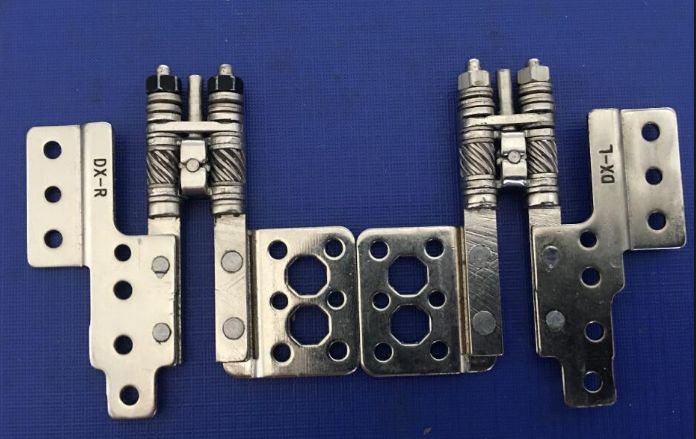
Improving reliability is technically challenging and typically depends on materials and processes. The 2200 MPa ultra-high-strength steel mentioned earlier is used in the Mate X5 hinge and resulted from advanced ultra-clean high-strength steel processing developed in Huawei’s materials laboratory. That team previously produced 1500 MPa steels used in earlier hinge structures. On the Mate X5, the higher-strength steel supports a new-generation waterdrop hinge that balances thinness, reliability, flatness, and stable hovering behavior while precise hinge-curve design improves opening and closing feel.
Moving mechanical designs introduces a central problem: water resistance. Mate X5 attains IPX8-level water resistance for a thin, large-screen foldable by zoning ingress control. Regions that must remain powered are fully sealed with four times the waterproof points used on straight phones; regions tolerant of some ingress are treated with waterproof coatings; hinge areas are isolated using flexible cured sealing materials.
Building on the Mate X3’s water-resistance strategy, Mate X5 expands wet-hand touch capability and can handle more complex liquids such as coffee or carbonated beverages without functional impact. These scenario-driven improvements reflect deeper technical investments rather than superficial feature claims.
Screen strength is another core challenge. For the outer display, the objective is to make it stronger than typical straight-screen phones in both drop and scratch resistance. Mate X5 uses the same second-generation Kunlun glass as the Mate 60 series. Compared with the first generation, second-generation Kunlun glass doubles drop resistance, while the first generation already improved drop performance by a factor of ten compared with ordinary glass.
Drop resistance requires toughness, which can conflict with surface hardness. Huawei addressed scratch resistance by applying a surface-strengthening technique inspired by amorphous diamond materials used in aerospace that combine high transparency and high hardness. Huawei’s Xuanwu hardening process deposits carbon atoms in an ultra-high vacuum down to sub-nanometer precision, with thickness control to 0.1 nm, and subjects each pane to a long precision processing step. The hardened second-generation Kunlun glass achieves substantially higher surface hardness and transparency, with outer-screen scratch resistance increased by 300% and drop resistance doubled.
The inner folding display is composed of a dozen or more layers of flexible materials—substrate, circuits, emissive layers, and cover layers—so impact resistance is a pronounced concern. One protective approach is to use a non-Newtonian fluid layer: soft under slow deformation but rapidly stiffening under high-impact loads. Non-Newtonian materials have been used in ballistic protection to absorb energy, but adapting such materials to a display requires careful control of optical transparency, adhesion, and mechanical properties.
Huawei engineers ran nearly three years of formulation exploration, production-process development, and validation, conducting over 100 formula adjustments. They developed a new impact-resistant non-Newtonian coating for Mate X5 that remains flexible during folding but hardens instantly under impact, providing surface protection for the inner display while preserving foldability.
Since Huawei introduced its first foldable five years ago, the market has progressed through iterative advances that have gradually diminished early-generation concerns. Material and process innovations on devices like the Mate X5 bring foldable reliability closer to that of straight-screen flagships.
Software and folding experience
Hardware improvements are necessary but not sufficient for a compelling folding experience; software adaptations and ecosystem support are also critical. Larger production volumes create scale effects that reduce unit costs and make ecosystem investments more attractive. Huawei has maintained an 8:7.1 golden ratio inner display aspect since its first foldable five years ago, keeping the software adaptation consistent over successive generations. With a leading market share, developers have adapted major apps for foldable form factors, and Mate X5 supports popular applications such as Weibo, Douyin, Xiaohongshu, iQIYI, and Tencent Meeting with foldable-specific layouts. Huawei has encouraged application partners to build a foldable software ecosystem to deliver the form factor's value.
In addition to fold-oriented optimizations, Mate X5 reintegrates a range of intelligent capabilities previously seen in straight-screen Mate series phones. Functions such as gesture control, intelligent payment/scan detection, and attention-aware screen behavior are fully supported on the Mate X5 foldable.
Conclusion
Through a combination of materials, structural engineering, sealing technologies, and software ecosystem work, the Mate X5 demonstrates measures designers use to pursue thinness, comprehensive feature sets, and durability in foldable phones. Iterative improvements across generations reduce prior objections and contribute to broader adoption. Different foldable shapes—horizontal thin flagship models and vertical compact designs—are establishing distinct market positions and user experiences alongside straight-screen flagships. Manufacturers that develop both inward, outward, and vertical fold strategies can leverage richer hardware and software ecosystems to continue evolving foldable phone value propositions toward reliability and comprehensive capability.