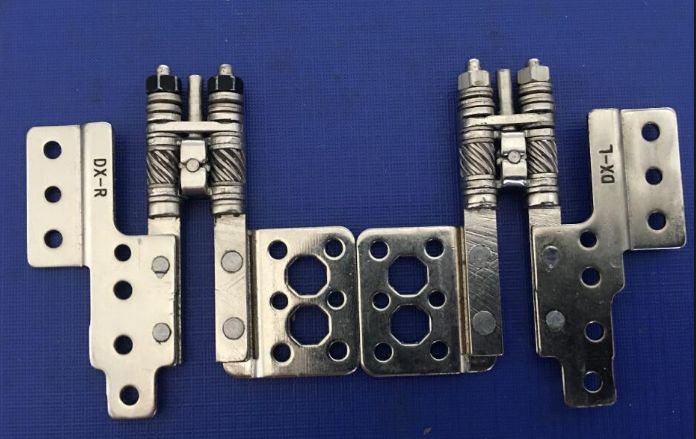
What is a laptop hinge?
A hinge is the shaft used to connect major product components that must rotate while withstanding both bending moment and torque. Hinges are common in everyday products, for example laptop computer hinges.
Laptop hinges may appear inconspicuous, but their role is significant. Different hinge designs give laptops different styles and appearances, and can enable new functionality. In many innovative and concept models, hinge design plays a key role. Changes in hinge form reflect improvements in laptop industrial design.
Industry development timeline
The PC hinge industry emerged after Toshiba released the T1100 laptop in Europe in 1985. The industry's development can be divided into three stages:
First stage, 1985–2000: This was the initial development phase. Limitations in production technology for major components such as the operating system, CPU, motherboard, and LCD panel kept laptop prices high, preventing wide consumer adoption and slowing hinge industry growth.
Second stage, 2000–2008: This was a rapid development phase. Advances in production technology and falling prices for components like the CPU, motherboard, and LCD helped laptops gain broader acceptance, driving fast growth in the hinge sector.
Third stage, 2008–present: This is a period of steady development. The rapid rise of tablet devices has made the laptop market more stable.
Functional and form evolution of laptop hinges
As laptops have evolved rapidly, hinge functions and forms have changed significantly.
2013 marked an important turning point for the PC hinge industry. Before 2013, hinge designs were typically traditional straight, wrapped, aluminum alloy, or automatic-closing types. After 2013, many deformable hinge designs emerged, such as dual-axis and central-hinge types.
One driver of this change is the trend toward thinner, more varied laptop form factors. Hinges have become more precise, lightweight, and wear-resistant while supporting more complex motion. Where older laptop hinges were limited to 180-degree rotation, modern hinges can offer 360-degree rotation and support split designs, sliding mechanisms, and other transmission modes. The appearance of all-in-one PCs and 2-in-1 convertible tablets has also driven expanded hinge functionality.
At the same time, the industry has shifted toward higher precision. This trend has reduced the competitiveness of low-tech, high-volume manufacturers and allowed technology-leading firms to become new industry leaders, raising the sector's average gross margin and making PC hinges one of the higher-value subsegments within metal hinge manufacturing.