Introduction
When the first Redmi phone launched in 2013 at an unusually low price, no one could have predicted that the Redmi line would sell in the hundreds of millions within a few years. The Redmi family has since expanded into multiple subseries, including Redmi, Redmi Note, and Redmi Pro, giving the lineup clearer positioning. This year Xiaomi has released several Redmi models and refined the series to present a more distinct product ladder. The Redmi Note 4, launched in partnership with China Mobile to push into offline channels, is positioned as a key model for that effort. This review examines how the Redmi Note 4 performs.
Hardware specifications overview
The Redmi Note 4 uses a MediaTek Helio X20 processor, paired with 3 GB RAM and 64 GB storage, a 5 MP front and 13 MP rear camera, and a 4100 mAh high-density battery. After upgrading to MIUI 8 it supports fingerprint-based Alipay payments. The phone uses a unibody full-metal back (not a three-piece design), nano-injected antenna lines, dual-SIM standby, and full-network support. Visually it retains familiar Redmi styling while adopting a higher metal ratio for a more premium feel. On paper, the configuration is consistent with a high-value offering in the budget segment.
Industrial design and build
A month earlier Xiaomi introduced the Redmi Pro, its first Redmi flagship with a unibody metal body and brushed finish. The Redmi Note 4 inherits the improved metal craftsmanship and emphasizes an all-metal theme. Overall the Note 4 uses a rounded-rectangle design with a clean front and minimal decorative elements. The 5.5-inch full-HD screen is covered with 2.5D curved-edge glass; bezel control is moderate and does not appear obtrusive on the white model. At the junction between screen and metal body, the Note 4 incorporates a white polycarbonate buffer strip to protect the display.
The Note 4 uses the same CNC unibody metal construction as the Redmi Pro, a marked improvement over the stamped metal body used in the Redmi Note 3. In practice the chassis is milled from a single block of metal with CNC machining for cutting, drilling, and polishing, followed by nano-injection to create the antenna signal strips, yielding an integrated metal shell. By contrast, the Note 3 used stamped metal panels with plastic end caps, forming a three-part metal body. The Note 4’s unibody design increases structural strength and metal coverage.
To retain a metal feel, the Note 4 uses a sandblasted finish with ceramic-grade 205 abrasive, which preserves some metal sheen while producing a finer matte texture that moderates the feel of the 5.5-inch size and 175 g weight. The phone adopts a largely symmetric layout—earpiece, front camera, and light/proximity sensors on the top; micro USB port and speaker at the bottom—while the top houses the headphone jack, IR sensor, and noise-canceling microphone, which prevents perfect symmetry.
Summary: The Redmi Note 4 shows notable improvements in craftsmanship through a CNC unibody metal shell and sandblasted finish. The design inherits several Xiaomi design cues seen on prior models and represents a clearer design direction.
Hardware performance analysis
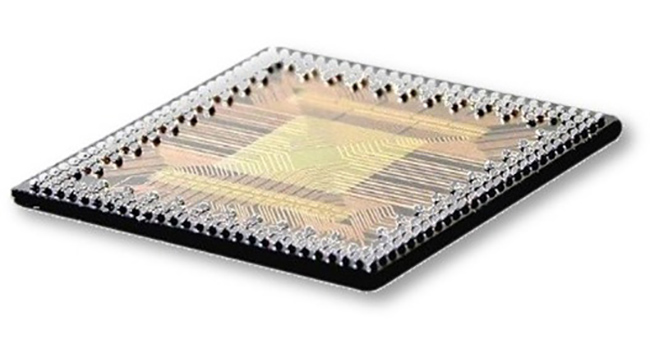
From the beginning the Redmi series emphasized value, where "value" refers to affordable pricing and "performance" to relatively strong hardware. The Note 4 uses the MediaTek MT6797 (Helio X20) SoC, built on TSMC 20nm HPM process and paired with a Mali-T880MP4 GPU. It includes a multi-band seven-mode modem and targets a cost-effective flagship-class SoC.
The Helio X20 uses a tri-cluster deca-core architecture. In short, the 10 cores are split into three clusters (2x A72, 4x A53, 4x A53). The two A53 clusters run at 2.0 GHz and 1.4 GHz respectively, while the A72 cores run at up to 2.5 GHz. The clusters are connected via the MCSI interconnect and managed by CorePilot 3.0 for heterogeneous scheduling. Different clusters handle different workload levels: heavy tasks use the big cores, light tasks use the small cores, and medium loads use the mid cores. Frequencies are dynamically adjustable.
Cluster scheduling allows flexible core usage and application-specific adaptation to optimize utilization and power efficiency. In benchmark runs the X20 scores roughly 1653 single-core and 5126 multi-core on CPU-centric tests. Single-core performance is comparable to the Snapdragon 652, while multi-core results can exceed Snapdragon 652 due to the larger core count.
For graphics, the Helio X20 uses a Mali-T880. Compared with the previous T760, the T880 benefits from a newer process and microarchitectural improvements. The T880 supports up to 16 shader cores with up to 2 MB L2 cache. Frequency and fill-rate improvements increase theoretical throughput while reducing power. In GFXBench tests the device achieves about 16 fps in Manhattan offscreen 1080p and 17 fps in T-Rex offscreen 1080p, trailing Adreno GPUs but showing a clear step up from T760.
Summary: Compared with similarly priced devices, the Redmi Note 4 remains a performance-oriented option in the budget segment. The Helio X20 offers strong multicore CPU performance and reasonable GPU capability; however, GPU performance still lags behind comparable Adreno solutions for heavy gaming. The X20 balances performance and power efficiency in a way that suits typical practical uses for budget buyers.
MIUI 8 system overview
MIUI has been iteratively developed since 2010 and is a core part of Xiaomi's software approach. MIUI 8 was released shortly before the Note 4 and brings design, functionality, and performance updates. The Redmi Note 4 ships with MIUI 8 preinstalled. Key MIUI 8 changes include:
Redesigned interface and dynamic colors
MIUI 8 redraws many system interfaces with inspiration from a kaleidoscope: it emphasizes bright, lively colors and dynamic color transitions. For example, the notification bar can change tone based on weather, and built-in apps such as Calendar, Recorder, and Weather adapt colors to context.
Practical feature set
MIUI 8 adds multiple practical features covering daily scenarios. Notable features include:
1. App and device cloning: App cloning allows duplicate instances of most apps so that two versions of WeChat, QQ, or other account-based apps can run simultaneously with isolated data. Device-level cloning lets different passwords or fingerprints open different home screens with isolated, encrypted data, enabling a guest profile for privacy-sensitive situations.
2. Enhanced scanner: The Scanner app now supports barcodes and QR codes plus price lookup, translation, homework problem recognition and solution, business card scanning, and document scanning. The price lookup can search for the same item on e-commerce platforms. The homework scanning feature can provide step-by-step solutions for a wide range of school-level problems and generate study reports.
3. Multifunction calculator: The calculator now supports practical tools such as mortgage, personal income tax, social fund calculations, unit and currency conversions with live exchange rates, and improved input/operation editing with visible steps and the ability to modify any step. It also supports Chinese uppercase number conversion for expense reports.
4. Long screenshot: MIUI 8 supports long screenshots with touch-based control over scroll speed and cropping, plus built-in annotation tools like doodle and mosaic for editing captures.
MIUI 8 also reduces some intrusive advertising compared with prior versions: information stream push in Weather, Security, and Calendar can be manually disabled, though a few embedded ads remain in areas like the music album page and calendar lunar section. Xiaomi has indicated ongoing optimization of ad placement to better align information streams with user needs.
MIUI 8 on the Note 4 supports fingerprint-based Alipay payments; WeChat fingerprint payments were expected in a subsequent update. Additional features such as screen recording and split-screen were under development at the time of review.
Camera analysis
The Note 4 uses a 13 MP rear sensor (from Samsung or OmniVision), f/2.0 aperture, 3.5 mm equivalent focal length, and PDAF phase-detection autofocus. Camera performance was evaluated across several scenarios.
Daylight outdoor shots: Under ample daylight the Note 4 produces acceptable images with Xiaomi’s typical slightly warm white balance. Reds can be pushed a little, resulting in vivid but not always natural colors. Greens are rendered reasonably well, though overall the image lacks a sense of depth and transparency common to higher-end sensors.
Indoor shots: In lower light the phone raises ISO (for example ISO 683) and uses a slower shutter speed (around 1/30s), which reduces image purity and can produce a slightly washed appearance. This prioritizes brightness over detail, a common trade-off in budget devices.
Macro: The macro performance is average; the subject is adequately captured with natural background blur, but the image lacks strong three-dimensional separation.
Night scenes: Nighttime results are weaker. While brightness can be acceptable, higher ISO introduces visible noise in the sky and loss of detail in darker areas of the scene.
Summary: The Note 4’s camera is satisfactory for the budget segment. It performs best in good lighting with warm-toned color reproduction. In low light and night conditions image quality declines due to higher ISO noise and reduced detail retention.
Conclusion
The Redmi Note 4 adopts a less common CNC unibody metal chassis in its price bracket and shows clear improvements in build and finish. Its hardware continues Xiaomi’s approach of high value: Helio X20 SoC, 3 GB RAM with 64 GB storage, a 5.5-inch display, fingerprint sensor, and MIUI 8 preinstalled. While camera performance is not a standout, the overall package presents a balanced combination of improved materials, solid performance, and software features geared toward practical daily use. The partnership with China Mobile to distribute the Note 4 through offline stores was intended to expand Xiaomi's retail reach beyond online channels.