Overview
Renesas Electronics and Qualcomm Technologies are collaborating to add 30W Wattshare wireless charging to mid-range smartphones based on the Qualcomm Snapdragon 780G 5G mobile platform. The new reference design is based on Renesas's P9412 and supports a proprietary fast-charge mode with authentication and a 24 kB multi-time programmable (MTP) nonvolatile memory.
Strategic Context
Amit Bavisi, vice president and general manager of the Renesas Wireless Power Group within the Mobile Infrastructure and IoT Power Business, said that continued collaboration between the two companies is an important step for integrating wireless power capabilities into 5G smartphones. "The 5G revolution presents design challenges for handset engineers because the technology enables higher-performance and potentially more power-hungry user applications. As handset makers expand their 5G device lineups while increasing battery sizes and integrating more features into these phones, wireless power designs require efficient fast charging and a lower thermal footprint," he said.
How 5G Wireless Charging Works
Wireless charging systems include a transmitter base station with one or more transmitters. These transmitters use a DC-to-AC inverter to provide power and transfer energy to a pair of inductors in the mobile device. Typical systems use near-field magnetic induction between coils and can be free-positioning or magnetically guided. The receiver controls transmitted power to optimize charging. Rx-to-Tx communication uses in-band communication over the transmission frequency via the power link, and out-of-band communication is also supported.
"Wireless power design involves hardware and software; it is a system-level effort. To achieve a stable, high-performance wireless power solution, robust hardware quality and reliable software algorithms are required. These advance in parallel: wireless power is effectively a system-on-chip where hardware and software interact to create a complete system solution with the scalability needed for diverse dynamic user scenarios," Bavisi said.
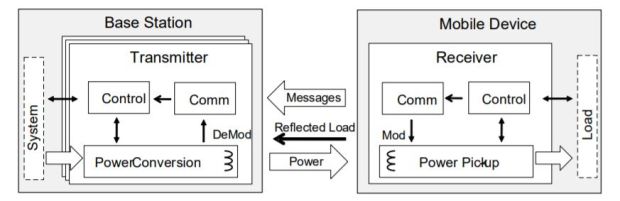
Figure 1: Typical system block diagram (Source: Renesas Electronics)
Although the underlying wireless technology is well known, transmitter design, transmitter placement, efficiency optimization and system validation require complex engineering solutions.
Qi is a wireless charging system that uses electromagnetic induction. In a typically flat transmitter or base station, a coil carrying a time-varying current produces an oscillating magnetic field. A similar coil in the device to be charged detects the varying magnetic field and, by electromagnetic laws, an electric current is induced to power the battery to be charged.
"Antennas are generally customized to provide a wireless receiving device that best fits the form factor of the end device. Typically, antenna diameters of 40 mm–50 mm are common in phones," Bavisi said.
For example, Qi provides various coil configurations in chargers so users are not forced to place the device precisely. In theory, coils need to be close, preferably overlapping, to transfer power, but elements of the Qi specification allow charging even when coils are a few centimeters apart. The specification also defines communication between the charger and the charging device using the same magnetic field as power transfer, which among other things allows the transmitter to stop generating the field when charging is complete.
Reference Design
The reference design aims to provide a turnkey solution to help smartphone OEMs deploy fast wireless charging quickly and cost-effectively in high-end and mid-range phones. It supports multi-time programmable memory (MTP) and over-the-air (OTA) updates to simplify software development and Qi certification processes. Bavisi highlighted how Renesas's 30W solution combined with Qualcomm Technologies' 5G solution can deliver more than 85% end-to-end system efficiency, facilitating delivery of fast wireless charging to the next generation of mid-range smartphones.
The wireless power receiver uses Renesas's P9412 with an integrated high-voltage capacitor divider, minimizing PCB area while enabling new features. P4912 is described as a fully synchronous rectifier with low-resistance switches and an embedded 32-bit ARM Cortex-M0 processor.
"The integrated capacitor divider greatly improves system efficiency while reducing solution size for high-power designs. By integrating a high-efficiency capacitor divider (>98%), the wireless power receiver coil now operates at half the current level, significantly reducing overall power loss. The integrated solution allows the wireless receiver IC to seamlessly control state transitions during mode changes and simplifies system design. To achieve 85%–90% end-to-end system efficiency (from wall adapter to wireless power output to phone battery or battery charger), individual component efficiencies must be high to avoid hotspots. A 20 V high-efficiency integrated capacitor divider reduces integration issues for handset and computing customers," the company said.
P9412 operates according to the WPC 5W specification but also implements a higher-power protocol that extends power transfer beyond the WPC 5W standard. A custom high-power protocol is embedded in the device firmware, enabling system authentication for power transfers above 15W.
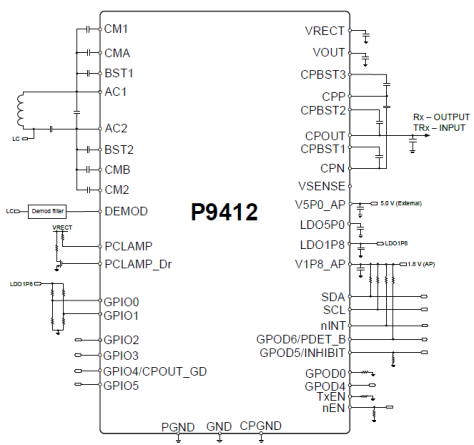
Figure 2: P9412 block diagram (Source: Renesas Electronics)
Wireless energy is stored on one or more capacitors connected to VRECT. The rectifier circuit and control blocks provide conversion and interconnection to maintain the required efficiency. An internal ADC monitors VRECT voltage and load current; P9412 instructs the power transmitter to increase or decrease transmitted power.