Overview and Applications
SCTF low phase-noise clock oscillators are intended as frequency references for digital audio systems. Stable, low-noise clocks are essential for accurate data transfer and decoding in music production and playback. When a reference frequency is unstable or noisy, playback distortion and artifacts can occur. Low phase-noise oscillators provide cleaner clock signals to support accurate digital audio transmission and decoding.
Product Description
Available CN series and package sizes:
- 1 CN Series | SMD2016
- 2 CN Series | SMD2520
- 3 CN Series | SMD3225
- 5 CN Series | SMD5032
- 7 CN Series | SMD7050
SCTF has developed a series of low phase-noise clock oscillators using recent oscillator process technologies. The series is available in multiple package sizes and is in production. Typical characteristics include high precision, high stability, low phase noise, and low jitter, making them suitable for digital audio applications.
Common Digital Audio Frequencies
11.2896 MHz / 22.5792 MHz / 45.1584 MHz
12.288 MHz / 24.576 MHz / 49.152 MHz
Key Features
01 High Precision and Stability
High precision and stability are important indicators of oscillator performance. Typical specifications are as follows:
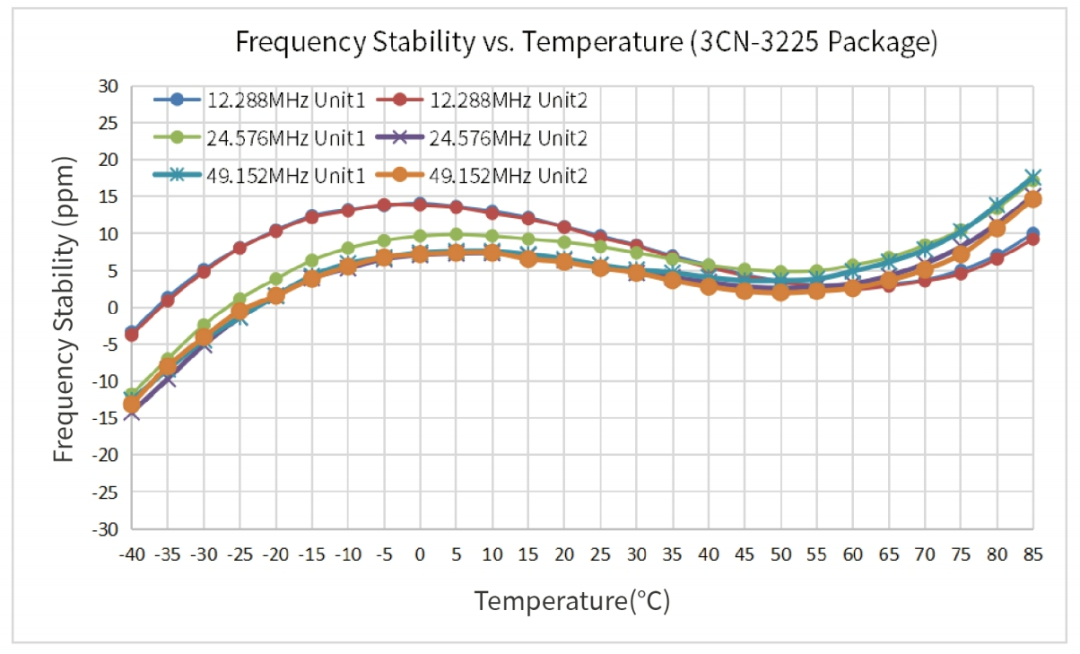
Operating temperature: -20°C to +70°C / -40°C to +85°C
Frequency tolerance: ±10 / ±15 / ±20 ppm max.
Frequency & temperature characteristic: ±20 / ±25 / ±30 ppm max.
Example: 3CN series frequency-temperature characteristic
02 Low Phase Noise and Low Jitter
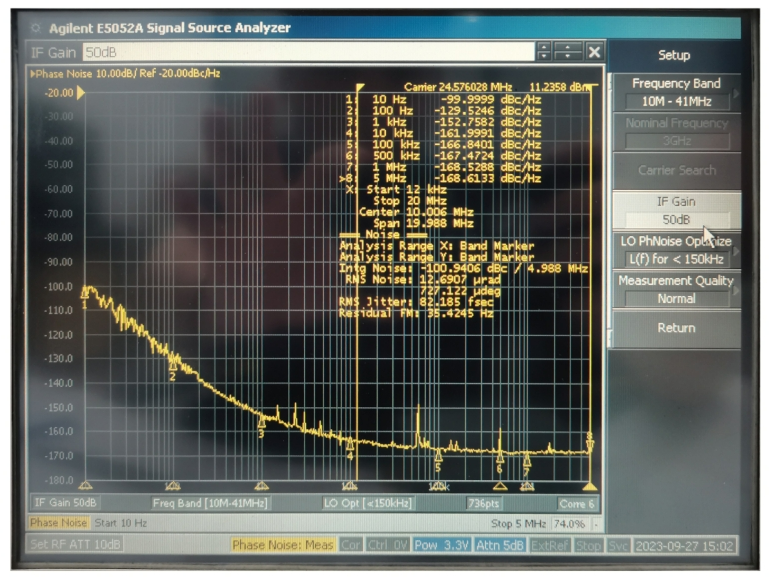
Low phase-noise clock signals provide greater stability and lower distortion, resulting in clearer audio quality in digital audio equipment. Typical phase noise and jitter values include:
Example frequency: 24.576 MHz [3.3 V, 1 kHz offset] Phase noise: -152 dBc/Hz. RMS phase jitter: 82 fs
Example: 3CN series phase noise
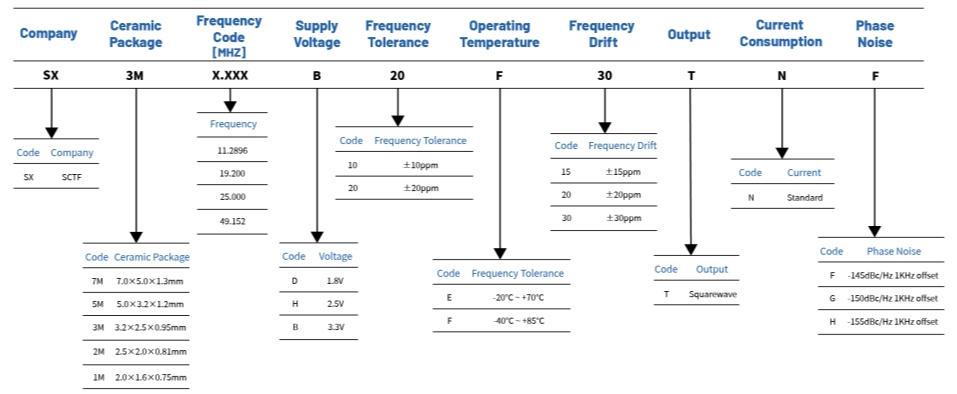
Selection Guide
- Choose the required package and series.
- Select the required frequency.
- Select the required supply voltage.
- Choose the required frequency tolerance.
- Choose the required operating temperature range.
- Choose the required frequency & temperature characteristic.
Component coding