In recent years, as living standards have risen, more people pay attention to quality of life. The living room, as a primary reception and home entertainment area, often becomes the focal point. The television continues to play a central role, and many users seek a cinema-like audiovisual experience. Larger TV sizes are one response to that demand, but larger panel TVs become much more expensive. For example, a 100-inch model introduced by a manufacturer this year was priced far above what most consumers find acceptable. As an alternative, laser-based television systems have attracted attention. This article explains what a laser TV is and how it differs from other display options.
What is a laser TV?
Strictly speaking, laser TV is not entirely new. As early as 2005, Sony built a large laser-based cinema screen at Expo Aichi. In 2006 Mitsubishi showed a 40-inch laser TV prototype, and Sony presented a 60-inch prototype in 2007. At the 2007 International Consumer Electronics Show, Sony and Mitsubishi demonstrated 55-inch and 40-inch laser TV prototypes. Companies such as Germany's LDT, Sony, Mitsubishi, Panasonic, Hitachi, Toshiba, Epson, and Samsung have reported research into laser TV and laser projection products. Mitsubishi released 65-inch and 73-inch laser TVs in the US market in 2008, suggesting a potential new generation of display technology, although the broader market adoption did not immediately follow.
The early laser TVs from companies like Mitsubishi and Sony were true laser systems. Sony's systems used direct-scan or line-scan methods, Samsung used point-scan, and Mitsubishi used a three-color laser light source with DLP rear projection. Those designs differ significantly from many products marketed as "laser TVs" in recent years.
Today, most products labeled as laser TVs are essentially laser projectors. Their hardware has two main components. The first is the projector itself, typically a reflection-type ultra-short-throw projector that uses a laser light source. This is why these products are commonly called laser TVs: they are ultra-short-throw laser projectors. The second component is an ambient-light-rejecting screen. These screens are made from special materials that reflect the projector image while rejecting other light sources, enabling good image quality even in brighter environments. In other words, unlike ordinary projectors that can use a plain white wall or a standard soft screen, a laser TV setup generally requires a specific ambient-light-rejecting screen to perform well.
Laser TV types
As demand for large screens has grown, more brands have entered the market. From a technology perspective, the market currently features three main types of laser-based light sources: ALPD laser-phosphor, SLPL phosphor drum, and pure blue laser systems.
ALPD (advanced laser phosphor display) is a patented laser-phosphor approach that uses a single-color blue laser to excite a phosphor, producing the visible image via an ultra-short-throw optical system. This approach controls cost and addresses certain thermal management challenges, and it is one of the main technologies used in laser projection products.
SLPL phosphor drum technology uses a glass phosphor coating on a rotating drum combined with full-excitation laser-phosphor techniques. This design aims to address concerns about brightness, lifetime, and color performance that have affected earlier laser-phosphor implementations.
Pure blue laser systems, adopted by some manufacturers, use a single blue semiconductor laser source without mercury. The projector dynamically adjusts the blue laser output to match image color requirements. Compared with traditional lamp-based projectors, these systems can achieve lower power consumption while aiming for strong color performance.
In practice, many of these systems move away from using three separate red, green, and blue laser sources. Instead, they use lower-cost semiconductor blue lasers to excite a high-speed phosphor wheel or drum, creating multiple colors. The specific internal implementations differ among manufacturers.
Advantages of laser TV
Size: Because laser TVs use projection principles, they are not constrained by the panel-size limits of flat-panel TVs. They can easily produce very large images, for example 100 inches or more. Flat-panel TV prices typically rise rapidly as screen size increases. Laser projection systems offer flexible image sizing, allowing users to adjust screen size and viewing distance to fit different room environments.
Image quality: New image reproduction techniques take advantage of the intrinsic properties of lasers. Unlike conventional incandescent or lamp sources that emit light in many directions, a laser produces a more collimated beam. Laser projectors can deliver a wider color gamut and clearer images compared with many traditional lamp-based projectors, making them suitable for applications where higher image fidelity is required.
Long lifetime and low maintenance: Laser light sources are cold light sources with longer lifetimes than traditional lamp-based sources. Laser modules have demonstrated lifetimes in the tens of thousands of hours. Laser displays tend to consume less power than many traditional displays, and their light source manufacturing can avoid hazardous heavy metals used in some older lamp technologies. Because many laser projection systems use reflected light, near-field viewing is less likely to cause glare, contributing to a comfortable viewing experience.
Instant on/off: Laser light sources require no warm-up time and do not require cool-down after power off in the same way some lamp-based systems do. Many laser projection products can turn on instantly and turn off immediately, which improves ease of use compared with traditional projectors that need a lamp warm-up period.
3D performance: Laser light is inherently well suited to polarization-based 3D systems. Laser sources can provide high effective brightness in 3D modes and integrate with 3D technologies without significant fusion issues. This makes laser projection a useful option for 3D displays.
Display chip is the same
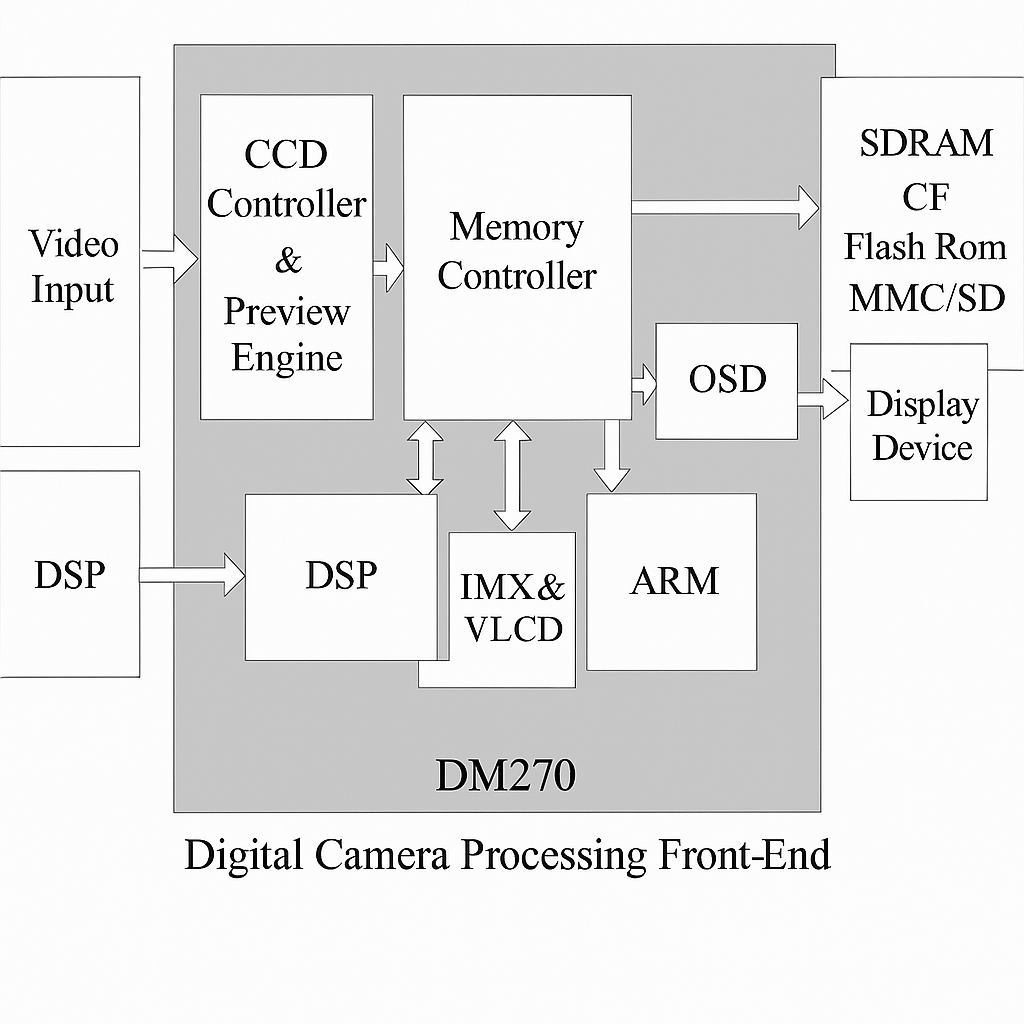
Aside from the laser light source, a laser TV still requires a display engine—most commonly DLP. DLP stands for Digital Light Processing. Its core component is the DMD (Digital Micromirror Device) chip, which contains an array of tiny, tilting micromirrors that form pixels. For a 1920×1080 projector, the DMD chip has 1920×1080 micromirrors. When a pixel should be bright, the corresponding micromirror tilts to reflect light toward the lens. When a pixel should be dark, the micromirror tilts away to prevent light from reaching the lens. DLP systems use this mechanism to separate and project R, G, B color information through optics onto the screen.
Therefore, when choosing a laser TV, the underlying display technology is often similar across products. With the introduction of 4K DMD chips, 4K laser projection models have appeared, offering higher resolution than 1080p models and correspondingly higher prices.
Ambient-light-rejecting screens differ
The other critical hardware element is the ambient-light-rejecting screen. The market mainly offers metallic hard screens and Fresnel passive bionic screens, and there are technical differences between them. Most systems use a metallic hard screen paired with the projector.
Metallic hard screens are typically constructed with a resin panel coated with a dense array of metal particles forming a honeycomb pattern. Incident stray light entering from the sides is scattered and absorbed by this structure, giving the screen high contrast and strong ambient light rejection. This helps maintain deep blacks and bright colors even in well-lit indoor environments, reducing the hazy look that can affect traditional projection screens. The effective imaging dot pitch on such screens is much finer than standard screens, improving perceived detail and clarity for motion video, animation, and games.
Fresnel passive bionic screens use a lens-like surface with concentric grooves on one side. These grooves act as a directional optical element that reflects or refracts light within a specified spectral and angular range. With a reflective coating behind the Fresnel structure, projector light is directed toward the viewer's eye while many off-axis ambient light components are rejected. Fresnel-based screens provide gain and enable daytime viewing without full blackout conditions, so ambient lighting does not need to be completely eliminated for acceptable image quality.
Smart features and content
Many laser TV products include smart TV platforms, integrating content streaming and app functionality into the device. This addresses the traditional projector limitation of lacking integrated content sources. The content libraries and platform experiences differ significantly between brands, so buyers who value integrated content delivery should compare platform offerings and user interfaces. If users prefer connecting external sources, platform differences may be less important.