Overview
Xiaomi announced the 14 series on October 26. WekiHome published a teardown video of the Xiaomi 14 Pro on October 27. According to WekiHome, besides being the first to use the Qualcomm Snapdragon 8 Gen 3 platform, the 14 Pro shows significant advances in display, imaging, performance, and system design.
Model differences at a glance
Both the Xiaomi 14 and Xiaomi 14 Pro use the Qualcomm Snapdragon 8 Gen 3 processor, but they differ in industrial design, display, camera, and battery specifications.
Display and exterior
Xiaomi 14 features a 6.36-inch flat OLED with a centered punch hole using C8 emissive material, with a peak brightness of 3000 nits. The bezel dimensions are extremely narrow: three sides at 1.61 mm and the bottom at 1.71 mm. It uses LTPO for 1–120 Hz adaptive refresh and reaches 460 ppi with approximately 1.5K resolution. The back uses a quad-curve design with a glossy metal frame on the sides. Thickness is 8.2 mm and weight is about 188 g.
The Xiaomi 14 Pro uses a 6.73-inch micro-curved screen with C8 emissive material and 3000 nits peak brightness with DC dimming. It reaches 522 ppi, supports 1920 Hz high-frequency PWM dimming, and offers a 2K-class resolution. Compared with the Xiaomi 14, the 14 Pro has more vivid and sharper color reproduction, higher-frequency PWM for reduced eye strain, and Dragon Crystal glass for improved drop resistance. The 14 Pro also has a titanium variant. Its thickness increases slightly to 8.49 mm and weight to about 223 g.
Dragon Crystal glass hardness and structure
The 14 Pro's screen is upgraded to Dragon Crystal glass. Reported Vickers hardness values are: Xiaomi Dragon Crystal 860 HV0.025, Huawei Kunlun 2nd gen 830 HV0.025, Apple Ceramic Shield 814 HV0.025, Corning Gorilla Glass Victus 2 670 HV0.025. Note: HV indicates Vickers hardness; the number before HV is the hardness value and the suffix indicates the test force. If the dwell time differs from the usual 10–15 seconds, the dwell time should be specified after the test force (for example, 600HV30/20 means a 30 kgf test force held for 20 seconds produced a hardness of 600).
Reportedly, Dragon Crystal glass raw materials include Li2O, SiO2, Al2O3, ZrO2, P2O5, Na2O, and others, which undergo thermal processing above 1600°C. Through nucleation and crystal growth, lithium disilicate and related crystals form with sizes around 25 nm and an interlocked structure uniformly dispersed in the glass. This preserves high optical transmittance while increasing strength. A final dual-ion-exchange strengthening step further increases hardness.
Dragon Crystal glass borrows the microscopic approach used in ceramics, growing fine crystals within the material to block crack propagation and reduce brittleness.
Because the crystals are extremely small, high transparency is preserved. Company-published data claim a 10x improvement in drop resistance and a 1.32x improvement in scratch resistance for Dragon Crystal glass compared with prior glass.
Camera system
Both models are equipped with a 50 MP main camera (Light Hunter 900 OIS with 1024-step variable aperture), a 50 MP ultra-wide, and a 50 MP floating telephoto. The main and telephoto modules support optical image stabilization. The Xiaomi 14 Pro's main camera also introduces a 1204-step variable aperture, further expanding photographic capability.
Battery and charging
The Xiaomi 14 contains a 4610 mAh silicon-carbon anode battery with 90 W wired charging, 50 W wireless charging, one Surge P2 charging IC, and one Surge G1 battery management chip.
The Xiaomi 14 Pro contains a 4880 mAh silicon-carbon anode battery, wired charging upgraded to 120 W, 50 W wireless charging, two Surge P2 charging ICs, and one Surge G1 battery management chip. The 14 Pro therefore has 270 mAh more battery capacity and faster wired charging.
Internal design and teardown observations
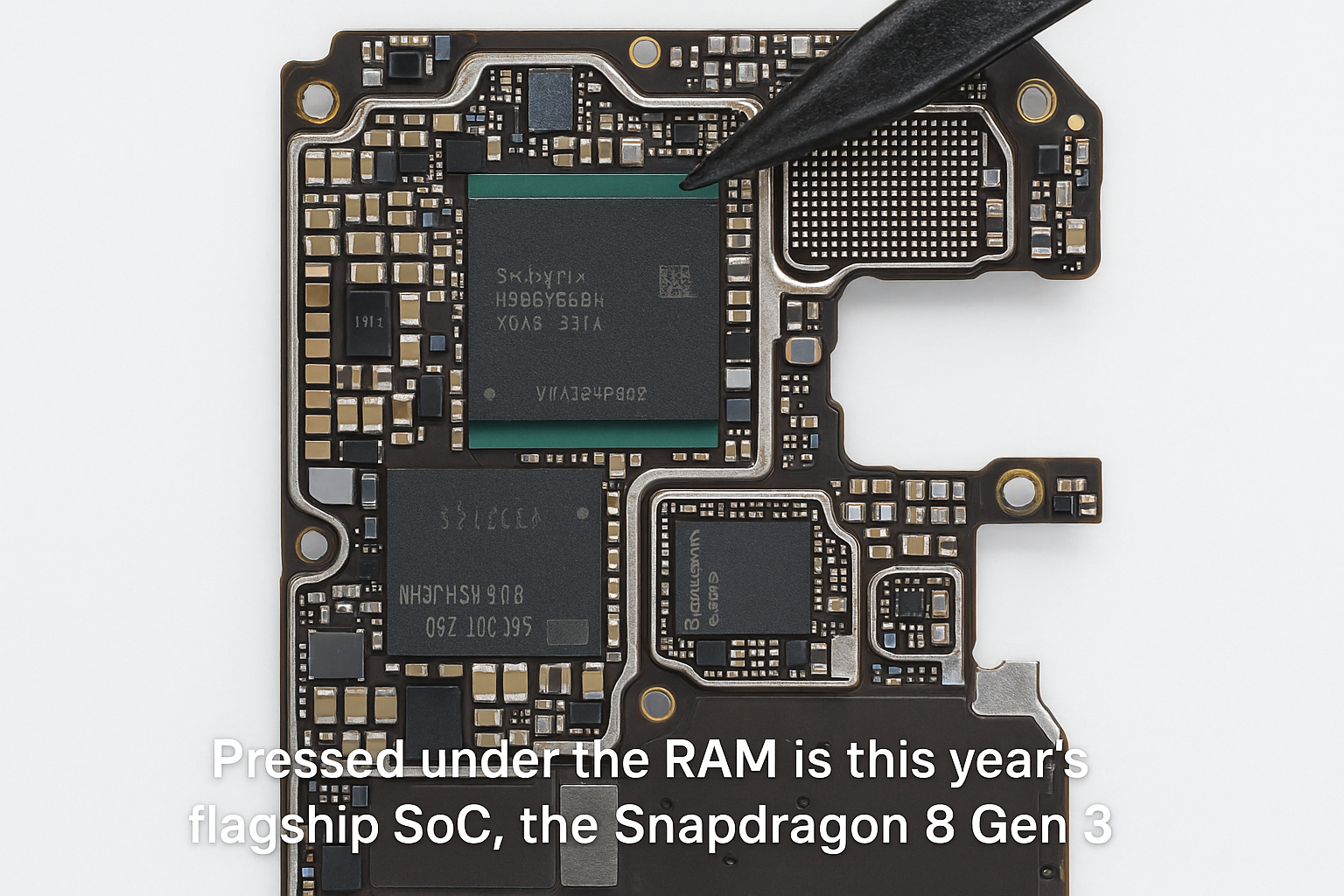
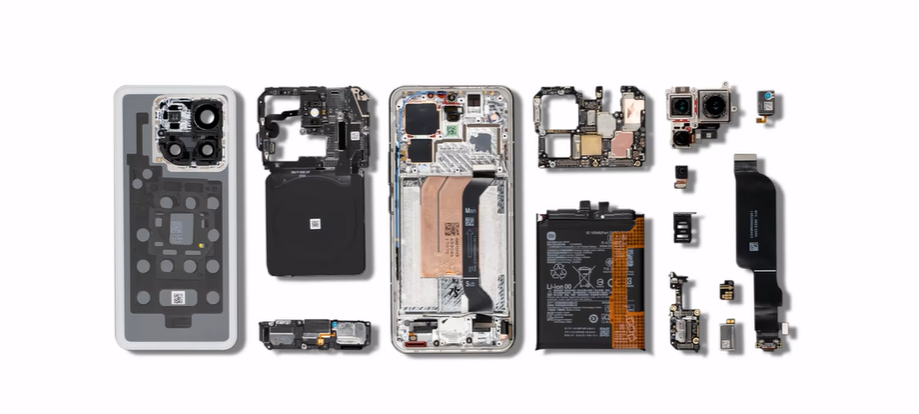
WekiHome's teardown shows the Xiaomi 14 Pro retains a traditional three-segment internal structure. The main board uses a dual-layer stacked PCB manufactured by Huatong Computer.
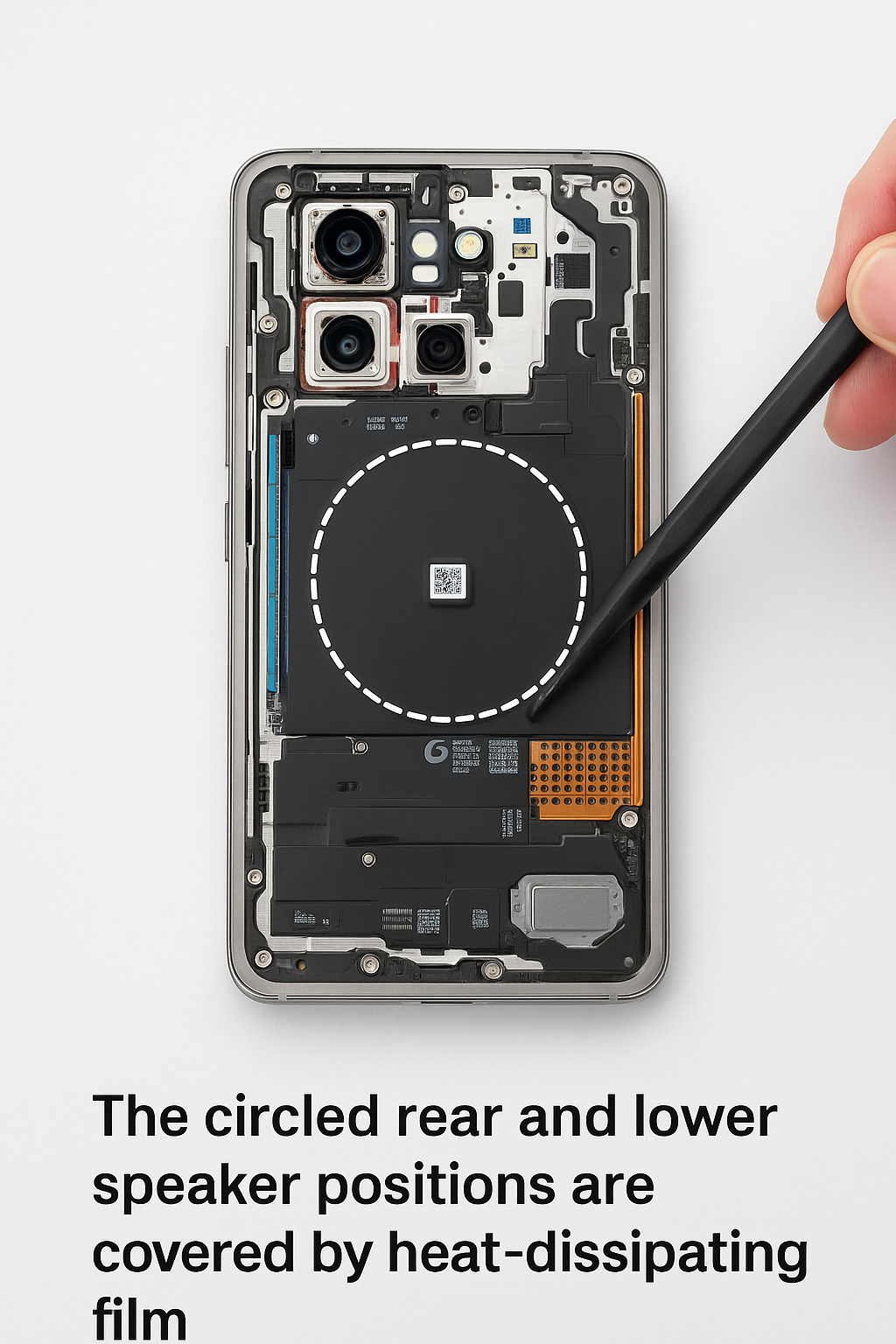
The main board integrates the top microphone, Hynix LPDDR5X RAM, the Qualcomm Snapdragon 8 Gen 3 SoC, Samsung UFS 4.0 storage, two Surge P2 charging ICs, and a discrete security chip.
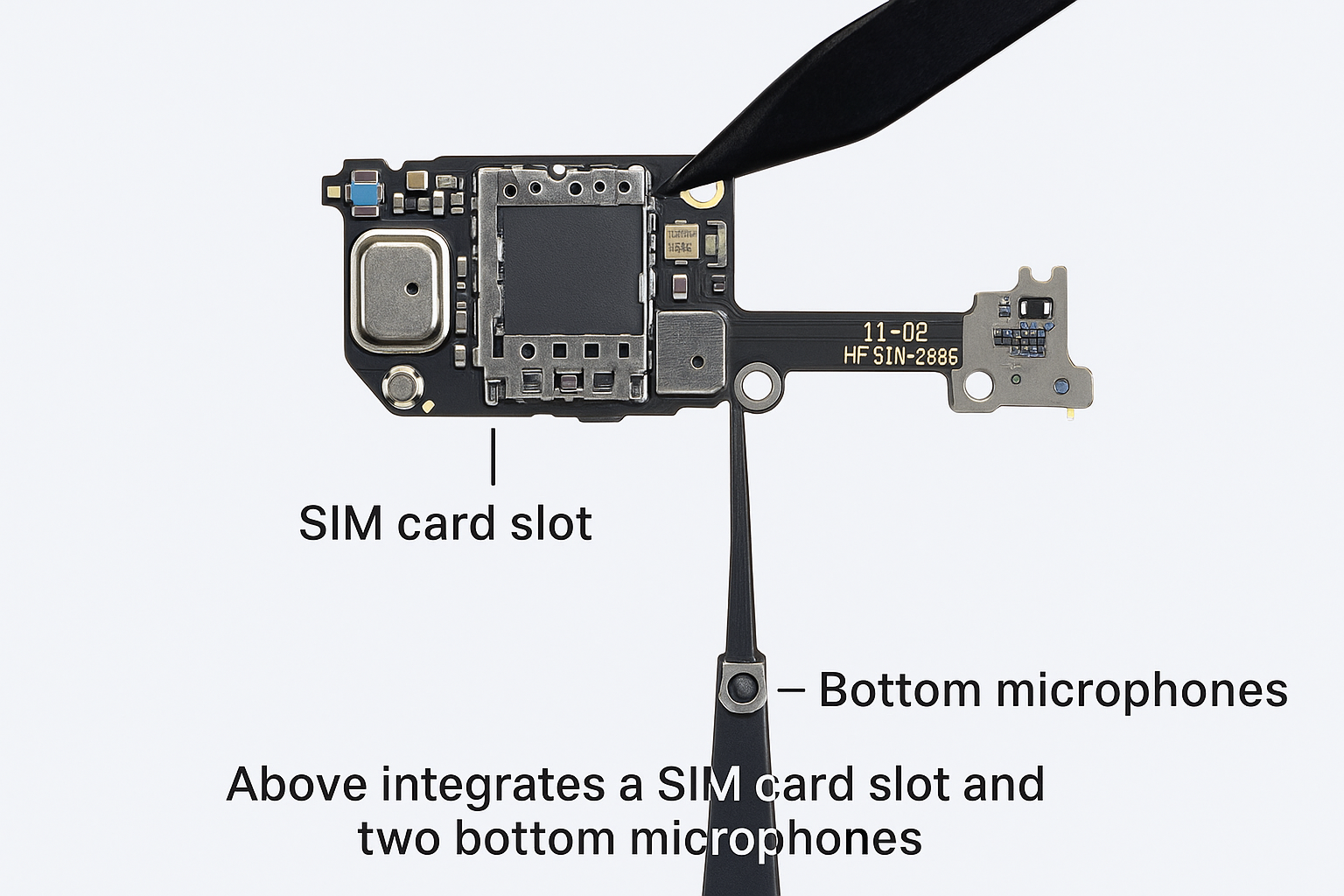
The secondary board is manufactured by Shenghong Technology. The device includes four microphones in total.
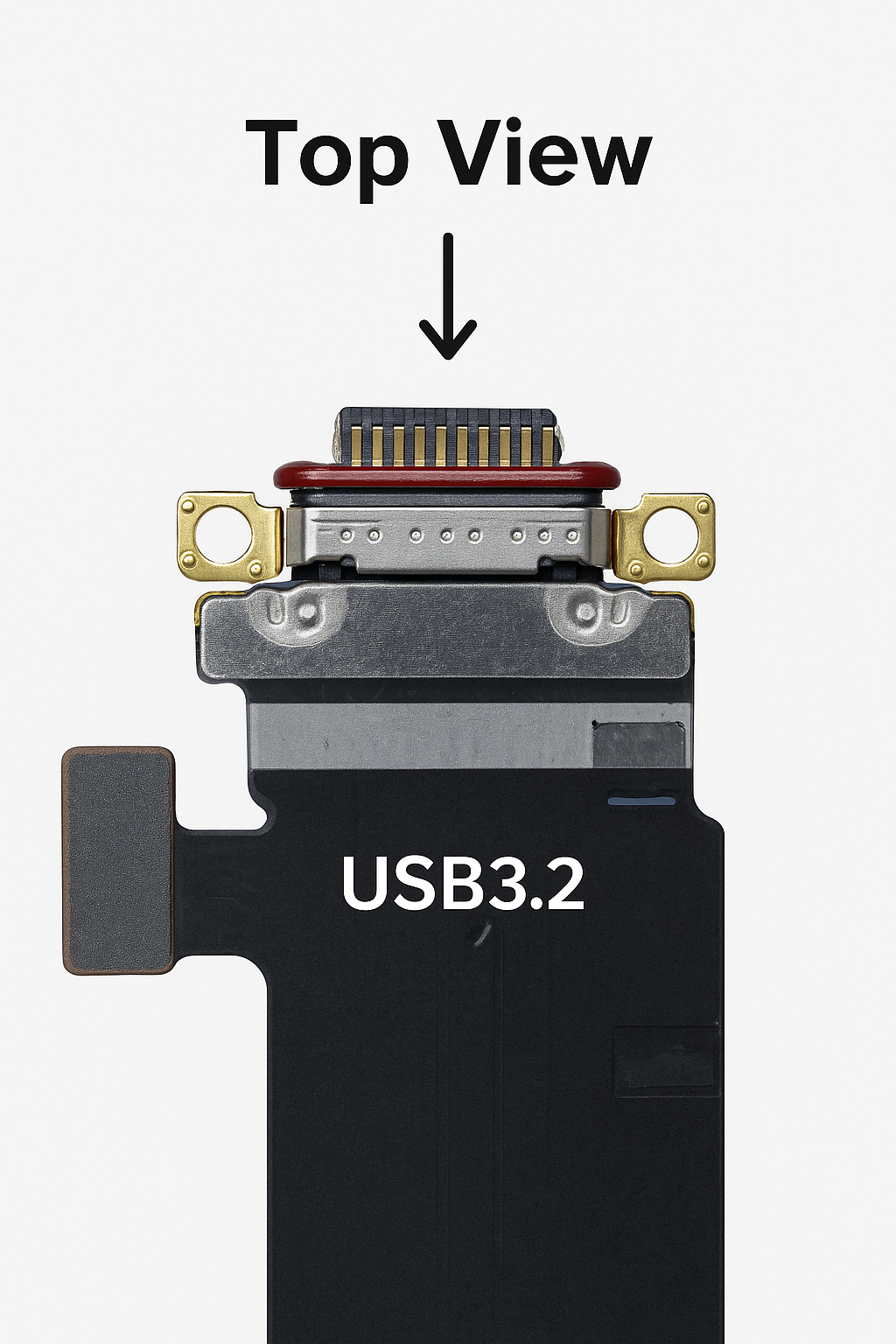
The Xiaomi 14 Pro uses a USB 3.2 port rated at 10 Gbps; the Xiaomi 14's USB rate is half that value.
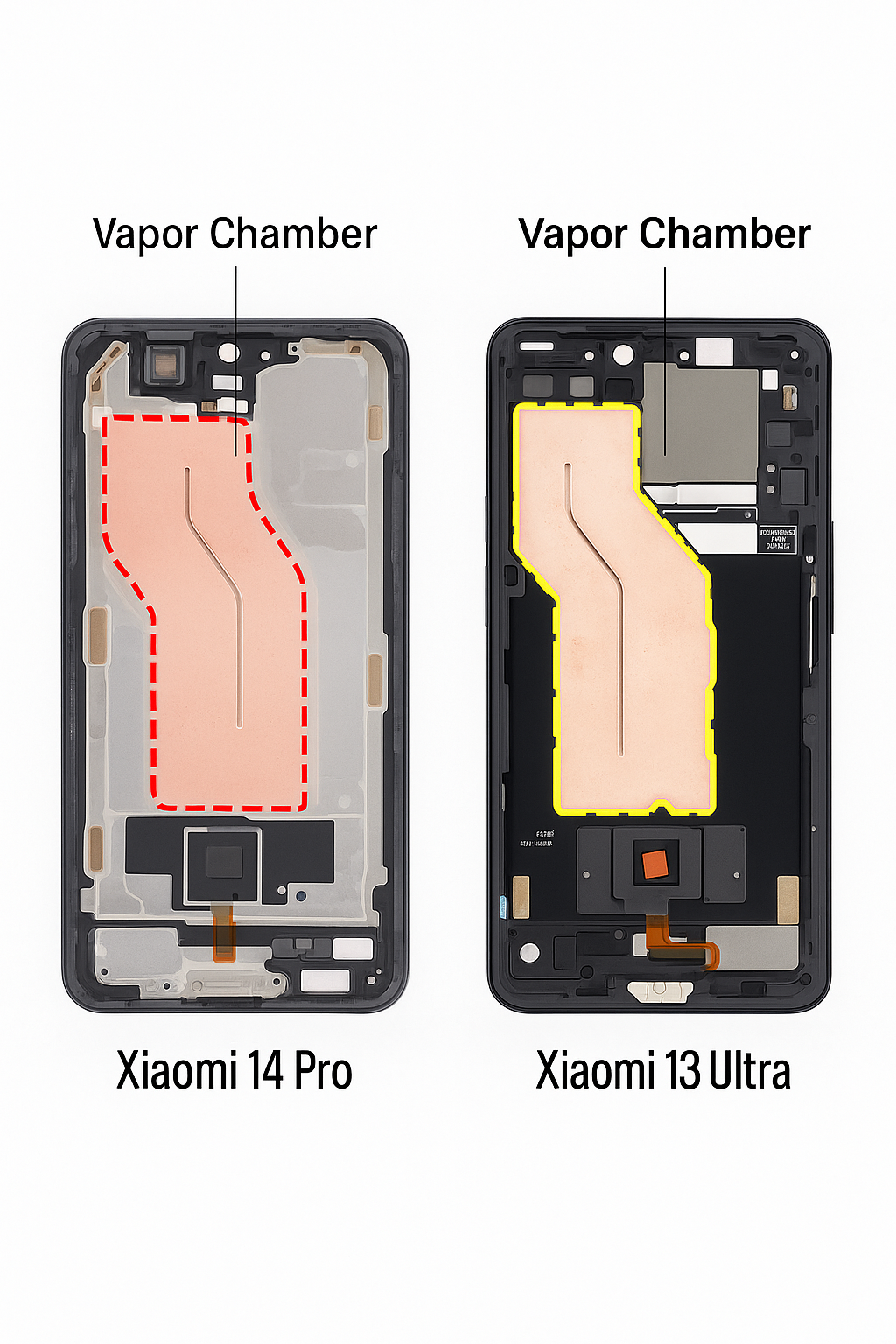
The annular cooling pump heat spreader appears larger than the one used in the Xiaomi 13 Ultra.
Observers noted an empty solder pad on the main board. Some suggest this large empty pad could correspond to a removed satellite communications chip; others believe the pad is for an RF chip. Qualcomm reference designs can use dual RF chips, and it appears Xiaomi may have implemented only a single RF chip in this board revision.
Conclusion
Both models share the Snapdragon 8 Gen 3 platform, a 32 MP front camera, IP68 dust and water resistance, Leica Summilux optics, a 75 mm floating telephoto, 50 W wireless charging, an annular cooling pump heat spreader, and a larger X-axis linear motor. The Xiaomi 14 Pro upgrades the screen, camera, battery capacity, and wired fast-charging capability compared with the Xiaomi 14; other hardware components are largely the same.