Overview
On July 27, Xiaomi announced two configurations of the Xiaomi Notebook Air, sized 12.5 inches and 13.3 inches. The design is visually similar to the Apple MacBook Air, with an emphasis on thinness and a balance of performance and cost. This article summarizes review and hands-on materials, including the launch presentation, quick-start footage, the 13.3-inch unboxing, and gaming tests.
Customization and Positioning
The notebook can be ordered with a laser-engraved Xiaomi logo on the lid or as a no-logo version suitable for user customization with stickers. From a hardware and price standpoint, the Notebook Air targets the mid-range market and is intended to handle common office, multimedia, and mainstream gaming workloads.
Design
- No-logo lid option for personalization.
- Thin-bezel design enables a 13.3-inch full HD display in a chassis closer to a 12-inch laptop, improving portability and appearance.
Performance and Configuration
- Discrete GPU: GT940MX. Performance is roughly 10%–20% better than GT940M and sits between GTX 750M and GTX 950M, sufficient to run popular online games such as League of Legends at high settings.
- Standard configuration: Intel i5-6200U, 8 GB DDR4 memory, and a 256 GB SSD. The configuration with the GT940MX was listed at CNY 4999.
User Experience
- White backlit keyboard and thin bezels provide a good visual experience.
- Solid metal construction; the lid resists local flex compared with some competing models.
- Charging speed is comparable to fast-charging smartphones; the battery can be charged from empty to full in about one hour under the test conditions.
- Data-sharing features enable fast transfers between Xiaomi phones and the notebook for users in that ecosystem.
- Overall system operation is smooth; file transfer and compression tasks perform reasonably well for the class.
Accessories
- Optional USB 3.1 Type-C adapter cable adds USB 3.0 and HDMI outputs while keeping the USB-C port available for charging and compatibility with MacBook chargers. The adapter was offered at CNY 149.
- The chassis includes an extra M.2 SATA SSD slot for user expansion of storage capacity.
Limitations and Improvement Areas
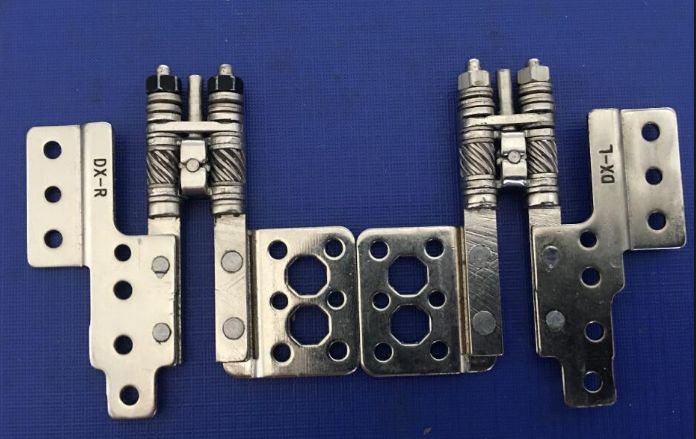
- Hinge: In the review sample of the 13.3-inch model, a very small wobble was observed at the maximum open angle when pressing on the lid. It is unclear whether this is specific to the sample unit.
- Thermals: The exhaust vents are located at the hinge while intake vents are on the bottom. The relatively low chassis height reduces thermal headroom. In AIDA64 stress tests that drove component utilization to 100%, the exhaust area, the area above the keyboard, and the upper screen region became noticeably warm. Real-world office or gaming loads usually result in much lower sustained utilization, so typical temperatures should be lower. A potential improvement for future revisions would be side or rear exhaust vents to improve cooling.
- Keyboard layout: The island-style keyboard places the up/down arrow keys tightly together and reduces their size relative to surrounding keys, which can feel cramped and lead to accidental presses.
- No built-in SD card reader: The omission of an SD card slot is inconvenient for users who handle photography or video and expect to transfer cards without an external reader.
Performance Benchmarks
The following summarizes basic performance results for the 13.3-inch Xiaomi Notebook Air, including objective benchmark scores and some application tests.
CPU
CPU-Z results: single-core performance exceeded the i7-4558U, while multi-core performance was slightly lower than the i7-4558U.