Overview
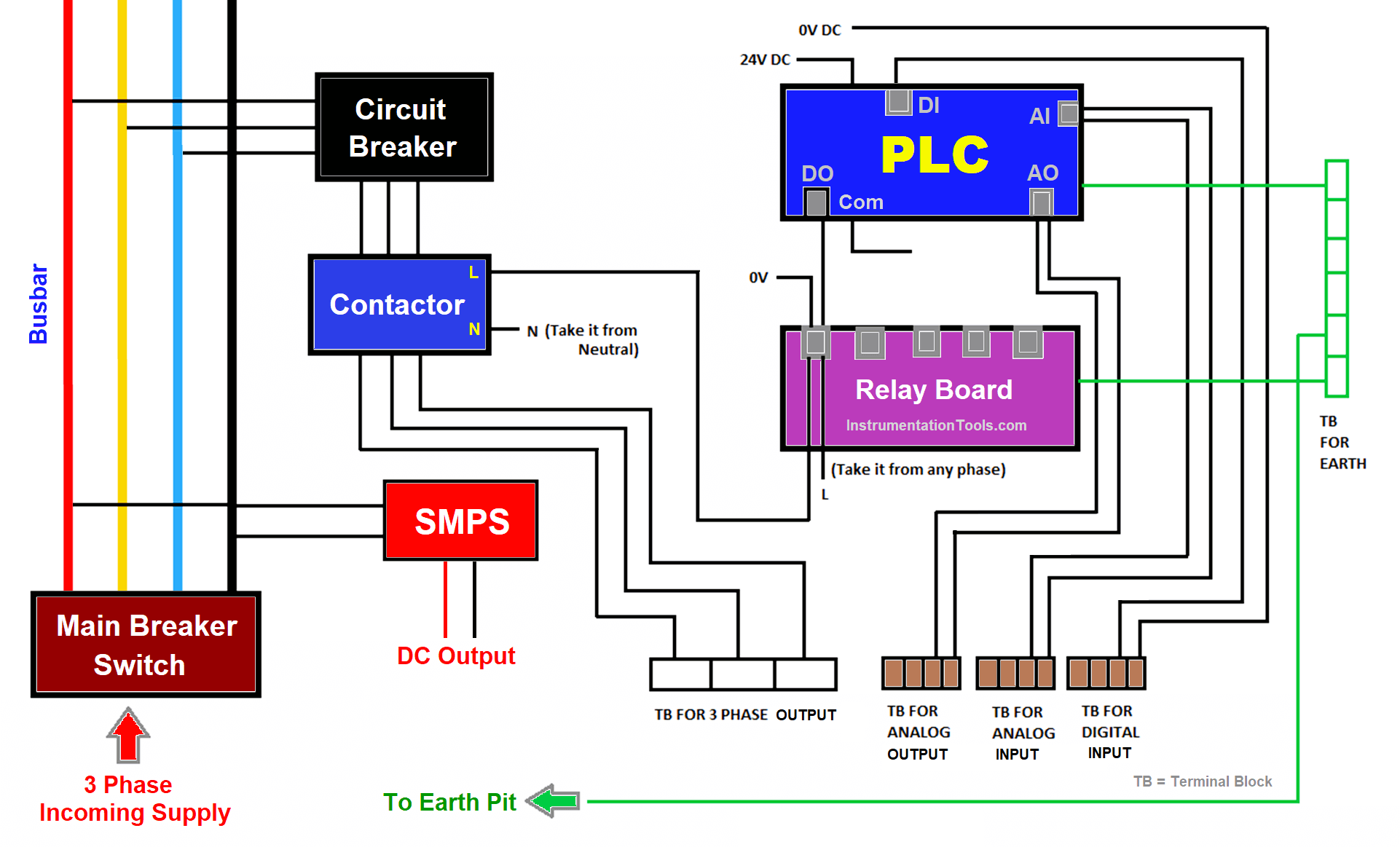
In electrical applications, pump control is a common control system. Common types include single-pump control, one-primary one-standby control, and two-pump three-level control. All types provide manual and automatic control modes. Manual control uses stop and start pushbuttons to stop and run the pump. Automatic control uses float switch contacts to provide level on/off signals to the control circuit and starts or stops the pump based on the set liquid levels.
Control Cabinet and Operation
Given the control options, pumps are typically set to automatic to achieve convenient automated operation. If an alarm occurs during pump operation, follow systematic inspection steps to identify the cause and clear the alarm.
Fault Cause 1: Control System Alarm
When a running pump signals an alarm, first check whether the control system is the cause. Switch the hand/auto selector to manual and momentarily press the start button to see if the control contactor pulls in. If there is no response, common causes are thermal overload protection tripped or the contactor coil not being energized.
Reset the thermal overload relay if it has tripped, and monitor current changes to determine whether the pump is experiencing overload or overcurrent. If the contactor coil is not energized, inspect the control circuit and the contactor. Check for open circuits in the wiring and consider replacing the contactor if necessary.
Fault Cause 2: Float Switch Signal
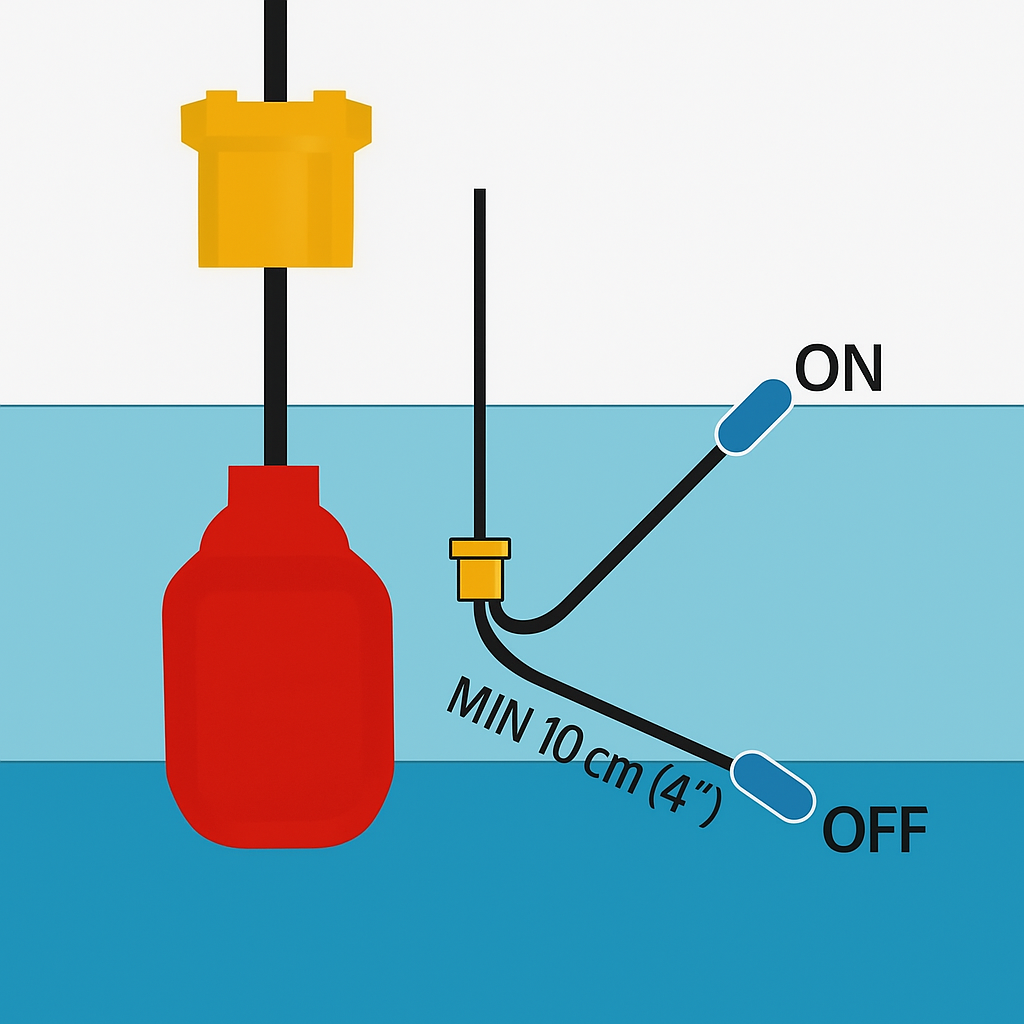
Single-pump control typically uses a stop float and a start float. Two-pump systems usually use stop, mid-level, and high-level floats. Float switch contacts provide the essential start/stop signals. Improper float positioning or mechanical jamming will affect normal operation. Floats can shift over time and produce signal deviations.
After excluding the control cabinet itself as the source of the alarm, inspect the liquid level. Use float switch wiring tests to diagnose float faults. Once the issue is accurately identified, adjust or replace the float switches to eliminate false alarms.
Fault Cause 3: Pump-Related Issues
The operating environment has a direct impact on pump lifetime. In humid, corrosive, or confined spaces, short circuits and reduced insulation are common failures. If the previous checks did not reveal the problem but the pump alarms and stops again after running, the pump itself may be the cause.
Perform insulation resistance and phase-to-phase resistance tests on the pump. Insulation resistance should generally be no less than 0.5 MΩ. If measurements fall below the standard, inspect the power cable and carry out disassembly and internal repairs on the pump to remove sources of the abnormal alarm.
Conclusions and Recommendations
The procedures above provide basic methods for troubleshooting pump alarms. Complex fault conditions may arise from two or more simultaneous causes, so perform step-by-step diagnostics. Follow a systematic approach to isolate control system faults, float switch issues, and pump insulation or wiring faults when repairing pump control systems.