The LED display industry has matured after more than a decade of development. Technology has improved, costs have declined, and price-performance has increased. Market size has grown and several reputable companies have gained recognition for product quality. Small-pitch displays with pixel pitch P2.5 and below, and Mini/Micro LED displays, are penetrating commercial and consumer markets due to high brightness, high refresh rates, and low power consumption, and their market share is rising.
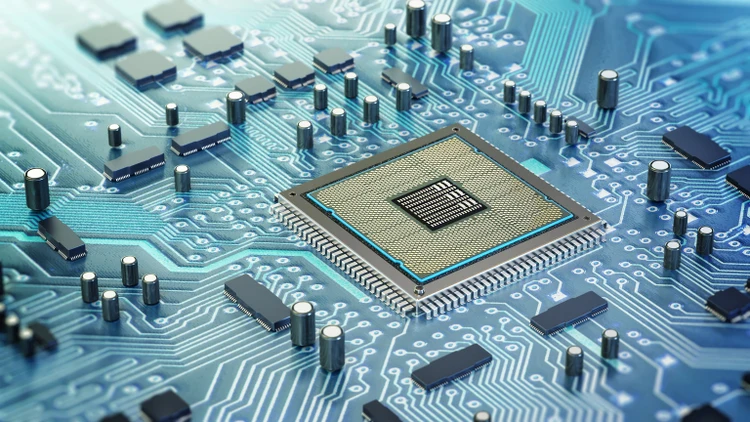
Small-pitch displays with pixel pitch P2.5 and below, as well as Mini/Micro LED displays, are rapidly penetrating commercial and consumer markets. Their adoption is driven by high brightness, high refresh rates, low power consumption, and increasingly sophisticated custom LED PCB board designs that support dense LED packaging, precise current control, and improved thermal management. As a result, their market share continues to rise.
As the market expands, the industry has regained momentum while competition has intensified. Early rapid expansion led to an emphasis on market share over quality and a neglect of differentiated production. Many manufacturers expanded capacity to capture market share, resulting in severe product homogenization and competition driven primarily by price.
Widespread product homogeneity has led to price declines to capture market share and reduce inventory. Conventional products lack clear competitive advantages, forcing many small and medium enterprises into niche segments. The supply chain alternately expands and experiences oversupply, generating downward pressure on prices. In response, many LED display manufacturers are pursuing transformation and upgrades, placing greater emphasis on brand, quality, product service, and technology.
1 Energy efficiency
Energy efficiency and environmental protection remain enduring themes and a key future trend. LED displays are inherently low-energy devices, using solid-state cold light sources that produce vivid colors, rich tonal depth, high luminous efficacy, easy maintenance, and long life. However, assembling thousands of LEDs into modules and panels can still result in significant overall power consumption. Reducing power usage to achieve real energy savings is a major development direction for LED displays.
2 Thin and lightweight design
Lightweight, thin cabinets are replacing traditional iron cabinets. Conventional iron enclosures and supporting steel structures are heavy, creating challenges for building load capacity and foundation limits. Heavy installations are often unacceptable for many buildings and increase transport and handling costs. Lighter cabinet designs reduce structural demands and improve logistics and installation efficiency.
3 Standardization
As the market grows, a large number of new entrants produce uneven-quality products, increasing selection difficulty for customers and creating an urgent need for product standardization. Component manufacturing is also fragmented, with many small specialized suppliers. Standardization across the market would improve component compatibility, enable mass production, and better meet customer requirements.
4 Ease of handling and assembly
Ease of handling mainly refers to simplified loading, unloading, and mechanical assembly. This requirement is most pronounced for stage and event displays, which are frequently assembled and disassembled. Cabinets must allow for fast, precise, and repeatable splicing between modules.
5 Smaller pixel pitch
Indoor small-pitch displays have already reached sub-millimeter levels, and outdoor small-pitch solutions can reach below P2. As technology advances and demand increases, pixel pitch will continue to shrink.
6 Patent protection
With industry maturation and rising numbers of practitioners, patents have become an important way for companies to preserve competitiveness and limit technology leakage. More companies are focusing on R&D and using patent applications to protect intangible assets.
Transitioning from crude price-based competition to competition based on capital and technology, and leveraging policy and industry measures to achieve sustained improvement, will be an important long-term challenge for the industry.