Overview
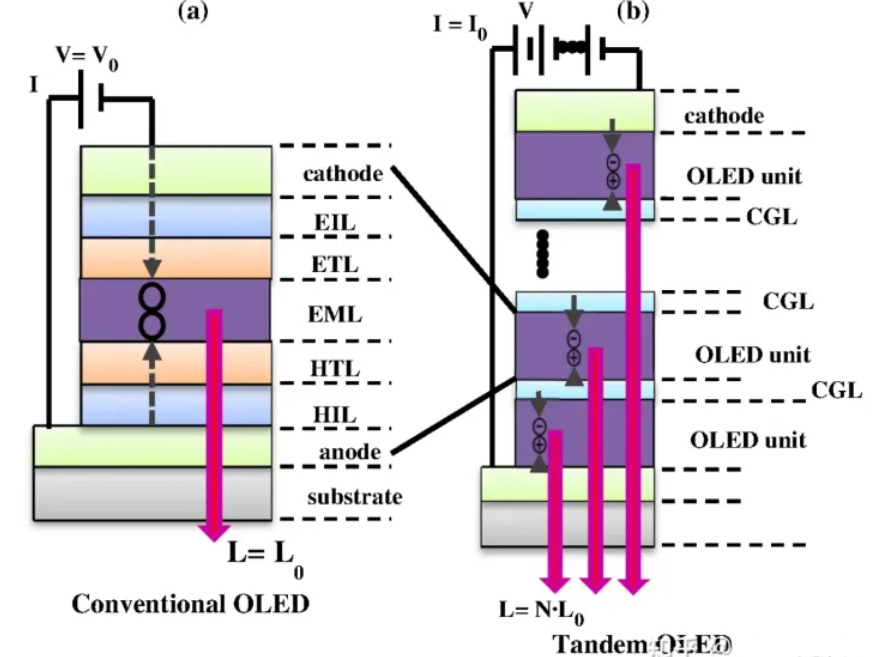
LED lamps are fixtures that use light-emitting diodes as the light source. Typically, the semiconductor LED is attached to a substrate using silver or white adhesive, connected to the chip and printed circuit board with silver or gold wire, and the perimeter is sealed with epoxy resin to protect internal leads before the housing is installed.
LEDs are widely used because of their high brightness, low power consumption, and long service life. Common faults are: lamp does not light, lamp becomes dim, and lamp flickers after the switch is turned off. The following sections analyze and propose practical remedies for each problem.
Basic Internal Structure
LED fixtures are commonly found as ceiling fixtures or as bulbs. Regardless of form factor, the internal structure is similar and can be divided into two main parts: the LED emitters and the driver.
LED emitters
If you open a ceiling fixture or the white plastic section of a bulb, you will typically see a small board populated with yellow rectangular LEDs. These LED emitters are the light-generating elements, and their quantity determines the lamp's luminous output.
Driver
The driver for a bulb is usually installed in the base and is not visible from the exterior. In ceiling fixtures the driver is often a black box that is installed during fixture assembly. The driver provides functions such as constant-current regulation, step-down conversion, rectification, and filtering.
Troubleshooting: Lamp Does Not Light
When a lamp does not light, first verify the mains circuit. For a new installation, use a test screwdriver or temporarily install an incandescent lamp to confirm the circuit is supplying voltage. If the supply is confirmed, proceed with the following checks.
Driver issues
Most cases of a lamp failing to light are caused by driver faults. LEDs require specific voltage and current; if either is outside the required range the LEDs will not illuminate. The driver contains the constant-current source, rectifier, and step-down components required for proper operation. If all LED emitters remain dark when the lamp is switched on, suspect the driver and consider replacing it.
Troubleshooting: Lamp Becomes Dim
Dimming can be related to the same causes that prevent a lamp from lighting. Both emitter failures and driver faults can cause reduced brightness.
LED emitter failures
LED emitters are typically arranged in series strings, with multiple strings connected in parallel. If a single emitter in a series string burns out, that entire string will go dark. If many strings each have one failed emitter, the overall lamp output will be reduced or the lamp may not light at all.
Failed emitters are often identifiable by a small black dot at the center of the emitter surface. If only a few emitters have failed, a common repair is to bridge the two solder pads behind the failed emitter with solder to bypass it. If many emitters are damaged, replacing the LED PCB board is recommended to restore illumination and uniformity.
When every string shows a failure, also inspect the driver components such as electrolytic capacitors or resistors for degradation, since driver faults can cause stress across all strings.
Troubleshooting: Flicker After Switch-Off
When a lamp flashes after the switch is turned off, first verify the wiring. A common wiring error is that the switch is interrupting the neutral instead of the live conductor. The correct wiring practice is for the switch to control the live conductor, with the neutral connected directly to the lamp. Correct any wiring errors to eliminate a potential safety hazard.
If wiring is correct, the lamp may be receiving a small residual or induced current that is enough to charge the driver circuit and produce intermittent light. A practical countermeasure is to include a 220 V relay coil in series with the lamp so that small residual currents are shunted through the coil and the lamp no longer receives enough current to flash when switched off.
Related Reading: LED Display System Commissioning Faults and Fixes