Electric aircraft technology is a cross-cutting advanced field. Similar to the development trajectory of new energy electric vehicles, it has become a core area in global aviation industry development. It shifts traditional aircraft design thinking toward greener, more efficient, and better-connected designs, optimizing the entire aircraft to improve reliability, environmental performance, comfort, and maintainability. It represents an important direction for future aircraft.
From hybrid to full-electric: electric propulsion as the core
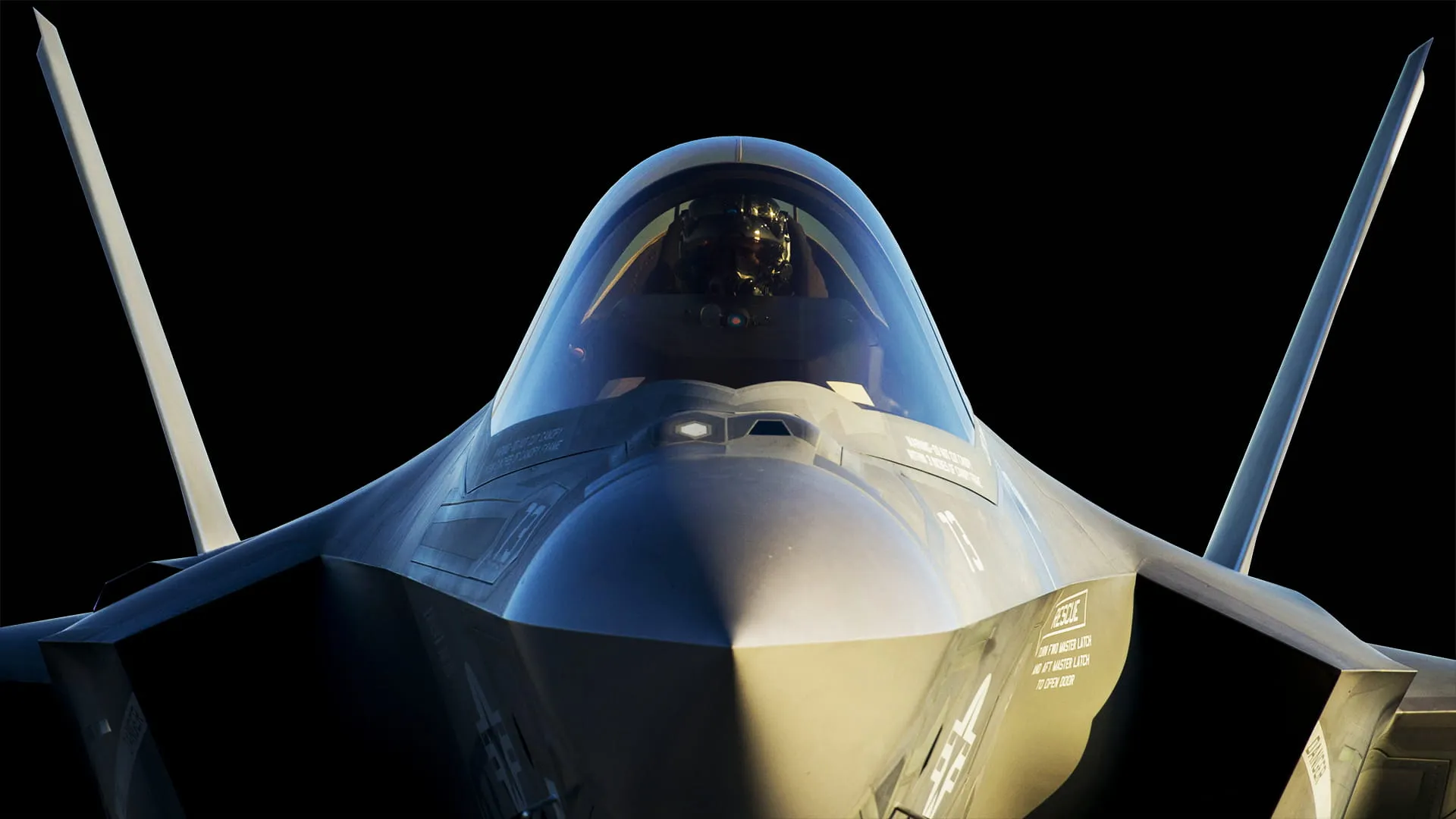
With rising demands for environmental protection, flight safety, passenger comfort, and efficiency, together with rapid advances in battery technology, aircraft primary energy systems are undergoing change. One path is improving existing engines to reduce fuel consumption, yielding hybrid-electric systems that cut fuel use and increase efficiency. The other path is a more fundamental shift to electric propulsion, resulting in electric aircraft technology. Electric propulsion has become a hot research area worldwide and is already applied across civil and military aviation systems, for example in aircraft series such as the Boeing 787, Airbus A380, A350, and the F-35.
The transition from multiple electrical systems to fully electric aircraft is gradual: increasing the proportion of electrical secondary energy first, then adopting hybrid-electric powertrains as an intermediate step, and finally moving to fully electric primary propulsion. The core of this development is electric propulsion technology.
Electric propulsion for aircraft
Progress in electric propulsion has been rapid, but significant energy density gaps remain. The specific energy of jet fuel is roughly 12.7 kWh/kg, while current batteries reach around 0.5 kWh/kg at best. Because conventional gas turbine engines have relatively low overall efficiency and power-to-weight ratios, improving battery specific energy could eventually enable battery propulsion to replace traditional engines. At present, directly using electric power systems to drive large airliners still faces challenges. Therefore, hybrid-electric propulsion is viewed as a practical transitional approach until batteries reach required energy densities.
Research indicates that even for hybrid-electric systems, the required battery capacity for a single-aisle airliner is substantial. The technical lead of the NASA gas-electric hybrid propulsion project has noted that driving a large aircraft in cruise requires energy densities on the order of 1 kWh/kg. Joint battery studies by NASA and MIT suggest that within 10–15 years various battery chemistries may achieve 1–1.5 kWh/kg.
Conventional gas turbine engines have overall efficiencies of 35%–50%. Hybrid-electric propulsion, by integrating two or more power converters, may further raise system efficiency while reducing acoustic emissions. Hybrid systems combine energy-dense liquid fuels with electric technologies to realize quieter, more efficient propulsion.
Forecasts suggest that after 2030, new hybrid distributed-propulsion regional aircraft could appear, with aircraft electrical power demands around 10–20 MW—an order of magnitude above current onboard electrical consumption. High-performance, high power-to-weight electric motors, long-life high-energy-density batteries, novel superconducting materials, aircraft networking, and quiet propeller designs are among the key enabling technologies for such systems.
Advances in power electronics and battery technology have accelerated electric propulsion development. In particular, the rapid progress in electric vehicle technology—high power-to-weight electric motors, integrated power electronics, high-energy long-life batteries, and system-level vehicle design—provides a solid foundation for electric aircraft. Europe and the United States have increased R&D investments in electric aircraft technology to pursue substantive breakthroughs. China is also advancing rapidly in this area, with some agile innovative companies investing in R&D to compete in this technology field.
Studies show that electrically driven aircraft can improve maneuverability and operational flexibility, present clearer fault modes for electrical systems, reduce wiring mass, improve system efficiency, lower life-cycle costs, and cut emissions and noise, which can enhance aircraft dispatch reliability.
Key technologies for electric aircraft
Electric aircraft development has evolved over a long period. Its core technologies can be summarized as four areas: high-efficiency, high power-to-weight electric propulsion motors; high-energy-density, long-life batteries; integrated power electronics and control; and overall electric aircraft design.
High-efficiency, high power-to-weight electric propulsion motors
Electric propulsion enables low- or zero-emission flight while addressing rising fuel costs. Electric thrust replaces or supplements fuel-driven thrust, reducing emissions from conventional propulsion.
The propulsion motor is critical: its power-to-weight ratio directly affects aircraft performance. Current motors include permanent magnet and asynchronous AC motors. Power-to-weight varies with motor topology, rated speed, and cooling method. Under ideal speed and cooling conditions, achievable maximum power-to-weight is typically under 20 kW/kg. Achieving significant further gains requires innovation in thermal design, magnetic performance, structural cooling, and other areas.
Research shows multiple motor topologies can improve efficiency and power-to-weight, but determining the optimal topology requires further study. Only disruptive innovations can deliver order-of-magnitude improvements in power-to-weight; superconducting motor technology is one such option. Superconducting motors can offer the highest power-to-weight ratios, but they carry higher technical risk and remain under active research for aircraft applications.
High-energy-density, long-life battery technology
Battery specific energy is increasing, accelerated by electric vehicle development. Energy storage can take many forms, including liquid air, fuel cells, compressed or liquid hydrogen, supercapacitors, and mechanical flywheels. Some storage methods have energy densities comparable to or exceeding batteries, but integration into aircraft often depends on the powertrain power-to-weight ratio and may require heavy insulation or thermal systems, reducing their practical advantage for flight.
The major challenge for electric aviation remains achieving energy storage and powertrain power-to-weight ratios comparable to fuel-based systems. In conventional fuel aircraft, fuel combustion with atmospheric oxygen reduces aircraft weight during flight; electric aircraft do not benefit from onboard mass depletion, and that must be accounted for in design.
Electric propulsion systems can be two to three times more efficient than fuel engines and may have superior power-to-weight for certain components, but lower battery specific energy compensates for those gains. Overall, electric aircraft are not yet at parity with fuel aircraft in range and payload for many missions.
Aircraft with novel configurations and mission profiles using hybrid-electric architectures are the most likely near-term candidates for successful application. Estimates suggest that for a hybrid-electric single-aisle regional airliner, battery specific energy needs to reach about 0.8 kWh/kg or higher, while a fully electric single-aisle commercial aircraft would need around 1.8 kWh/kg. Widespread aviation use of batteries also requires demonstration of safety and the development of supporting infrastructure. Given rapid progress in battery technology, prospects appear promising.
Supercapacitors offer distinct characteristics: energy densities approaching lead-acid levels but with power densities much higher than lithium-ion, enabling seconds-scale charge and discharge for peak power bursts; extremely high cycle life (up to one million cycles); wide operating ranges; and the absence of combustible materials. These features suit supercapacitors for peak-power support in hybrid systems, where they complement batteries.
Lithium-based batteries and fuel cells are expected to see extensive use in electric aircraft due to their high stored energy, safety considerations, longevity, adaptability, and operational convenience.
Integrated power electronics and control
Power electronics is the main enabler for multi-electrical and fully electric aircraft. Treating an aircraft as an independent electrical network requires extensive research to ensure efficient, safe, and stable operation. Integrated power electronics control is therefore a core technology for electric aircraft.
High power density is crucial for aircraft electrical systems, so power converters must combine high density and high efficiency. Conventional air-cooled converters are typically limited to about 20 kW/L, while an ideal target for aviation propulsion converters is around 50 kW/L. Achieving this requires continued research into new materials, converter designs and topologies, advanced manufacturing, and new power semiconductor packaging techniques. These foundational technologies will significantly influence power electronics design and production.
Silicon carbide high-temperature power electronics are key to achieving high power density converters. Silicon carbide power semiconductors and their packaging, used together with emerging converter topologies, can raise converter power density without degrading performance. Many enabling techniques are already being developed, such as wireless sensors and microcomputer-based motor speed control; further research can increase power electronics power density even more.
Stable operation of an aircraft’s independent electrical network is essential because aircraft power electronics present many nonlinear loads that generate harmonics and noise, degrading stability and efficiency. Robustness of the electrical network is therefore critical. A robust electrical network, enabled by integrated power electronics control, must reliably supply peak loads, manage varying loads, and provide high-reliability power to critical aircraft systems.
Overall electric aircraft design
Integrating electrical systems well into the aircraft design is vital for overall performance and service life. A successful aircraft requires coordinated design across propulsion, aerodynamics, structure, systems, and more. Holistic system-level design is necessary to produce a high-performing aircraft.
Simulation and model-based systems engineering are important for electric aircraft development. Applying model-based approaches across disciplines allows virtual verification of flight and system behavior and supports multidisciplinary optimization. Electric aircraft technology spans multiple fields and is inherently interdisciplinary, with significant implications across economic and industrial sectors.