1. Detection and Stealth: Spear Versus Shield
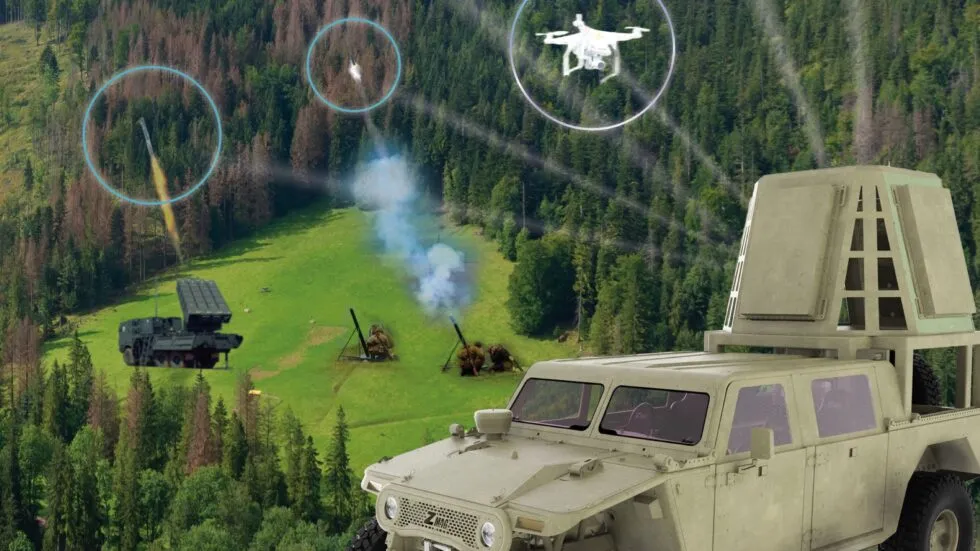
Detection uses various means to identify and measure targets, while stealth reduces a target's detectability. Detection and stealth technologies can be viewed as spear and shield, often evolving in alternating cycles. Common target detection methods include visible-light detection (vision), radar, infrared detection, and acoustic detection (sonar). Human vision and hearing were the main detection methods before modern technical means became available, but they have natural limitations and are affected by conditions. Visible light covers only a small portion of the electromagnetic spectrum; because its wavelength is shorter than infrared and radar bands, effective detection range is limited and it is affected by weather and day/night cycles. Camouflage is an established countermeasure against visible detection, achieved by disrupting object outlines or blending objects into the background. Sound propagates slowly in air and is mainly used for underwater detection.
Radar became the core detection equipment. Radar (radio detection and ranging, Radar) was applied in World War II with notable results. During the second half of the 20th century, new radar detection paradigms and technologies advanced rapidly, greatly increasing radar capabilities and making radar a core element of information-based combat systems.
Demand for detecting aircraft and missiles drove infrared detection development. Aircraft and missile engines operate at high temperatures and emit strong infrared radiation. The growth of jet aircraft and missiles after World War II promoted infrared detection technology, enabling combat use in air-to-air missiles, man-portable air defense systems, and other air defense systems. By the 1980s, infrared detection had been widely applied in ballistic missile early warning, airborne and shipborne infrared search and track, missile launch warning, airborne and spaceborne ground surveillance and reconnaissance, kinetic interceptors, air-to-air missiles, air-to-ground missiles, anti-ship missiles, and precision-guided anti-armor munitions.
Radar and infrared detection are the main detection methods for modern weapon systems above the waterline. Underwater environments are not favorable for electromagnetic wave propagation, so this discussion focuses on land, sea surface, air, and space. Detection and stealth are mutually antagonistic yet interdependent; improvements in detection stimulate development in stealth and vice versa.
1.2 Stealth: Reducing Detectability
Stealth techniques do not make a target completely undetectable. Their purpose is to reduce detectability and improve survivability. With the rise of detection technologies in the 20th century, especially the wartime deployment of radar, stealth techniques emerged to lower detectability. In technical terms, stealth is known as low-observable technology or target signature management, which alters or reduces target signatures from aircraft, ships, missiles, and other platforms to lower the probability of detection by adversary systems. Stealth increases a platform's difficulty of being discovered, tracked, or engaged and thus improves survivability.
Stealth involves multiple signal types, with radar and infrared stealth being primary directions. To make weapon systems harder to detect, designers seek to minimize radar, infrared, laser, visible-light, and acoustic signature signals. Because radar and infrared are widely used for detection and guidance, radar and infrared stealth receive priority in development.
Stealth technologies fall into active and passive categories; currently passive techniques dominate. Passive methods include radar stealth, infrared stealth, laser stealth, visible-light stealth, and acoustic stealth. Active stealth requires energy consumption and remains less mature, so passive approaches currently predominate.
Radar wavelengths are relatively long and cover a wide band, making radar the primary means for medium- to long-range detection. Radar cross section (RCS) is used to quantify an aircraft's radar stealth performance. Radar detects by receiving and analyzing echoes reflected from a target. RCS measures the ability of a target to reflect radar signals back to the receiver direction. A smaller RCS indicates weaker reflected signals and reduced radar detectability. RCS depends not only on target size but also on structure, materials, electromagnetic frequency, angle of incidence, and other factors.
Stealth aircraft shape design follows basic rules. Stealth is a multidisciplinary integrated design: besides stealth materials, the aircraft shape itself can effectively reduce detectability. Shaping relies on electromagnetic scattering theory, arranging major aircraft components to minimize electromagnetic radiation in threat directions.
2. Key Stealth Materials
Radar, infrared, and visible-light detection have different characteristics and require different countermeasures:
- Radar detection actively emits electromagnetic waves and receives returns across a wide frequency range; radar stealth materials are the most complex and include radar-absorbing coatings and absorbing structures.
- Infrared detection passively receives a target's thermal radiation. The atmosphere attenuates infrared radiation, with the 1–2.5 μm, 3–5 μm, and 8–14 μm bands having relatively low atmospheric attenuation. Infrared stealth focuses on materials with low infrared emissivity.
- Visible-light stealth relies on camouflage coatings or environmental blending to reduce visual conspicuity.
2.1 Infrared and Visible-Light Stealth Materials
Low-Emissivity Materials
Infrared stealth aims to reduce thermal signatures. Low-emissivity materials reduce the infrared emissivity of a target surface and its infrared radiation characteristics. Low-emissivity materials are classified by chemical composition into inorganic, organic, and organic-inorganic composite low-emissivity materials.
Visible-Light Camouflage Materials
Visible-light stealth targets human observation, photography, and video. Camouflage coatings are categorized as protective, mimicry, and disruptive camouflage. Protective camouflage suits fixed or small targets on monochrome backgrounds; mimicry camouflage suits relatively fixed targets on multicolor backgrounds; disruptive (or deforming) camouflage uses irregular large spots of multiple colors for moving targets such as military vehicles. Military camouflage coatings must withstand harsh environments and exhibit strong adhesion, impact resistance, corrosion resistance, weatherability, and mold resistance. The pattern and color combinations of pigments determine visible-light concealment effectiveness.
2.2 Radar-Absorbing Coatings
Radar-absorbing materials convert incident electromagnetic energy into heat or other forms of energy to absorb incident radar waves. Electromagnetic absorbing materials can significantly reduce an aircraft's RCS, improving survivability and combat performance. Absorbing materials are classified by fabrication and mechanical support into coating-type and structural-type absorbers, and by loss mechanism into dielectric-loss, magnetic-loss, and other loss types.
2.2.1 Magnetic-Loss Absorbers
Ferrites
Ferrites have high permeability and high resistivity at high frequencies, allowing electromagnetic waves to enter and rapidly attenuate. They exhibit strong ferromagnetic resonance absorption and frequency dispersion of permeability, providing strong, broadband absorption and are a relatively mature absorber class. Early naval applications include 1947 ferrite-based absorbers used to reduce antenna and edge diffraction on ships. The U-2 reconnaissance aircraft also used ferrite absorbers. Ferrites have drawbacks such as poor high-temperature performance and relatively high areal density, limiting their use on stealth aircraft.
Carbonyl Iron
Carbonyl iron is commonly produced by thermolysis of iron pentacarbonyl and is a widely used radar-absorbing agent. When used alone, carbonyl iron behaves similarly to ferrite, with disadvantages including high specific gravity and thick matching layers. It is often compounded with carbon materials, polymers, or other magnetic loss agents to improve performance.
Ultrafine Metal Powders
Ultrafine metal powders are pure metal or alloy particles with submicron to nanometer sizes. Their transmission and absorption properties depend on particle size. Major drawbacks include poor oxidation and acid/base resistance, high dielectric constant, unfavorable spectral characteristics, difficult fabrication, and high cost.
2.2.2 Dielectric-Loss Absorbers
Magnetic-loss materials are broadband and mature, but due to the Curie temperature limit, magnetic materials are unsuitable for high temperatures. Therefore, high-temperature absorbers are mainly dielectric-loss materials such as carbon-based absorbers and silicon carbide.
Carbon-Based Absorbers
Carbon-based absorbers include graphite, carbon black, solid carbon fibers, and hollow carbon nanotubes. They have wide raw-material availability, simple fabrication, low density, high conductivity, and strong adsorption, and are often used as strong absorbers, carrier materials, or matching layers in multilayer absorbers. A weakness of carbon absorbers is high-temperature oxidation, which degrades absorption performance.
Silicon Carbide
High-temperature stealth materials for hot parts of weapon systems must withstand prolonged high temperatures and thermal shocks. Research on high-temperature absorbers has focused on ceramic-matrix composites; silicon carbide is a key component for multi-band high-temperature absorbers. Some commercial ceramic-based materials can operate at 1000°C and have been applied to subsonic missile nozzles and inlets. Ceramic-based structural absorbers used in some stealth aircraft exhausts have tolerated temperatures up to around 1093°C.
2.2.3 Nanomaterials and Trends
Nanomaterials exhibit high electromagnetic absorption performance, combining wide bandwidth, low density, thin thickness, and good compatibility. Research on nanocomposite absorbers focuses on ferrite composites, carbon material composites, and silicon carbide composites. Absorbing materials are trending toward lighter, thinner, and wider-band solutions; composite and structured approaches are promising directions.
2.3 Structural Stealth Materials
Structural stealth materials are integrated structural-and-stealth composites developed from advanced composite materials. They can serve as structural components (such as wing skins, tail surfaces, and inlet ducts) while providing stealth functions, reducing lifecycle and maintenance costs compared to coatings. Structural stealth materials include traditional types (hybrid fiber-reinforced composites, silicon carbide fiber composites, sandwich-structured absorbing composites, and conductive-enhanced composites) and novel types (frequency-selective surfaces and metamaterials).
2.3.1 Traditional Structural Stealth Materials
Hybrid fiber-reinforced composites: Carbon-fiber composites are widely used in aerospace due to high specific strength and stiffness and low weight. One development path is hybridizing carbon fiber with other fibers to create hybrid composites that provide both absorbing and mechanical properties. Hybrid structural absorbers typically consist of a transmissive layer that allows electromagnetic waves to enter and an absorbing layer that dissipates the waves via loss mechanisms.
Thermoplastic-resin-based hybrid composites have been applied to U.S. defense systems. Thermoplastic resins such as PEEK, PEK, PPS, PEKK, and LCP are spun into yarns and alternately mixed with special fibers, then woven into fabrics or sandwich structures and combined with resin to form composites. Some stealth aircraft use PEEK hybrid fiber absorbing composites for wing and fuselage skins; hybrid PEEK structural stealth materials have been used in submarine hulls.
Silicon carbide fiber composites: Silicon carbide fibers combine dielectric properties similar to glass fiber and strength and modulus comparable to carbon fiber, with superior high-temperature oxidation resistance, making them ideal reinforcement for high-performance composites.
Sandwich-structured absorbing composites: Sandwich absorbers consist of two skins and a core layer, offering load-bearing capacity while producing multiple reflections and absorption of radar waves. Core types include corrugated, pyramidal, and honeycomb structures.
Conductive-enhanced plastics: Conductive-enhanced plastics add conductive fibers, foils, or nanoscale metal powders into nonmetal polymers or resins. When radar waves penetrate, part of the energy is absorbed. The absorption band can be tuned by material type and content. Additives include PAN fibers, nickel-plated carbon fibers, stainless steel fibers, thin aluminum sheets, ferrites, nickel, cobalt powders, etc.
2.3.2 Novel Structural Stealth Materials
Frequency-Selective Surfaces
Frequency-selective surfaces (FSS) are periodic surfaces made from unit cells arranged in specific patterns. Depending on unit cell geometry and arrangement, an FSS can present reflective behavior in certain bands and transmissive behavior in others. Traditional FSS are implemented by periodic slots in metal surfaces or by arranging periodic metal patches on dielectric substrates to form resonant "dipole" structures, whose electromagnetic properties are modulated by the surface periodicity. FSS can be classified as low-pass, high-pass, band-pass, or band-stop.
FSS have been applied to fighter and naval radome designs. FSS features allow good transmission within radar operational bands, preserving antenna operation, while acting as a reflective metallic surface outside those bands, thus reducing antenna RCS outside its working band.
Metamaterials
Metamaterials are engineered composite functional materials that use subwavelength unit cells arranged to produce macroscopic physical properties not found in natural materials. By tailoring unit-cell structure, metamaterial effective medium parameters can be freely engineered to achieve unique electromagnetic properties.
Metamaterials can realize negative refractive index and are sometimes called "left-handed materials." When both permittivity and permeability are negative, unusual phenomena such as negative refraction occur, where the refracted wave lies on the same side of the normal as the incident wave.
Metamaterial development can be viewed in three phases: theoretical research, realization of electromagnetic properties, and electromagnetic stealth applications. In 2008, the "perfect metamaterial absorber" concept was realized in the microwave band using a resonant ring, dielectric layer, and metal ground plane, demonstrating near-perfect absorption at specific frequencies. Unlike traditional absorbers, this metamaterial used only metallic elements and could be tailored and optimized individually, marking a milestone for structured stealth.
Metamaterials have continued to evolve toward wider operating bands. By nesting or arraying unit cells, multiband absorption has been demonstrated, including absorbers that operate across S, C, and X radar bands simultaneously.
Metamaterial radomes have been proposed that integrate absorptive and transmissive functions: outside an antenna's operational band, the metamaterial shell can guide and absorb incoming waves to reduce RCS; within the operational band, the shell can operate in a "transparent mode" to allow normal antenna function. Compared with FSS-based radomes, metamaterial radomes offer further improvements because metamaterials can theoretically absorb incident energy across bands rather than simply redirecting it, which reduces vulnerability to multistatic radar techniques.
Metamaterials attracted defense research attention early in the 21st century. The U.S. Defense Advanced Research Projects Agency (DARPA) began tracking metamaterials work in the late 1990s and included metamaterials topics in multi-university research proposals in 2001. Industry collaborations and patents followed, and several defense contractors pursued metamaterial applications in antenna and communications systems.
3. Stealth Aircraft Emphasis and Structural Stealth Adoption
3.1 U.S. Experience with Multiple Stealth Aircraft
Because radar is the mainstream means to detect aircraft, "stealth aircraft" usually refers to aircraft with low radar detectability. In recent local conflicts, Western countries led by the United States used stealth aircraft to achieve significant operational effects. Radar-focused stealth emerged during World War II with German use of absorbing materials on submarines and wings. Aircraft stealth advanced during the Cold War in the United States; subsequently, China, Russia, Germany, France, the UK, Sweden, Canada, Japan, and others conducted stealth aircraft research.
F-117 and B-2 demonstrated strong survivability in conflicts. During the Gulf War, NATO operations over Yugoslavia, and the Iraq War, the United States employed stealth aircraft. In the Gulf War, the F-117 flew thousands of strike missions and lost only one aircraft; the B-2 flew long-range missions from the continental U.S. and experienced no significant threats during specific campaigns. However, some stealth platforms imposed high maintenance demands due to coatings and materials.
3.2 U.S. Design Trends: Balancing Stealth, Aerodynamics, and Maintainability
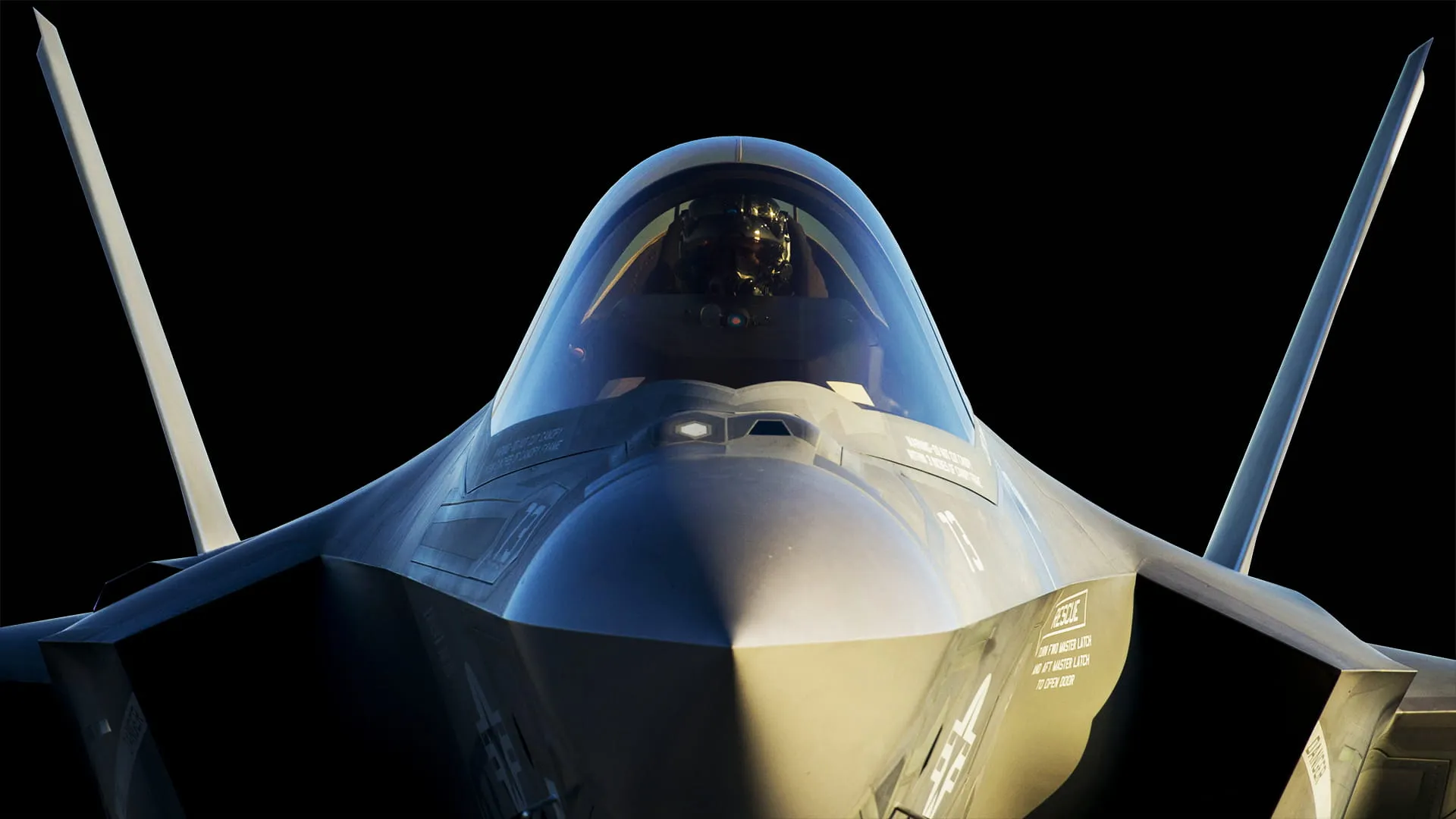
U.S. stealth aircraft design evolved from F-117, which prioritized stealth over aerodynamic performance, to F-22, which balanced stealth and aerodynamic performance, and later to F-35, which balances stealth, aerodynamics, and maintainability. Design maturity improved over successive programs.
The F-117's faceted geometry traded aerodynamic performance for radar reflection control. Its faceted surfaces directed radar energy away from the emitter, but the geometry degraded aerodynamic and maneuvering characteristics.
The B-2 used smoother, tailless flying-wing shapes and radar-absorbing coatings rather than faceting. While the B-2 achieved superior stealth, its coatings required intensive maintenance, reducing sortie rates and increasing maintenance hours. Early B-2 coatings required frequent inspection and repair after flights, resulting in high maintenance-to-flight-hour ratios.
F-22 and F-35 achieved better compromises between stealth and maneuverability by adopting conventional aerodynamic layouts that offer more favorable handling. F-35 maintenance related to low-observable repairs has been substantially reduced compared with earlier platforms. Developers integrated low-observable features into the manufacturing process rather than retrofitting them, and structural absorbing materials and hybrid composites were used extensively across control surfaces, skins, and inlet structures, reducing sustainment burden.
The forthcoming B-21 bomber incorporates next-generation stealth technologies and networked open architectures and is described by its manufacturer and public defense statements as optimized for maintainability, reflecting lessons learned from earlier programs.
In summary, structural stealth materials have matured across generations, and FSS has been applied to radomes. Key observations include:
- Early platforms used composite and honeycomb structural stealth materials due to technological limits.
- FSS was applied in some designs to preserve onboard radar operation while reducing emissions outside operational bands.
- Stealth technology advances have improved maintainability in later designs.
3.3 Stealth Programs Represent Significant Budget Shares
U.S. budget reports indicate that stealth platforms account for a substantial portion of major fighter program budgets. For example, combined budgets for major stealth programs such as F-35, next-generation air superiority, MQ-25, and B-21 represented roughly 50% to 58% of major fighter program budgets across recent fiscal years, showing an increasing share over time. The F-35 program in particular has dominated budget allocations among manned fighter programs.
The F-35 production and sustainment timeline spans multiple decades, with procurement and development projected into the 2040s. Annual development and procurement costs averaged in the billions of dollars during production peaks, with procurement dominating costs as the program matures.
3.4 F-35 Global Orders and Carrier Adaptation
The F-35 has achieved significant global sales and deliveries, with thousands of orders from partner and foreign customers and substantial deliveries as of mid-2023. The F-35B short-takeoff/vertical-landing variant has been adapted for use on carriers by several navies, and multiple countries have operated or embarked F-35B aircraft from carriers and large-deck amphibious ships for the first time in decades.
3.5 Global Emphasis on Stealth Aircraft R&D
Stealth aircraft development is a global R&D focus. By 2021, the United States fielded several hundred stealth fighters, exceeding the numbers of other countries. Besides China, the United States, and Russia, France, Germany, Spain, the UK, Japan, South Korea, and Turkey have pursued stealth-fighter programs. Recent milestones include first flights and prototype testing of new platforms in several countries.
3.6 High-Tech Products: Long Development Cycles and High Customization
Stealth performance is a core metric for stealth aircraft. For advanced fighters, stealth, supersonic cruise, beyond-visual-range engagement, and high maneuverability are key capabilities. Stealth materials involve core performance requirements and high qualification barriers. Because stealth is a core capability of weapon systems, suppliers face strict licensing and qualification regimes and must meet high technical standards.
Stealth material development cycles are long and highly customized. To ensure required performance, customers typically require co-development with suppliers from design through first-piece trials to production. As stealth material applications increase across platform locations and variants, downstream models and requirements diversify. Each product often has unique material, specification, and performance requirements, leading to a customized supply approach.
Structural absorbing materials impose integrated demands on suppliers. These materials combine electromagnetic absorption and structural load-bearing roles, requiring suppliers to provide integrated stealth solutions and strong multiphysics simulation and design capabilities. Long-term stable cooperation is preferred by customers because switching suppliers entails high costs and long timelines. First movers with sustained quality often form exclusive, long-term supply relationships.
4. Company Profiles
4.1 Huaxin Technology
Sha'anxi Huaxin Technology Industrial Co., Ltd. went public in March 2022. The company focuses on special functional materials including stealth, camouflage, and protective materials. Key products include stealth coatings, structural stealth materials, high-fidelity camouflage barriers, camouflage nets, heavy-duty anti-corrosion materials, and efficient thermal insulation materials. Products are applied to major defense platforms such as aircraft, main battle tanks, ships, and missiles for stealth, camouflage of important ground targets, and surface protection of components. After years of development, the company achieved breakthroughs in special functional materials and entered batch production of core stealth and camouflage products in 2019 and 2020.
In 2022 Huaxin Technology reported revenue of 672 million CNY. Revenue growth from 2018 to 2022 recorded a compound annual growth rate (CAGR) of 93.91%. Net profit attributable to shareholders in 2022 was 333 million CNY, with a CAGR of 138.82% over 2018–2022 and a net margin of 49.59%.
Special functional materials accounted for the majority of revenue in 2022, contributing 615 million CNY (91.44% of total revenue) with a gross margin of 59.25%.
According to its prospectus, Huaxin is a supplier of special functional materials to defense programs. In the first half of 2021, sales to the largest customer group accounted for 95% of revenue, with a single constituent unit accounting for approximately 66% of total revenue.
Huaxin collaborates with research institutions under a "production-study-research" cooperation system. Its aerospace engine special functional materials project passed defense technology appraisal and achieved national-level technical awards. As of March 2022, the company held numerous defense and national invention patents. The company continues to follow customer platform developments and has participated in multiple weapon system material development projects, with some products entering validation and qualification stages.
4.2 KuangChi Technologies
KuangChi Technologies Co., Ltd. previously operated in automotive components before acquiring KuangChi Advanced Technology, which focuses on metamaterials and related structural solutions. KuangChi Advanced has pursued commercialization of metamaterials for advanced equipment and holds a substantial patent portfolio. Founding team members include returnees with advanced degrees from institutions such as Duke University, and the company published a notable metamaterial cloak paper in 2009 in Science.
KuangChi's current business segments include metamaterials and automotive components. Metamaterial products target aerospace and marine structural applications, split between formal research and batch production. Automotive components cover seat functional parts, safety parts, and key components.
KuangChi reported revenues of 1.168 billion CNY in 2022, a 35.88% year-on-year increase, and net profit attributable to shareholders of 377 million CNY, up 38.84% year-on-year. In 2022, metamaterial products contributed 800 million CNY (68.50% of revenue) with a gross margin of 54.81%.
KuangChi claims to have transitioned metamaterials from basic science to industrial application, establishing production and testing capabilities and filing numerous patents and standards. The company reported that structural components using its third-generation metamaterial technology entered batch production in 2021, and it recorded large production contracts in subsequent periods. Incentive-driven revenue targets for metamaterial business suggest continued high growth expectations.
4.3 JiaChi Technology
Chengdu Jiachi Electronic Technology Co., Ltd. focuses on electromagnetic functional materials and structures (EMMS). Main products include stealth coating materials, structural stealth components, and electromagnetic compatibility materials, with military applications representing the primary revenue source. The company is led by a senior technical team including an academician with extensive research and industrialization experience in electromagnetic radiation control materials.
In 2022, Jiachi reported revenue in which stealth coating materials and structural stealth components were the main contributors. Stealth coatings generated 403 million CNY (52.41% of revenue) with a gross margin of 82.44%. Structural stealth components generated 329 million CNY with a gross margin of 85.24% and a strong multi-year CAGR.
Jiachi sources high-strength aramid honeycomb and special structural components as major inputs for structural stealth items. The company supplies major defense groups and had two main defense customers accounting for significant portions of 2022 revenue. The company has received national and provincial science and technology awards and continues to run multiple R&D projects. Planned fund-raising aims to expand production capacity and enhance R&D capabilities to meet growing demand from both military and civilian markets.
4.4 New Jinggang
Guangdong New Jinggang Technology Co., Ltd. focuses on special-application materials and electronics. Products include RF microwave power amplifiers, RF filters and modules, frequency-hopping filters, thermal spray materials, electromagnetic absorbing materials, anti-corrosion and antistatic materials, and ZnS optical materials.
In 2022, New Jinggang reported revenue of 430 million CNY and net profit of 132 million CNY. RF microwave products provided the majority of revenue (96.54%). The company's special-application materials business, operated via a subsidiary, includes thermal spray materials, electromagnetic absorbing materials, structural absorbing materials, carbon-fiber-reinforced composites, anti-corrosion and antistatic coatings, and ZnS optical materials. Thermal spray materials, electromagnetic absorbers, and anti-corrosion antistatic materials have entered batch production and supply. Structural absorbers and some composite and optical materials remain in R&D and validation stages. Electromagnetic absorption materials are already supplied in small batches for aircraft, ships, specialized vehicles, and ground equipment.
References and Notes
This article summarizes published technical literature, company reports, and publicly available defense procurement and program information to provide an overview of trends in detection and stealth technologies, key materials, structural approaches, and supplier landscapes.