Abstract
With the continuous emergence of disruptive frontier technologies and so-called "black technology" in military offense and defense, strategic research is needed to assess future defense system development and requirements. This analysis identifies four typical threat categories at the system, platform, weapon, and technical levels. By reviewing the current state and development trends of key air and missile defense technologies, including conventional air defense and frontier technologies such as artificial intelligence and quantum information, this article analyzes application forms and implications. Following the principle that technology development drives changes in weapons and equipment, relevant insights and recommendations are presented to inform future defense system development.
1 Introduction
Air and missile defense has long been a key component of tactical defense. As a multidisciplinary field covering weapon systems, aerodynamics, structures, launch, and propulsion, related technologies demonstrate breadth and extensibility. In recent years, rapid advances in science and technology have driven traditional capabilities toward higher speed, altitude, and range, while new technologies represented by artificial intelligence and quantum information have introduced both opportunities and challenges for air and missile defense development.
2 Typical Threat Analysis for Air and Missile Defense
With intensified exploration of near-Earth orbit by major powers, maturing combat system concepts, increasing cyber competition, improvements in precision strike weapons and utilization of near-space, and breakthroughs in big data, quantum positioning, and intelligent stealth, aerospace defense tasks have become increasingly demanding. Overall, air and missile defense systems will face comprehensive threats at the system, platform, weapon, and technical levels.
2.1 System-level threats
Top-down combat system design determines doctrine and guides campaign development. Concepts such as multi-domain operations, mosaic warfare, decision-centric operations, and joint all-domain operations create system-level threats. Multi-domain operations expand traditional ground domains into sea, air, space, and cyber domains. Mosaic warfare emphasizes flexible, rapidly reconfigurable distributed force packages combining manned and unmanned elements. Decision-centric approaches leverage intelligent decision support to conduct intelligence and counterintelligence to erode an adversary's information advantage. Joint all-domain operations strengthen cross-domain integration across land, sea, air, space, cyber, and electromagnetic domains to secure decision superiority in the cognitive domain. As a result, combat system concepts will play an increasingly important role in future operations.
Cyberspace extends the global information environment and includes communications, radar, navigation, and various electromagnetic signals and systems. Concepts such as "no success without networked advantage" and "electromagnetic dominance is decisive" characterize the informationized aerospace battlefield. Electronic warfare emphasizes integrated and interoperable electronic warfare systems to secure control of the electromagnetic spectrum through situational awareness, electronic attack, and electronic protection. Therefore, contestation in cyberspace will be a principal battlefield in future informationized conflicts.
2.2 Platform-level threats
Conventional air, land, and sea platforms, including high-performance stealth aircraft, land- and sea-based launch platforms, aircraft carriers, submarines, ground stations, lighter-than-air platforms, and unmanned aerial vehicles, have established operational advantages. Development of near-space and exo-atmospheric capabilities is increasingly prioritized, and new weapon platforms that integrate autonomy and unmanned technologies are maturing. Emerging strike platforms incorporating a range of innovative approaches will diversify future airstrike methods.
Space is a strategic high ground and is being leveraged via spaceborne platforms to enhance strike systems, making it a focus of major powers. Reconnaissance, early warning, and navigation satellites provide vital support for command and control, situational awareness, precision strike, missile defense, and battlefield environmental monitoring. As of early 2023, there were 7,218 operational satellites in orbit globally, with the United States holding 65.5% of that total. Space-based weapons can offer wide engagement ranges, rapid response, and strong survivability, extending global strike capability without being constrained by airspace, and therefore present significant threats. Future platform deterrent and strike capabilities across sea, land, air, and space will expand operational dimensions and compound combat capabilities, posing deeper challenges to aerospace defense systems.
2.3 Weapon-level threats
Weapon-level threats are the most direct lethal components of strike systems and include ballistic missiles, near-space hypersonic vehicles, directed energy weapons, and high-power microwave systems. These and other advanced destructive weapons will continue to evolve.
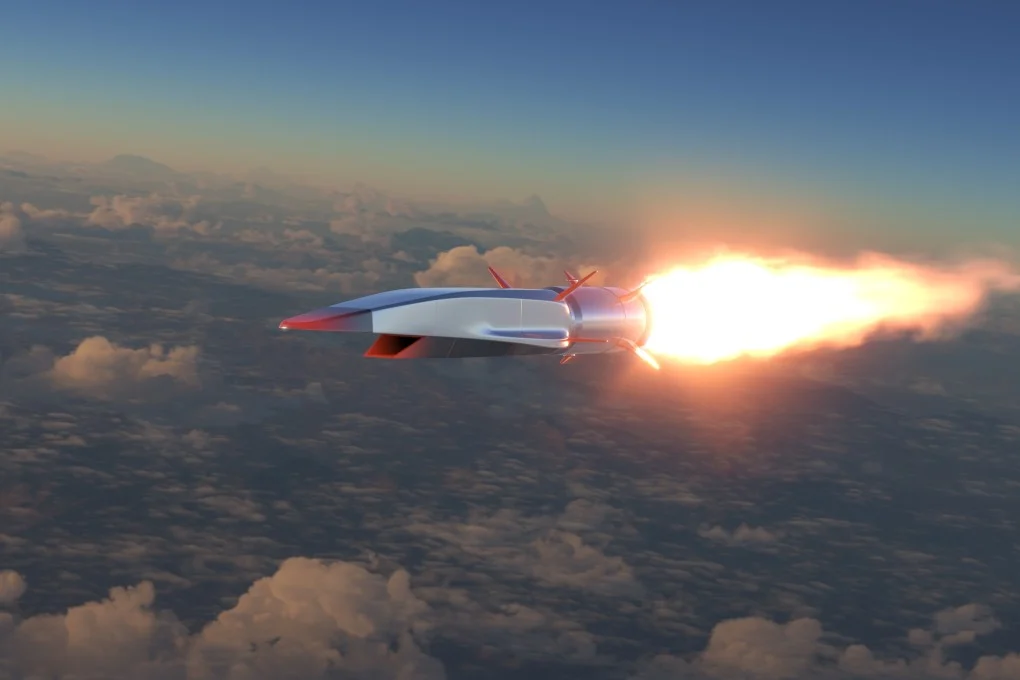
For long-range precision strike, ballistic missiles offer long range, high speed, strong penetration, high accuracy, and mass effects. They feature surprise, concealment, multi-platform and multi-directional launch capabilities and can carry various warheads, making them among the most threatening offensive weapons. Near-space hypersonic vehicles are developing toward greater coordination, extended range, and reduced observability, enabling strikes from outside defended areas against deep targets and posing significant tactical threats. Major powers are accelerating development to achieve global rapid response. Conceptual weapons such as high-energy lasers and high-power microwaves also threaten current air defense systems. High-energy lasers provide near-instantaneous, precise effects with controllability and rapid engagement, while high-power microwaves can broadly disrupt informationized weapons and systems. As ballistic missiles become more maneuverable, hypersonic vehicles are fielded, and directed-energy and high-power microwave systems enter operational use, future aerospace strike modes and capabilities will diversify significantly, challenging traditional air defenses.
2.4 Technology-level threats
Beyond platforms and weapons, emerging technologies pose latent and hard-to-predict threats, including adaptive stealth, blockchain, and big data. Intelligent stealth can autonomously sense and identify environmental changes and adaptively adjust optical, infrared, and radar signatures for reduced detectability. As stealth platforms become more common, stealth techniques will extend to more weapon platforms and munitions. Big data, with its extreme volume, domain specificity, diversity, temporal-spatial breadth, and rapid evolution, offers new modes and methods for understanding complex military systems. Blockchain can enable decentralized weapon information systems and improve logistics assurance and data security, supporting lifecycle equipment management. Overall, rapid emergence of creative frontier technologies brings high value to future strike systems while posing significant threats to air and missile defense.
3 International Air and Missile Defense: Current State and Trends
3.1 Conventional air and missile defense technologies
In response to increasingly advanced and complex aerospace threats, global air and missile defense technology has progressed steadily. The United States has developed an integrated network of surface-to-air systems ranging from high-altitude, long-range to ultra-low-altitude, short-range layers based on systems like Patriot and Standard, achieving initial integration of air defense and missile defense. Russia has built on Soviet missile technology with classic systems such as the S-300 and S-400, which offer advantages in range and speed relative to some U.S. systems. After the Russia-Ukraine conflict and related geopolitical pressures, Russia accelerated deployment of the S-500, a next-generation air and missile defense system with capabilities in long-range air defense, non-strategic and strategic missile defense, counter-hypersonic targets, and low-orbit space target engagement.
3.1.1 Advanced missile design technologies
Mature overall missile design capability is a key measure of integrated air and missile defense performance. The Standard series achieves extended range by using a common main stage with strap-on boosters and expands mission sets through upgrades to on-board systems. The Patriot series improves system-level capabilities through iterative upgrades to on-board electronics, enabling integrated air and missile defense. The S-500 relies on a modular, common top-level design to incrementally enhance missile parameters and engagement envelopes, enabling rapid upgrades and clustered deployment approaches.
3.1.2 Precise detection and guidance technologies
High-precision detection and guidance enable accurate intercepts. Current mainstream terminal guidance technologies include active radar, semi-active radar, and passive infrared sensors, while multi-sensor and multi-mode composite guidance is a primary means to improve accuracy. Iterations of the Patriot series have accompanied improvements in seeker accuracy and detection capability, and the multi-role capability of the Standard family depends on enhanced sensing components to support precision guidance.
3.1.3 Efficient aerodynamic design
Excellent aerodynamic design significantly improves missile flight performance, but it must be closely coordinated with the missile's guidance, navigation, and control (GNC) system. Modern missile control electronics are implemented on ruggedized military PCB, which provide reliable signal processing, power management, and actuator control under extreme acceleration, vibration, and thermal shock.
The S-400 missile family adopts a finless tail control configuration to achieve a favorable lift-to-drag ratio and high-speed flight characteristics. High-angle-of-attack flight techniques are used to increase maneuvering load capacity, placing stringent demands on real-time attitude sensing and control-loop stability. These functions are handled by flight control computers and inertial measurement systems built on high-reliability military PCB, ensuring precise control during aggressive maneuvers.
3.1.4 Responsive propulsion and control technologies
High maneuverability requires propulsion and control advances. In combined aerodynamic and direct-thrust control, the ERINT kinetic interceptor uses pulsed reaction control thrusters to achieve rapid maneuvering near the target via aerodynamic/direct force composite control, reducing miss distance. For boost-stage control, ASTER boosters use dual gimbaled nozzles, offering lower thrust loss and higher control efficiency compared with conventional gas-jet vane control. In July 2022, the U.S. proposed hypersonic weapon concepts powered by rotating detonation engines (RDEs); detonation-based propulsion offers stronger performance potential compared with deflagration-based approaches and wide application prospects.
3.2 Key frontier technologies
As missile weapon capabilities evolve and offense-defense competition intensifies, major military powers are consolidating traditional air and missile defense technologies while emphasizing disruptive technology development and innovative operational concepts to seek asymmetric advantages. In particular, artificial intelligence and quantum information technologies show transformative application prospects for air and missile defense.
3.2.1 Artificial intelligence
Artificial intelligence spans big data, blockchain, the Internet of Things, cloud computing, natural language processing, and more. Systems built on big data can comprehensively collect massive data on platforms, personnel, and training to provide timely operational intelligence. In 2016, DARPA launched multiple big data projects, including multi-scale anomaly detection and predictive insight programs, aiming at rapid transformation toward data-centric operations. Blockchain, as an immutable decentralized ledger, can protect critical systems and validate battlefield commands and information in contested cyberspace. The Internet of Things enables dynamic management of heterogeneous sensors to support rapid allocation and tasking of air and missile defense assets; in 2018 the U.S. Army proposed a "tactical Internet of Things" concept to network battlefield resources. Cloud computing aggregates distributed storage and compute resources to accelerate distributed algorithms and shorten command decision loops; programs such as the U.S. Army's cloud initiatives integrate cloud infrastructure into command post environments. Natural language processing is a focus area for joint all-domain command and control concepts to assist analysts in quickly generating situational reports, accelerating intelligence sharing, and supporting information operations. In 2022, OpenAI released ChatGPT, a language model demonstrating advanced text generation and interactive capabilities.
3.2.2 Quantum information technologies
Quantum information includes quantum communications, quantum computing, quantum positioning, and quantum sensing, realized via quantum satellites, quantum radar, quantum computers, and quantum navigation systems. Quantum radar can offer low electromagnetic signature, low power consumption, compact size, and enhanced imaging performance, improving counter-stealth capability. Research prototypes have demonstrated imaging using entangled photons and entangled microwave detection that can reveal objects with minimal emitted radiation, making detection of the radar itself challenging. Quantum positioning systems can provide high-precision navigation without external signals, enhancing missile stealth. Trials have shown submarine quantum navigation with sub-meter drift over 24 hours. Quantum computing offers high computational power to accelerate defense system and weapon design and testing. In 2019, a 53-qubit quantum processor demonstrated performance beyond contemporary classical systems for a specific task. In operational contexts, quantum communication can secure command and control links against eavesdropping and compromise. In May 2022, proposals were made to develop mobile quantum communication networks using unmanned platforms to enable resilient connectivity in contested environments. Overall, international development follows the OODA loop (Observe-Orient-Decide-Act) with rapid, broad technology advances, indicating that traditional defense concepts and systems require adaptation. In response, air and missile defense systems are adjusting strategies to meet evolving equipment and technology trends.
4 Technology Requirements for Air and Missile Defense
4.1 Strengthen combat system research and promote equipment system integration
Information-system-based campaign operations are the basic form of joint operations under informationized conditions. Building aerospace defense combat systems and corresponding weapon and equipment families that fit new operational conditions is critical. Development must follow objective laws of equipment evolution and focus on integrated trials of multi-system and multi-platform equipment. This requires systematic testing of equipment tactical and technical performance under complex conditions and comprehensive assessment of system-level combat effectiveness, contribution, adaptability, interoperability, and coordination.
4.2 Advance all-domain, high-speed missile design research
With proliferation of ballistic missile technology and rapid growth of hypersonic vehicles, cross-atmosphere targets that traverse multiple domains present significant defense challenges and influence modern doctrine and operations. Mobile ballistic missiles and hypersonic vehicles are receiving high priority among major powers and employ maneuvers to enhance penetration. These developments demand improved intercept capabilities across all domains, with higher speed and enhanced maneuver interception performance.
4.3 Develop collaborative, intelligent guidance and control technologies
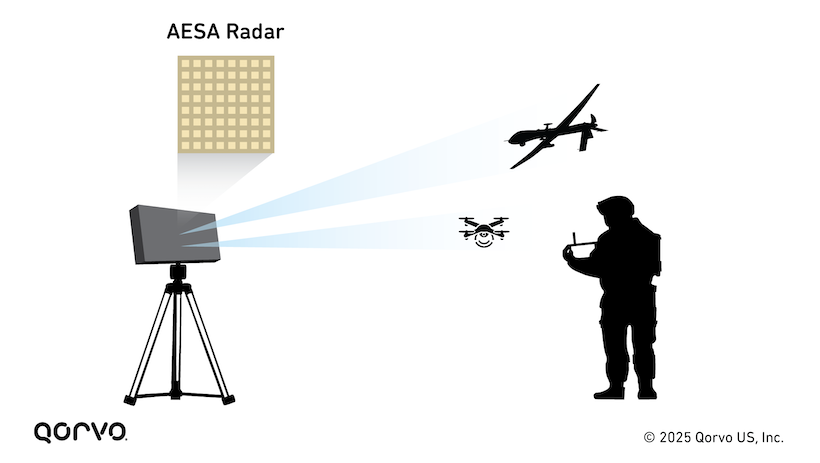
Emerging operational modes such as ultra-low observable targets, saturation attacks from cruise and anti-ship missiles, manned-unmanned teaming, and swarming UAVs create complex, diverse, and intelligent threats. Guidance technologies must evolve to detect low-observable air and space targets, small space targets, and group targets, moving toward counter-stealth, multi-mission, and intelligent capabilities. Missile flight control technologies must advance in high-altitude, high-speed stable control, high-maneuver, rapid-response control, and intelligent cooperative control.
4.4 Pursue frontier technologies such as AI and quantum science
As artificial intelligence and quantum science iterate and mature, novel equipment such as integrated air-space systems, autonomous unmanned platforms, and high-speed stealth platforms will proliferate. New technologies and application models will iterate rapidly, cross-fertilize, and leap forward as groups. Initiatives that prioritize intelligent weapon systems aim to use technological transformation and novel operational concepts as multipliers for capability gains. Therefore, air and missile defense equipment development should track frontier trends, accelerate engineering applications and capability transitions, and ensure effective deployment in intelligent and unmanned future battlefields.
5 Conclusion
Faced with a complex and rapidly changing international environment and fast-paced technological change, air and missile defense must emphasize iterative innovation of existing capabilities and exploration of emerging technologies. In line with global technological and military revolutions, it is necessary to focus on future defensive capability needs, identify technical trends in weapon systems, promote frontier technology research and systemic innovation, achieve breakthroughs in core technologies, and intensify fundamental research to consolidate defensive capabilities and support long-term military development.