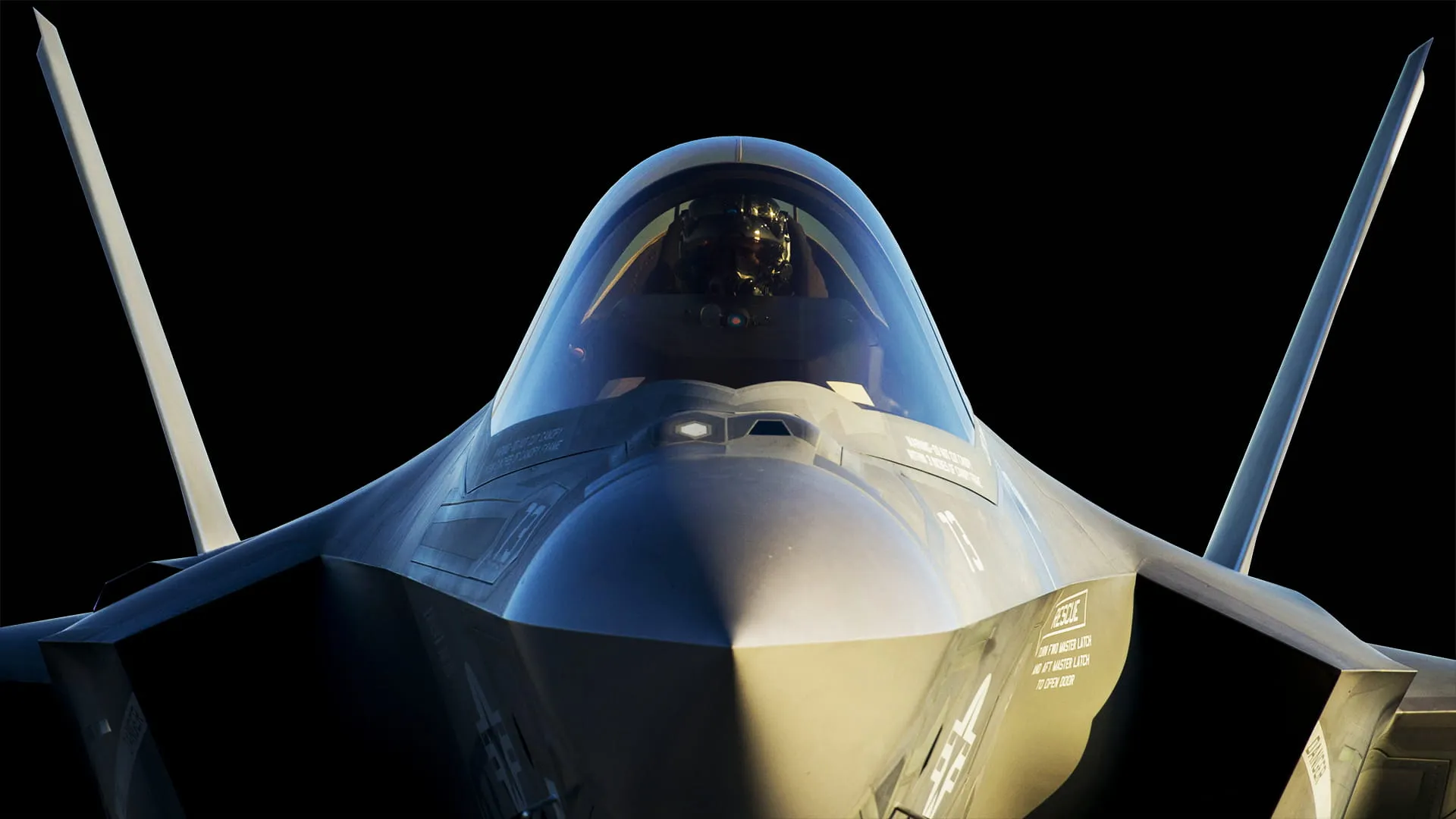
The F-35 is the United States' next-generation multirole fighter. Since its inception the program has been notorious for significant cost overruns and schedule delays. Those problems have drawn intense media attention and prominent headlines, and many people label the F-35 as one of the most expensive weapons programs in the world.
Because of these issues, it is understandable that many view the F-35 as an expensive aircraft. However, there is an important distinction between the program's total cost and the per-aircraft value. When evaluated on a per-flight or per-capability basis, the F-35's operating cost is relatively low compared with the capabilities it provides.
Program Cost vs Lifecycle and Inflation
It is accurate to say the F-35 program is one of the most costly weapons programs in history, but the program's large total cost largely reflects the Department of Defense decision to buy a single design for the Air Force, Navy, and Marine Corps. Even without development problems, a joint attack fighter that supplies high-end capability to all three services would be expected to be very expensive because of the large fleet size required.
Furthermore, the frequently cited $1.4 trillion figure is unusual because it projects total costs across all three services over the program's half-century-plus lifecycle, not just procurement costs. That figure also includes inflation, which accounts for more than one third of the total. Predicting inflation and lifecycle costs out to when aircraft retire in 2070 involves significant extrapolation and uncertainty. The metric is similar to evaluating a car not only by its sticker price but by all fuel, oil, tires, maintenance, car washes, interest, inflation losses, and so on until the car is retired. While useful for quantifying cumulative budget impact, the headline number can be misleading to those unfamiliar with the program.
Assessing Value by Operating Cost
Comparing the F-35 to other aircraft or high-tech transportation assets using total program cost is of limited value because many elements in that total are not directly comparable; inflation is a prime example. To assess relative value more tangibly, other metrics such as flyaway cost and operating cost are useful.
Variants and Roles
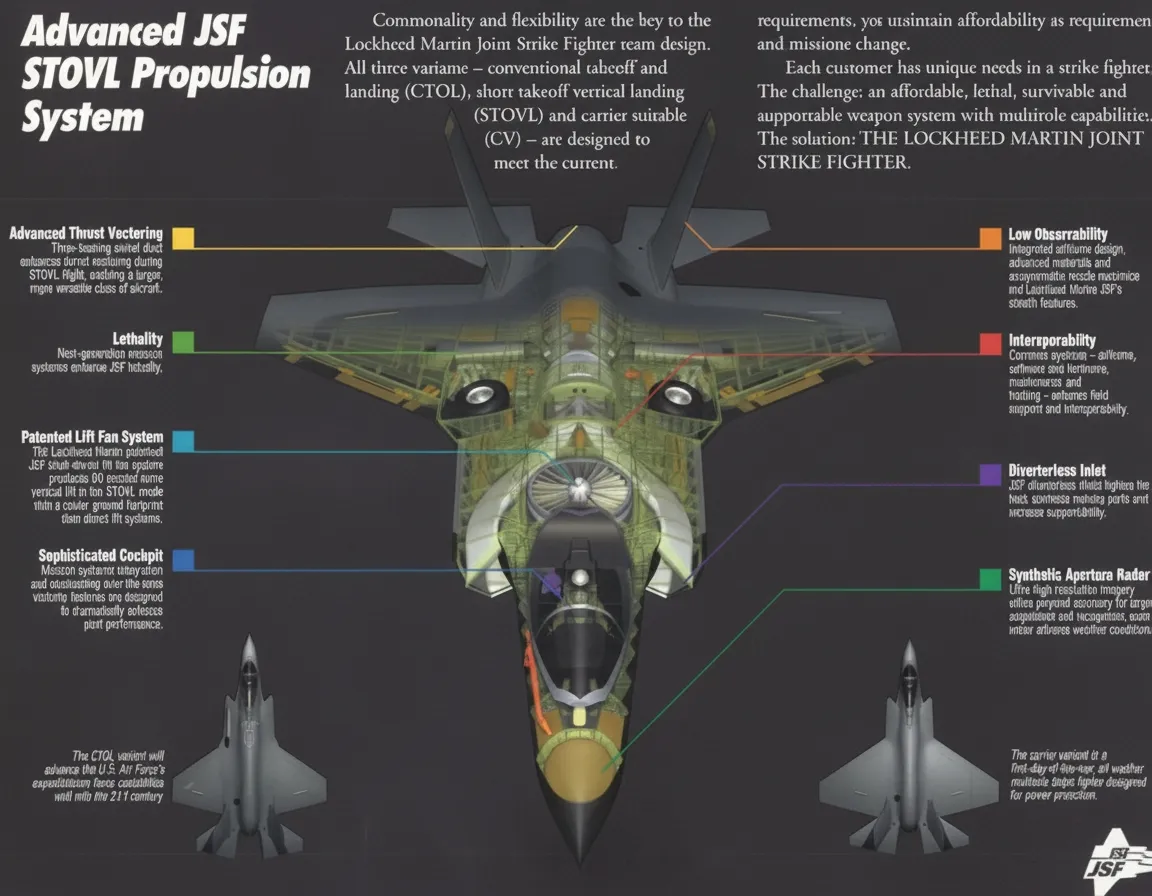
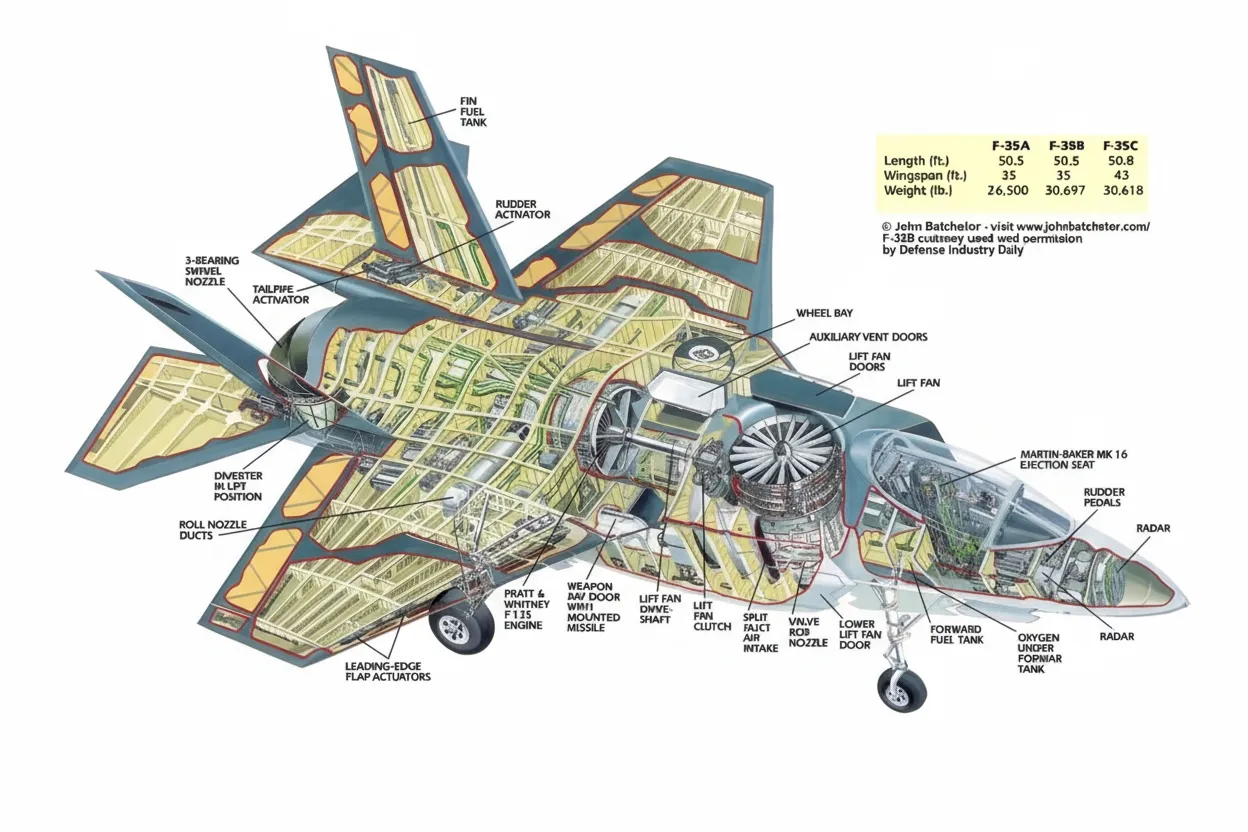
The F-35 exists in three variants. The F-35A is designed for conventional takeoff and landing from paved runways; it is the most common variant and the one most international customers purchase. The F-35B has a swiveling nozzle and lift fan for short takeoff and vertical landing without catapults. Because the F-35B has no true competitors on the international market, its value proposition is harder to evaluate. The F-35C is designed for operations from conventional aircraft carriers equipped with catapults and arresting gear; it has about 35% more wing area than the A and B variants to improve low-speed lift.
Production Scale and Unit Price Trends
As production has ramped up, F-35 unit costs have steadily declined and moved closer to the prices of other modern fighters. The low-rate initial production (LRIP) Lot 10 contract in October 2017 was the latest LRIP contract, delivering 35 aircraft to the United States and 8 to international customers at a total cost of $900 million. According to Jane's, the reported costs were $60 million per F-35A, $12.28 billion per F-35B, and $12.18 billion per F-35C in that contract summary. These latter two figures appear to reflect aggregated or programmatic costs rather than single-aircraft flyaway prices. Lockheed Martin and several independent analysts forecast that once full-rate production is reached, F-35A unit price could fall to around $35 million. As Marine Corps and Navy orders increase, costs for the other two variants should decline as well.
Comparative Pricing and Capability
Although $35 million for an F-35A may sound high, that figure is competitive with other modern fighters. For example, recent agreements placed Eurofighter Typhoon prices near $122.18 million per aircraft to certain buyers. The F/A-18E/F Super Hornet is sold at around $35 million per aircraft to the U.S. Navy. Even modern Russian designs such as the Su-35 are reported near $70 million per aircraft. Only refurbished, older-generation Russian fighters or lightweight, low-cost types like JF-<> and HAL Tejas are priced much lower.
In short, U.S. allies pay similar amounts for the F-35 as they do for other high-end Western jets, and they acquire greater integrated capability for their dollar. As aviation analyst Richard Aboulafia noted, many European fighters lack the modern features found on the F-35. The F-35's relatively low operating cost is also a function of large-scale production, which demonstrates the role of international customers in achieving program efficiencies.
Capabilities vs Older Fighters
Some fourth-generation fighters such as the Super Hornet may have lower operating costs than the F-35, but their overall capability is much lower. Exact specifications and performance data for some legacy fighters are not publicly available, but the F-35's powerful AN/APG-35 radar, sensor fusion, advanced datalinks and software, stealth, internal weapons carriage, and internal fuel provide significant advantages over prior-generation aircraft. While some avionics on early F-35 production aircraft experienced problems that raised concerns about capability, software blocks should address many of those issues.
Red Flag 17-1 results indicated that the F-35 is highly effective against previous-generation aircraft and air defense systems. Even the F-35's within-visual-range performance has improved substantially as pilots have learned to exploit the aircraft's strengths; pilots report low-speed and high-angle-of-attack handling that in some respects exceeds that of legacy fighters such as the F-16.
Related Reading: Evolution and Core Technologies of Advanced Fighter Design
Conclusions
All of this does not diminish concern over cost overruns and ongoing development problems—those issues deserve scrutiny from taxpayers and military leadership. However, stakeholders should remember that despite serious setbacks and scandals, the F-35 is not as unaffordable as some headlines and public sentiment suggest. At full production rates, its operating and unit costs are expected to be in line with other high-end Western fighters, and the aircraft offers capabilities not available on other types currently on the market.