Common drone types
Drone types can be classified by purpose, structure, or flight mode. Below are five common types:
- Multirotor drones: Typically driven by four to eight electric motors and rotating propellers. These platforms offer good maneuverability and can hover, take off and land vertically, and change attitude quickly. They are widely used for aerial photography, search and rescue, logistics, and agriculture.
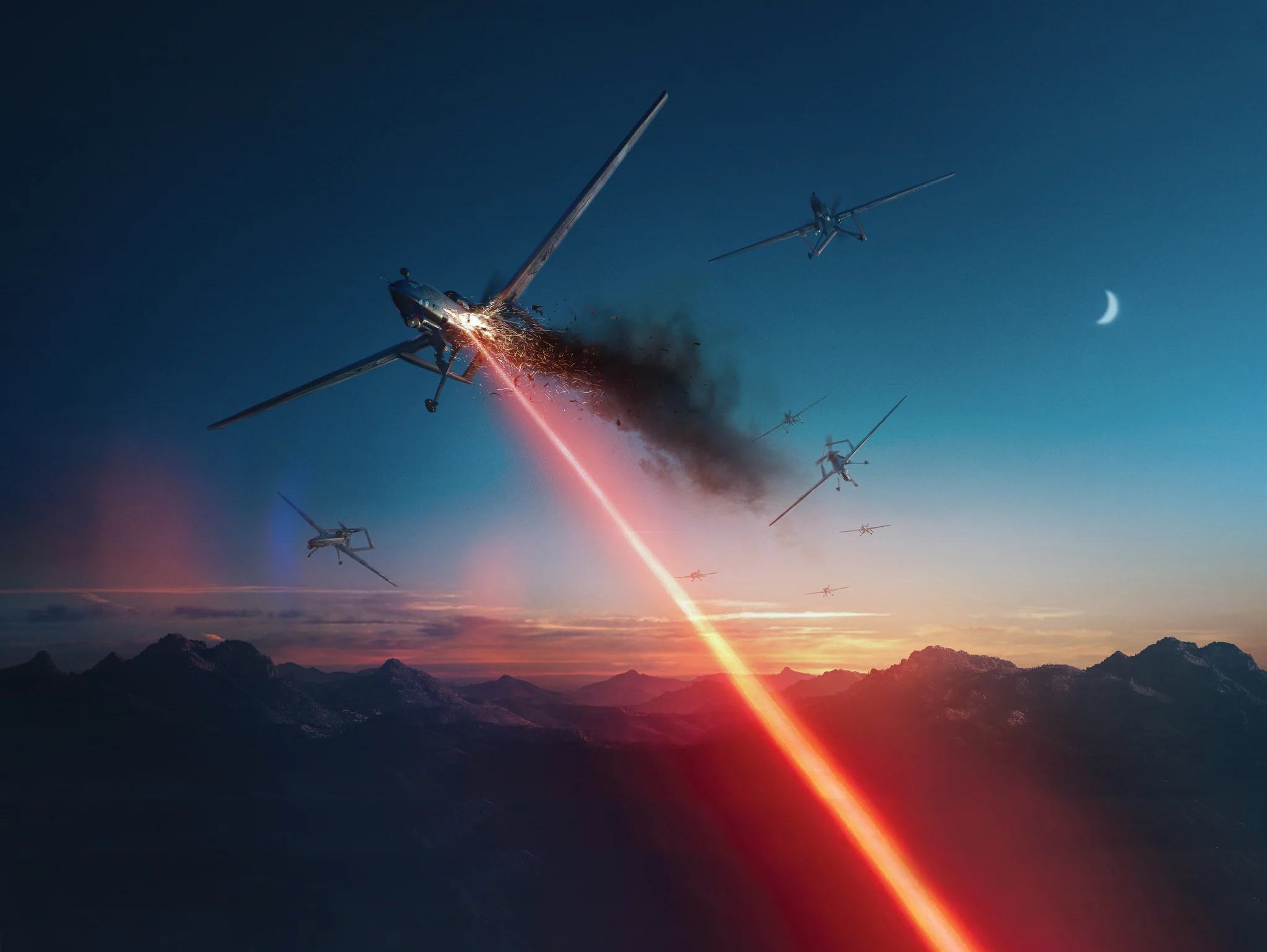
- Fixed-wing drones: Similar to conventional airplanes, fixed-wing drones have rigid wings and generally provide longer range and higher speed. They require a runway or launcher for takeoff and are suitable for wide-area, long-duration tasks such as aerial reconnaissance, mapping, and cargo transport.
- VTOL drones (vertical takeoff and landing): These drones can switch between vertical takeoff/landing mode and fixed-wing flight. They combine the VTOL ability to operate in confined areas with the efficiency of fixed-wing flight for longer distances.
- Hybrid VTOL drones: These combine features of fixed-wing and rotorcraft designs. They typically achieve the speed and range of fixed-wing aircraft while retaining vertical takeoff and hover capabilities similar to rotorcraft. They are often used for surveillance, reconnaissance, and data collection.
- Single-rotor drones: Use one large main rotor and a tail rotor for stability and control. They can offer high flight efficiency and stability and are commonly applied in aerial inspection, power-line patrols, and agricultural spraying.
These categories are common examples; actual drone types vary with design features and application scenarios, and new configurations continue to appear as technology evolves.
Key technologies for drones
Drones involve multiple core technologies. Key areas include:
- Autonomous flight technology: Autonomous operation depends on flight control algorithms, navigation systems, and sensors that enable autonomous takeoff, flight path planning, waypoint following, hovering, and automatic landing.
- Remote sensing and image processing: Drones carry various sensors and cameras to capture high-resolution imagery and video. Remote sensing supports geological surveys, environmental monitoring, and agricultural management, while image processing provides real-time monitoring, target detection, and tracking.
- Communication and data-link technology: Reliable real-time data transfer and command-and-control links between the drone and ground station are essential. This includes data-link transmission, signal transmission, and wireless communication technologies to maintain robust two-way connectivity.
- Inertial navigation and positioning: Accurate positioning and navigation are required for safe and precise mission execution. Inertial navigation uses gyroscopes and accelerometers for attitude, position, and velocity measurement, while positioning uses systems such as GPS and BeiDou alongside inertial systems.
- Collision avoidance and obstacle detection: Drones need obstacle detection and avoidance capabilities to prevent collisions with other aircraft or obstacles. Technologies include radar, LiDAR, and infrared sensors to perceive the environment and identify hazards.
- Efficient power and battery technology: Power systems must support propulsion, sensors, and communications. Efficient energy management and battery technologies, such as high-capacity lithium batteries and fast-charging methods, extend flight endurance and mission duration.
Drone technology also spans materials science, aerodynamics, and human-machine interaction. Ongoing innovation across these fields continues to expand drone capabilities and applications.