Abstract
Modern combat modes have changed profoundly, with new operational concepts and frontier technologies emerging. Concepts such as distributed lethality, mosaic warfare, and position suppression engineering have appeared. This article analyzes multi-domain integrated operations observed in the Russia–Ukraine conflict, summarizes two major challenges facing current detection and guidance technologies—performance limits and physical constraints—and proposes a development direction for collaborative detection and guidance based on full-domain holographic situational awareness. Eight key technologies are extracted, including a generic collaborative detection and guidance architecture, and implementation approaches are discussed. The aim is to drive detection and guidance technologies toward multi-domain integration, cross-domain coordination, and full-domain competition to support higher-level informationized operations.
Introduction
Rapid changes in the international security environment are accelerating the formation of new combat concepts and major shifts in operational technologies. Military powers worldwide are adapting to evolving modes of warfare and proposing new operational ideas. The US has accelerated military transformation and proposed concepts such as distributed lethality, mosaic warfare, and position suppression engineering. Distributed lethality uses command, control, and communication collaboration to form dispersed yet integrated combat units, improving survivability compared with traditional concentrated forces. Mosaic warfare emphasizes dynamic, coordinated, and highly adaptable composable forces that link low-cost, low-complexity systems into mosaic-like operational architectures. Position suppression engineering focuses on enabling systems to acquire any data in software-defined environments and forms the basis for future joint tactical networks. Germany, France, and Spain have also discussed future air combat concepts around sixth-generation fighters and an integrated "combat cloud" concept, driven by artificial intelligence and advanced command and control systems to interconnect combat units and manage battlefield resources dynamically from a system level. These new concepts have shifted warfare from traditional forms toward modern operations involving cross-domain integration.
Local conflicts such as the Gulf War and the Iraq War primarily involved air and naval campaigns without fully developed system-level cross-domain coordination. In contrast, the Russia–Ukraine conflict since February 2022 is widely regarded as a modern multi-domain conflict. Operations have involved coordinated action across land, sea, air, space, electromagnetic, and network domains, plus information and cognitive warfare, expanding the battlespace into both physical and non-physical dimensions and demonstrating multi-domain integrated characteristics.
1 Multi-domain Integrated Operations in the Russia–Ukraine Conflict
By October 12, 2022, forces on both sides conducted intense operations across land, sea, air, space, electromagnetic, and network domains. The Russian side used multi-point rapid strikes to pursue control and coercion objectives, while Ukrainian forces, equipped with NATO weapons and informed by US and NATO intelligence, implemented full-domain coordinated operations. Strategically, the Russian special military operation has remained contested. Several operational characteristics of multi-domain integrated warfare are evident.
1.1 Multi-domain, Multi-platform Collaborative Detection
Multi-domain collaborative detection builds unified information exchange models and standards to meet needs for battlefield situational awareness, fire support, command and control, and battlefield communications. It enables coordinated actions and cross-domain information sharing across land, sea, air, space, electromagnetic, and network domains, supporting real-time aggregation and orderly release of joint combat effects. Figure 1 illustrates multi-domain and multi-platform collaborative detection.
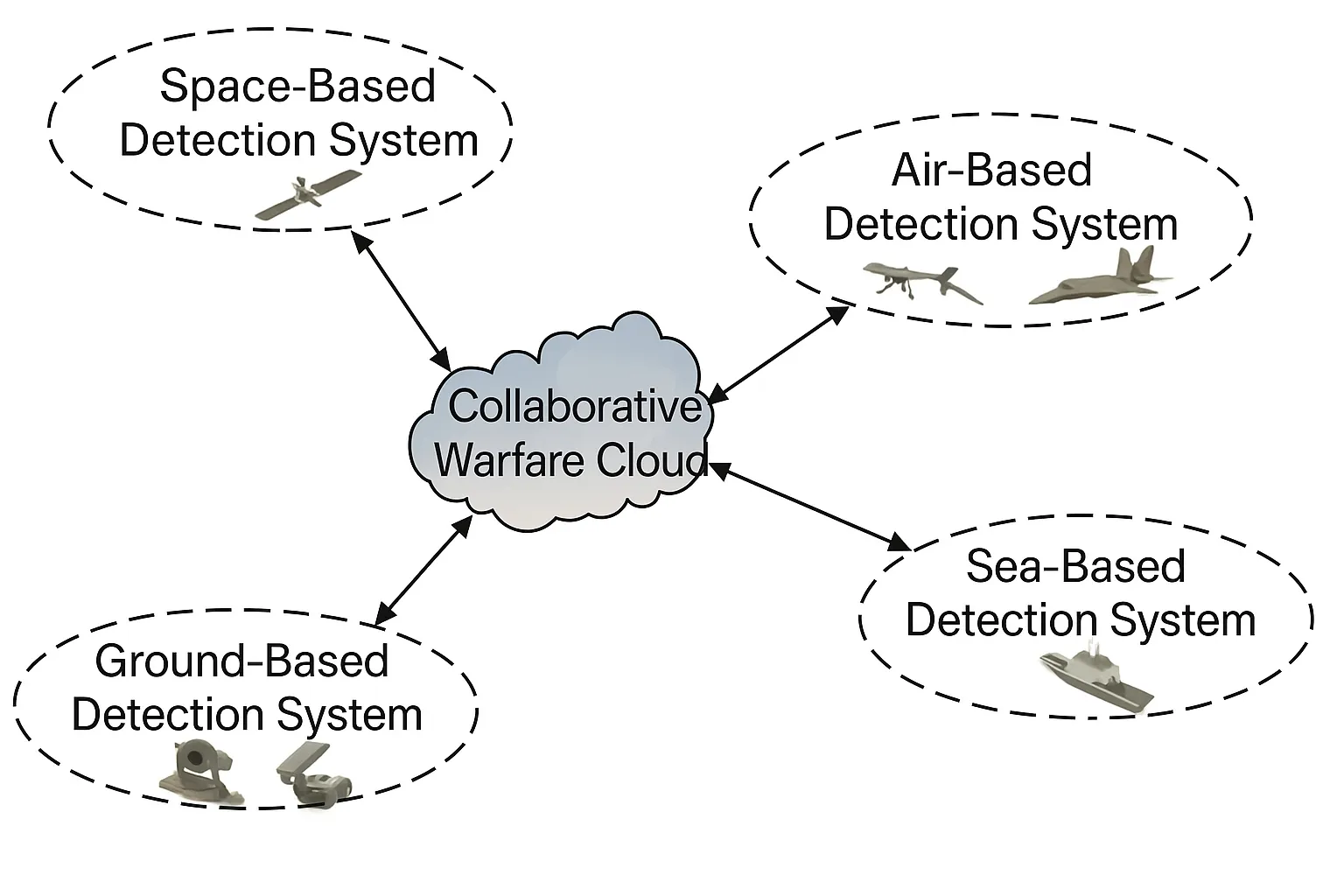
Fig. 1 Multi-domain and multi-platform collaborative detection
On the Russia–Ukraine battlefield, both sides have recognized that modern warfare offers little operational concealment and approaches full transparency. Reconnaissance satellites, airborne early warning platforms, reconnaissance aircraft, unmanned aerial vehicles, smartphones, and surveillance cameras provide information from different sources, dimensions, and characteristics that can be fused and cross-validated to support precise operations. During the battle for Kyiv, several concealed mechanized raids were exposed and disrupted by NATO intelligence and monitoring systems. Supported by NATO and allied intelligence, Ukrainian forces coordinated disparate units, dispersed and maneuvered, and used shared joint collaboration systems to execute precise strikes on targets, achieving tactical successes.
1.2 Full-domain Stereoscopic Precision Strike
Full-domain stereoscopic strike follows three principles: first, adjusting force posture by integrating fixed deployments with strategic long-range mobility; second, employing multi-domain formations that combine capabilities across multiple domains to counter rivals of comparable strength; third, force fusion that rapidly and continuously integrates capabilities across land, sea, air, space, networks, the electromagnetic spectrum, and information environments. The goal is full-domain mobility, coordination, and strike to achieve information, decision, and action advantages through integrated attacks.
Russian platforms involved include launch vehicles, fighters, bombers, unmanned systems, submarines, and frigates. Russia maximized geography advantages, deploying Iskander missile systems near borders and positioning submarines, frigates, and coastal defense systems in the Black Sea to strike Ukrainian targets from multiple domains. Ukraine integrated air, space, and network resources, focusing on system-level targeting to identify critical nodes such as supply hubs and surface-to-air missile sites, and used air, ground, and maritime fires for suppression to compensate for air force disadvantages. Ukrainian use of unmanned systems and precision-guided munitions enhanced strike effectiveness and accuracy; for example, Bayraktar TB2 drones armed with MAM-L laser-guided munitions achieved multiple successes. Drones equipped with sensors and detectors performed reconnaissance and surveillance, relaying target data to command centers that selected and guided laser-guided munitions for precise strikes.
1.3 Starlink Enables Information Sharing
Low Earth orbit broadband constellations such as Starlink provide low-cost, numerous, widely covering, short revisit, and mobile-capable satellite communications with strong network resilience and survivability, and the ability to host various payloads. They can integrate command, remote sensing, and other networks to leverage operational resources and enhance capabilities.
In the Russia–Ukraine conflict, Starlink provided Ukrainian forces with communications, intelligence, and command links. Early in the conflict, much Ukrainian military infrastructure and heavy equipment were degraded, yet with allied intelligence support and remote command, Ukrainian forces using portable anti-tank and air-defense systems and dispersed tactics inflicted substantial losses on Russian personnel and equipment. By March 17, 2022, additional Starlink user terminals arrived in Ukraine, with thousands of terminals in use and widespread adoption of the Starlink application. Starlink served as communication, intelligence, and command infrastructure and played an important role in Ukrainian targeting operations.
The multi-domain collaborative characteristics in the Russia–Ukraine conflict show that collaborative detection and precise guidance are essential expressions of integrated operations, and full-domain holographic battlefield awareness is a crucial enabler. Demands for multi-domain sensing, multi-dimensional information processing, and integrated resource application require detection and guidance systems that support plug-and-play, rapid access, fast upgrades, high-speed processing, and quick decision making.
2 Current Challenges for Detection and Guidance Technologies
To meet complex operational environments and enable multi-domain integrated operations, precision-guided weapons impose greater functional and performance requirements on detection and guidance systems. Two major technical challenges exist.
(1) Performance boundaries of detection and guidance systems. Detection and guidance equipment on a single platform face rigid constraints: regardless of frequency band or modality, detection capability, countermeasure resistance, and guidance performance have inherent limits. Low-frequency anti-radiation targets and complex mixed-jamming environments may exceed the capabilities of single-platform systems.
(2) Physical boundaries of detection and guidance systems. Increasingly diverse frequency bands and modalities lead to stacked physical architectures that make devices more complex and costly, lengthening development cycles and reducing cost-effectiveness. Single-weapon systems struggle to scale functionality quickly enough to match battlefield changes.
Addressing these performance and physical boundaries requires moving from single-platform function stacking to multi-platform collaborative detection and guidance. Cross-platform collaboration is now a broad consensus, and research and development across multiple systems and domains is underway.
3 Collaborative Detection and Guidance Based on Full-domain Holographic Situational Awareness
Collaboration in operations involves coordinated action by diverse forces executing a unified plan to maximize overall combat effect. Collaborative detection and guidance are key to operational efficiency and effectiveness. Collaborative detection uses multiple sensing methods, information sharing, and fusion to achieve multi-source, multi-angle, multi-layer target recognition. Collaborative guidance uses multiple guidance modes and joint information processing to enable multi-source, multi-angle, multi-layer target localization and engagement. These technologies coordinate different detectors and guiders to improve localization and strike accuracy, enhance situational awareness and decision support, and increase operational flexibility and adaptability. Full-domain holographic situational awareness addresses the strategic needs of collaborative detection and guidance by resolving inconsistencies in temporal and spatial references, information formats, interface definitions, and transmission methods across domains, platforms, and bands, enabling precise identification, accurate localization, and real-time guidance of targets through a comprehensive awareness system.
3.1 Key Technologies for Full-domain Holographic Situational Awareness
1) Generic Collaborative Detection and Guidance Architecture
A generic architecture integrates sensors, signal processing, target recognition and tracking, decision support, and guidance modules. Starting from operational needs, it builds common detection capabilities and interaction models across platforms to derive methods for acquiring, sharing, and guiding battlefield information in real time. The goal is a flexible and extensible system architecture that integrates multiple collaborative detection and guidance tasks. Key development areas include common detection and guidance information requirements analysis, classification of collaborative operating modes, sensor information representation, information packets and transport protocols, architecture standards, and system integration validation.
2) Spatio-temporal Synchronization
Spatio-temporal synchronization uses high-precision time and spatial references to align time, frequency, and position among communications, radar, and navigation systems. High-precision synchronization is essential for multi-platform, multi-sensor collaborative detection and guidance. High-throughput, high-rate, and low-latency communication networks enable real-time sharing of massive battlefield information across platforms. Combining GNSS with ground and space clocks can achieve sub-nanosecond-level synchronization, while optical transport systems can support data rates up to 100 Gbit/s. Key directions include high-precision timing and frequency transfer and synchronization error relative calibration.
3) Integrated Sensing and Communications
Integrated sensing and communications combine sensors with communications to unify wireless sensor networks and communication networks. Detection and communication capabilities complement each other to enable detection-assisted communications or communication-assisted detection. Deep integration across spectrum resource management, hardware, waveform design, signal processing, protocol interfaces, and network collaboration is required. Standards for sensor interfaces across space, airborne, missile-borne, UAV, and near-space platforms should be developed to establish unified interconnection modes and reciprocal networking between detection and communication networks. Key topics include joint coding and ranging, integrated sensing/communication waveform and protocol design, system validation, node redundancy, and self-organizing networking.
4) Sensor Chipization and Modularization
As application scenarios diversify, sensor chipization and modularization become prominent. New device forms can enable rapid and sustainable upgrades, reduce cost, and improve maintainability. Sensors will trend toward miniaturization, integration, and low power consumption, leveraging advances such as nanotechnology, dynamic voltage and frequency scaling, and sleep modes to extend operation. Integration with artificial intelligence, cloud computing, and big data enables intelligent data collection, processing, and analysis for varied scenarios. Key directions include standardized detection sensor chips, microwave signal and image processing chips, modular detection devices, and surface detection techniques.
5) Reconfigurable Antenna Beam, Band, and Polarization
Reconfigurable antennas enable planar, compact, high-performance antennas whose beam, band, and polarization can be reconfigured online to match node functions and environmental conditions and suppress interference. Advances in beamforming, multi-beam and MIMO techniques, novel materials such as graphene, and additive manufacturing are accelerating progress. These breakthroughs support applications in wireless communications, radar, and satellite communications. Key directions include solid-state plasma antennas, liquid crystal antennas, and coded metamaterial antennas.
6) Collaborative Detection and Guidance Operating System
Traditional software development is often bespoke and tightly coupled to specific hardware, resulting in long development cycles and difficult upgrades. A collaborative detection and guidance operating system should provide a standardized software architecture that separates application software from hardware drivers, enabling independent development, improved portability, shorter development cycles, lower maintenance burden, and reduced costs. This approach supports rapid development and iterative upgrades. Key directions include sovereign embedded operating systems and application software development frameworks.
7) Multi-modality Detection and Access
During target engagement, information from radar and optical modules can be supplemented by platform sensors and external support systems, such as radiation information from ELINT modules, INS-provided positioning, pre-loaded target type and kinematics, and other external intelligence. Multi-modality detection integrates diverse sensors and data sources into one system for more comprehensive and accurate information, allowing flexible coordination among multi-platform, multi-modality sensor nodes to expand detection dimensions and accuracy and improve target discovery, recognition probability, and guidance precision in complex environments. Key directions include coordinated aerial scanning, cooperative sensing, node redundancy design, and plug-and-play nodes.
8) Edge and Advanced Computing
Edge computing deploys compute resources closer to data sources to enable real-time response and immediate decision making, supporting large-scale collaborative data linking and processing and improving resistance to transmission interference. Near-source distributed processing spatializes data and applies edge computing characteristics—standardization, connectivity, and scalability—to transform detection and guidance data into structured digital forms and accelerate decision cycles. Edge computing combined with private 5G can increase data acquisition, interconnectivity, reconfigurability, and real-time analytics on sensor networks, enabling richer data collection at the edge. Open standards and frameworks are needed to break sensor information silos and improve detection and guidance efficiency. Edge architectures can host distributed AI models and employ federated learning to continuously improve collaborative detection and guidance intelligence. Key development areas include decentralized collaborative edge computing, federated learning algorithms, node-agnostic processing algorithms, and centralized high-performance processing.
3.2 Implementation Approaches
The overall implementation strategy combines theoretical innovation, digital wargaming, and integration verification to validate key technologies in collaborative detection, guidance, operations, and countermeasures. Using single-platform sensors as building blocks and expanding from local capabilities to full-domain holographic battlefield awareness will support future high-dimensional informationized warfare.
(1) Theoretical innovation: Overcome limitations of single-platform operational concepts, focus on rigid collaborative detection requirements and new sensing ecosystems, and establish top-level theories and system architectures to form unified collaborative detection and guidance models that support new tactics, algorithms, and models.
(2) Digital wargaming: Build full-chain, closed-loop digital sandboxes for collaborative detection and countermeasure simulations to rapidly validate collaborative theories, technologies, and methods, perform quantitative assessments, and support rapid functional iteration and system integration.
(3) Integration verification: Use UAV collaboration as a baseline to build a demonstrator system for common detection and guidance in UAV swarms, deploy new methods and technologies, develop standards, and feed results back to guide rapid validation and integration of new tactics, methods, and hardware/software interfaces.
4 Conclusion
Operational modes have changed profoundly. Modernized warfare is evolving from limited-domain information strikes to cross-domain coordination and full-domain confrontation. Cross-domain collaboration relies on multi-dimensional sensor networks across land, sea, air, space, and networks to sense the battlespace and obtain more detailed and accurate intelligence to support precision fires and diverse operational actions. Driven by urgent operational needs, detection and guidance technologies will evolve toward multi-domain integration, cross-domain coordination, and full-domain competition. Collaborative detection and guidance must adopt unified architectures, standard interfaces, immediate access, rapid upgrades, and dynamic adaptation to respond to rapidly changing battlefield conditions, forming sensor-centric full-domain holographic battlefield awareness and cognition systems to support higher-level informationized operations.
References
1. Zhang Jun, Wang Jianjun, Zhang Mu, et al. Study on Evaluation Method of “Distributed Killing” Combat System and Contribution Rate of Weapons and Equipment[J]. Ship Electronic Engineering, 2018, 38(6):5-9, 16.
2. Sun Shengzhi, Miao Zhuang, Gao Zan, et al. The Conception Research of the U.S. Mosaic Warfare[J]. Fire Control & Command Control, 2022, 47(10):180-184.
3. Liu Jinming, Wang Yun. Summary on Development of Precision-Guided Weapon Command and Control Technologies in 2022[J]. Tactical Missile Technology, 2023(2):66-74.
4. Tang Shengjing, Shi Songwei, Zhang Yao, et al. Review on the Development of Intelligence-Based Distributed Cooperative Operational System[J]. Air & Space Defense, 2019, 2(1):6-13.
5. Chen Mingde, He Xin. Enlightenment Analysis of Mosaic Warfare for the Field of Command and Communications[J]. Communications Technology, 2022, 55(10):1284-1293.
6. Zhao Baojun, Chen Shitao, Li Daxi, et al. Analysis of the Sixth Generation Fighter Development and Operational Concept[J]. Modern Defence Technology, 2022, 50(6):19-25.
7. Zhao Xinyan, Chen Zaiyang. Research on the Development of Information Characteristics of Several Recent High-Tech Local Wars[J]. Science & Technology Information, 2013(7):492-493.
8. Li Chenggang. The Local War after the End of the Cold War: the Gulf War(II)[J]. Jun Shi Shi Lin, 2021(2):17-29.
9. Wang Jinhua. Characteristics of the Operational Use of US Navy in Recent Local Wars[J]. Military History, 2016(6):45-47.
10. Wang Yalin, Liu Duqun, Li Xuepeng, et al. Research on the Applications of Russian Precision Strike Weapons in the Russia-Ukraine Conflict[J]. Tactical Missile Technology, 2022(3):107-115.
11. Wang Yongqing, Ji Hongbin. Review on Supersonic Missile Application and Development Trend in the Russia-Ukraine Conflict[J]. Tactical Missile Technology, 2022(6):1-7.
12. Shuaixian Workshop. The Russian-Ukrainian Conflict Is a Model of Modern Multi-dimensional War: Whoever Can Grasp the Five Major Points Will Win[EB/OL]. 2022-10-24.
13. Zhao Bendong, Hu Xingzhi, Lai Jianqi, et al. Analysis and Discussion on Aerospace Attack-Defense Operations in the Russia-Ukraine Conflict[J]. Tactical Missile Technology, 2022(4):17-22, 202.
14. Wang Xiaomeng. The Sky of UAVs: The Application and Development of UAVs From the Russian-Ukrainian War[J]. Tank & Armoured Vehicle, 2022(15):60-66.
15. Wang Taijun, Tang Shiqi, Zhou Chao. Research on Starlink Applications in Russia-Ukraine Military Conflict[J]. Communications Technology, 2022, 55(8):1006-1013.
16. Peng Zhongxin, Qi Zhenqiang, Zhong Sheng, et al. Analysis and Reflection on the Application of Starlink in the Russia-Ukraine Conflict[J]. Tactical Missile Technology, 2022(6):121-127.
17. Lai Wenxing, Wang Chuangwei, Gu Cunfeng, et al. Integrated Air Defense Cooperative Networking Operation Research[J]. Air & Space Defense, 2022, 5(4):92-96.
18. Wang Lei, Li Shujing, Liu Pingni, et al. A High-Precision Synchronous Timing System Based on Embedded System[J]. Modern Electronics Technique, 2023, 46(6):7-10.
19. Zhang Bingqiang, Fang Wei, Wang Meng. Synchronous Simulation Method for Flight Simulators with Remote Networked Training[J]. Computer Applications and Software, 2022, 39(9):113-120.
20. Feng Zhaokui. The Chip Dispute Between China and United States: Reality, Logic and Reflection[J]. Asia-Pacific Security and Maritime Affairs, 2023(2):18-36.
21. Yu Hongwei. Research on Wide Beam-Coverage Microstrip Antenna and SSPP-Based Leaky-Wave Arrays[D]. Xi'an: Xidian University, 2020.
22. Deng Ruoqi, Zhang Yutong, Zhang Haobo, et al. Holographic Radio: A New Paradigm for Ultra-Massive MIMO Enabled by Reconfigurable Holographic Surfaces[J]. Acta Electronica Sinica, 2022, 50(12):2984-2995.
23. Yan Zhengkan, Lu Lei, Yang Kang. Edge Computing Architecture and Application Scenario Analysis[J]. Telecommunications Information, 2023(2):19-24.