Introduction
India's Defence Research and Development Organisation (DRDO) announced in July 2022 that the Autonomous Flying Wing Technology Demonstrator (AFW-TD) completed its first flight. The flight tests took place at the flight test range in Chitradurga, Karnataka. The AFW-TD/SWiFT demonstrator is a scaled-down version of the Ghatak UCAV; its results will influence the Ghatak program. The demonstrator's data will also inform development of the Advanced Medium Combat Aircraft (AMCA), which is planned to incorporate a number of stealth features.
Development history
India initiated an independent unmanned aerial vehicle research program in the late 1980s. The Ghatak project traces back to the 2009 AURA project, also referred to as the Autonomous Unmanned Research Aircraft, which had an initial budget of 125 million rupees (equivalent to about 270 million rupees in 2020 or roughly $3.3 million). In June 2012, DRDO released digital images of the AURA model. The project was officially renamed Ghatak in 2015.
Around 2020, India began developing a technology demonstrator for the Ghatak UCAV, called the Stealth Wing Flying Testbed (SWiFT). According to DRDO, SWiFT is intended to develop and demonstrate control and flight characteristics of a flying-wing configuration at high subsonic speeds. Ground tests for SWiFT began in June 2021, while images and videos of taxi tests appeared on October 29, 2021. The SWiFT demonstrator bears some resemblance to the U.S. Northrop Grumman B-2 Spirit stealth bomber. SWiFT measures approximately 4 m in length, has a 5 m wingspan, weighs roughly 1 ton, and is powered by either the NPO Saturn 36MT or the TRDD-50MT turbofan. Its maximum range for receiving ground commands is about 200 km, service ceiling is approximately 6 km, and endurance is around one hour.
SWiFT demonstrator and first flight
The SWiFT demonstrator performed its first flight on July 1, 2022. DRDO reported that the aircraft executed a clean flight, including takeoff, waypoint navigation and smooth landing, using fully autonomous mode. Footage of the flight, however, showed vertical stabilizers fitted to the flown aircraft even though the design did not include them; this may indicate directional stability issues that required the addition of vertical surfaces.
Systems and integration
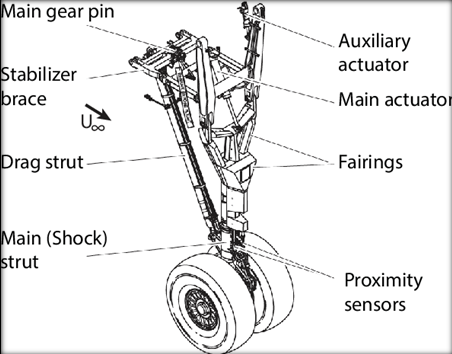
The SWiFT demonstrator's fuselage, landing gear, and the complete flight control and avionics suite were developed indigenously. Beyond serving as a technology precursor to the Ghatak program, SWiFT may also continue as an independent project under unmanned wingman or unmanned bomber concepts. The Combat Vehicles Research and Development Establishment (CVRDE) developed a 1-ton retractable landing gear for SWiFT and delivered it to the Aeronautical Development Establishment (ADE) for integration. The demonstrator has obtained military airworthiness and certification from the Centre for Military Airworthiness and Certification (CEMILAC) and the Directorate General of Aeronautical Quality Assurance (DGAQA).
Landing gear
The demonstrator uses an indigenous retractable landing gear designed and built to support takeoff and landing requirements for the flying-wing testbed.
Ghatak overview
Ghatak is an autonomous stealth unmanned combat aerial vehicle (UCAV) being developed by the Aeronautical Development Establishment (ADE) under DRDO. The Aeronautical Development Agency (ADA) has described it as a high-speed reconnaissance unmanned aircraft with weapon-release and self-defense capabilities.
Scaled model and design
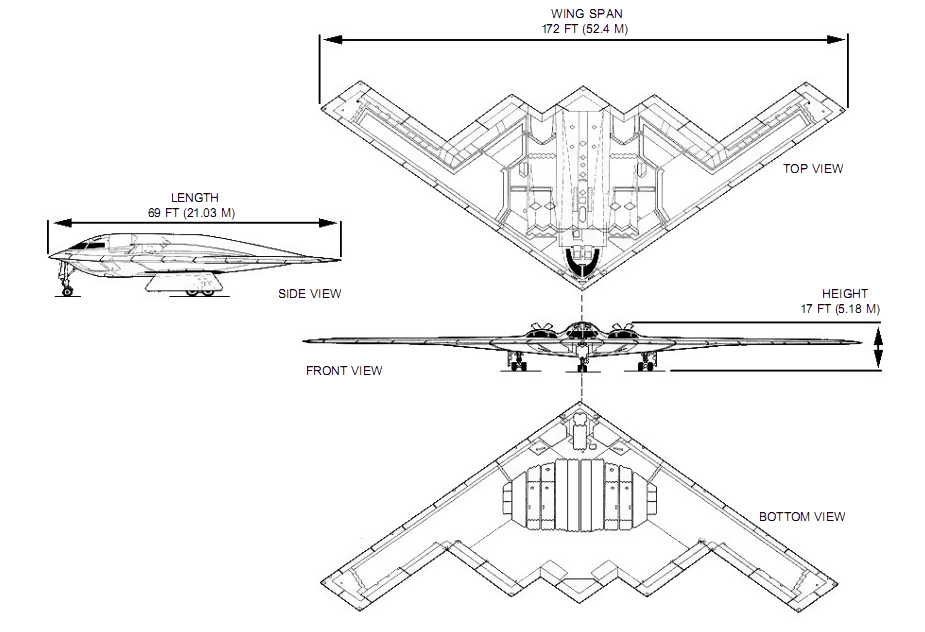
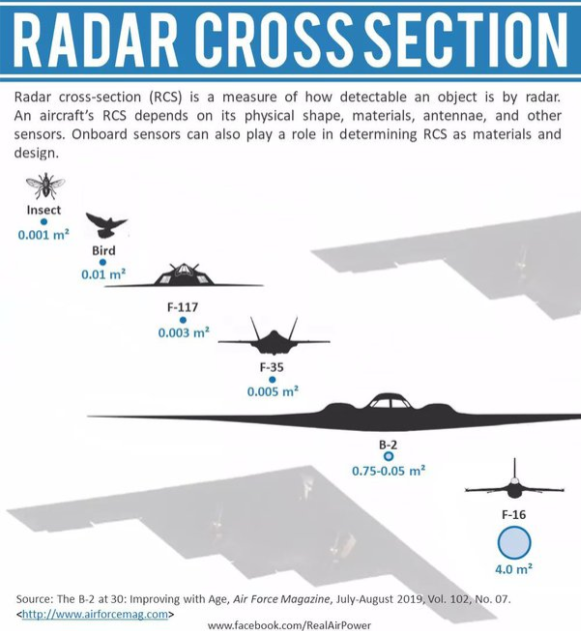
DRDO experts project that Ghatak will operate at altitudes around 30,000 ft (9,144 m), weigh under 15 tonnes, and be capable of launching missiles, bombs and precision-guided munitions. The design emphasizes fuel efficiency and low observability, following a flying-wing layout similar to the B-2 bomber. Flying-wing designs eliminate a distinct fuselage and tail; payload, fuel and systems are integrated within the main wing structure. Stability and center-of-gravity management are used to maintain controlled flight without a conventional tail.
Structure, propulsion and avionics
The basic mechanical structure, landing gear, flight control system and the demonstrator's avionics were developed indigenously. Planned onboard systems for full-scale Ghatak include a mission computer, datalink, fire-control radar, identification friend-or-foe (IFF), and a collision-avoidance system. The prototype was expected in the 2024–25 timeframe.
Ghatak is intended to weigh less than a manned fighter and is planned to be powered by a derivative of the GTRE GTX-35VS Kaveri turbofan producing about 52 kN of thrust in a dry configuration. The Kaveri engine was developed for the Light Combat Aircraft (LCA) program but did not achieve the performance required for supersonic fighters.
Kaveri engine
The Kaveri program produced a turbofan design intended for indigenous fighter propulsion, and derivatives are being considered for use in unmanned platforms such as Ghatak. Further development or alternative powerplants may be needed to meet operational requirements.
Avionics, networking and payloads
Ghatak is expected to include network-centric datalinks, command-and-control interfaces, weapon carriage and release mechanisms, extended-range fully autonomous flight modes, satellite communications, navigation systems, electro-optical sensors, flight-control systems and potentially an electronic warfare (EW) suite. ADA and the Defence Electronics Applications Laboratory (DEAL) are responsible for developing the flight control and datalink packages.
Latest developments
A full-scale Ghatak prototype was planned for testing by the end of 2025. Media reports indicate interest from the Indian Navy in evaluating carrier-capable and other sea-based variants for shipboard operations.
Summary
Once fielded, a stealthy, autonomous UCAV like Ghatak could provide India with an extended-range strike and reconnaissance capability with reduced crew risk. Its flying-wing design and autonomous systems aim to combine low observability with long-range missions and precision weapon delivery. Operational utility will depend on the maturity of propulsion, avionics, weapon integration and reliability demonstrated through flight testing.