Introduction
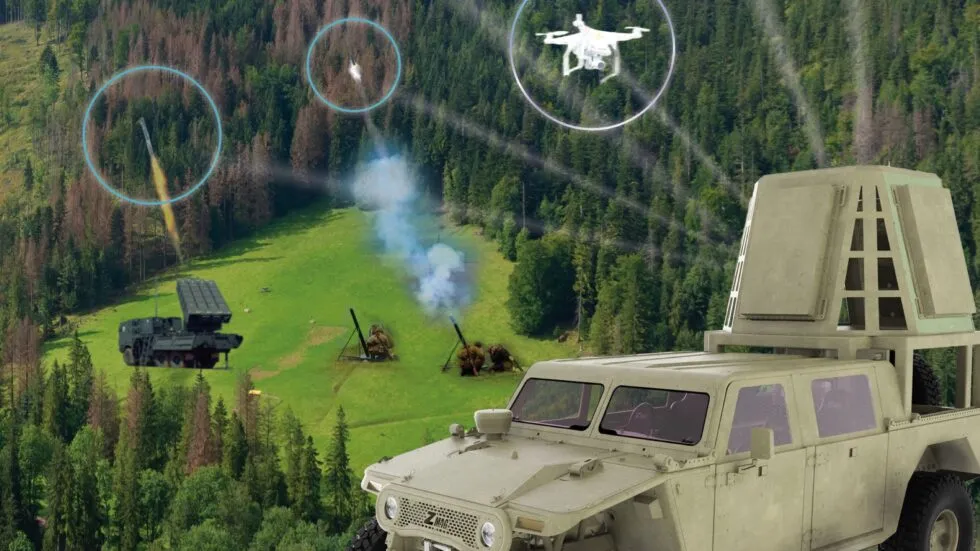
In recent years, influenced by various environmental factors, the communications industry has begun to focus on drone collaborative communications. Initial assumptions about drone links were: 1) use the U-V frequency band for point-to-point remote control; 2) use existing WiFi for video transmission. Practical use reveals drone communications are more complex than traditional systems.
Video Transmission
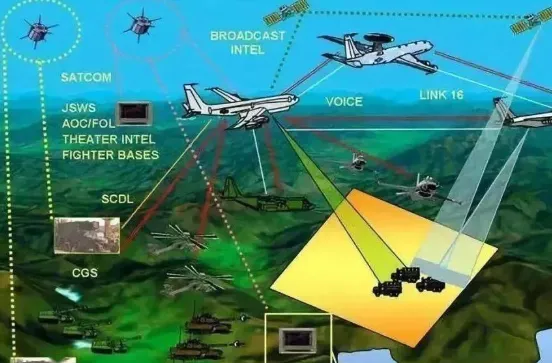
Most commercial drones use video transmission. To achieve high-definition video, systems try to transmit as much data as possible within a fixed bandwidth, which stresses limited spectrum resources.
Single-carrier modulation has been noted as suitable for some air-to-ground links because it can avoid multipath concerns. However, drones form a real-time mobile communication system; motion introduces significant multipath effects that must be addressed.
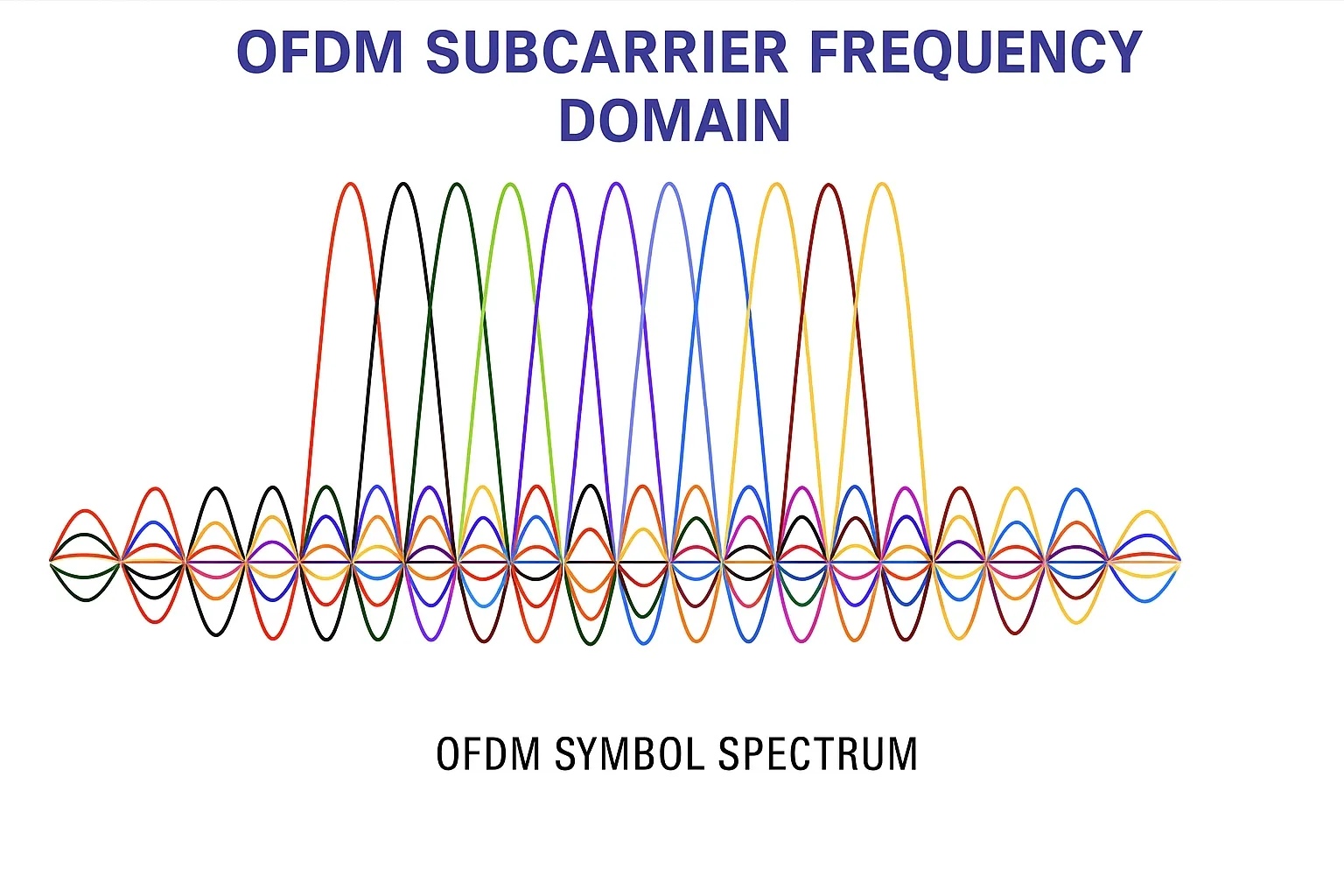
Is OFDM the right choice? In many mobile scenarios, OFDM can show degraded performance, so the drone industry typically uses COFDM.
What Is COFDM
COFDM is described as a modulation approach that combines OFDM with forward error correction. OFDM effectively handles channel-selective fading in multipath environments but can struggle with flat fading. Adding channel coding to OFDM to address that issue is what forms COFDM.
COFDM makes efficient use of channel bandwidth and avoids the need for high-speed equalizers and strong burst-noise protection. In COFDM, a single data stream is transformed into multiple lower-rate streams, each sent on a subcarrier. Subcarriers are separated via FFT so that orthogonal waveforms can be maintained even with interleaving. In practical terms, COFDM adds redundancy through error-correcting codes, reducing the probability of data loss. In short, COFDM includes internal FEC and is more reliable for communications on the move than plain OFDM.
RF Considerations and Linearity
From an RF perspective, COFDM is still an OFDM-based waveform; its advantages are primarily in interference resilience. Peak-to-average power ratio does not change relative to OFDM, and drone terminals demand very high efficiency. Distant links and long standby times require drone transmitters to use linearization techniques.
Drones typically have much longer communication ranges than mobile phones. Uplink can be command-oriented, but downlink often requires transmission of large volumes of high-definition video. That means drone transmitters need both high output power and good linearity.
Many drone systems therefore adopt digital predistortion, or DPD, to improve transmitter efficiency while maintaining linearity. From the modulation viewpoint, drone private-network waveforms differ from public networks, but from RF design, the main changes are related to linearity and efficiency rather than a complete redesign of RF architecture.
Conclusions
Wideband communication is an unavoidable trend for private networks, and drones serving as cooperative relay points is a key research direction. Terminal efficiency and linearity are central technical challenges. While some consider there is little left to do in communications, for private networks the issues of linearity and efficiency remain open engineering problems. Some organizations in China should consider external technologies rather than remain inward-looking.