Overview
The Royal Air Force (UK) has confirmed that a prototype loyal wingman unmanned aircraft is expected to fly by 2023, with a contract awarded to a selected prime contractor. Spirit AeroSystems, based in Northern Ireland, will design and build a prototype "unmanned combat aircraft" under Project Mosquito, aiming to develop drones capable of semi-autonomous cooperation with crewed aircraft.
The recently awarded deal to Spirit AeroSystems is worth £300,000 (roughly $410,000 at the time of writing) and is expected to complete within three years. Once the company designs and builds a technology demonstrator under Project Mosquito, a decision will be made on whether to proceed to a production version. The ultimate goal is to prove the viability of low-cost unmanned aircraft that could operate alongside the RAF's Eurofighter Typhoon, F-35B Lightning II, and the future Tempest stealth fighter then under development. The UK loyal wingman is expected to provide additional protection, survivability and information for its crewed counterparts while flying alongside them.
Swarm Tactics and Operational Roles
Swarms inherently threaten adversary air defenses by overwhelming sensors and operators with too many targets to prioritize, reducing reaction time and frustrating coordinated responses beyond the capacity of human crews. Unmanned aircraft equipped with electronic or cyber warfare packages could further degrade or confuse an opponent's defensive networks.
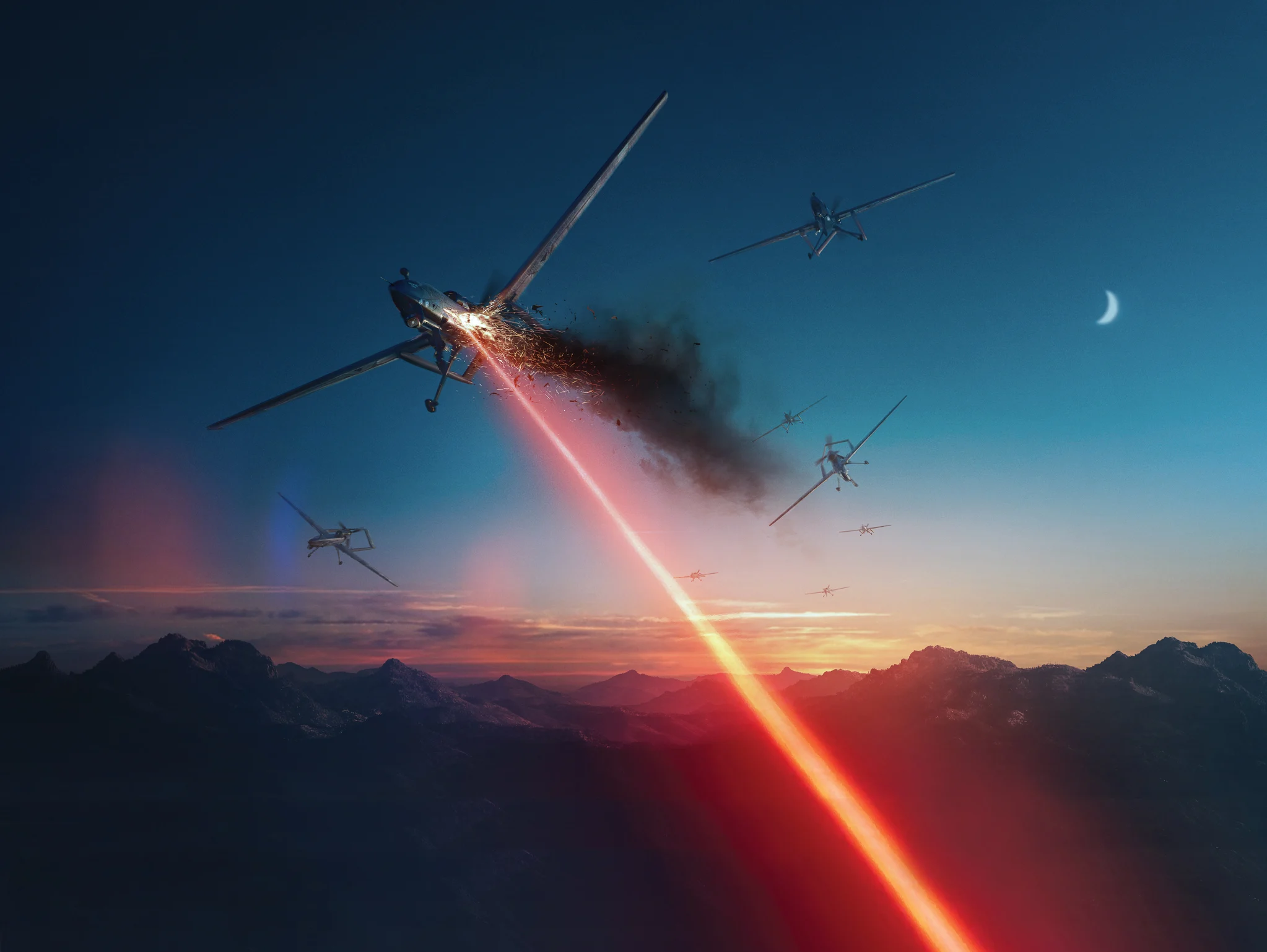
Swarms can also act as decoys, emitting signals that mimic larger aircraft and diverting attention away from higher-value threats. These unmanned aircraft, armed with conventional munitions or directed-energy weapons, could destroy air defenses independently and clear the way for follow-on strikes by manned platforms. Swarms can also perform missions unrelated to enemy air defenses.
Platform Size, Reusability, and Comparisons
Plans to create a full squadron to operate such aircraft imply platforms larger and reusable compared with many air- and ground-launched systems under development worldwide, particularly in the United States. This suggests the reference is not to smaller missile-like systems such as the USAF and USN MALD-X. It aligns more with DARPA's Gremlins program concept for a recoverable system, and appears similar to interest in the US drone maker Kratos' stealth XQ-58 Valkyrie.
The US Air Force plans to test the XQ-58 as part of its low-cost attritable strike demonstrator program and envisages operations in swarms as loyal wingmen networked with crewed aircraft. Concept art describes the XQ-58 with a conventional tricycle landing gear and as an evolution of Kratos' ground-launched XQ-222 (also called Valkyrie). The company estimated each XQ-222 at about $30,000, less than one quarter of the flying cost of a non-stealth MQ-9 Reaper in some estimates.
Despite low cost, early designs could carry a pair of 250 lb-class GBU-39/B small diameter bombs, electronic warfare systems, sensors, and more. Early Kratos claims for the Valkyrie indicated a maximum range in excess of 3,000 miles and a combat radius of up to 1,500 miles depending on internal payload. Other reports put the maximum ferry range near 2,100 miles. For context, the straight-line distance from London to Moscow is about 1,500 miles, while typical fighter combat radii are often around 700 to 1,100 miles.
The XQ-222 evolved from Kratos' unmanned tactical air platform UTAP-22, also called Mako. The ground-launched UTAP-22, a derivative of the BQM-167A aerial target, has demonstrated swarm operations and loyal wingman capability.
UK Programs: LANCA and Project Mosquito
Work under LANCA may have informed Defence Secretary Williamson's optimistic timetable for new unmanned swarm squadrons. Any developments the RAF pursues under LANCA will contribute to its swarm capability requirements.
However, LANCA statements focus more on developing higher-end UCAVs than the XQ-58, aiming for platforms with broader capability and fighter-like performance, able to integrate closely with future sixth-generation crewed fighters such as the Tempest. Since 2005, BAE Systems has developed the Taranis concept demonstrator as a possible design foundation for higher-end UCAV requirements and to provide upper-tier capabilities for any new swarm unit.
The Ministry of Defence is reportedly keen to establish a squadron equipped with lower-end platforms (similar to the XQ-58) as a stepping stone to build out full UCAV squadrons. BAE previously indicated that an operational UCAV based on Taranis would enter service "after 2030," roughly aligning with UK plans for Tempest deliveries.
Contracting an initial unmanned squadron and fully developing the selected system over the next three years would give RAF personnel time to develop tactics, techniques and procedures for wide UCAV employment over the next decade. After acquiring more expensive, lower-density high-end platforms, demand for attritable systems—low-cost fleets bought in quantity—will be less urgent, but it is clear that no single system can entirely replace other capabilities.
Cooperation with the United States
Another possibility is the UK has acquired access to a US unmanned combat aircraft program that has been secret for some time. There are signs that certain technologies were moved into classified programs. Indicators include heavy recruitment at Lockheed Martin's Fort Worth facility for an unnamed production program and continued public silence from US Air Force leadership on the topic, even as other nations develop such capabilities openly.
By collaborating on UCAV programs, the US and UK can pool resources to achieve economies of scale and deeper interoperability. The two countries have a long history of cooperation, and in recent years that has become more common. The RAF has adopted systems such as the RC-135 Rivet Joint, P-8 Poseidon and MQ-9 Reaper rather than developing indigenous alternatives. The F-35B joint strike fighter is another example.
For a shared UCAV program to achieve strategic scale and exploit the unique swarm concept, moving from the shadows into full-rate production is critical. Participation in a US UCAV program would also better prepare the RAF to introduce a domestic successor, potentially based on Taranis, in the future.
Strategic Incentives for Smaller Nations
For many smaller countries, shifting a greater share of air combat burden from crewed fighters to unmanned platforms is attractive due to lower platform costs and savings in pilot training and infrastructure. Over time, UCAVs will become more advanced and autonomous, delivering capabilities close to crewed fighters at lower cost. Depending on their programming, UCAV swarms can act faster and more coherently than human-controlled teams, and they offer greater range and lower observability than crewed platforms in some scenarios.
Given the economic uncertainty following the UK’s exit from the EU, increased interest in unmanned air combat capability is unsurprising. Budgetary pressures have already raised questions about the feasibility of developing a new crewed stealth fighter without partnering. Swarm programs will help the UK maintain competitiveness in air combat. This is particularly relevant with China investing heavily in UCAV and swarm capabilities, and to a lesser extent Russia as well.
Expected Capabilities
The MoD provided further detail on how it expects future loyal wingmen to operate. The drones are intended to "fly at high speed with fighters" and to carry "missile, surveillance and electronic warfare technologies." They are expected to target and defeat enemy aircraft and to survive against surface-to-air missiles.
"We are taking a revolutionary approach, looking at swarming unmanned aircraft like Project Mosquito alongside crewed fighters such as Tempest, which will change the battlespace in ways unseen since the jet age," announced RAF Chief of the Air Staff Marshal Mike Wigston.
Concept Art and Design Features
The MoD released a digitally generated concept image of a loyal wingman design flying with an F-35B. It is unclear whether the image represents the Project Mosquito technology demonstrator or a potential production version. The concept resembles a model the RAF and MoD displayed at the 2019 Royal International Air Tattoo.
The concept retains a relatively narrow fuselage with swept wings and a V-tail, although control surfaces are larger and the wing now features pronounced downward-tilted tips. Low-observable features are preserved, including a dorsal intake and a chine-like lower fuselage line, while the exhaust appears to have a sawtooth nozzle.
LANCA and the Future Combat Air System
Project Mosquito is part of the RAF’s Lightweight Affordable Novel Combat Aircraft (LANCA) concept. LANCA, initiated in 2015 by the Defence Science and Technology Laboratory (Dstl), seeks to explore innovative operational air technologies and concepts to significantly reduce cost and development time. Although managed by Dstl, LANCA and Project Mosquito are led by the RAF’s Rapid Capabilities Office.
LANCA sits within the broader Future Combat Air System Technology Initiative (FCAS TI), which also includes the Tempest crewed fighter. In 2020 the UK prime minister announced additional defence R&D funding, some of which would benefit FCAS TI.
Consortiums and Industry Roles
In October last year, after Bombardier’s Northern Ireland division transferred to Spirit AeroSystems, Spirit began leading the Project Mosquito design and prototype work. Initially, Bombardier Belfast and Northrop Grumman UK formed a consortium named Black Dawn, led by Callen-Lenz, and were one of three entrants for the project’s first phase, competing against teams led by Boeing and Blue Bear Systems Research.
Northrop Grumman UK remains part of the team now led by Spirit AeroSystems, but Callen-Lenz is not mentioned in recent releases, suggesting it may no longer be involved. That could also explain why the bid is no longer named Black Dawn.
With experience developing the Australian Airpower Teaming System (ATS), Boeing was a likely contender to design the UK’s new loyal wingman and may have a role within LANCA. The Australian government allowed Boeing to share ATS data with the UK. The MoD has not excluded awarding contracts to more than one Project Mosquito competitor.
Boeing ATS and the Modular Nose Concept
ATS is designed to cooperate with crewed air assets in a loyal wingman role at very low cost. The concept aims to scale tactical jet capability at a fraction of the cost of purchasing additional crewed airframes while injecting new disruptive tactics into air operations. It also improves crewed asset survivability by taking on some of the riskiest mission elements.
A combination of artificial intelligence and a degree of autonomy is key to the capability, allowing the drones to act as force multipliers for existing crewed fighters. These drones will not be remotely piloted like MQ-9 Reapers; instead they will be directed via click-based desktop or touchscreen interfaces. AI can automate much of the routine control, allowing human operators to focus on the broader tactical picture.
Much of ATS development has taken place in virtual environments, including simulators pilots can interact with and highly detailed virtual models of the aircraft, often called "digital twins." Boeing has said the ATS digital twin allows accelerated deployment while development is still underway, a process often called concurrency.
The aircraft’s software and interfaces will allow smaller physical flight substitutes to stand in for a full-size unmanned aircraft during testing, even as the airframe is being built. The ATS fuselage includes an interchangeable nose. One of the aircraft’s notable features is a clipped, quick-change nose section, about 8.5 ft long, offering roughly 9,000 cubic inches of space for payloads. Swapping payloads to alter a drone’s role is a core UCAV design principle: one aircraft can be configured for different tasks by changing its nose.
For example, in an anti-air mission, one drone might carry an infrared search and track sensor, two others radar, another a communications gateway, and a further aircraft an electronic warfare payload and defensive laser. This approach provides the right mix of capabilities without buying drones that must simultaneously house all systems, which would be costlier. Using the entire nose section for modular payloads is effective because some sensors and payloads work best when mounted in the nose; the SR-71 used a similar principle decades ago.
Attritable Design and Cost Trade-offs
The program aims to build attritable loyal wingmen that balance survivability and flexibility while costing around $20,000 per aircraft—comparable to some cruise missile costs. It is not yet clear how the UK’s programs align with other efforts, but since these aircraft will be used in very high-risk scenarios, the concept assumes some airframes will be lost in combat. The design balances capability—including survivability—against cost.
This balance influenced ATS design decisions. Although the aircraft incorporates low-observable features, performance and cost must be weighed against detectability. The ATS team noted that a flying-wing layout has higher manufacturing cost and is challenging to fly. Their design uses a relatively simple but effective four-surface control arrangement with a large tail similar to the YF-23, which they judged "good enough" for broad performance and signature goals while keeping price and complexity down.
The ATS wing is composed of only two large composite parts, one for the upper wing and one for the lower, manufactured using out-of-autoclave resin infusion techniques pioneered on the 787. The rest of the unmanned jet also uses advanced composites to reduce cost and production time while remaining strong, corrosion-resistant and lightweight.
ATS would support fighters across a range of missions—air-to-air, strike, reconnaissance and electronic attack—while accompanying larger assets such as tankers, maritime patrol aircraft and airborne early warning jets. This asset-protection role frees crewed fighters for other frontline tasks and defends the air force’s most vulnerable but critical airborne systems.
Control Concepts and Squadron Integration
Boeing recognizes that a single fighter cockpit may not fully exploit ATS potential, even with wide-area displays. Larger aircraft like tankers and AEW platforms could provide dedicated ATS crew stations to control squadrons or formations more complexly. Boeing envisages one fighter controlling three to four drones, while platforms like an E-7 Wedgetail could manage multiples of that number.
Interestingly, the latest MoD release did not explicitly mention swarm capabilities, though such capability has been expected. The MoD is known to be researching swarms of smaller drones, and the RAF has established a dedicated drone development unit, No. 216 Squadron.
Related Industry Demonstrations
UK swarm ambitions align with demonstrations by Italy’s Leonardo and the RAF of autonomous drone swarms, each aircraft carrying variants of the BriteCloud expendable active decoy as an electronic warfare payload. Using BriteClouds with jamming capability, drones simulated non-kinetic attacks on radar systems representing an adversary integrated air defense. That work involved Callen-Lenz and Blue Bear Systems Research.
The RAF’s Protector program is also progressing, aimed at providing a more capable successor to its long-endurance remotely piloted MQ-9 Reapers.
Conclusion
Project Mosquito and the broader LANCA initiative indicate the United Kingdom is increasingly embracing an unmanned future for air combat. With a prime contractor selected for Project Mosquito, a demonstrator may appear soon, and the country’s first loyal wingman unmanned aircraft could follow in the coming years.