Overview
This article describes the role of SAR/MTI radar in unmanned aerial vehicles (UAVs). Operators use various types of sensors to identify military facilities on the battlefield. Identification of cooperative friendly targets uses identification friend or foe (IFF) and the automatic identification system (AIS), while non-cooperative targets are identified using EO/IR cameras, electronic support measures (ESM) systems, and radar systems.
Capabilities of SAR/MTI Radar
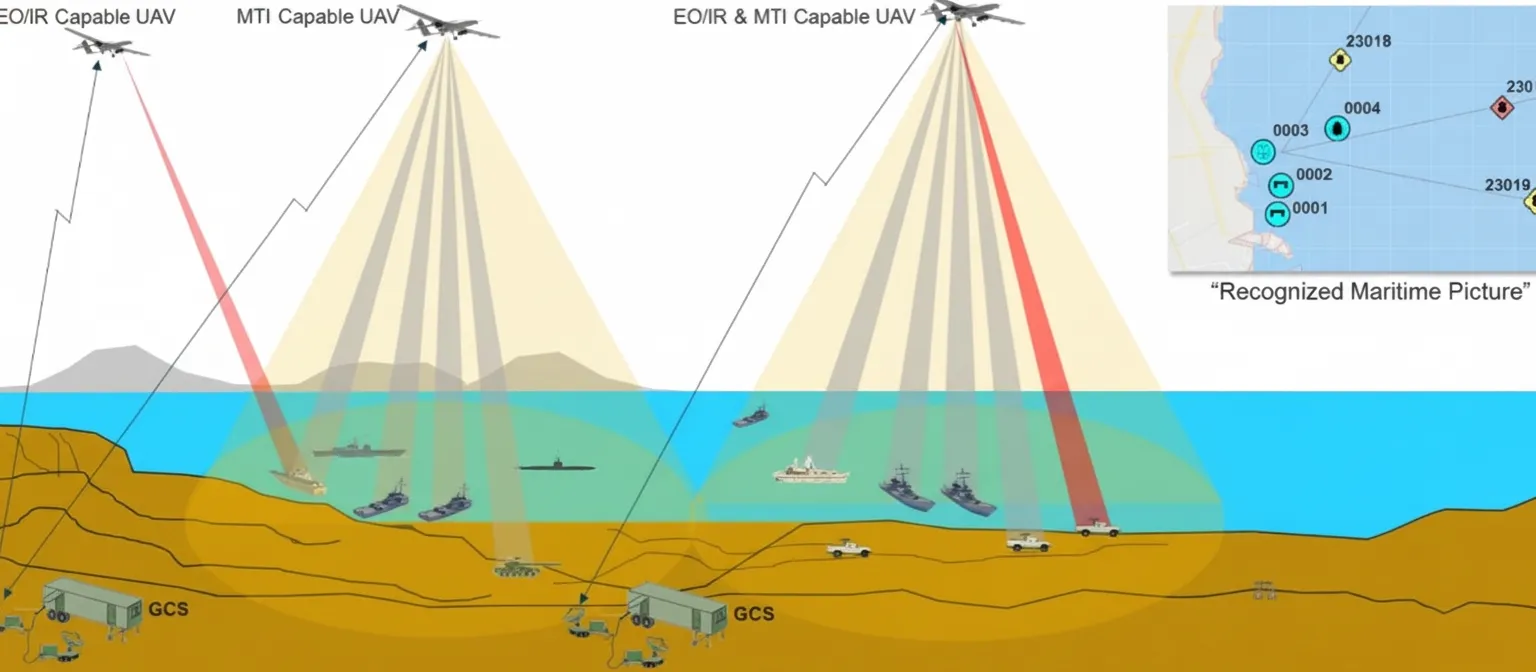
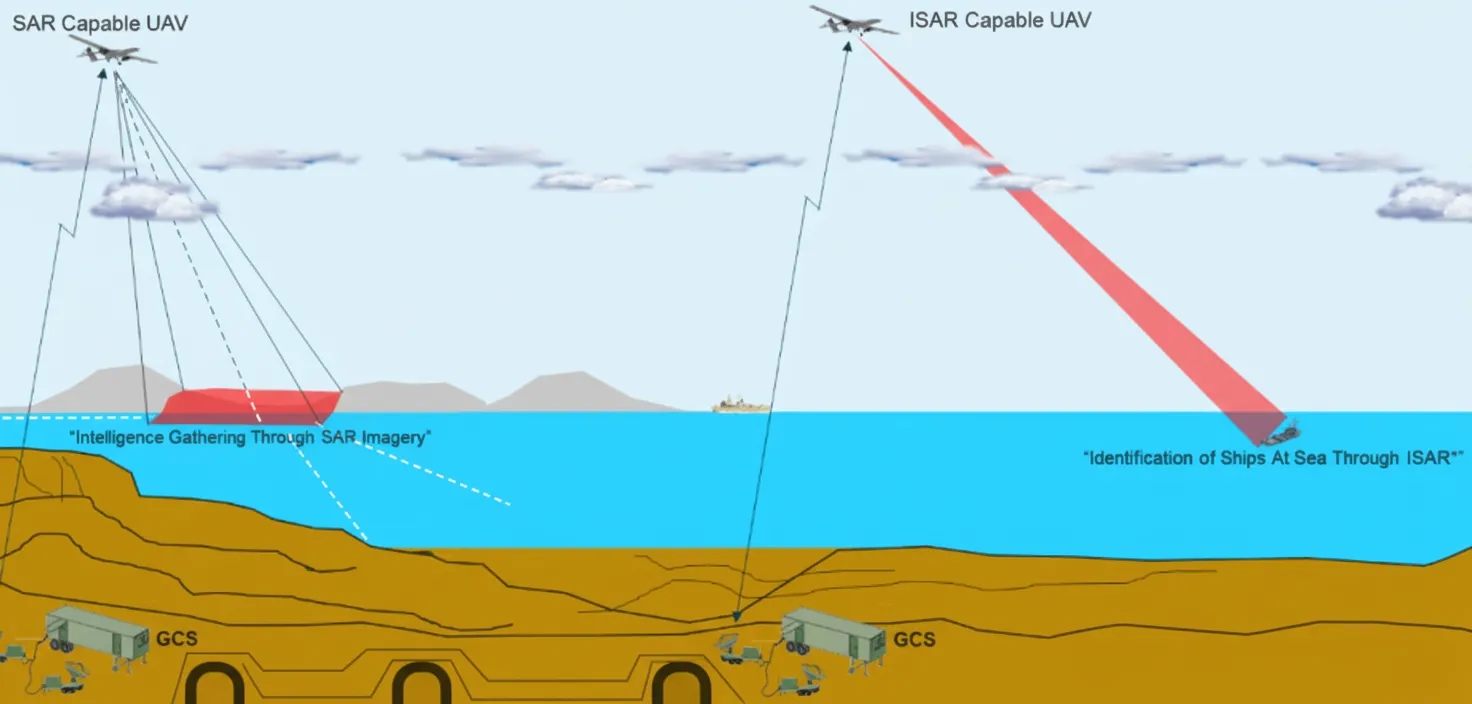
SAR/MTI radar, by analyzing radar imagery (SAR and ISAR) and moving target indicators, can significantly improve identification performance for both stationary and moving targets. In addition, SAR/MTI radar can assist operators in identifying ships at sea under low-visibility conditions via ISAR functionality, which EO/IR cameras cannot achieve. Although EO/IR cameras are the primary identification tool on surveillance platforms, most platforms, including UAVs, carry only EO/IR cameras, which limits their search capability due to a restricted field of view. The MTI function of radar systems provides all-weather situational awareness by shortening and enhancing the target detection process.
Operational Integration with EO/IR
UAVs equipped with MTI capability provide 360?degree search coverage, including ground moving target indication (GMTI) and maritime moving target indication (MMTI). If MTI-capable and EO/IR-equipped UAVs operate together, even low-cost tactical UAVs can accomplish the detect?track identify sequence. MTI-capable UAVs detect moving targets on the ground, and a ground control station (GCS) can automatically task EO/IR?equipped UAVs to the detected location for identification. Combining EO/IR cameras with SAR/MTI radar helps overcome detection and tracking challenges such as high?speed targets, targets within or above cloud cover, and low?visibility conditions. Whether both sensor types can be carried simultaneously depends on the payload capacity of the tactical UAV.