Overview
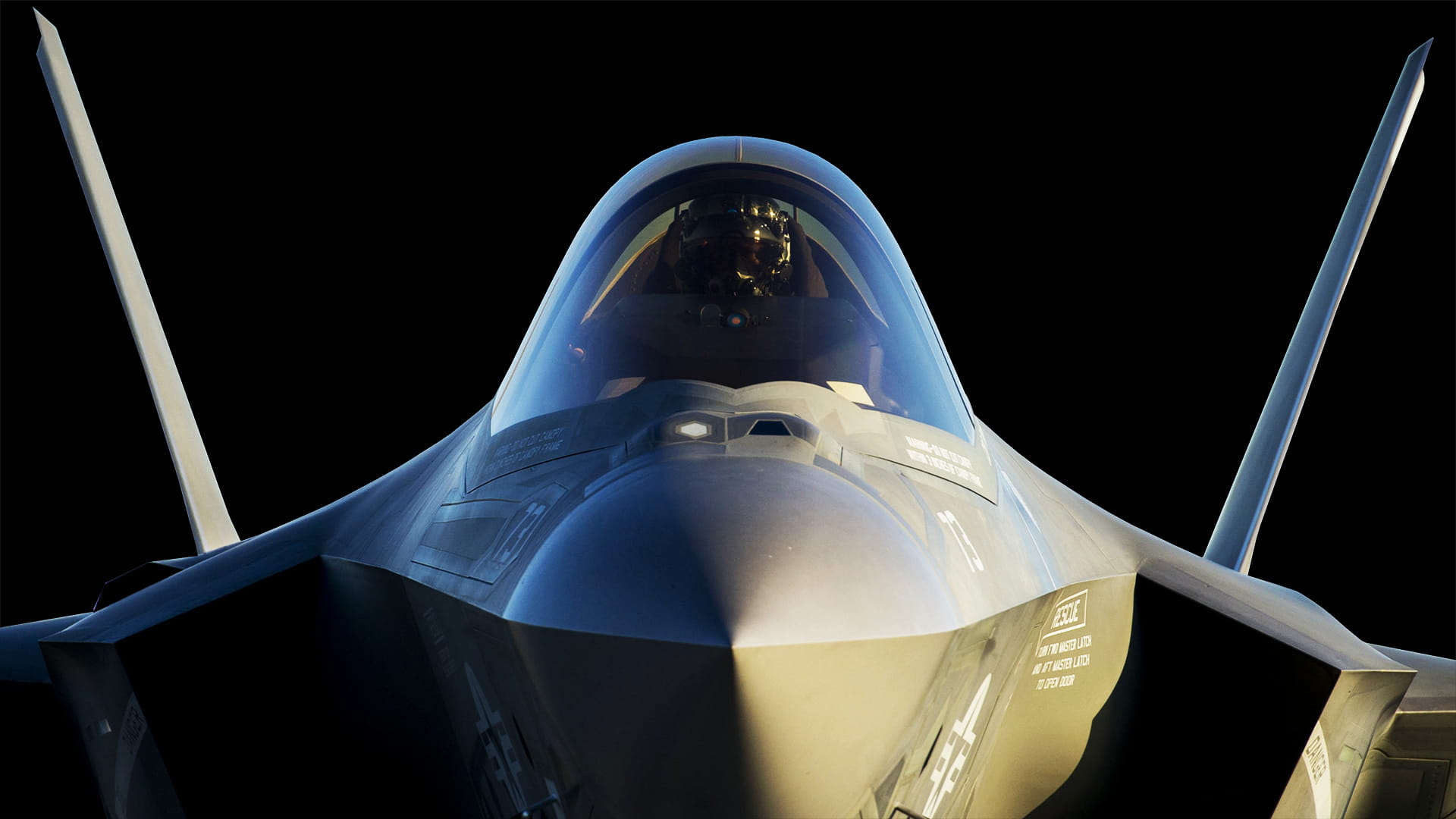
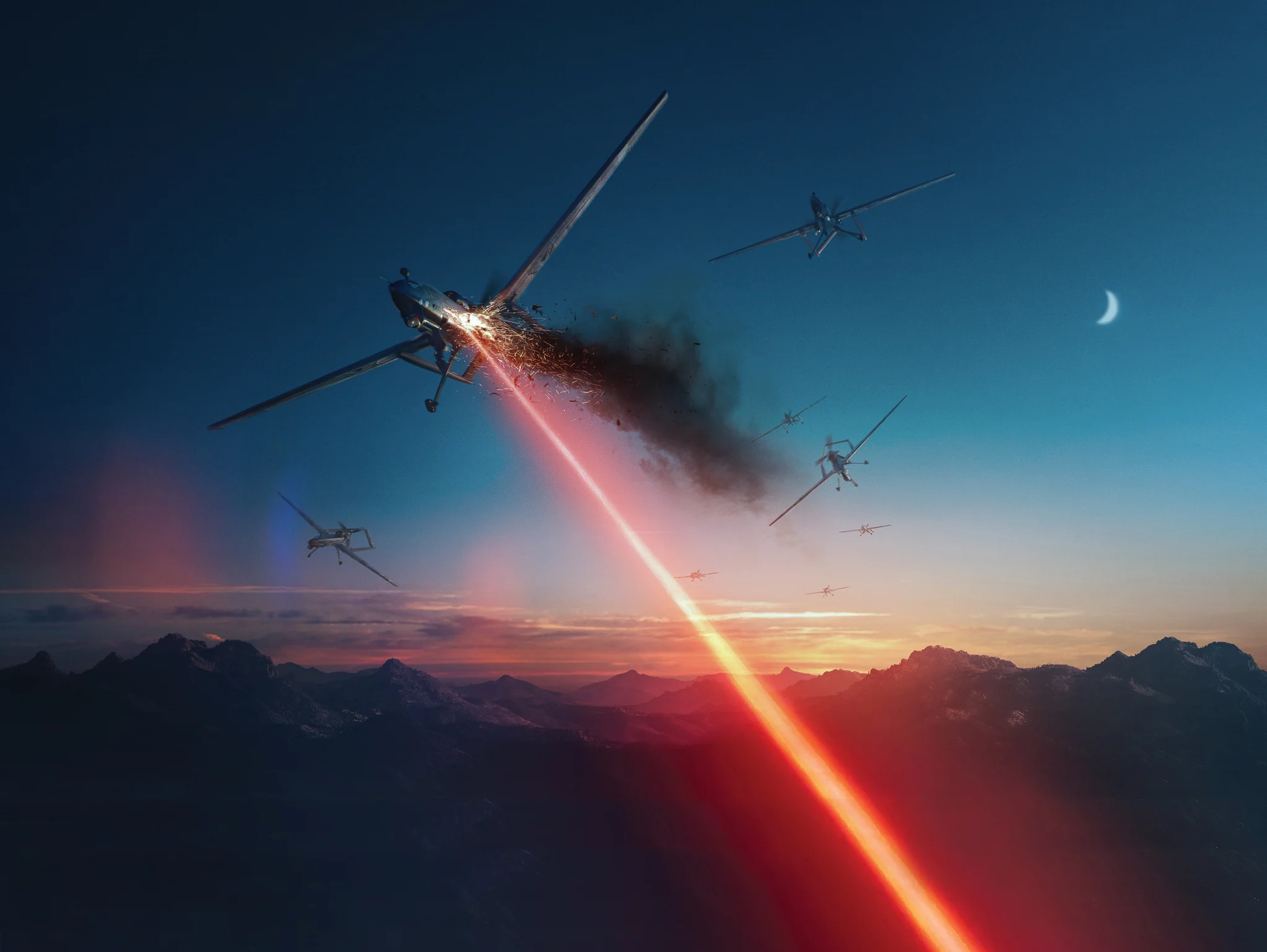
In recent years the US Air Force has targeted equipping fifth-generation fighters, strategic bombers, and future aircraft with laser weapons. The SHiELD project has advanced airborne laser pod development, but significant technical challenges remain.
SHiELD project progress
The Air Force Research Laboratory (AFRL) has pursued two approaches: externally pod-mounted airborne lasers under the Self-protect High Energy Laser Demonstration (SHiELD) project and internally integrated designs under the HELLADS program. Since few details on HELLADS have been disclosed after 2015, this analysis focuses on SHiELD.
SHiELD project overview
- Laser type: fiber laser
- Target power: 150 kW
- Mounting: pod-mounted
- Planned platforms: AC-130, fighters and multiple airframes
- Progress and timeline:
- 2019–2021: Ground demonstrator. In 2019 it reportedly shot down several air-launched missiles (possibly using 50 kW or 60 kW) and completed flight tests on an F-15 with a laser test pod.
- February 2021: Receipt of the SHiELD system pod subsystem.
- July 2021: Receipt of the SHiELD laser and beam control system.
- February 2022: Lockheed Martin began delivering the LANCE system to AFRL; AFRL planned further integration of the weapon and the thermal systems that manage LANCE heating and cooling.
- 2023: Advanced Technology Demonstration planned to address power scaling, beam quality, thermal management, and packaging.
- 2024–2029: AFRL planned a first full system test in 2024, with later goals to integrate pods on F-16 and F-35 aircraft.
Initial assessments
(1) Pod weight may meet fighter carriage requirements. The US Air Force has flight-tested an F-15 carrying a laser pod. Lockheed Martin executives indicated the SHiELD pod is among the smallest and lightest high-energy lasers in its class; the delivered pod subsystem size was reported as one sixth that of a comparable 60 kW Army laser. This suggests the Air Force may have reduced pod weight toward a fighter carriage target of roughly 680 kg.
(2) Ground demonstrations do not fully represent airborne performance. The Air Force used the Army's Demonstrator Laser Weapon System (DLWS) for ground testing and successfully shot down multiple air-launched missiles, validating laser effects on those targets. Ground tests differ substantially from airborne use: beyond power and weather factors, airborne lasers face wind, turbulence, and rapid aircraft maneuvers. Whether they can effectively counter missiles traveling at Mach speeds remains uncertain.
Technical challenges for airborne laser weapons
Airborne laser weapons still face multiple technical hurdles:
(1) Scalable, transportable power supply, reliability, and electromagnetic compatibility. Integrating a laser weapon onto a fighter requires delivering short bursts of about 150 kW without disrupting other systems, placing a major burden on the platform power system. Electromagnetic compatibility with other aircraft systems must also be managed. The Air Force is reportedly developing high-power onboard lithium batteries, but details are limited.
(2) Limited energy conversion, and a trade-off between thermal management and combat effectiveness. Current electric laser emitters have conversion efficiencies below 30%. Unconverted energy must be removed by aircraft cooling systems to prevent failures or damage. AFRL installed thermal management on the SHiELD pod to withstand repeated wartime firings, but thermal handling can reduce combat effectiveness. Balancing thermal management and weapon effect remains unsolved.
(3) Extremely difficult tracking, aiming, and beam focusing against highly maneuvering airborne targets. Flight vibration, high-G maneuvers, and airflow-induced turbulence cause image blur, jitter, and optical distortion, degrading tracking and aiming. Effective range and required dwell time determine system effectiveness. The Air Force has described an "aerodynamic fence" to protect the pod from turret-induced turbulent flow and improve beam quality, but technical details were not disclosed. In practice, keeping a beam focused on a highly maneuverable missile in turbulent atmospheric conditions is challenging even at close range.
Feasibility of equipping fifth-generation fighters
Low firing cost and a near-unlimited magazine are key reasons the US military continues airborne laser research. The Air Force has expressed intent to equip fifth-generation fighters with lasers, but doing so without degrading existing performance and while meaningfully improving missile defense is not feasible in the short term.
(1) Reduced stealth for advanced stealth fighters. Internal integration imposes tighter size and weight constraints, so initial deployments are likely to use pods. On stealth aircraft such as the F-35, even retractable pods increase radar cross-section and reduce stealth, limiting pod use on stealth platforms.
(2) Continued need for kinetic weapons. While 100 kW-class lasers can damage targets at close range with short dwell times and hold tactical value, meeting advanced fighter requirements demands extreme miniaturization, high peak power delivery, and dynamic target engagement capabilities. Lasers are also limited by atmospheric conditions, clouds, and smoke and cannot provide all-weather coverage. As a result, lasers cannot replace kinetic weapons and will remain a complementary weapon requiring integration with existing fire-control and kinetic systems. Whether such integration can substantially improve fifth-generation missile defense is still unknown.
Conclusion
Considering size, weight, power and cooling constraints, as well as the challenges of tracking and damaging dynamic targets, the US Air Force is unlikely to integrate missile-defense laser weapons with high-speed fifth-generation fighters in the near term.