Introduction
During the space race, the United States and the Soviet Union competed for superiority in spaceflight. The Soviet Union launched the first artificial satellite, Sputnik 1, and put the first human, Yuri Gagarin, into space. The United States won the race to land humans on the Moon with the Apollo 11 mission in 1969, when Neil Armstrong and Buzz Aldrin walked on the lunar surface.
Another alarming development during the Cold War was the militarization of space. Throughout the latter half of the 20th century, both the United States and the Soviet Union pursued ways to gain advantage, including developing weapons that could be operated from or deployed into space.
10. Space Lasers
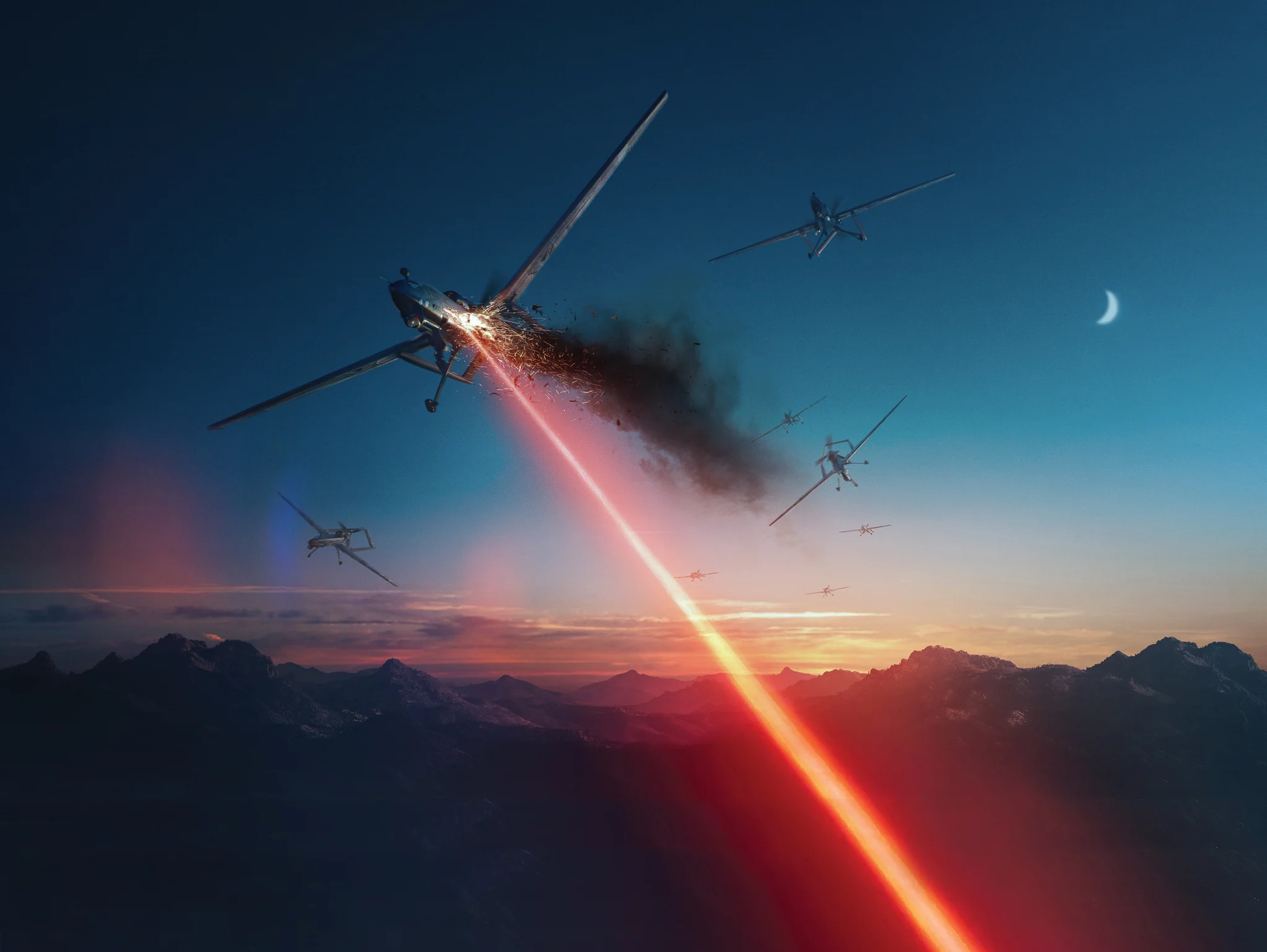
Directed-energy weapons, commonly referred to as lasers, were envisioned for space use. In the 1980s, the Soviet Union developed a prototype handheld energy weapon for cosmonauts that reportedly used a cartridge-fed flash technique to project a beam up to about 20 meters. Although such handheld devices were never deployed to space, experiments and proposals for space-based laser systems were pursued.
Both countries proposed platforms—rockets, shuttles, or satellites—capable of carrying laser weapons so that long-range beams could be projected at targets on Earth or other objects. In 1984, the Soviet Union claimed it had fired a combination of ruby and carbon-dioxide lasers at the United States' Terra-3 site to target the Challenger orbiter, reportedly causing malfunctions and crew discomfort.
9. Space Nuclear Missiles
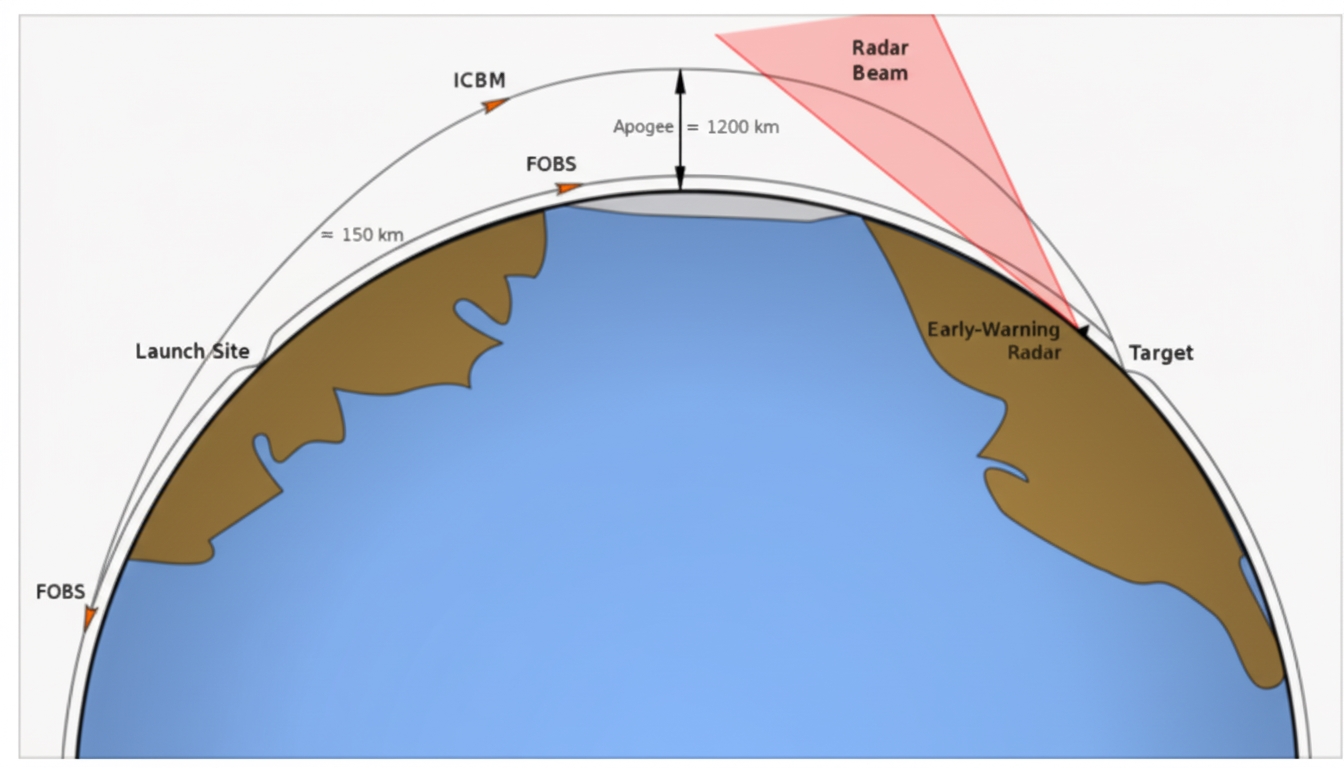
Intercontinental ballistic missiles (ICBMs) have been capable of striking targets thousands of miles away since the 1950s, but the idea of stationing nuclear weapons in space to enable attacks from anywhere led to proposals for orbital nuclear warheads.
During the Cold War, the Soviet Union deployed a Partial Test Ban System concept between 1968 and 1983 that, in theory, allowed nuclear warheads to be placed in low Earth orbit and then deorbited toward targets on the surface. Under arms-control agreements such as the 1983 SALT II framework, the Soviet Union began to phase out such deployments starting in 1979. Various international treaties, including the Outer Space Treaty, later restricted placing nuclear weapons in space, though legal constraints do not always deter states determined to act irresponsibly.
8. Anti-Satellite Weapons
Anti-satellite (ASAT) weapons are designed to disable or destroy satellites in orbit. Over the years, many countries have developed ASAT capabilities, including the United States, the Soviet Union, China, and India. The most common approach is directed-energy weapons (DEW), which deliver highly concentrated energy—electromagnetic radiation, particle beams, or other high-energy effects—to damage or disable a target.
One notable example occurred in 2008 when the United States intercepted and destroyed one of its own satellites using a RIM-161 Standard Missile 3 (SM-3) as the satellite was decaying from orbit. Although effective, such actions create significant orbital debris, which has discouraged many states from employing destructive ASAT methods.
7. Handguns in Space as Emergency Kits
Beyond speculative laser firearms, handheld guns have actually been brought into orbit by both Soviet/Russian and U.S. missions. These weapons were reportedly carried as part of crew emergency kits to provide protection if a reentry vehicle landed off-course in a remote area. Soviet cosmonauts reportedly carried the TP-82 survival pistol during the 1980s; its effective range was listed as up to 200 meters.
6. V-2 Liquid-Fuel Rocket
The German V-2 rocket, developed during World War II, used a liquid-fuel rocket engine and became the first human-made object to reach the edge of space. Deployed as a weapon against Allied cities, the V-2 inflicted substantial civilian casualties. The V-2 also demonstrated how rocket technology could be repurposed for spaceflight and later for military applications in space.
5. "Kamikaze" Satellites
One of the more unusual Cold War proposals involved so-called kamikaze satellites: placing a satellite in orbit and holding it until the right moment, then deorbiting it so it would impact a targeted location at high velocity. Fortunately, this idea was never operationalized, but any nation with launch capability could theoretically use satellites for destructive deorbiting, which remains a concerning possibility.
4. Polyus Orbital Platform
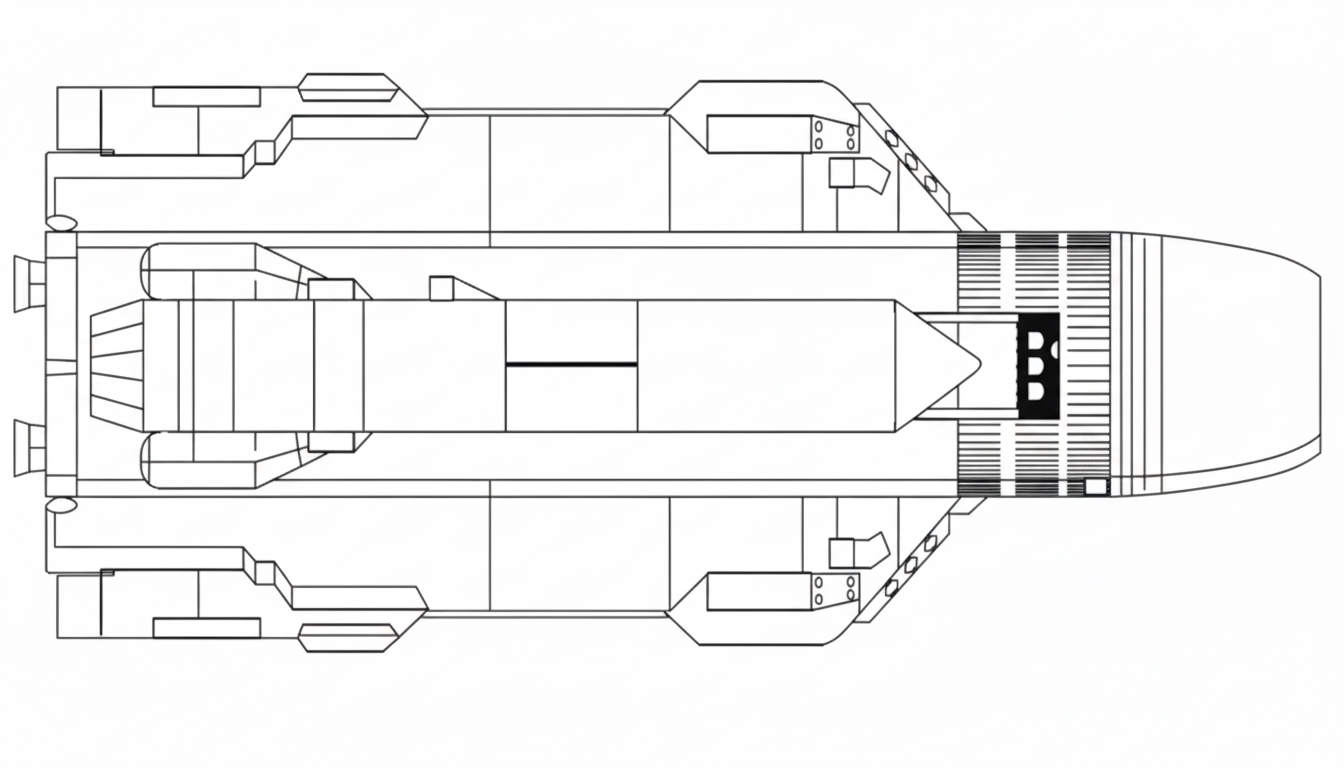
The Soviet Polyus was a prototype orbital weapons platform conceived to carry a carbon-dioxide laser, nuclear anti-satellite mines, defensive recoilless guns, and other counterspace systems. Launched in June 1987, Polyus failed to reach orbit and the program ceased as the Soviet Union began to dissolve. Polyus remains one of the most ambitious and potentially dangerous space weapon concepts from that era.
3. Nuclear Tests in Orbit
Nuclear tests were conducted above the surface of the Earth to study blast effects and resulting radiation. From 1958 onward, the United States carried out high-altitude nuclear tests; the Soviet Union conducted similar tests in the following decade. These experiments demonstrated the destructive potential of detonating nuclear devices in or above near-Earth space, including damage to satellites and electromagnetic effects on electronics.
An example photograph taken from Honolulu shows debris on the horizon after the U.S. "Starfish Prime" test in 1962. Detonating nuclear devices in space to destroy another state's spacecraft or satellites was a real consideration during the Cold War.
2. Strategic Defense Initiative (SDI)
In May 1983, U.S. President Ronald Reagan proposed a combined ground- and space-based system intended to protect the United States from ballistic missile attacks. Nicknamed "Star Wars" by critics, the Strategic Defense Initiative (SDI) envisioned space-based lasers, ground systems for tracking incoming missiles, and other technologies to create a defensive shield.
One SDI concept was the use of kinetic kill vehicles—small, high-speed projectiles launched from satellites to intercept incoming missiles or other targets before impact. While many SDI concepts were never realized and the program focused on defensive measures, SDI represented a potential shift in how space could be used in strategic defense.
1. Redirecting Asteroids Toward Earth
At the extreme end of proposals discussed during the Cold War was the theoretical idea of redirecting asteroids to impact Earth. An asteroid impact would produce catastrophic, potentially apocalyptic effects. Historical records indicate that Soviet circles at one point considered whether manipulating an asteroid's orbit to cause it to strike another state might be theoretically possible. Given the technological limitations at the time, these ideas were quickly dismissed as impractical.