Overview
For many viewers the striking whirling airflows that sometimes appear in front of aircraft engines are a visual curiosity. Their causes, however, are usually explained in technical papers full of equations, so the underlying physics is not widely understood. Casual explanations include jokes that the engine is "peeing" or that the aircraft is dumping fuel, but the actual mechanism is aerodynamic.
What the phenomenon is
This phenomenon is called a ground vortex. It is a type of vortex that looks similar to a small tornado, often appearing as a spiraling column of condensed vapor rising in front of an engine intake.
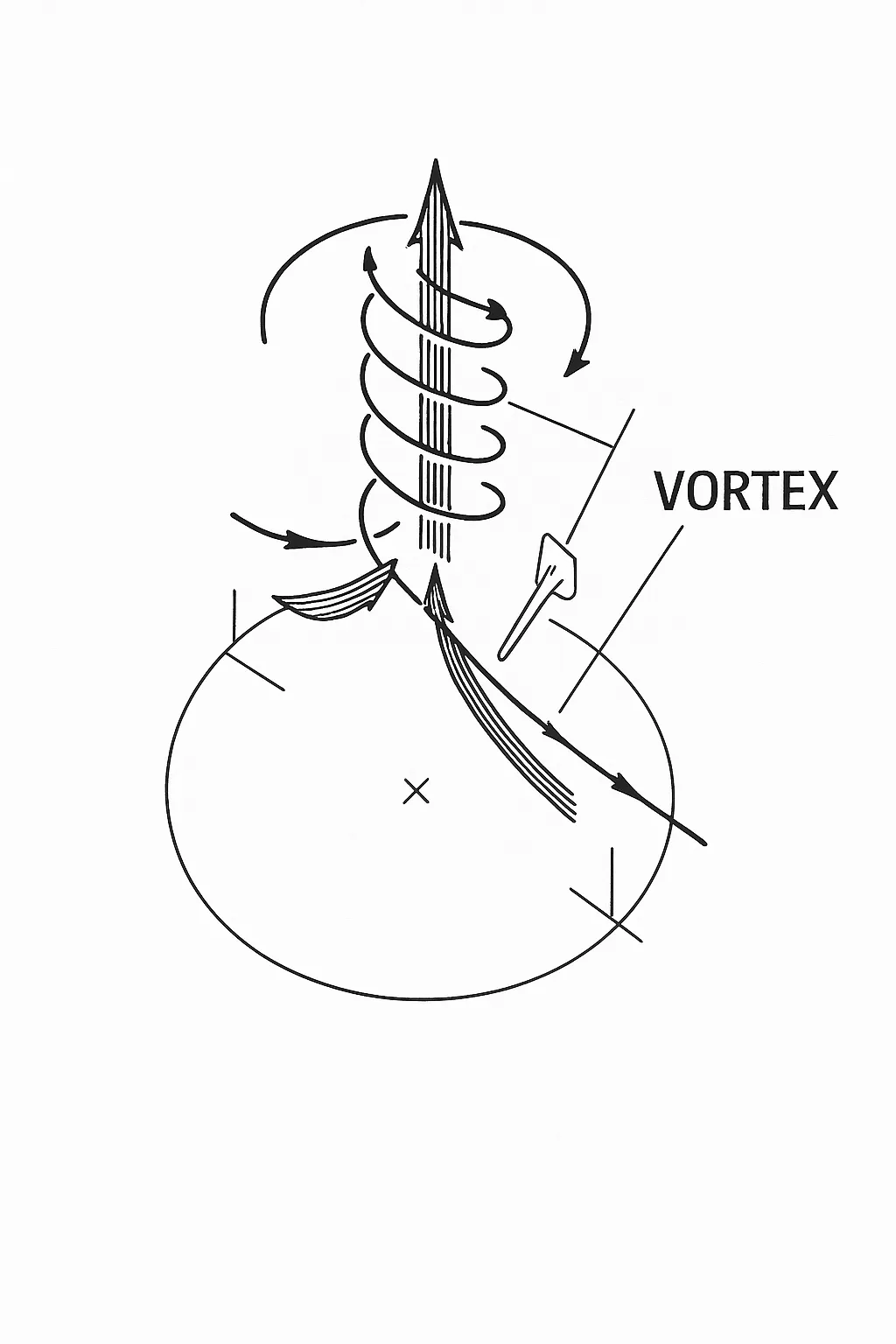
Simple schematic of ground vortex formation
How a ground vortex forms
When an engine draws air into its intake, air is pulled from all directions toward the inlet. Because the engine is close to the ground, boundary-layer flow near the ground is constrained. If there is a crosswind, the upward-moving flow near the ground can start to rotate and then spin rapidly, forming a vortex.
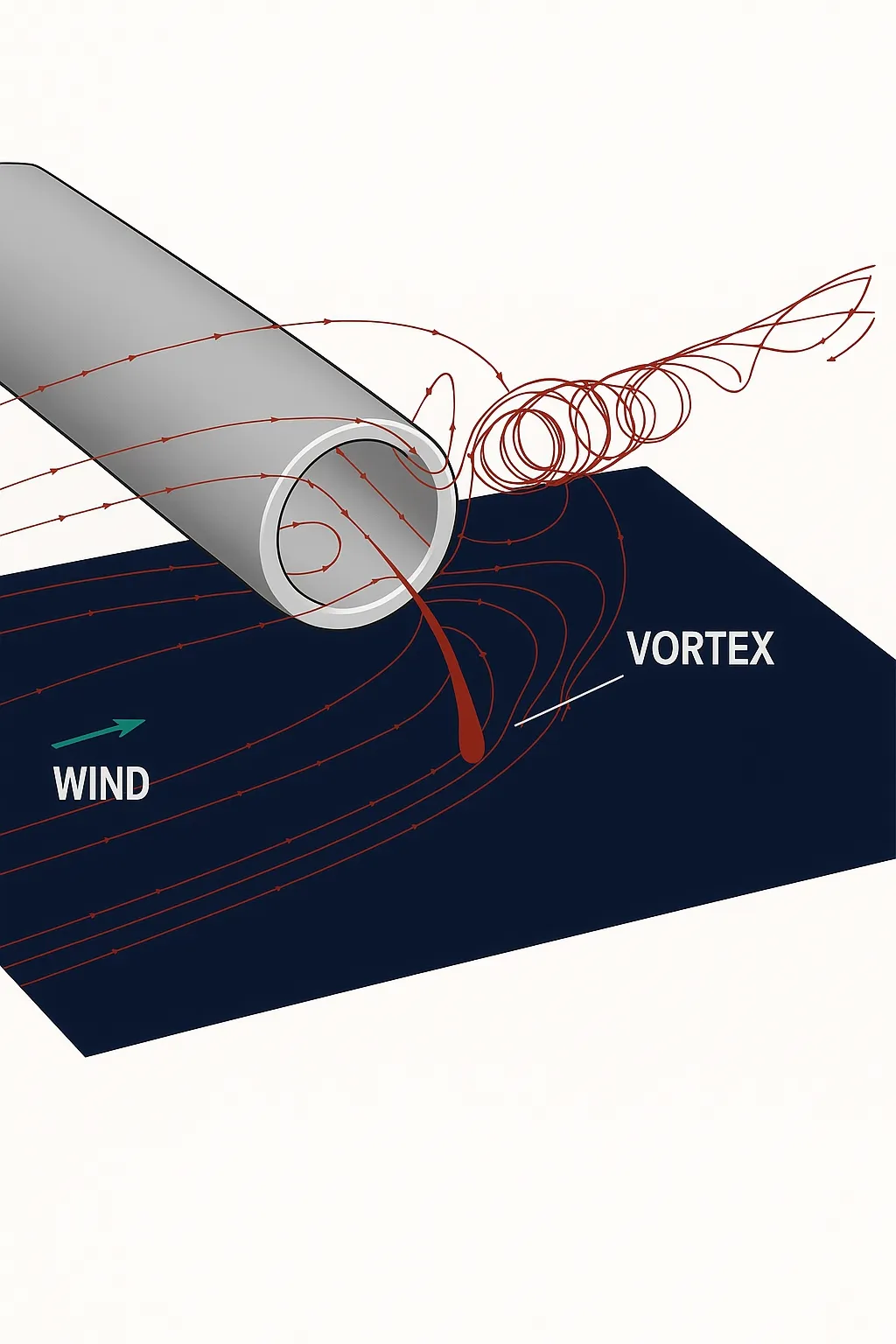
An intuitive way to picture the process is to imagine the engine rapidly removing air from its vicinity, creating a low-pressure region near the inlet and the ground. Air from farther away rushes in to fill that low-pressure "hole." As the air accelerates toward the inlet, inertia carries it forward even as the inlet's suction deflects it upward. The combination of this deflection and angular momentum causes the airflow to twist and form a vortex.
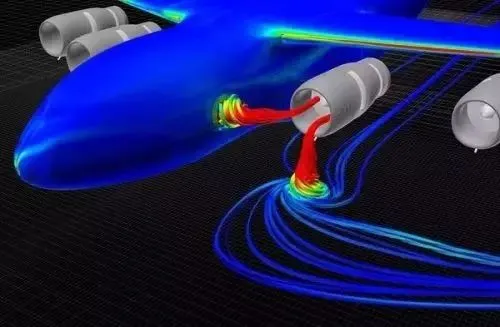
If the engine is close to the fuselage, additional vortices can form along the fuselage surface.
Even without a fuselage, multiple vortex filaments can appear simultaneously, not just a single column.
Why the vortex is sometimes visible
You may have flown many times without ever noticing this effect. Ground vortices form under many conditions, but they become visible only when ambient humidity is high or the ground is wet. Under those conditions, the vortex center has lower pressure and therefore lower temperature. Water vapor condenses in the core and becomes visible as a white cloud.
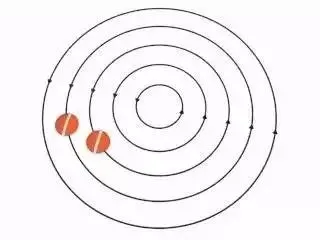
Vortices share the characteristic that rotation speed increases toward the center; the fastest motion occurs near the core.
According to Bernoulli's principle, for flows at the same height, higher fluid speed corresponds to lower pressure. Lower pressure results in lower temperature, which explains the condensation in the vortex core.
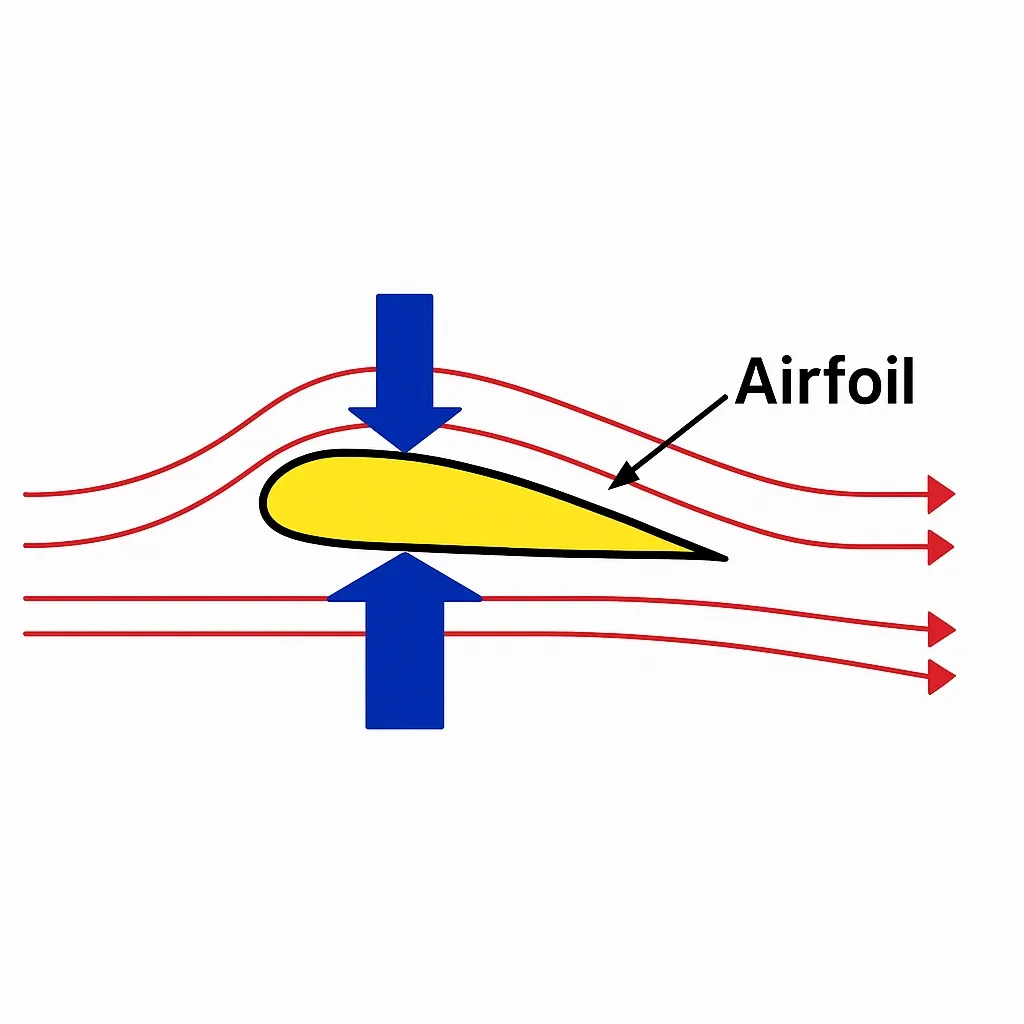
Lift arises because airflow above a wing moves faster than below, producing lower pressure and generating lift.
Potential hazards to the engine
Although ground vortices can look visually impressive, they pose risks that manufacturers try to avoid. Modern airliners use larger, longer wings to increase passenger capacity, which tend to bend upward in flight. To reduce wing bending, heavy engines are mounted on pylons under the wing. This underwing mounting reduces cabin noise and eases maintenance access, but it places inlets closer to the ground, increasing the likelihood of ground vortex formation.
A ground vortex can generate strong suction near the engine inlet. If loose debris such as small screws or coins are present on the ramp, they can be ingested into the engine, causing severe damage. Even without solid debris, ingestion of large amounts of water vapor, sand, or dust can increase engine wear and reduce reliability.
Mitigation measures
Aircraft designers and operators use several strategies to reduce ground vortex formation or its consequences:
- Raise the engine installation where possible. Increasing inlet height reduces the tendency for ground vortex formation, although this is not always feasible for every airframe design.
- Use inlet flow control or bleed-air devices to direct part of the intake flow toward the ground near the expected vortex location. Tests have shown this approach to be effective, but it adds system complexity, cost, and some performance penalty.
- Keep ramp and runway areas clean. Since damage is usually caused by debris carried into the vortex and ingested by the engine, thorough and frequent cleaning of apron surfaces reduces the risk of foreign object ingestion.
Summary
Ground vortices in front of aircraft engines result from the interaction of engine suction, ground proximity, and crosswinds. They become visible when condensation occurs inside the low-pressure core. While visually striking, they can pose a hazard if debris or large quantities of particulates are ingested. Mitigation includes design choices, local flow control measures, and operational practices such as maintaining clean ramp areas.