Introduction
If 6G performs as planned, it will benefit many vertical markets.
The rollout of 6G could open the door to major changes and new possibilities across many domains. Achieving the technology's ambitions will require large-scale collaboration, huge infrastructure investment, and solutions to unprecedented problems. Multiple companies are researching 6G with targets such as peak download rates up to 1 terabit per second (Tb/s) and latencies below 0.1 ms—about 100 times better than 5G. If these targets are achieved, 6G could transform daily life and industries including agriculture, intelligent transport, entertainment, healthcare, manufacturing, public safety, and smart cities. It could also accelerate developments in AI, VR/AR, voice services, and big data.
Steve Hanna, distinguished engineer at Infineon Technologies, noted that new 6G network features will enable novel robotics, healthcare, and industrial applications. However, these applications also bring higher risks. Successful attacks could cause not only inconvenience but also safety hazards. For real-time applications such as robotics, even delayed messages can have catastrophic consequences. To meet these challenges, 6G vendors will need to improve security capabilities via network resilience, trusted computing, and post-quantum encryption.
Despite the potential, the path to 6G is more challenging than many companies acknowledge. The biggest question is whether these obstacles can be overcome before the planned initial deployments around 2030.
Vision and Benefits
If 6G achieves its goals, it will bring advantages across many verticals. In intelligent transport, 6G-enabled automated driving will offer convenience and other benefits. V2X and smart infrastructure connectivity can help avoid avoidable collisions and improve driving efficiency through optimized urban traffic management. 6G support for smart cities could help emergency vehicles overcome congestion and reach hospitals faster, potentially reducing accidents toward near zero.
Delivering higher efficiency and convenience in smart transportation requires full integration of connected autonomous vehicles, real-time cloud connectivity, continuously updated mapping, mature V2X/cellular-V2X, and smart city infrastructure. Many see 6G as a key building block because of its higher speed and lower latency, which enable real-time connectivity without downtime. Autonomous driving will require not only ADAS and AI but also ultra-fast cloud links.
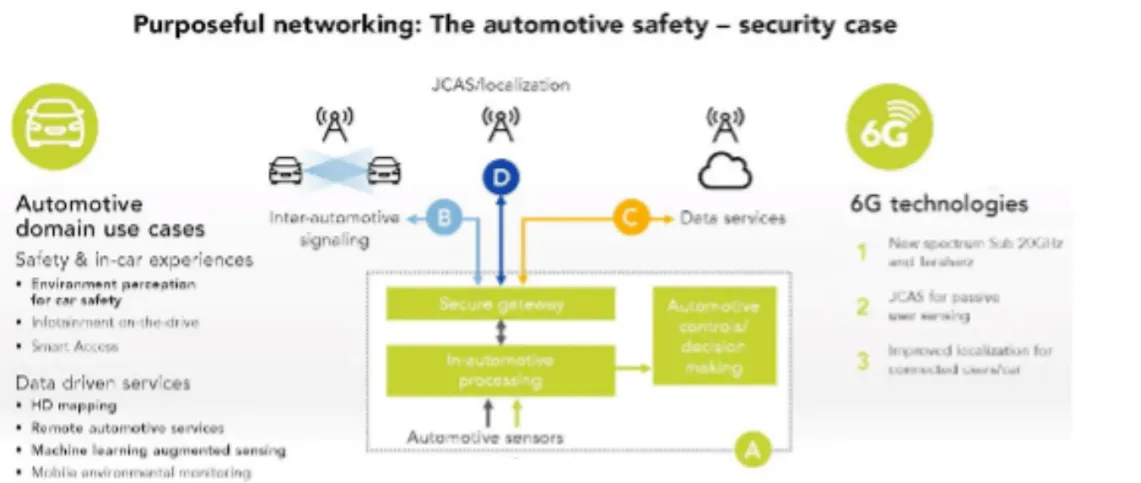
Figure 1: Cloud-based automotive services include improved safety, enriched in-car experience, high-definition maps, and other remote services. Source: NXP and ABI Research.
As connected healthcare advances, 6G is expected to support remote robotic surgery where connections must be fast and uninterrupted. Reliability is mandatory: even a few seconds of Internet interruption during remote surgery could be catastrophic. The entire infrastructure and supply chain—from high-speed 6G chips to reliable network equipment—must work in near-perfect coordination. Successful deployment could allow patients anywhere, including underserved and remote areas, to access advanced medical care. High-speed connectivity could also support integrated vital-sign monitoring, AI, augmented reality, and robotics (including exoskeletons), enabling global collaboration among medical professionals.
Sarah LaSelva, 6G marketing director at Keysight Technologies, said that 6G will offer better performance and faster data rates than 5G, which will inevitably create new applications. At this early stage, however, it is difficult to identify a single killer app for 6G. The goals for 6G are ambitious: to affect many verticals and improve overall human quality of life. As AI capabilities advance and AI-native networks emerge, 6G aims to optimize connected systems broadly and in ways that remain difficult to fully anticipate. By adding wireless connectivity to more devices—from IoT sensors and wearables to factory machines—6G will generate more data for AI algorithms, optimizing both wireless systems and the connected environment.
In 2022, Samsung demonstrated 6G speeds of 12 Gbps at 30 m indoors and 2.3 Gbps at 120 m outdoors. Ericsson has researched new spectrum technologies including centimeter-wave support in the 7 to 15 GHz range. Many organizations and universities worldwide are conducting 6G research. Market research firm Fact.MR projects 6G revenue could reach $300 billion by 2033, but realizing that potential depends on factors ranging from user experience and adoption to infrastructure investment.
6G Updates
A comparison of 5G and 6G shows 6G is poised to push technical limits in multiple dimensions. Beyond speed and latency improvements, 6G aims to improve bandwidth, efficiency, reliability, and coverage, significantly enhancing user experience.
Standards and Alliances
To date, no universally accepted 6G standard exists, but multiple 6G alliances are forming globally. The Alliance for Telecommunications Industry Solutions (ATIS), in collaboration with standards bodies that defined 5G, is working on defining 6G. Its membership includes major industry players such as AT&T, Cisco, Dell, Ericsson, Google, HP, Huawei, Keysight, LG, Nokia, NTT Docomo, Qualcomm, Samsung, T-Mobile, Verizon, and others. Regional alliances have also signed cooperation agreements, including North America’s Next G Alliance with European and Asian groups. South Korea announced a K-Network 2030 plan that includes commercial 6G services by 2028. Other regions have launched 6G research programs to accelerate commercial readiness. India’s Department of Telecommunications formed the Bharat 6G Alliance to foster collaboration among public and private companies, academia, research institutions, and standards bodies.
The International Telecommunication Union Radiocommunication Sector (ITU-R) and its IMT-2030 work focus on the post-2030 timeframe. A draft framework lists six usage scenarios: immersive communication, massive communication, and ultra-reliable low-latency communication, plus three additions: ubiquitous connectivity, AI-communication integration, and sensing-communication integration. Ultimately, chipset developers, equipment and infrastructure vendors, software developers, and hardware manufacturers must work together to avoid fragmentation, while companies compete to lead.
6G Obstacles
Implementing 6G successfully faces many obstacles. Building networks and mobile 6G infrastructure will be a major challenge. Although 6G can build on 5G, the migration from 4G to 5G took a long time and is still evolving. Infrastructure costs for 6G will be very high, and issues such as spectrum allocation and various network challenges must be resolved.
Terahertz Waves
Achieving terahertz-band performance that balances sustainable throughput and flexibility will be challenging, and the 6G supply chain will need time to mature. Beyond the technical challenges common to 5G and mmWave applications, signals in higher bands are easily affected by weather and solids such as windows and walls. The industry still lacks killer applications that strictly require 6G functionality. Moving massive amounts of data at speeds two orders of magnitude higher between chips and chiplets presents technical challenges. Defining the optimal compute balance from device to edge to data center is also critical. Consumer concerns about security, safety, and privacy will affect acceptance and adoption.
6G Testing
Testing is another critical area. Successful implementation at a single site does not guarantee scalable performance, which helps explain why 5G speeds vary by country due to geography and coverage differences. Delivering reliable, 24/7 network service may require substantial time and effort. To achieve 100 Gbps or higher throughput in sub-THz bands (100 to 300 GHz), high-order modulation and wide occupied bandwidths of 10 to 30 GHz may be required. Supporting wide modulation bandwidths demands very fast ADCs and DACs with high dynamic range and linearity to handle candidate 6G waveforms with high peak-to-average ratios. IF/RF/THz radio hardware and channel impairments will introduce amplitude and phase distortions across wide modulation bandwidths that receiver baseband equalization algorithms must address.
However, this approach requires high clock rates and extensive parallelization, quickly consuming baseband resources. Measuring error vector magnitude (EVM) for these wideband, high-speed systems requires high-performance test equipment such as ultrafast arbitrary waveform generators (AWGs) and digital oscilloscopes to generate and analyze wideband waveforms with low residual EVM. For example, Keysight’s M8199A AWG offers sample rates up to 128 GSa/s and analog bandwidth up to 70 GHz on four channels, while the UXR digital oscilloscope provides sample rates up to 256 GSa/s and analog bandwidth up to 110 GHz on four channels. Such instruments form the basis for sub-THz testbeds, enabling engineering teams to evaluate and measure high-speed 6G technologies.
Security
As speeds and connectivity increase, network risk levels also rise. The Next G Alliance report "Trust, Security and Resilience of 6G Systems" describes trusted network organization as a lifecycle covering strong assurances for security, privacy, reliability, availability, and functional safety. Network deployment should follow standardized design, development, and integration phases to ensure trustworthiness.
Impact on Chip Design
6G performance requirements will significantly affect future chips and IP. Challenges include integration of chips, IP, chiplets, and power management. Coverage, cost, and power consumption are key drivers for the transition from 5G to 5G+ and toward 6G. Building penetration limits 5G coverage and indoor use. Many chips will rely on chiplet architectures, since mixing process nodes may be the best approach. This strategy enables higher spectrum support while managing device costs and power consumption carefully.
From a network-on-chip (NoC) perspective, massive data volumes, data locality, and compute demands will drive protocol and bandwidth requirements. Correctly combining NoC features across chiplets will determine requirements for memory, inter-chip controllers, and PHYs. Chiplets are critical for 6G applications because they allow designers to combine the most suitable process nodes for each function—for example, advanced 3 nm or 2 nm nodes for HPC-type computation combined with process nodes better suited for RF.
Overall, 6G will require effort on multiple fronts, including achieving the expected peak speeds. For reference, peak 5G download speeds in North America reached about 3.3 Gbps, while average speeds are much lower and still far from the 10 Gbps target in 5G specifications. Reaching 1 Tbps will be even more challenging and likely take longer. Data management also needs more R&D, since higher-speed data generation will directly impact storage requirements, network security, traffic management, and analytics. If handled poorly, time, effort, and costs will increase and network efficiency will suffer.
Conclusion
Momentum behind 6G is strong. While the technology promises many benefits, significant deployment challenges remain, including terahertz implementation, 6G infrastructure, chip development, testing, and network security. Coordination across the 6G supply chain, scalability, and massive data management are additional challenges. Achieving 6G by 2030 is an ambitious goal; reaching it will be difficult. It remains unclear whether 6G will become a ubiquitous network available everywhere or a collection of regional networks with varying speeds and specifications.