I. Introduction
INTRODUCTION
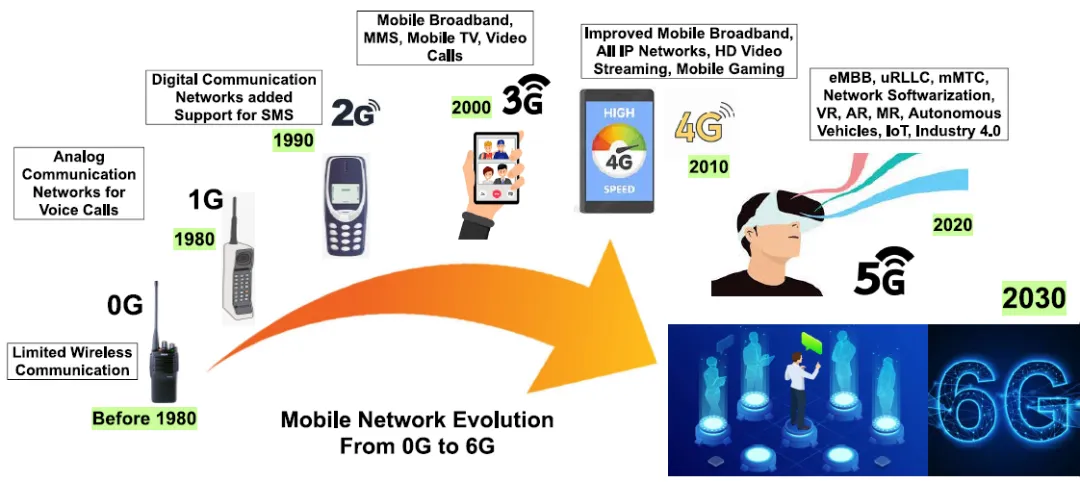
Evolution of mobile networks, from 0G to 6G
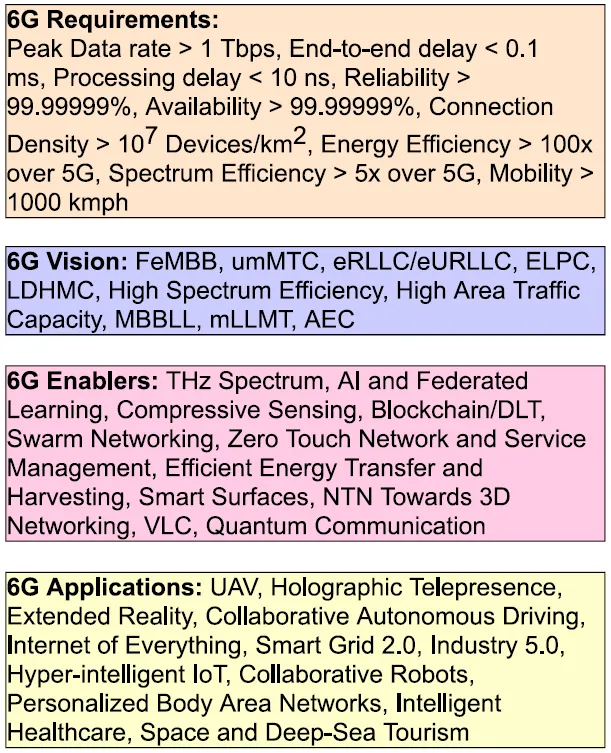
6G requirements, enablers, and applications
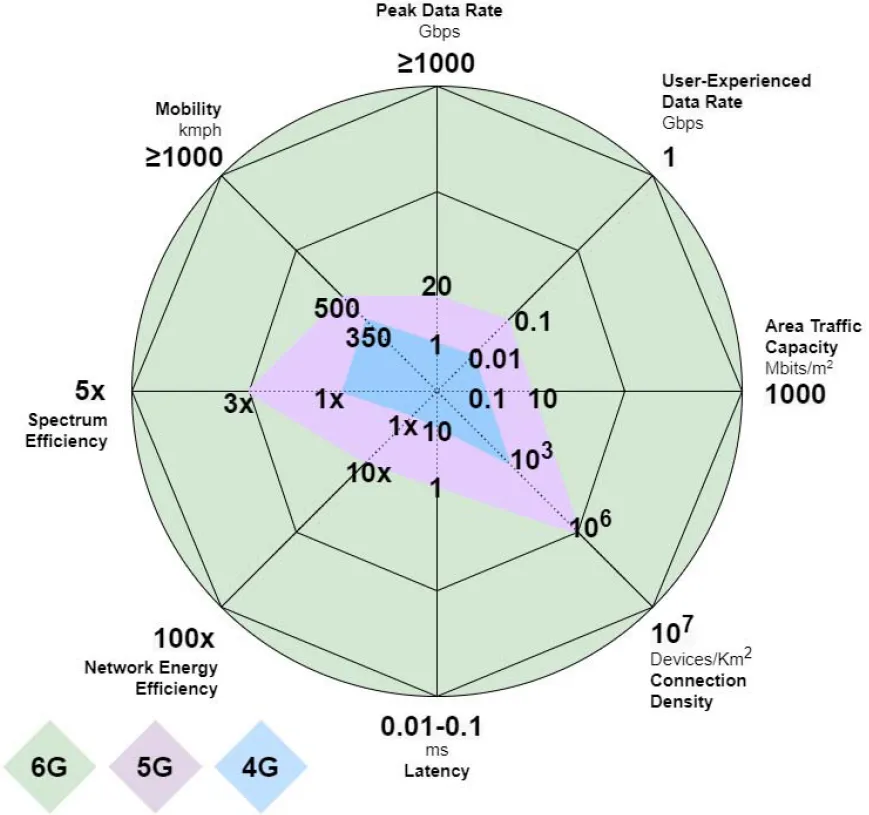
6G mobile communication networks are expected to provide peak data rates beyond 1 Tbps. End-to-end latency will be imperceptible, potentially below 0.1 ms. 6G will enable powerful edge intelligence with processing latency under 10 ns. Network availability and reliability are expected to exceed 99.99999%. Extremely high connection densities are anticipated, supporting more than 10^7 devices/km^2 to enable the Internet of Everything. 6G spectral efficiency is expected to be over five times that of 5G, while supporting extreme mobility up to 1000 km/h.
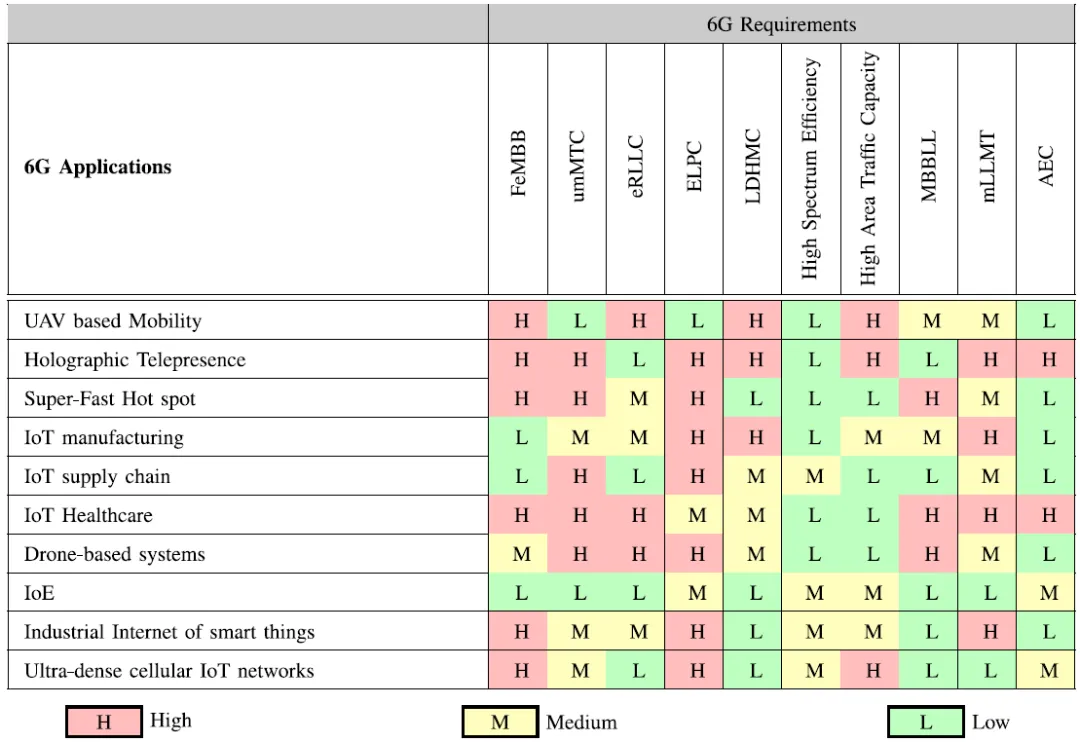
The development of 6G will revolve around many new requirements, such as further enhanced mobile broadband (FeMBB), ultra-massive machine-type communications (umMTC), mobile broadband with low latency (MBBLL), and massive low-latency machine-type communications (mLLMT).
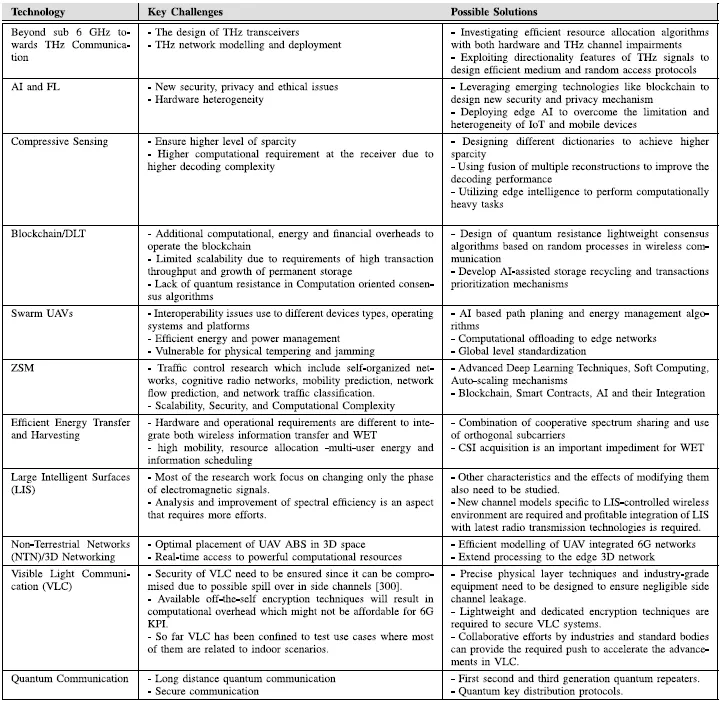
New 6G requirements will be enabled by emerging technologies such as THz communications, federated learning, edge AI, compressed sensing, blockchain and distributed ledger technology, and 3D networks, among others.
Applications like holographic telepresence (HT), unmanned aerial vehicles (UAVs), extended reality (XR), cooperative autonomous driving, smart grid 2.0, IoE, Industry 5.0, and space and deep-sea tourism are expected to become mainstream use cases for future communication networks.
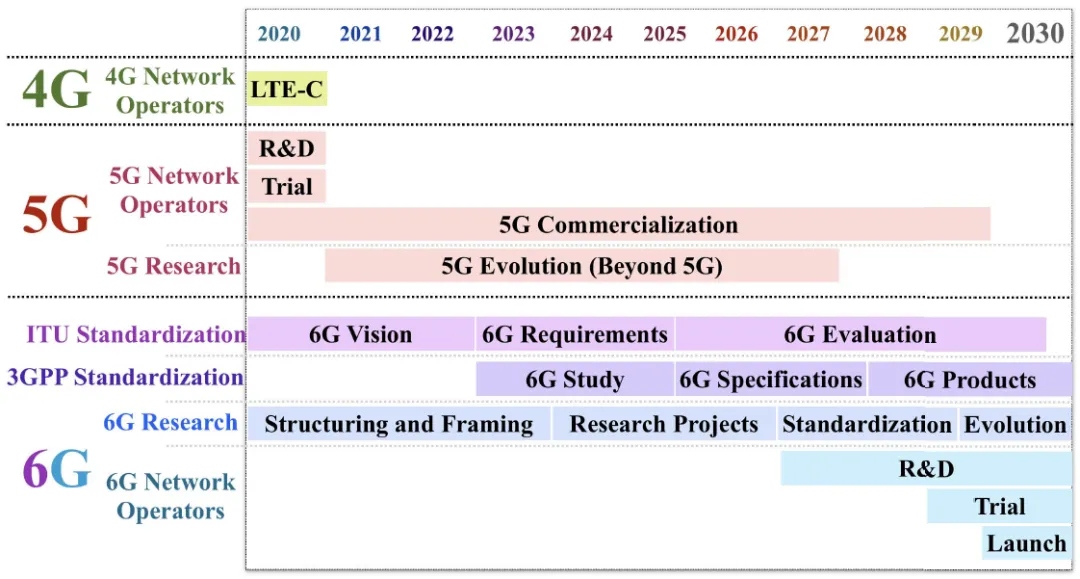
II. Key Driving Trends Toward 6G
- A. IoT expanding to the Internet of Everything (IoE)
- B. Availability of massive small-data
- C. Availability of self-sustaining networks
- D. Convergence of communications, computation, control, localization, and sensing (3CLS)
- E. Zero-energy IoT
- F. Advances in communication technologies
- G. Gadget-free communication
- H. Increasing elderly population
- I. Emerging technologies and their applications
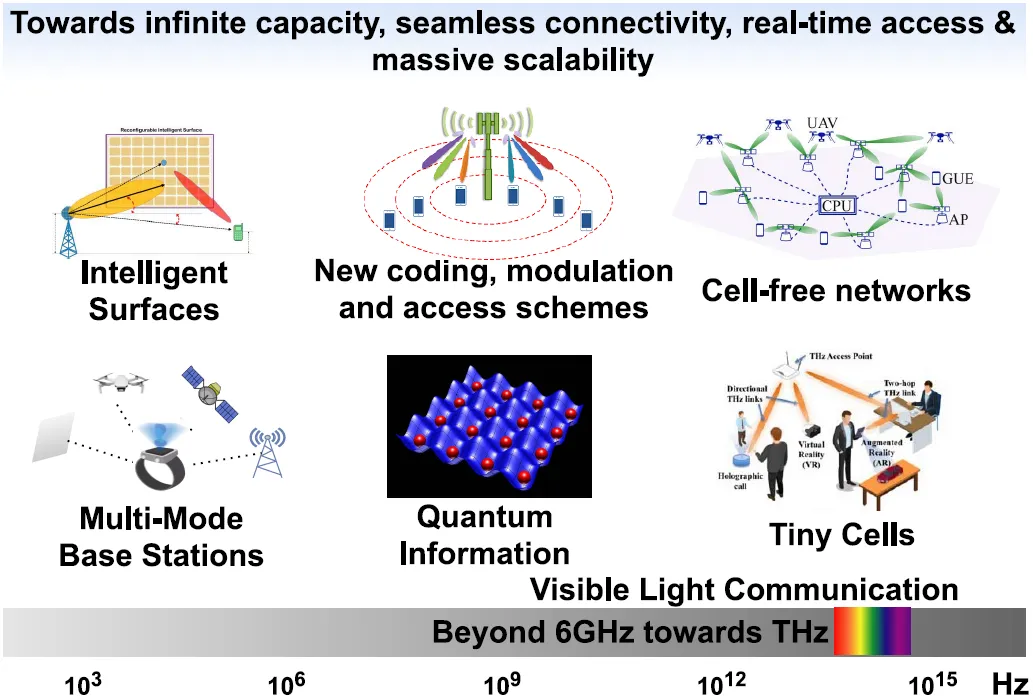
III. 6G Applications
- A. Internet of Everything (IoE)
- B. Smart grid 2.0
- C. Holographic telepresence
- D. UAV-based mobility
- E. Extended reality (XR)
- F. Connected autonomous vehicles
- G. Industry 5.0
- H. Hyper-intelligent IoT
- I. Collaborative robots
- J. Personalized body area networks
- K. Smart healthcare
IV. 6G Requirements and Vision
- A. Further enhanced mobile broadband
- B. Ultra-massive machine-type communications
- C. Ultra-reliable low-latency communications
- D. Extremely low-power communications
- E. Long-range high-mobility communications
- F. High spectral efficiency
- G. High area traffic capacity
- H. Mobile broadband with low latency (MBBLL)
- I. Massive low-latency machine-type communications (MLLMT)
- J. AI-assisted extreme communications
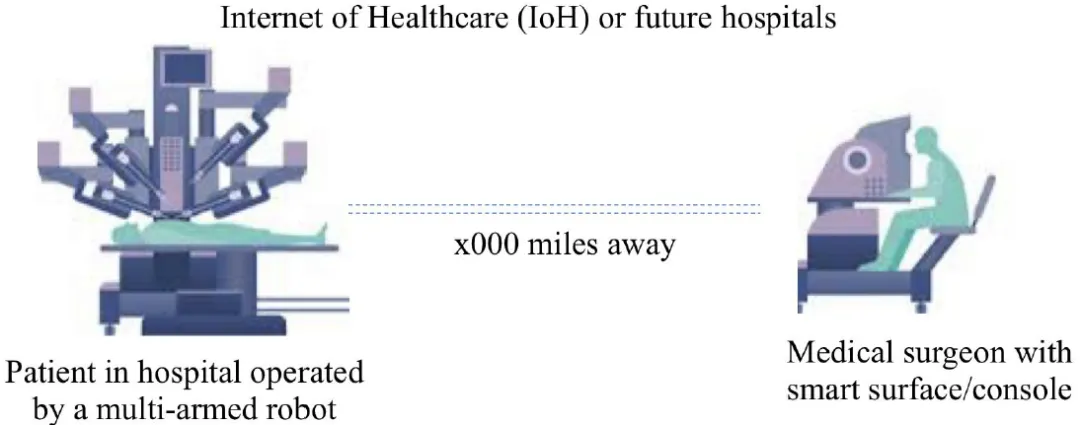
eURLLC use cases (IoT healthcare)
LDHMC use cases (space tourism, deep-sea tourism, high-speed trains, etc)
V. 6G Enabling Technologies
- A. Sub-6 GHz to THz communications
- B. AI and federated learning
- C. Compressed sensing
- D. Blockchain and distributed ledger technology
- E. UAV swarms
- F. Zero-touch networks and service management
- G. Efficient energy conversion and harvesting
- H. Large intelligent surfaces
- I. Non-terrestrial networks (NTN) for 3D networks
- J. Visible light communications
- K. Quantum communications
6G technical challenges and potential solutions
VI. 6G Projects and Research Activities
- A. 6G FLAGSHIP (May 2018 – Apr 2026)
A research program focused on "6G-enabled wireless smart society and ecosystem", funded by the Academy of Finland, duration eight years.
- B. Hexa-X (Jan 2021 – Jun 2023)
An EU flagship collaboration between European industry and academia, funded by the European Commission. It studied the B5G/6G vision and developed enabling technologies and architectures to connect the human, physical, and digital worlds.
- C. TeraFlow (Jan 2021 – Jun 2023)
Focused on creating new cloud-native software-defined networking (SDN) controllers for post-5G networks. Funded by the EU.
- D. DAEMON
Focused on providing high-quality network intelligence for post-5G systems to achieve fully automated network management. Funded by the EU.
- E. 6G Brain (Jan 2021 – Dec 2023)
Focused on applying AI-driven multi-agent deep reinforcement learning to 6G wireless links. An EU project.
- F. Korea MSIT 6G research projects
Korea's MSIT (Ministry of Science and ICT) has developed an ambitious plan. The government anticipates potential commercialization of 6G services in Korea between 2028 and 2030.
- G. Japan 6G/B5G promotion strategy
Japan launched a 6G/B5G promotion strategy in 2020 to drive R&D for 6G wireless services.
- H. 6G Innovation Center
The University of Surrey launched a 6G Innovation Centre building on its 5GIC.
- I. Industry 6G initiatives
Major telecom industry players have launched multiple industry 6G programs, including NTT, Huawei, SK Telecom, Samsung, LG, and others.
VII. 6G Standardization Efforts
Table 7 lists leading ongoing 6G projects and the standardization activities for 6G enabling technologies and applications. Details omitted.
VIII. Future Research Directions and Challenges
FUTURE RESEARCH DIRECTIONS AND GENERAL CHALLENGES IN 6G
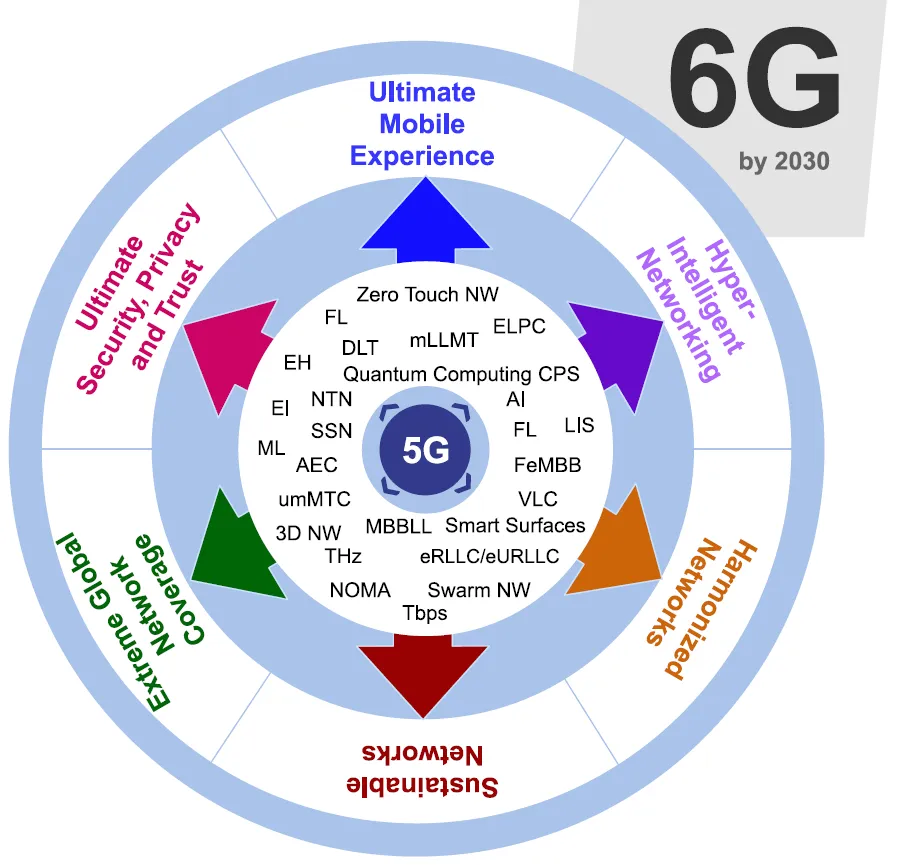
Toward 6G—future directions and challenges
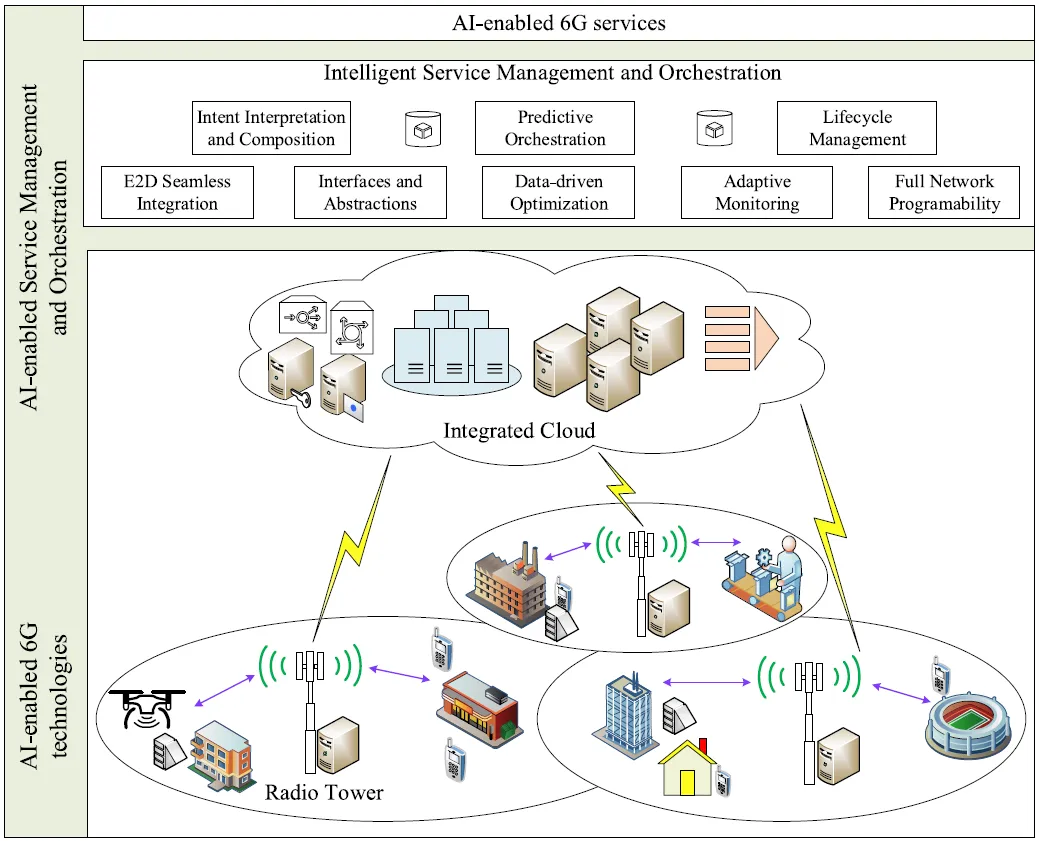
6G enabling services