Introduction
Traditional pick and place machines have dominated surface mount technology lines for decades, handling high-volume placement of components with speed and precision. However, as printed circuit boards grow more complex with mixed technologies, odd-form parts, and high-mix production runs, limitations in flexibility become apparent. Advanced robotics assembly lines step in to address these gaps, incorporating multi-axis robotic arms capable of through-hole insertion, adhesive dispensing, and intricate manipulations beyond simple component placement. These systems enhance throughput while maintaining quality in demanding applications like aerospace and medical devices. Electric engineers benefit from understanding how these technologies integrate into workflows, enabling smarter design choices and troubleshooting during implementation. This article explores the principles, types, challenges, and best practices of advanced robotics in PCB assembly.
Why Advanced Robotics Matters in Modern PCB Assembly
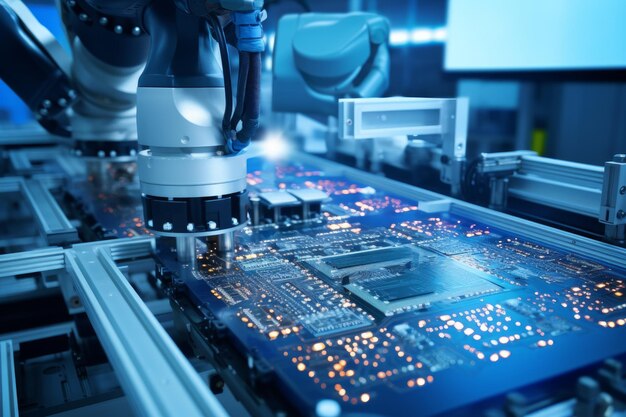
The shift to advanced robotics assembly lines responds to industry demands for versatility in an era of rapid product cycles and customization. Conventional lines excel in standardized SMT but struggle with non-standard components or rework tasks, leading to bottlenecks. Robotic systems offer dexterity akin to human operators but with repeatability and no fatigue, crucial for high-reliability assemblies. They reduce defects by integrating real-time inspection and adaptive programming, aligning production with evolving design requirements. For electric engineers, this means fewer field failures and optimized yields, especially in flexible automation PCB setups where changeovers occur frequently. Ultimately, these advancements lower long-term costs through minimized scrap and faster time-to-market.
Types of Automated Assembly Lines Featuring Robotics
Automated assembly lines vary in configuration to suit different production scales and complexities, with robotics playing a central role in modern variants. Fixed inline systems use gantry-based pick and place for high-volume runs, but advanced robotics assembly lines incorporate modular designs for scalability. Collaborative lines blend SCARA robots for fast planar movements with articulated arms for 3D tasks, allowing seamless transitions between SMT and THT processes. Flexible lines employ delta robots overhead for ultra-high-speed picking, ideal for feeder integration in dynamic environments. Engineers must evaluate line types based on throughput needs, with hybrid setups offering the best balance for prototyping to mid-volume.
- Inline Fixed — Gantry/SCARA for placement; typical applications: high-volume SMT.
- Modular Flexible — 6-axis arms, vision-guided; typical applications: high-mix, odd-form.
- Collaborative — Delta + articulated; typical applications: prototyping, rework.
- Overhead Delta — Parallel kinematics; typical applications: ultra-fast picking.
This list highlights how types of automated assembly lines evolve with robotic integration, aiding selection for specific workflows.
Robotic Arm for PCB Assembly: Design and Functionality
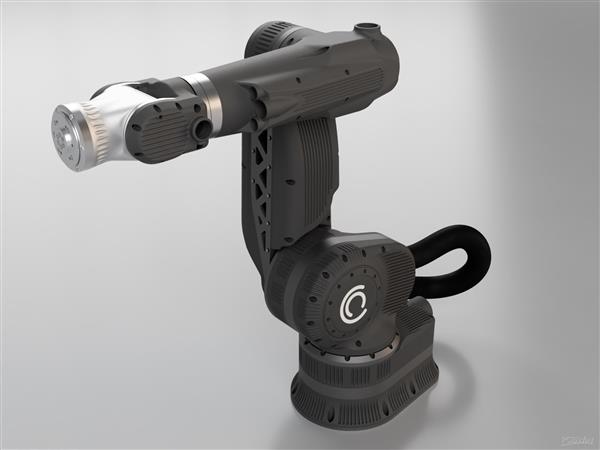
A robotic arm for PCB assembly typically features 4 to 6 degrees of freedom, enabling precise end-effector exchanges for tasks like soldering, screwing, or conformal coating. Articulated 6-axis arms mimic human wrist flexibility, ideal for navigating tight board geometries during through-hole insertion. SCARA arms provide high-speed horizontal reach for glue dotting or tape-and-reel handling, while Cartesian systems ensure orthogonal precision in large-panel assembly. Vision systems with 3D cameras compensate for fiducial offsets, ensuring sub-micron accuracy even on warped boards. Force-torque sensors prevent component damage by detecting contact forces, a critical upgrade over rigid pick and place mechanisms. Integration with conveyor indexing synchronizes arm movements, boosting overall line efficiency.
Enabling Flexible Automation PCB Through Robotics
Flexible automation PCB lines reconfigure on-the-fly via software-defined robot paths and quick-change tooling, accommodating design revisions without mechanical downtime. Programmable logic controllers orchestrate multi-robot cells, where one arm handles placement while another performs selective soldering. AI-driven path optimization predicts collision risks and adjusts for thermal expansion in real-time. This adaptability shines in just-in-time manufacturing, where batch sizes drop to onesies. Engineers troubleshoot flexibility by calibrating end-effectors to component tolerances, ensuring consistent performance across material variations. Such systems future-proof factories against obsolescence, scaling from prototypes to production seamlessly.
Common Robotic Assembly Challenges and Troubleshooting
Robotic assembly challenges often stem from precision demands in handling delicate components like BGAs or fine-pitch QFNs. Programming complexity arises with irregular part geometries, requiring teach pendants or simulation software for path validation. Vibration and thermal drift can misalign arms, necessitating frequent recalibration. Integration hurdles include synchronizing robot speed with upstream solder paste printers or downstream reflow ovens. Dust or flux residue fouls grippers, leading to placement errors that demand robust cleaning protocols. Electric engineers address these by implementing redundant sensors and offline programming, verifying compliance with standards like IPC-A-610 for joint acceptability.
Another hurdle involves high-mix scenarios, where frequent feeder swaps slow lines; dual-arm configurations mitigate this by parallel processing. Force feedback loops detect insufficient insertion depth, preventing bent leads. Data logging from robot controllers aids root-cause analysis, pinpointing issues like encoder drift.
Best Practices for Advanced Robotic Systems
Start with thorough design-for-assembly reviews, spacing components to allow arm access radii and avoiding shadowed areas. Simulate entire cells using digital twins to iron out kinematics before hardware deployment. Employ machine vision for fiducial detection and defect flagging, looping back to robotic rework stations. Maintain end-effectors with scheduled inspections, using vacuum verification for pick reliability. Train operators on J-STD-001 guidelines for any manual overrides, ensuring process consistency. Monitor key performance indicators like cycle time and first-pass yield to iteratively refine trajectories.
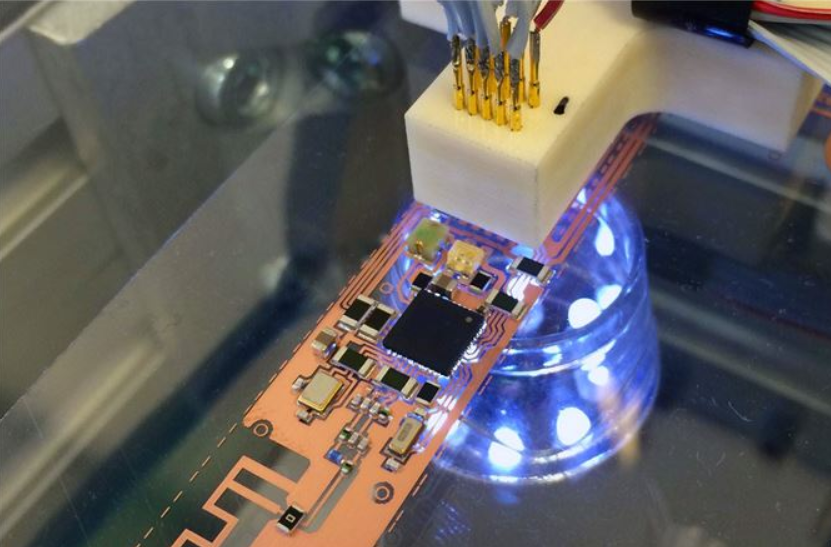
Layer in ISO 9001 quality management for traceability, logging every placement event. Hybrid human-robot zones enhance safety with speed-limiting fences. Regular firmware updates incorporate kinematics improvements, sustaining peak performance.
Conclusion
Advanced robotics assembly lines propel PCB production beyond pick and place limitations, delivering flexibility, precision, and efficiency for complex boards. From articulated robotic arms to modular line types, these systems tackle high-mix demands while upholding quality. Engineers who master robotic assembly challenges through simulation, sensing, and standards compliance unlock reliable workflows. Flexible automation PCB emerges as the cornerstone for competitive manufacturing. As technology advances, integrating AI and collaborative robots will further redefine assembly paradigms, benefiting electric engineers in design and production alike.
FAQs
Q1: What are advanced robotics assembly lines in PCB manufacturing?
A1: Advanced robotics assembly lines integrate multi-axis robots with vision and force sensing for tasks beyond SMT placement, such as THT insertion and inspection. They support high-mix production by enabling quick reprogramming and tool changes. This setup improves yield and reduces downtime compared to traditional lines, aligning with standards like IPC-A-610 for quality. Electric engineers use them to handle complex boards efficiently.
Q2: How does a robotic arm for PCB assembly differ from pick and place machines?
A2: A robotic arm for PCB assembly offers 6-axis dexterity for 3D manipulations, unlike gantry-based pick and place limited to XY placement. It handles odd-form parts, soldering, and rework with adaptive end-effectors. Troubleshooting focuses on calibration for precision, making it ideal for flexible automation PCB. Integration enhances line versatility without sacrificing speed.
Q3: What are the main types of automated assembly lines using robotics?
A3: Types of automated assembly lines include modular flexible lines with 6-axis arms, inline SCARA for speed, and delta overhead for picking. Each suits different volumes, from prototypes to high-throughput. Selection depends on mix complexity and space, with hybrids offering optimal robotic assembly challenges resolution.
Q4: What are key robotic assembly challenges and solutions?
A4: Robotic assembly challenges include programming for irregular parts, thermal misalignment, and gripper contamination. Solutions involve AI path planning, sensor fusion, and automated cleaning cycles. Compliance with J-STD-001 ensures solder joint integrity. Engineers troubleshoot via data analytics for sustained performance in advanced setups.
References
IPC-A-610H — Acceptability of Electronic Assemblies. IPC, 2019
IPC J-STD-001H — Requirements for Soldered Electrical and Electronic Assemblies. IPC, 2020
ISO 9001:2015 — Quality Management Systems. ISO, 2015