Introduction
Framed SMT stencils play a critical role in surface mount technology assembly by ensuring precise solder paste deposition on printed circuit boards. Engineers often start with stainless steel framed stencils due to their reliability and widespread availability, but as component pitches shrink and yields demand improvement, exploring advanced framed stencil materials becomes essential. This shift addresses challenges like paste release inconsistencies and aperture wall roughness that can lead to defects such as bridging or insufficient solder volume. Framed stencil materials directly influence print quality, throughput, and long-term stencil performance in high-volume production. By moving beyond stainless steel, assembly teams can optimize for fine-pitch components and complex board layouts. This article examines key alternatives, their properties, and practical selection criteria for electric engineers.
Understanding Framed SMT Stencils and Material Importance
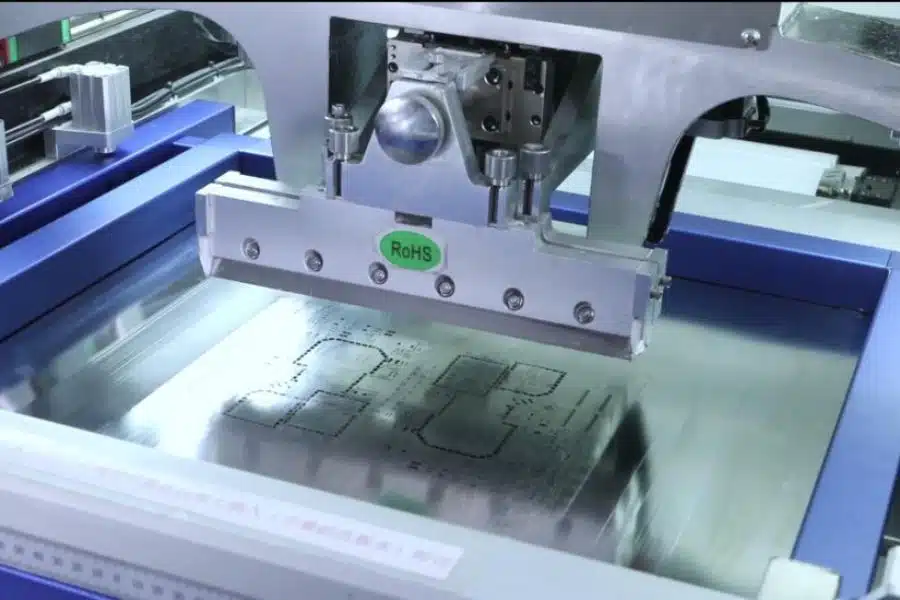
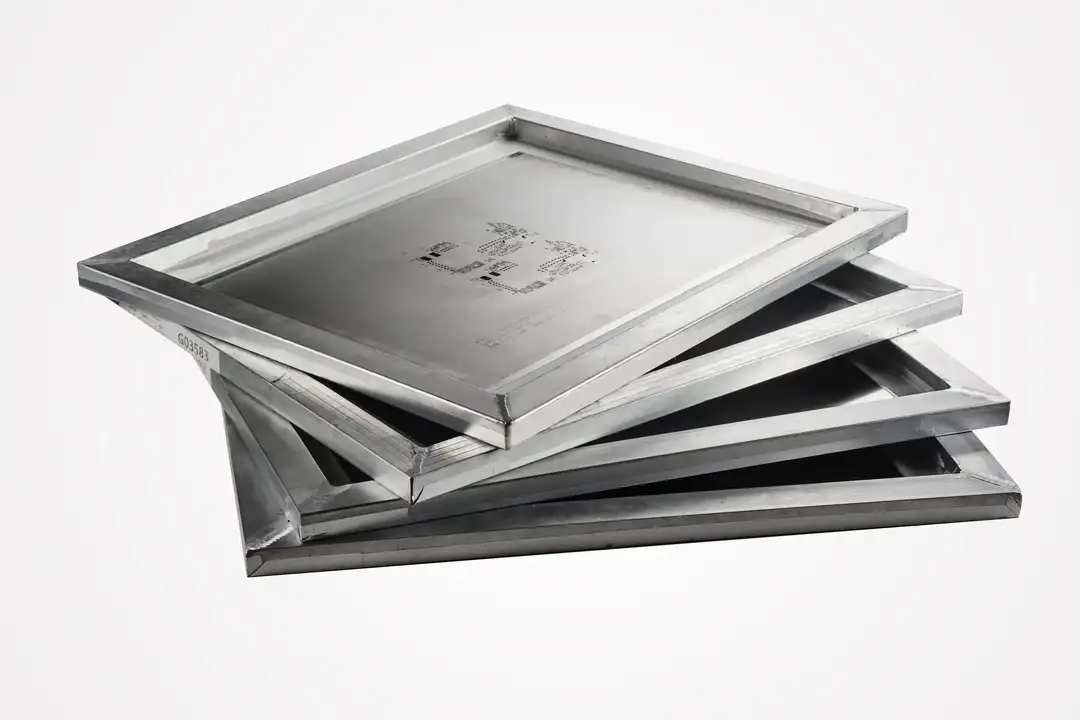
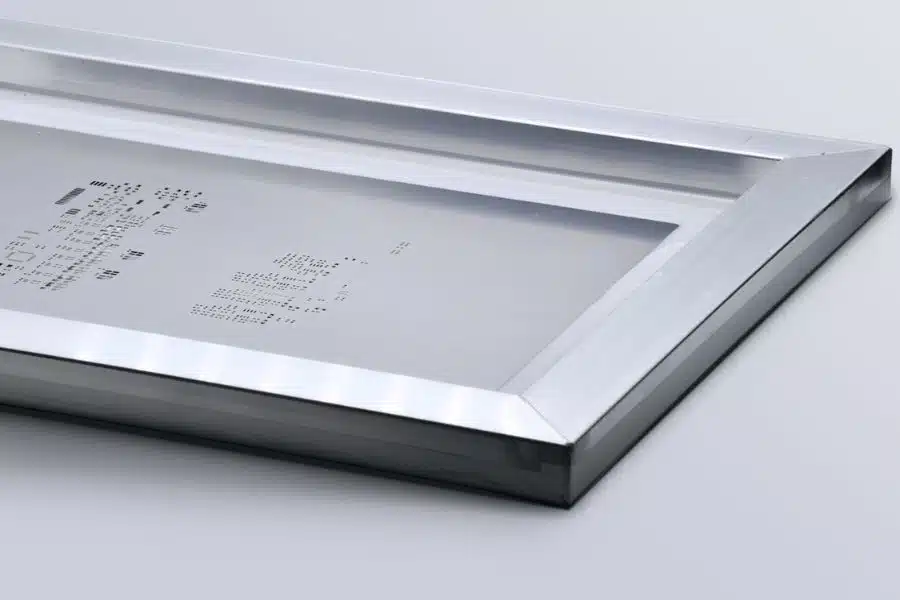
Framed SMT stencils consist of a thin metal foil with precisely cut apertures, tensioned within a rigid frame using mesh borders for stability during printing. Unlike frameless stencils, framed versions maintain consistent tension across large panels, reducing warpage and enabling high-speed printing cycles. Material choice affects aperture quality, solder paste transfer efficiency, and stencil lifespan, directly impacting first-pass yields in SMT lines. Poor material selection can result in inconsistent deposits, leading to rework or assembly failures. Framed stencil materials must balance durability with precision to meet tightening tolerances in modern electronics. Engineers evaluate these based on component size, paste type, and production volume.
In high-density assemblies, framed stencil materials determine how well the stencil handles off-contact printing, where clean separation from the board is vital. Stainless steel has long been the baseline, but advanced options offer superior surface finishes and mechanical properties. According to IPC-7525 guidelines, stencil design including material influences volume control and defect rates. Selecting the right framed stencil materials aligns process parameters with board complexity for optimal results.
Stainless Steel: The Established Baseline for Framed Stencils
Stainless steel framed stencils, typically produced via laser cutting or chemical etching, provide robust performance for standard SMT applications. Their high tensile strength resists deformation under repeated printing cycles, making them suitable for medium to large pitch components. The material's uniformity allows for reliable tensioning in frames, minimizing print defects like smearing. However, stainless steel apertures often exhibit trapezoidal sidewalls from laser kerfing, which can trap paste and reduce release efficiency. Engineers troubleshoot this by polishing or coating, but inherent roughness limits fine-pitch use. Overall, framed stencil stainless steel excels in cost-sensitive, high-volume runs where precision tolerances exceed 0.5mm pitch.
Durability is a key advantage, as stainless steel withstands cleaning cycles without significant wear. Frame integration with mesh ensures flatness, critical for multi-up panels. Drawbacks include higher friction coefficients compared to alternatives, potentially requiring adjusted squeegee pressures. In practice, electric engineers select these for prototypes or legacy designs, monitoring transfer efficiency through volume measurements. Regular inspection for aperture clogging maintains performance. Transitioning to advanced materials addresses these limitations for next-generation boards.
Electroformed Nickel: Precision Engineering for Framed Stencils
Electroformed nickel framed stencils represent a leap in framed stencil nickel technology, grown layer-by-layer through electrodeposition for ultra-smooth, vertical aperture walls. This process yields foils harder than comparable stainless steel, enhancing resistance to wear and extending usable life in demanding environments. The low coefficient of friction promotes superior solder paste release, reducing bridging risks on fine-pitch arrays like 0.3mm or smaller. Framed stencil electroformed variants integrate seamlessly with tension frames, maintaining planarity for high-speed lines. Engineers value their consistency in Type 4 and Type 5 paste printing, where minute volume control prevents tombstoning or voids.
Production involves plating nickel onto a photolithographically patterned substrate, followed by frame mounting with adhesive and mesh. This results in sharper edges and minimal burrs, outperforming laser-cut options in release rates. Troubleshooting focuses on over-plating avoidance to prevent thickness variations. Cost is higher due to process complexity, but ROI comes from fewer defects and longer stencil life. For assemblies with BGAs or QFNs, framed stencil nickel delivers measurable yield gains.
Comprehensive Framed Stencil Material Comparison
Comparing framed stencil materials highlights trade-offs in precision, durability, and application suitability. Stainless steel offers affordability and strength for general use, while electroformed nickel prioritizes finesse for micro-components. Here's a structured overview:
- Aperture Wall Finish: Stainless steel — trapezoidal, moderate roughness; Electroformed nickel — vertical, ultra-smooth
- Friction Coefficient: Stainless steel — higher; Electroformed nickel — lower
- Hardness: Stainless steel — good; Electroformed nickel — superior (harder than full-hard stainless steel)
- Fine-Pitch Suitability: Stainless steel — up to 0.4mm pitch; Electroformed nickel — below 0.3mm pitch
- Cost: Stainless steel — lower; Electroformed nickel — higher
- Lifespan: Stainless steel — standard cycles; Electroformed nickel — extended due to hardness
- Best For: Stainless steel — prototypes, larger pitches; Electroformed nickel — high-volume, fine-pitch
This framed stencil material comparison guides selection based on process needs. Stainless steel suits budget-conscious runs, but nickel shines in precision-driven scenarios. IPC-7525 recommends evaluating material against aperture aspect ratios for volume accuracy. Hybrid approaches, like nickel-coated stainless, blend benefits but require validation.
Best Practices for Selecting and Implementing Advanced Framed Stencils
Start by assessing board pitch and paste particle size; fine-pitch demands framed stencil nickel for optimal transfer. Validate material choice through print trials, measuring deposit height and area ratio per IPC-A-610 criteria for acceptability. Tension frames to 40–50N/cm to prevent deflection, regardless of material. Clean stencils ultrasonically post-run, avoiding abrasives on nickel surfaces to preserve smoothness. For troubleshooting inconsistent prints, inspect aperture integrity under magnification and adjust snap-off distances.
Incorporate nano-coatings on stainless steel as a bridge to full electroformed, enhancing release without full material change. Document baseline yields before switching framed stencil materials to quantify improvements. Collaborate with suppliers on foil thickness uniformity, targeting 5–10% variation max. Regular profilometry checks ensure compliance with process windows. These practices minimize downtime and maximize ROI on advanced investments.
Troubleshooting Insights for Framed Stencil Performance
Common issues like insufficient paste release often stem from mismatched framed stencil materials and pitch density. With stainless steel, trapezoidal walls trap Type 5 paste; switch to electroformed nickel and reduce squeegee speed by 10–20% for cleaner wipes. Bridging in fine arrays signals high friction, resolved by verifying frame tension and using low-residue pastes. Warped frames exacerbate defects, so measure flatness pre-installation.
Voiding under components traces to volume shortfalls; recalibrate apertures per IPC-7525 for 75–85% transfer efficiency. Nickel stencils resist clogging better, but over-cleaning dulls surfaces, dropping yields over 10,000 prints. Log pressure, speed, and gapping data to isolate variables. Proactive swaps to advanced materials cut rework by addressing root causes early.
Conclusion
Exploring framed stencil materials beyond stainless steel unlocks superior print performance for modern SMT challenges. Electroformed nickel stands out for its precision and durability, complementing stainless steel's versatility in a material comparison framework. Engineers benefit from tailored selections that boost yields and reduce defects. Adhering to standards like IPC-7525 ensures reliable outcomes. As assemblies evolve, prioritizing advanced framed stencil nickel positions teams for efficiency gains. Invest in testing to match materials to your process for sustained success.
FAQs
Q1: What are the main framed stencil materials available for SMT?
A1: Framed stencil materials primarily include stainless steel and electroformed nickel, each suited to different needs. Stainless steel provides cost-effective durability for standard pitches, while framed stencil nickel offers smoother apertures for fine-pitch precision. Selection depends on component density and paste type to optimize transfer efficiency and minimize defects in assembly lines.
Q2: How does framed stencil nickel compare to stainless steel?
A2: Framed stencil nickel electroformed stencils feature harder foils and lower friction for better paste release than stainless steel. They excel in sub-0.4mm pitches, reducing bridging, though at higher cost. Stainless steel handles larger volumes reliably but may need coatings for finesse. Use framed stencil material comparison charts to align with yield goals.
Q3: When should I choose framed stencil electroformed over stainless steel?
A3: Opt for framed stencil electroformed nickel when fine-pitch components like 0201 resistors or 0.3mm BGAs demand ultra-smooth walls and high volume control. Stainless steel suffices for prototypes or coarser pitches but struggles with Type 5 pastes. Test both via SPI validation to confirm improvements in first-pass yields.
Q4: What factors influence framed stencil material lifespan?
A4: Framed stencil material lifespan hinges on hardness, cleaning methods, and print cycles. Electroformed nickel outlasts stainless steel due to superior wear resistance, enduring more wipes without degradation. Proper tensioning and non-abrasive maintenance extend both, preventing aperture enlargement. Monitor via regular inspections for sustained performance.
References
IPC-7525C — Stencil Design Guidelines. IPC, 2021
IPC-A-610H — Acceptability of Electronic Assemblies. IPC, 2019
J-STD-001GS — Requirements for Soldered Electrical and Electronic Assemblies. IPC, 2020