Introduction
High-volume PCB assembly demands streamlined processes to handle increasing production volumes without compromising quality. SMT line integration depaneling embeds automated depaneling solutions right after key assembly stages like reflow soldering and automated optical inspection. This setup minimizes manual intervention, cutting handling time and reducing exposure to contaminants or mechanical damage. Electric engineers benefit from this approach by gaining better control over process parameters and troubleshooting inline issues swiftly. Ultimately, inline depaneling systems elevate overall line efficiency, supporting faster time-to-market for complex electronics.
What Is SMT Line Integration Depaneling and Why It Matters
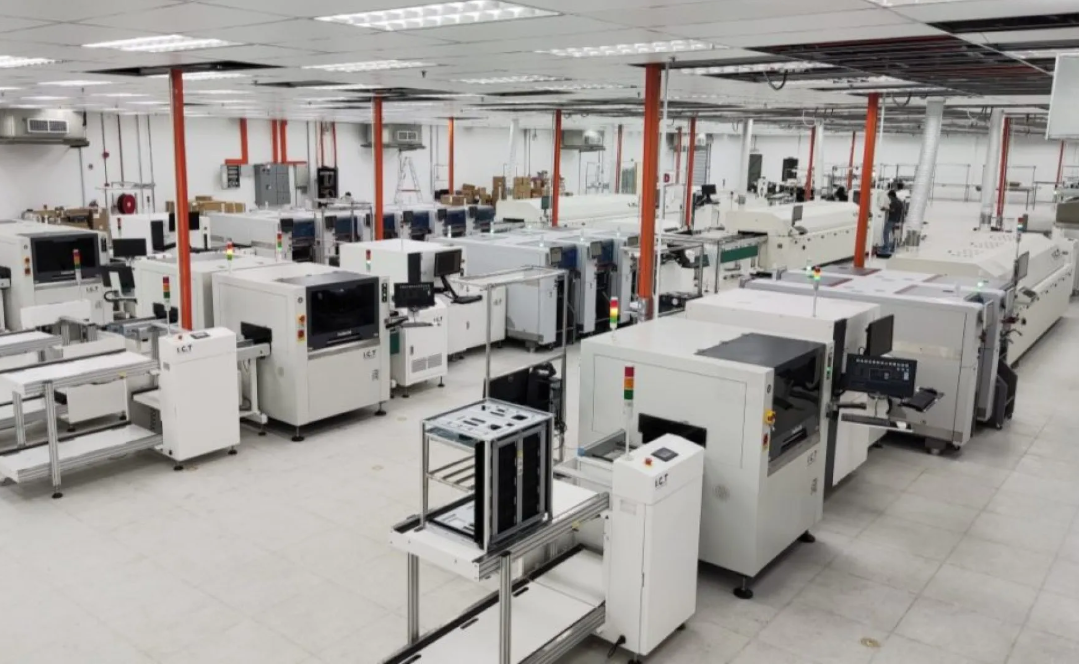
SMT line integration depaneling involves placing depaneling equipment directly within the surface mount technology workflow to separate multi-board panels into individual units automatically. Panels arrive populated with components, so the process must avoid stressing solder joints or delicate parts. Unlike offline batch depaneling, inline methods synchronize with the line's conveyor speed, ensuring no production pauses. This matters in high-volume PCB assembly where every second counts toward meeting quotas and maintaining yield rates.
Engineers face challenges like vibration transmission or dust generation that could affect downstream testing. Proper integration per design guidelines prevents these, aligning with quality benchmarks. The result is higher throughput and fewer rejects, critical for competitive manufacturing.
Technical Principles of Inline Depaneling Systems
Inline depaneling systems operate on principles of precise material removal along predefined panelization features like tabs, V-scores, or perforations. Mechanical routing uses rotating bits to mill paths, requiring rigid fixturing to dampen vibrations that might propagate to components. Laser-based systems ablate material thermally without contact, suiting high-density boards but needing exhaust for fumes. Selection depends on board thickness, edge clearance to parts, and line speed compatibility.
Stress analysis is fundamental, as bending or shearing forces can cause laminate cracks or joint failures. IPC/JEDEC-9704A outlines strain gage placement and limits for validating these effects during setup. Panel design per IPC-2221C incorporates adequate tab spacing and support to distribute loads evenly. Cooling and vacuum hold-downs further stabilize the process, preventing warpage in thin flex-rigid boards.
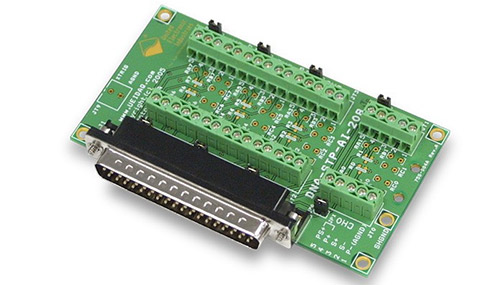
Conveyor handoff uses edge grippers or pallets matching SMT pitch, with fiducials enabling sub-millimeter accuracy. Vision cameras verify cut completion, halting the line if anomalies appear.
Benefits for High-Volume PCB Assembly
Automated depaneling solutions in SMT lines accelerate high-volume PCB assembly by matching or exceeding upstream takt times, often processing hundreds of boards hourly. Reduced operator touchpoints lower contamination risks and labor costs, freeing staff for value-added tasks. Cleaner edges from automated cuts improve handling in subsequent packaging or test fixtures.
Mechanical integrity improves as controlled forces stay below thresholds that damage BGAs or QFNs. Post-depaneling inspections align easier with IPC-A-610J criteria, boosting first-pass yields. Scalability shines in multi-line factories, where modular systems adapt to volume surges without reconfiguration.
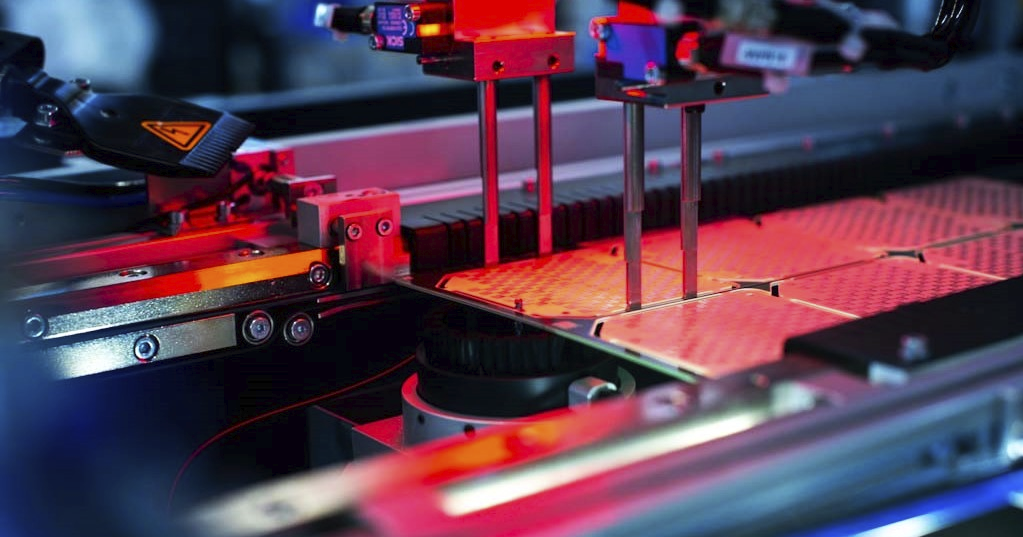
Data from integrated sensors tracks performance, enabling root-cause analysis for continuous improvement.
Practical Solutions and Best Practices
Position the depaneler after reflow cooling and AOI to catch assembly defects before singulation, optimizing flow. Match machine footprint to available space, using stackable conveyors for compact lines. Program paths from Gerber files with safety offsets, testing on scrap panels first.
Fixture design counters board flex, employing vacuum or pin support arrays. Calibrate daily for spindle runout or laser focus, logging data for trends. Integrate with MES for recipe auto-load during changeovers, slashing setup to minutes.
Validate integration with full-line dry runs, measuring end-to-end cycle time gains.
Troubleshooting Common Integration Challenges
Vibration issues often trace to unbalanced spindles or loose mounts; balance tools and add dampers as first fixes. Dust buildup clogs downstream filters, resolved by zoned extraction and air knives. If cuts wander, recalibrate vision offset against fiducials, checking panel tolerances.
Warpage post-depanel signals poor support; redesign tabs per IPC-2221C with added rails. Strain spikes indicate overload, prompting slower feeds or method switches. Log events to correlate with yields, refining parameters iteratively.
Operator training on error codes speeds recovery, keeping uptime above 95 percent.
Conclusion
SMT line integration depaneling revolutionizes high-volume PCB assembly by embedding efficiency and precision into core production. Automated depaneling solutions address pain points like stress and delays, empowering engineers with reliable inline systems. Adhering to standards ensures long-term quality, from design to delivery. Facilities adopting these practices report sustained throughput boosts and fewer field failures.
FAQs
Q1: What does SMT line integration depaneling entail for high-volume production?
A1: SMT line integration depaneling automates panel separation within the assembly line, typically post-reflow for seamless flow. It syncs with pick-and-place speeds, using routing or laser for clean cuts. This setup cuts manual handling risks, vital for high-volume PCB assembly where consistency drives yields. Engineers troubleshoot via fiducials and strain data for optimal performance.
Q2: How do automated depaneling solutions enhance inline processes?
A2: Automated depaneling solutions boost inline depaneling systems by minimizing stress on populated boards and matching line beats. They reduce burrs and contamination versus manual methods, improving IPC-A-610J compliance. In high-volume scenarios, quick changeovers and data logging support scalability. Practical gains include higher uptime and easier integration troubleshooting.
Q3: What best practices ensure successful SMT line integration depaneling?
A3: Key practices include fiducial-based alignment, vibration-damped fixturing, and strain validation per IPC/JEDEC-9704A. Position post-AOI for early defect catch, calibrating tools daily. For high-volume PCB assembly, MES integration auto-loads recipes, minimizing downtime. Regular audits prevent drift, sustaining efficiency.
Q4: How to address vibration in inline depaneling systems?
A4: Vibration in inline depaneling systems arises from imbalances or poor fixturing; balance spindles and add isolators first. Verify conveyor sync to avoid resonance, monitoring with accelerometers. Adjust feeds for board types, retesting strain limits. This troubleshooting keeps SMT line integration depaneling smooth in demanding runs.
References
IPC-2221C - Generic Standard on Printed Board Design. IPC, 2023
IPC-A-610J - Acceptability of Electronic Assemblies. IPC, 2024
IPC/JEDEC-9704A - Printed Wiring Board Strain Gage Test Guideline. IPC/JEDEC, 2012