Introduction
Custom audio filters play a critical role in modern audio systems, enabling precise frequency shaping for high-fidelity sound reproduction. In PCB design, integrating these filters directly onto the board ensures compact layouts while maintaining signal integrity essential for applications like equalizers, crossovers, and noise reduction circuits. Engineers often turn to audio filter design PCB techniques to achieve low distortion and optimal dynamic range in professional audio equipment, consumer devices, and measurement systems. Active filter circuits audio, in particular, offer advantages over passive designs by providing gain buffering and sharper roll-off characteristics without inductors. This tutorial provides a structured approach to Butterworth filter implementation PCB, audio equalization techniques PCB, and low-noise amplifier design audio, drawing on established engineering principles. By following these steps, designers can create reliable circuits that meet performance demands in real-world deployments.
Audio applications demand filters that preserve phase linearity and minimize group delay variations, making custom PCB implementations indispensable. Whether attenuating rumble below 20 Hz or rolling off ultrasonics above 20 kHz, these designs must contend with PCB parasitics like stray capacitance and inductive coupling. The process begins with topology selection and ends with layout optimization for minimal noise pickup. This guide equips electric engineers with practical strategies to navigate these challenges effectively.
Understanding Audio Filters and Their Importance on PCBs
Audio filters classify into low-pass, high-pass, band-pass, and band-stop types, each tailored to specific frequency control needs. Low-pass filters remove high-frequency noise, while high-pass variants eliminate subsonic content that could damage speakers. In PCB contexts, active implementations using operational amplifiers dominate due to their tunability and independence from load impedance. These circuits excel in audio equalization techniques PCB, where multiple stages adjust gain across octaves for tonal balance. Custom designs outperform generic modules by allowing integration with amplifiers and ADCs on the same board.
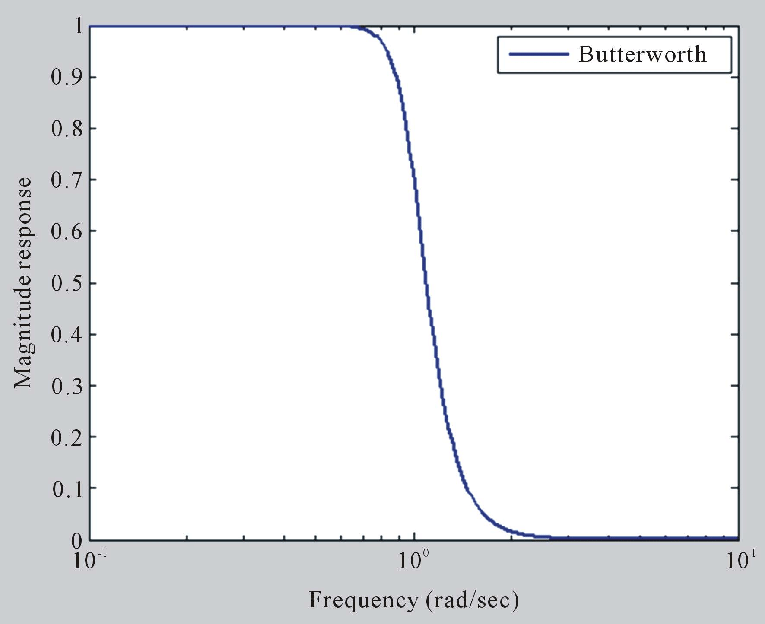
The relevance stems from audio's sensitivity to noise and distortion; even microvolt-level interference becomes audible. PCB-mounted filters reduce interconnection lengths, cutting susceptibility to electromagnetic interference. Butterworth filters stand out for their maximally flat passband response, ideal for transparent audio processing without ripple. Engineers must consider power supply rejection and thermal stability during design. Standards like IPC-2221C guide trace routing and spacing to prevent crosstalk in dense layouts.
Passive filters suffice for simple attenuation but lack the precision of active topologies. Active filter circuits audio enable higher-order responses through cascading, achieving steeper slopes like 24 dB/octave for subwoofer crossovers. PCB realization introduces layout sensitivities, such as feedback path impedance mismatches causing peaking. Addressing these ensures phase-coherent multichannel systems.
Core Technical Principles of Active Audio Filters
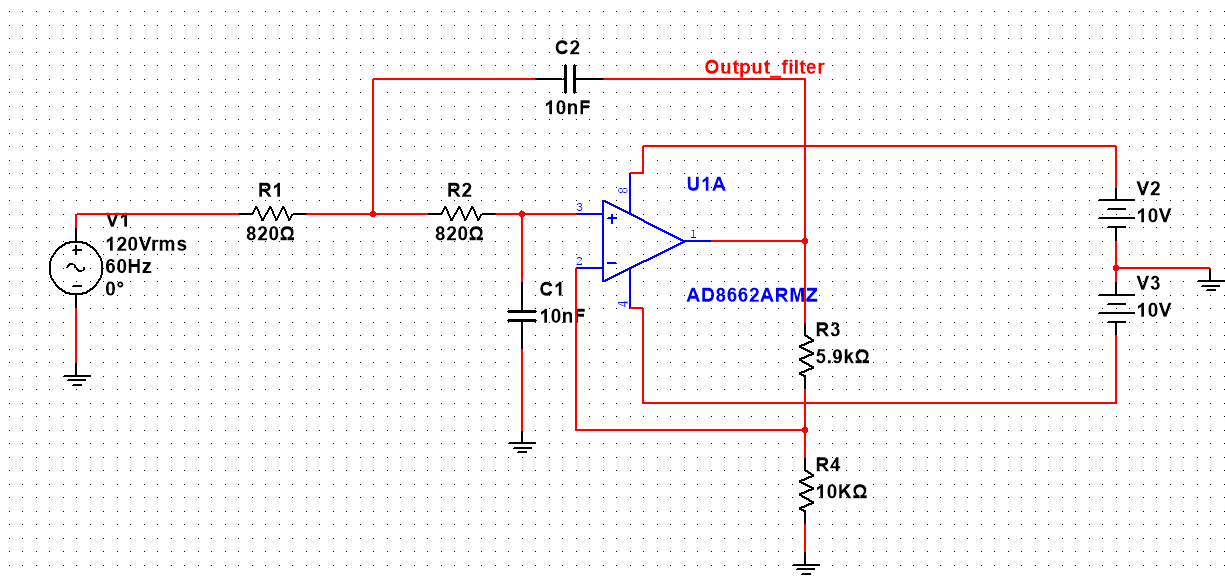
Active filters rely on op-amps configured in feedback loops with RC networks to define poles and zeros. The Sallen-Key topology proves popular for second-order sections due to its simplicity and low component count. For a low-pass stage, the transfer function approximates H(s) = 1 / (1 + s/Qω0 + (s/ω0)^2), where ω0 sets cutoff and Q controls damping. Butterworth filter implementation PCB targets Q = 0.707 per stage for flat magnitude response. Higher orders require multiple unity-gain stages to avoid op-amp overload.
Noise performance hinges on resistor values; lower resistances reduce thermal noise but demand larger capacitors. Op-amp selection prioritizes low voltage noise density, high power supply rejection ratio, and sufficient bandwidth beyond 20 kHz. In cascaded designs, sequence high-Q stages first to attenuate their noise contribution in subsequent sections. PCB parasitics shift pole locations, necessitating simulation validation before layout.
Audio equalization techniques PCB often employ biquad filters, combining notch and peaking responses for parametric control. These allow boost or cut at center frequencies with adjustable bandwidth. Gain staging prevents clipping while maintaining headroom. Grounding schemes profoundly impact common-mode rejection.
Step-by-Step Guide to Audio Filter Design on PCBs
Step 1: Define Specifications and Select Topology
Begin by specifying cutoff frequency, order, ripple tolerance, and input/output levels. For a 1 kHz low-pass Butterworth, a fourth-order design yields -3 dB at cutoff with 24 dB/octave roll-off. Choose active topology based on unity-gain stability needs; multiple-feedback suits voltage-controlled applications. Calculate component values using normalized tables scaled to desired frequency. Precision of 1% for resistors and NP0/C0G ceramics for capacitors ensures Q stability.
Document phase and gain margins early. Consider supply voltage; bipolar ±15 V supports dynamic range exceeding 100 dB.
Step 2: Component Selection and Schematic Development
Select low-noise op-amps with input noise below 10 nV/√Hz for audio bands. Resistor values around 10 kΩ balance noise and capacitor practicality. Simulate the schematic to verify frequency response and transient behavior. Add buffers if driving low-impedance loads. Include DC blocking capacitors to prevent offsets.
For Butterworth filter implementation PCB, denormalize prototype values: C = 1/(2πfR). Verify unity gain at DC for integrators.
Step 3: PCB Layout for Low-Noise Performance
Layout profoundly affects low-noise amplifier design audio integrated with filters. Employ a solid ground plane on the bottom layer, splitting analog sections if mixed-signal. Route signal traces over ground, minimizing loop areas for magnetic coupling rejection. Place decoupling capacitors—0.1 μF ceramic plus 10 μF electrolytic—within 5 mm of each op-amp power pin. Follow IPC-2221C for minimum trace widths and clearances to handle currents without voltage drops.
Star-ground sensitive nodes to a single point, avoiding loops that induce hum at 50/60 Hz. Keep feedback traces short and shielded under ground pours. Separate power routing from signals.
Orient components to shorten high-impedance paths. Use via stitching along ground boundaries for low-inductance returns.
Step 4: Power Supply and Decoupling Optimization
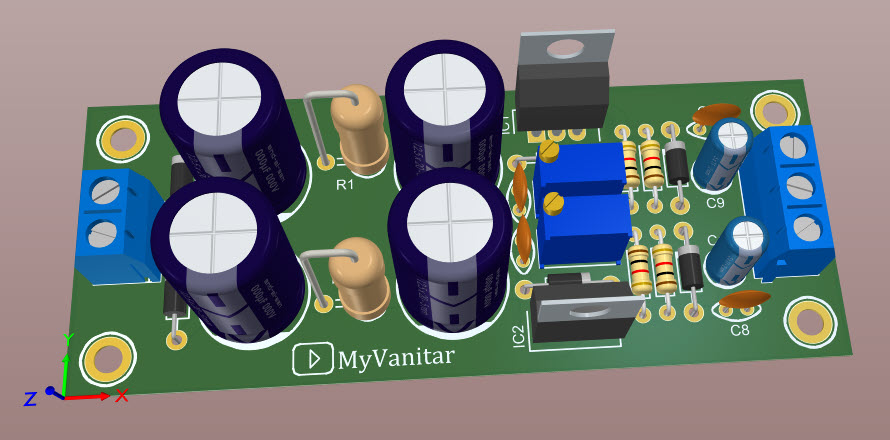
Dedicated regulators for analog rails minimize ripple; LC post-filters attenuate residuals. Kelvin connections for sense lines preserve regulation. Bypass with low-ESR capacitors staged by value for broadband decoupling. Per IPC-7351C land pattern standards, ensure pad sizes match component footprints for solder joint reliability.
Step 5: Verification, Prototyping, and Iteration
Fabricate prototypes on 2- or 4-layer boards, prioritizing FR-4 with low-loss dielectrics. Measure Bode plots and distortion with audio analyzers. Iterate layouts if peaking occurs, adjusting compensation. Assembly per IPC-A-610 ensures void-free joints.
Advanced Techniques: Equalization and Amplification Integration
Audio equalization techniques PCB leverage state-variable filters for simultaneous low-pass, high-pass, and band-pass outputs. Cascade with variable gain stages for shelving or peaking. Low-noise amplifier design audio precedes filters, using instrumentation topology for common-mode rejection. Matched source impedances cancel resistor noise.
Guard traces around inputs shield electrostatic coupling. Multi-layer boards with dedicated planes excel here.
Troubleshooting Common Issues in Audio Filter PCBs
Oscillations arise from phase margin erosion via capacitive loading; add series resistors at outputs. Hum indicates ground loops—lift digital grounds via 10 Ω resistors. Component tolerances shift cutoffs; trim with potentiometers during bench tuning. Excessive noise points to poor decoupling—audit cap placements.
Thermal drift demands temperature-stable caps. EMI pickup requires ferrite beads on inputs.
Conclusion
Designing custom filters for audio on PCBs demands meticulous attention from specification to layout, ensuring low distortion and robust performance. Key steps—topology selection, precise component choice, and noise-optimized routing—unlock high-fidelity results. Integrating active filter circuits audio with equalization and amplification elevates system quality. Adhering to standards like IPC-2221C guarantees manufacturability. Engineers can confidently prototype these designs for diverse applications.
FAQs
Q1: What are the basics of audio filter design PCB for electric engineers?
A1: Audio filter design PCB involves selecting active topologies like Sallen-Key for precise frequency control. Define cutoffs and orders first, then size RC components for desired response. Layout emphasizes ground planes and short feedback paths to minimize noise. Simulation verifies performance before fabrication, ensuring compliance with signal integrity needs.
Q2: How does Butterworth filter implementation PCB improve audio quality?
A2: Butterworth filter implementation PCB delivers flat passband response ideal for undistorted audio. Cascade second-order stages with Q = 0.707 for higher orders. PCB layout must mitigate parasitics to preserve roll-off. This approach suits crossovers and anti-aliasing, maintaining phase linearity across the audible spectrum.
Q3: What are key audio equalization techniques PCB?
A3: Audio equalization techniques PCB use biquad or state-variable filters for boost/cut at specific frequencies. Parametric designs adjust Q and gain per band. Integrate with low-noise amps on split planes to reject interference. Cascading enables graphic EQ emulation with minimal phase shift.
Q4: Why focus on low-noise amplifier design audio in filter PCBs?
A4: Low-noise amplifier design audio preconditions signals for filters, maximizing dynamic range. Use low-eNoise op-amps and star grounding to suppress hum. Decouple aggressively and route powers separately. This integration prevents noise floor elevation, critical for hi-fi and professional recording applications.
References
IPC-2221C — Generic Standard on Printed Board Design. IPC, 2023
IPC-7351C — Generic Requirements for Surface Mount Design and Land Pattern Standard. IPC, 2014
IPC-A-610H — Acceptability of Electronic Assemblies. IPC, 2019