Introduction
Flexible OLED displays represent a significant advancement in car display technology, enabling innovative designs in vehicle interiors. These displays use organic light-emitting materials on bendable substrates, allowing them to conform to curved surfaces in dashboards and consoles. As automotive manufacturers seek to enhance user interfaces with immersive visuals, flexible OLED technology addresses the demand for lightweight and space-efficient solutions. However, integrating these displays into vehicles requires careful attention to automotive OLED design principles to ensure performance under demanding conditions. Reliability challenges, such as environmental stresses, must be mitigated to achieve long-term functionality. This article explores key design considerations and reliability issues for electric engineers working on OLED automotive dashboards.
What Are Flexible OLED Displays and Why Do They Matter in Automotive Applications
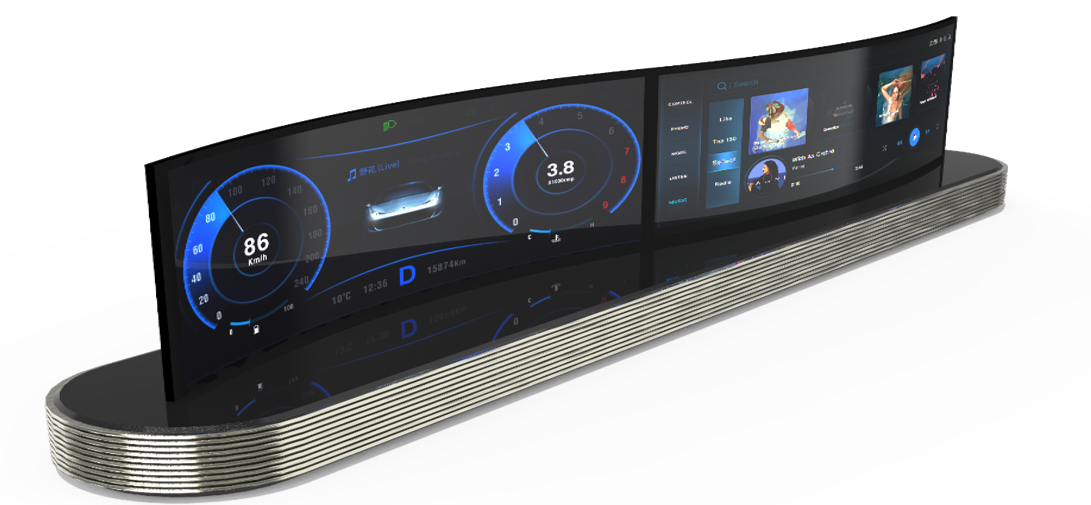
Flexible OLED displays differ from traditional rigid OLEDs by employing substrates like polyimide films instead of glass, which allows bending and folding without compromising light emission. The organic layers in OLEDs emit light when current passes through, offering superior contrast, thin profiles, and wide viewing angles compared to LCD alternatives. In automotive contexts, this flexibility supports freeform shapes that fit seamlessly into instrument clusters, center stacks, and ambient lighting zones. Car display technology benefits from reduced weight, which contributes to overall vehicle efficiency, and vibrant colors that improve driver information readability.
The relevance stems from evolving vehicle architectures, where larger, curved screens replace multiple gauges and buttons. Flexible OLEDs enable panoramic dashboards that wrap around the driver's field of view, enhancing safety through intuitive interfaces. Engineers must consider how these displays integrate with flexible printed circuits for signal routing, aligning with standards like IPC-6013 for qualification of flexible boards. As electric vehicles proliferate, the energy efficiency of OLEDs becomes crucial for extending battery range while maintaining high brightness in daylight.
Technical Principles of Flexible OLEDs
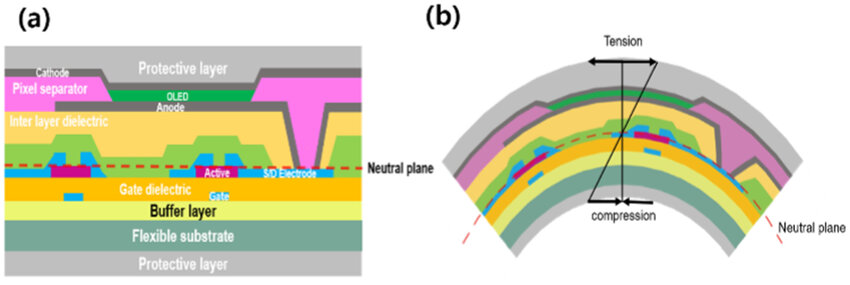
The core mechanism of flexible OLEDs involves multilayer stacks: anode, organic emissive layers, cathode, and encapsulation, all deposited on a flexible substrate. Electrons and holes recombine in the emissive layer, producing photons across red, green, and blue subpixels for full-color output. Bending capability arises from the substrate's ductility and thin encapsulation films that prevent cracking during flexure. In automotive OLED design, pixel density and refresh rates must support high-resolution graphics for navigation and telemetry data.
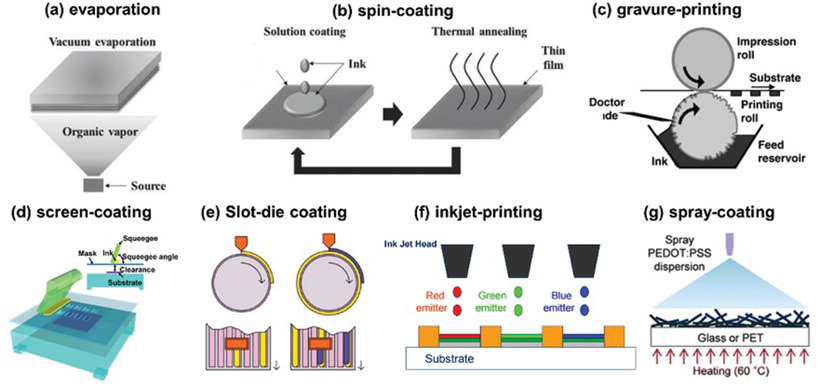
Substrate selection influences thermal expansion matching between layers to avoid delamination under stress. Conductive layers, often indium tin oxide or alternatives, require patterning for uniform current distribution. Encapsulation barriers, typically thin-film multilayers, protect sensitive organics from ingress of moisture and oxygen. These principles guide engineers in optimizing layer thickness and material interfaces for durability.
Key Design Considerations for Automotive OLED Integration
Automotive environments impose unique constraints on flexible OLED displays, starting with mechanical flexibility limits during installation and use. Engineers must define minimum bend radii to prevent micro-cracks in brittle layers, using finite element analysis to simulate repeated folding. Integration with flexible PCBs ensures reliable electrical connections, with traces routed to avoid stress concentrations at bend zones. Optical design considerations include anti-reflective coatings to minimize glare from headlights and sunlight.
Power management is critical, as OLEDs draw varying current based on content, requiring drivers compliant with vehicle power fluctuations. Thermal dissipation designs incorporate heat spreaders or substrates with high thermal conductivity to manage localized hotspots. Vibration from engines and roads demands reinforced edge seals and adhesive bonding strategies. Compliance with IPC-2223 guidelines for flex circuit design helps standardize these aspects, ensuring consistent performance.
Housing and mounting strategies protect displays from impacts, using compliant materials that absorb shocks without transmitting to the OLED stack. Interface protocols like MIPI or LVDS must support high data rates for dynamic content. Overall, a holistic automotive OLED design balances aesthetics, functionality, and robustness.
Reliability Challenges in OLED Automotive Dashboards
OLED reliability faces hurdles from automotive stressors like thermal cycling, which causes material fatigue in organic layers. High humidity accelerates degradation through barrier permeation, leading to dark spots or color shifts. Vibration induces fatigue in interconnects, potentially causing open circuits over time. Flexible OLED displays exacerbate these issues, as bending introduces shear stresses at interfaces.
Burn-in, where static images leave permanent traces, poses risks in dashboards displaying persistent icons like speedometers. Blue subpixels degrade faster due to higher energy gaps, shifting white balance. Encapsulation integrity is paramount, yet thin films struggle against prolonged exposure. IEC 62341 standards provide methods for assessing lifetime and image sticking, guiding qualification tests.
Mechanical reliability testing simulates real-world flexure cycles, revealing weaknesses in adhesives or substrates. Dust and contaminants during assembly can compromise seals. Engineers address these by prioritizing multi-barrier encapsulation and robust packaging.
Best Practices for Enhancing OLED Reliability and Design
Adopt modular designs where OLED panels connect via standardized flexible interconnects, facilitating replacement and testing. Select substrates with proven flex endurance, validated per IPC-6013 performance specs. Implement active thermal monitoring with sensors to throttle brightness during overloads. Multi-layer thin-film encapsulation, alternating inorganic and organic films, boosts barrier performance against environmental ingress.
Conduct accelerated life testing encompassing temperature extremes, humidity exposure, and random vibration profiles. Optimize pixel driving waveforms to equalize wear across colors, mitigating burn-in. Use cover lenses with hardness ratings suitable for touch interactions, integrated seamlessly for curved forms. Collaborate across disciplines to align mechanical, electrical, and optical tolerances early in development.
Edge reinforcement with tapes or frames prevents peel-off during flex. Post-assembly bake-outs remove residual moisture. These practices, grounded in engineering rigor, elevate car display technology to production viability.
Troubleshooting Common Issues in Flexible OLED Automotive Deployments
Static image retention often traces to imbalanced aging; recalibrate drive currents periodically via firmware. Delamination signals mismatch in coefficients of thermal expansion; verify layer compatibility pre-production. Flickering under vibration points to loose interconnects; reinforce with strain-relief features. Dimming in hot conditions requires enhanced heat sinking, possibly via graphite sheets.
Dark spot proliferation indicates barrier failure; inspect for pinholes using calcium tests. Color drift mandates uniform subpixel calibration at assembly. Systematic root-cause analysis, leveraging failure mode effects, refines designs iteratively. Electric engineers benefit from logging operational data to predict field issues.
Conclusion
Flexible OLED displays transform automotive interiors with their adaptability and visual prowess, yet demand meticulous design and reliability engineering. Key considerations span mechanical flexure, thermal control, and encapsulation to withstand vehicle rigors. Standards like IPC-6013 and IEC 62341 anchor qualification efforts, ensuring compliance. By addressing challenges proactively, engineers unlock durable OLED automotive dashboards. Future iterations will refine these technologies, advancing car display technology further.
FAQs
Q1: What are the primary design challenges for flexible OLED displays in automotive applications?
A1: Flexible OLED displays must endure bending during installation while maintaining optical uniformity. Automotive OLED design involves matching substrate flexibility with organic layer stability to avoid cracks. Vibration damping and thermal paths prevent degradation. Engineers prioritize interconnect reliability per IPC-6013 to support curved forms in dashboards.
Q2: How does OLED reliability impact car display technology?
A2: OLED reliability hinges on encapsulation against moisture and oxygen, critical in humid automotive settings. Thermal cycling accelerates wear, demanding robust heat management. Vibration tests reveal fatigue points in flexible substrates. Adhering to IEC 62341 for lifetime evaluation ensures long-term performance in OLED automotive dashboards.
Q3: What role do flexible substrates play in automotive OLED design?
A3: Flexible substrates like polyimide enable conformal mounting in vehicle interiors. They provide mechanical compliance while supporting thin OLED stacks. Design per IPC-2223 mitigates stress in traces. This integration boosts OLED reliability under dynamic loads in car display technology.
Q4: How can engineers improve reliability of flexible OLEDs for dashboards?
A4: Multi-barrier encapsulation and strain-relief features enhance durability. Accelerated testing simulates environmental stresses. Drive circuitry balances pixel usage to prevent burn-in. These steps align with standards for sustained OLED reliability in harsh automotive conditions.
References
[1] IPC-6013E — Qualification and Performance Specification for Flexible Printed Boards. IPC, 2021
[2] IEC 62341-5-3 — OLED Displays: Part 5-3: Measuring Methods for Image Sticking and Lifetime. IEC, 2019
[3] IPC-2223C — Sectional Design Standard for Flexible/Rigid-Flexible Printed Boards. IPC, 2019