Introduction
Stencil printing forms the foundation of surface mount technology assembly by depositing precise volumes of solder paste onto PCB pads. Engineers transitioning from prototype development to full production must select stencil printers that match their volume demands, precision requirements, and budget constraints. A mismatched printer can lead to defects like insufficient paste transfer or bridging, compromising assembly yield. This article explores the manual vs automatic stencil printer options, delves into stencil printer throughput comparison, and provides stencil printer cost justification strategies. By understanding these elements, electrical engineers can optimize their SMT lines for reliability and efficiency. Practical insights drawn from industry processes help troubleshoot real-world challenges in scaling production.
What Is a Stencil Printer and Why It Matters in PCB Assembly
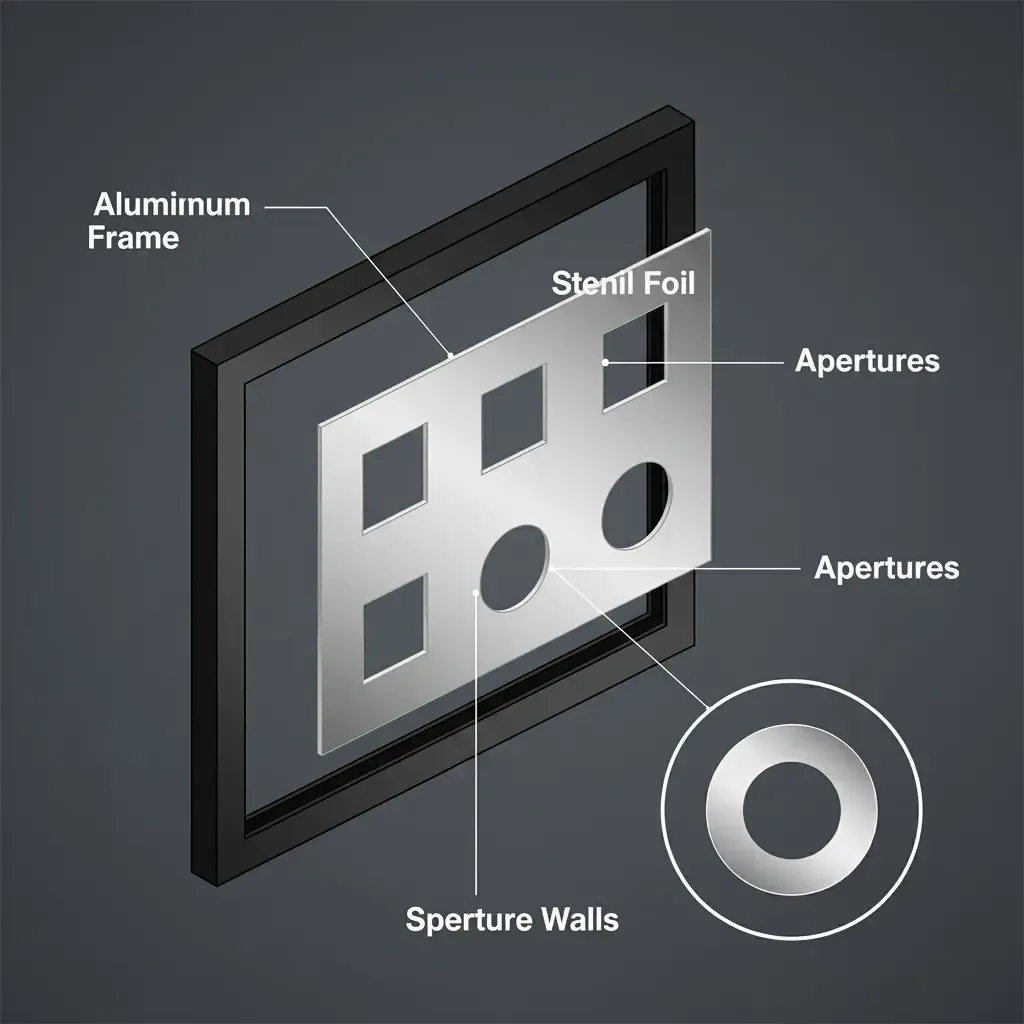
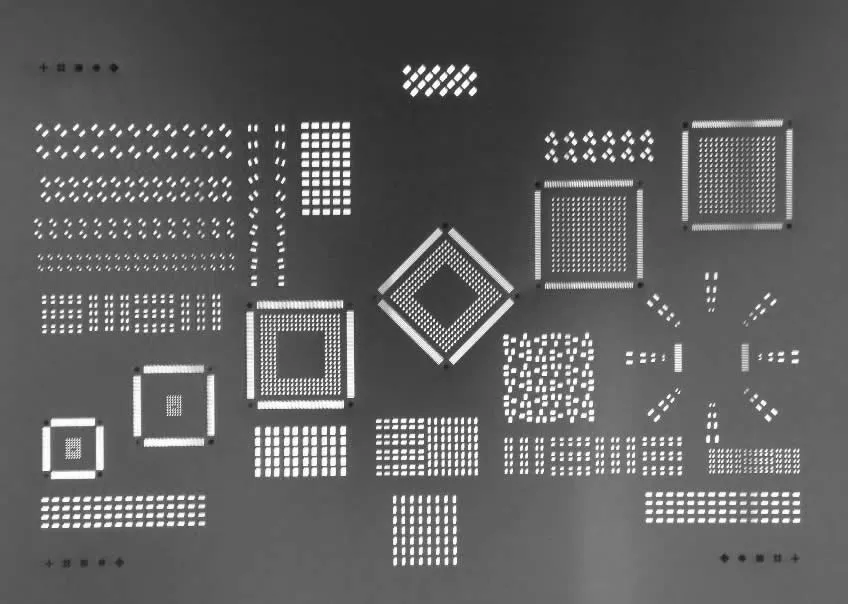
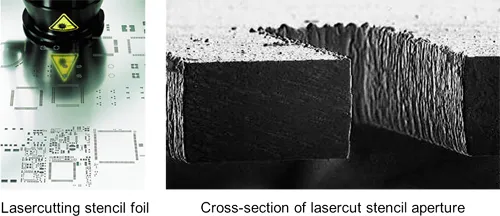
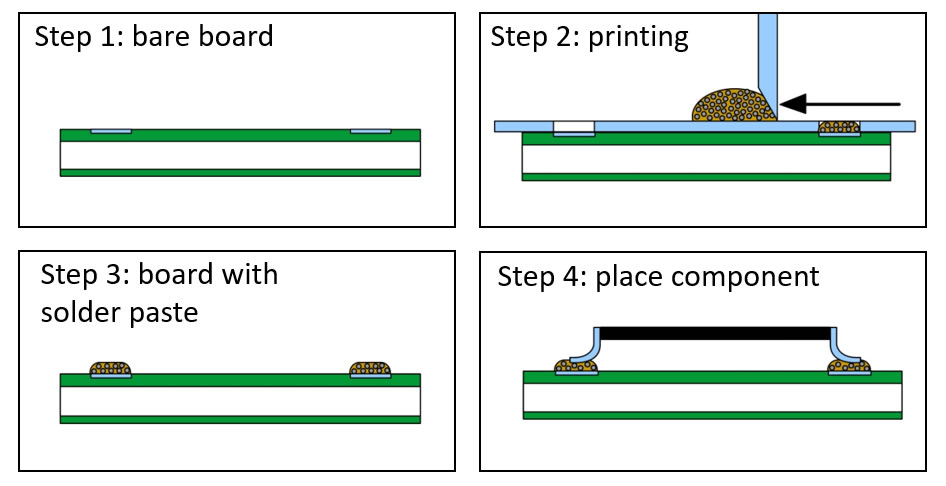
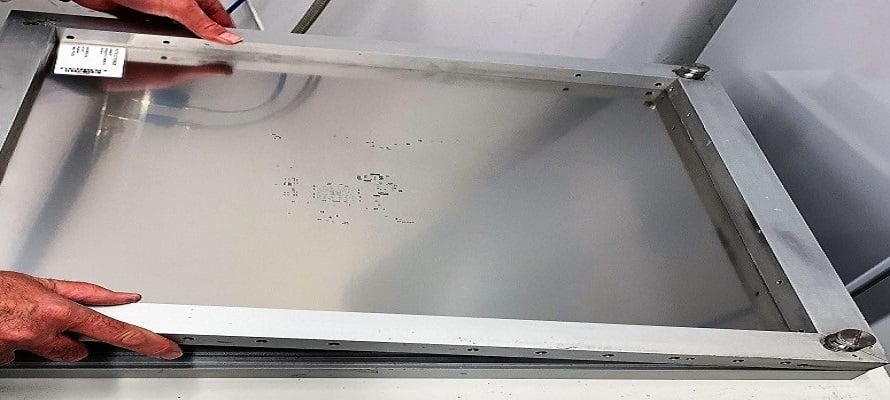
A stencil printer uses a thin metal stencil with laser-cut apertures aligned over the PCB to transfer solder paste via a squeegee blade. This process ensures uniform paste deposits critical for component adhesion during reflow soldering. Inaccurate printing often causes tombstoning, bridging, or open joints, directly impacting assembly quality. For prototypes, simplicity matters, while production demands repeatability to meet high-volume targets. Stencil printers bridge manual handling and automated lines, influencing overall cycle times and defect rates. Adhering to guidelines like IPC-7525 for stencil design minimizes variations in paste volume and release.
The relevance intensifies in modern electronics with finer pitches and high-density boards. Engineers must consider printer features like vision systems for alignment and automated cleaning cycles to sustain performance. Poor stencil printing accounts for a significant portion of SMT defects, making printer selection pivotal. From low-volume labs to high-throughput factories, the right printer scales operations without excessive rework. Troubleshooting paste inconsistencies starts here, as printer setup affects downstream pick-and-place and reflow.
Manual vs Automatic Stencil Printer: Core Differences and Applications
Manual stencil printers rely on operator skill for PCB loading, stencil alignment, and squeegee passes, suiting low-volume prototype runs. Operators manually clamp the board, apply paste, and flood the stencil before printing, allowing quick setups for one-off boards. This approach offers flexibility for irregular board shapes or custom stencils but introduces variability from human factors like pressure inconsistency. In contrast, automatic stencil printers feature motorized stages, fiducial cameras, and programmable squeegee speeds for precise, repeatable operation. The manual vs automatic stencil printer debate centers on trade-offs between initial accessibility and long-term consistency.
Automatic models excel in production with features like dual squeegees for bidirectional printing and understencil wipe mechanisms to prevent paste buildup. Manual printers demand vigilant operators to avoid smears, while automatics reduce such errors through closed-loop feedback. For prototypes under 50 boards, manual suffices, but scaling reveals limitations in speed and precision. Automatic printers integrate seamlessly into SMT lines, syncing with conveyors for continuous flow. Engineers should evaluate board complexity, as fine-pitch components favor automatics' micron-level accuracy.
Stencil Printer Throughput Comparison: Scaling from Lab to Line
Stencil printer throughput comparison highlights how manual units process boards sequentially at operator-paced rates, ideal for prototyping but bottlenecking at moderate volumes. Automatic printers achieve higher cycles per hour through rapid alignment, printing, and offloading, often handling multiple boards per minute in optimized setups. Factors like board size, stencil thickness, and paste viscosity influence effective rates, with automatics maintaining consistency across shifts. Manual throughput drops with fatigue or complex apertures, whereas automatics sustain output via recipe storage and auto-calibration. In high-mix environments, semi-automatic hybrids bridge the gap, offering pneumatic assistance without full automation.
Production engineers analyze throughput by calculating cycle time from load to unload, factoring in cleaning intervals. Automatics reduce downtime with inline paste inspection, boosting overall equipment effectiveness. For volumes exceeding hundreds daily, the stencil printer throughput comparison favors automatics, as manual labor scales poorly. Prototyping benefits from manual speed in setup changes, but production prioritizes uptime. Integrating throughput data with line balancing prevents mismatches in pick-and-place synchronization.
Stencil Printer Cost Justification: Balancing Investment and ROI
Stencil printer cost justification involves weighing upfront capital against operational savings, especially when moving from prototype to production. Manual printers carry low acquisition costs, making them accessible for engineering validation phases with minimal financial risk. However, recurring labor expenses accumulate, prompting ROI calculations for automatics in scaling scenarios. Automatics justify higher initial outlays through reduced defects, faster cycles, and lower per-board costs at volume. Engineers perform break-even analysis by projecting throughput gains versus maintenance and training needs.
Key metrics include total cost of ownership, encompassing depreciation, consumables like squeegee blades, and yield improvements. For mid-volume runs, semi-automatics offer cost-effective transitions, blending manual control with pneumatic efficiency. Stencil printer cost justification strengthens with data on defect reduction aligning to J-STD-001 requirements for soldered assemblies. Production forecasts reveal payback periods shortening as volumes rise. Troubleshooting high costs often traces to inefficient cleaning or misalignment, underscoring preventive maintenance value.
Best Practices for Selecting and Operating Stencil Printers
Select printers based on pitch requirements, with automatics preferred for under 0.5mm features due to vision alignment precision. Validate stencil compatibility per IPC-7525, ensuring aperture walls support clean paste release. Implement daily verification routines, including paste height gauges and SPI integration for feedback. Optimize squeegee pressure and speed through DOE to match board types, avoiding overprint or starvation. Train operators on manual units for consistent flood and print strokes, while programming automatics for multi-user access.
Maintenance protocols prevent common failures: clean stencils ultrasonically, inspect blades for wear, and calibrate stages regularly. Integrate printers with MES for traceability, logging parameters against IPC-A-610 acceptability criteria. For hybrid lines, standardize fixturing to ease transitions. Best practices evolve with process audits, refining throughput without overhauls. Engineers gain from vendor-agnostic benchmarking to align equipment with assembly goals.
Troubleshooting Common Issues in Stencil Printing
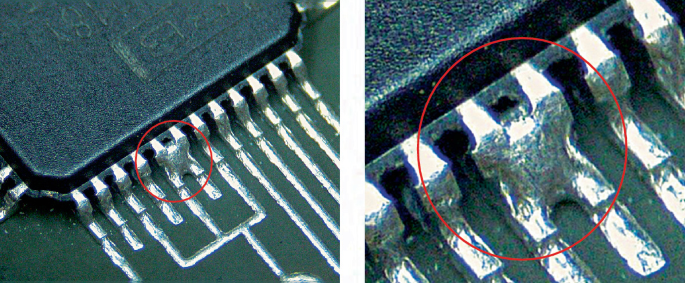
Insufficient paste transfer often stems from poor squeegee contact or aged paste; remedy by adjusting angle and refreshing material. Bridging arises in fine-pitch areas from excessive volume, addressed via thinner stencils or reduced print speed. Alignment shifts demand fiducial checks and stage recalibration, critical in automatics. Smearing indicates understencil residue, resolved with optimized wipe cycles and nano-coatings where applicable. Inspect post-print with shadow moire or laser for volume uniformity, correlating to reflow defects.
Sticky stencils from humidity affect release; control environment per J-STD-001 handling guidelines. Operator errors in manuals, like uneven pressure, mimic machine faults, so log parameters for root cause. Production halts from clogs require paste shear testing beforehand. Systematic troubleshooting uses Pareto analysis on SPI data to prioritize fixes. Consistent practices yield stable processes across printer types.
Conclusion
Choosing the right stencil printer pivots on production stage, with manuals suiting prototypes and automatics powering volume manufacturing. The manual vs automatic stencil printer choice, informed by throughput and cost analyses, drives efficiency gains. Stencil printer cost justification and throughput comparisons guide investments yielding higher yields and lower defects. Adhering to standards like IPC-7525 and J-STD-001 ensures process robustness. Electrical engineers benefit from practical troubleshooting to sustain performance. Scale confidently by matching equipment to needs for seamless assembly.
FAQs
Q1: What are the main differences in a manual vs automatic stencil printer for PCB assembly?
A1: Manual stencil printers depend on operator handling for alignment and printing, offering low cost and flexibility for prototypes but with variable results. Automatic versions use cameras and motors for precision, ideal for production with consistent high throughput. Choose manual for small runs under 100 boards to avoid over-investment, while automatics excel in repeatability for fine-pitch components. Troubleshooting focuses on operator training for manuals versus software tweaks for automatics.
Q2: How does stencil printer throughput comparison impact production planning?
A2: Stencil printer throughput comparison reveals manuals process fewer boards per hour due to manual cycles, suiting low-volume prototyping. Automatics deliver higher rates through automation, balancing lines with pick-and-place speeds. Factor board size and cleaning frequency into planning for accurate forecasts. High-mix production may hybridize approaches to optimize overall equipment effectiveness.
Q3: What factors enter into stencil printer cost justification from prototype to production?
A3: Stencil printer cost justification weighs manual's low entry price against automatic's labor and defect savings at scale. Calculate ROI using projected volumes, yield improvements, and maintenance. Prototypes justify manuals for quick iterations, while production break-even favors automatics within months. Align with process needs to avoid underutilization.
Q4: When should electrical engineers upgrade from a manual to an automatic stencil printer?
A4: Upgrade when prototype volumes exceed consistent manual throughput or defects rise from variability. Automatics justify via precision for complex boards and integration into SMT lines. Monitor labor costs and yield data signaling the shift. Standards compliance strengthens the case for reliable production scaling.
References
IPC-7525C — Stencil Design Guidelines. IPC, 2021
J-STD-001 — Requirements for Soldered Electrical and Electronic Assemblies. IPC/JEDEC, 2017
IPC-A-610 — Acceptability of Electronic Assemblies. IPC, 2017