Introduction
High-mix PCB assembly presents unique challenges in modern electronics manufacturing, where production runs involve diverse board types, component pitches, and technologies within the same facility. Selective soldering emerges as a critical process for handling through-hole components on boards already populated with surface-mount devices, ensuring reliability without disturbing sensitive SMT parts. This method allows engineers to address the demands of mixed technology PCBs, balancing precision and efficiency in environments with frequent product changes. As facilities shift toward flexible manufacturing, mastering selective soldering equipment becomes essential for maintaining quality and throughput. In this article, we explore the principles, optimization strategies, and practical applications tailored for electrical engineers tackling high-mix scenarios.

What Is Selective Soldering and Why It Matters for High-Mix Assembly
Selective soldering refers to a targeted soldering technique that applies molten solder to specific through-hole leads or connectors using localized tools like nozzles or waves, sparing adjacent surface-mount components from excessive heat. Unlike full-wave soldering, which risks damaging fine-pitch SMT parts, selective soldering isolates the process to predefined areas via flux deposition, preheating, and solder application modules. This makes it ideal for selective soldering for mixed technology PCBs, where boards combine densely packed SMT with robust through-hole elements such as connectors or heat sinks.
In high-mix production, where low volumes of varied designs dominate, selective soldering equipment supports rapid adaptation without extensive retooling. Facilities benefit from reduced defects like bridging or insufficient wetting, common in universal processes. Compliance with standards like IPC J-STD-001 ensures solder joint integrity, minimizing rework in dynamic environments. Ultimately, it enables manufacturers to meet tight deadlines while upholding reliability for applications in aerospace, medical devices, and telecommunications.
The relevance intensifies as market demands push for shorter product lifecycles and customization. Engineers gain flexibility to handle boards with varying thicknesses, component heights, and lead configurations in a single shift. By integrating selective soldering, operations avoid the downtime of batch processing, aligning with lean manufacturing goals.
Technical Principles of Selective Soldering Equipment
Selective soldering systems operate through a sequence of fluxing, preheating, soldering, and cleaning stages, each controlled for thermal profiles and positioning accuracy. Flux is precisely deposited via drop-jet or spray mechanisms to activate surfaces without overspray, preventing contamination on nearby SMT pads. Preheating then raises board temperatures to around 100-150°C, reducing thermal shock during solder immersion and promoting consistent wetting as per J-STD-001 guidelines.
The soldering module employs mini-wave or laser-selective methods, where a pumped solder pot generates a stable wave tailored to component geometry. Nozzle designs, ranging from single to multi-orifice, accommodate lead counts and pitches down to 0.6mm, with nitrogen shrouds minimizing oxidation for brighter joints. Drop-jet solder application offers further precision by dispensing solder droplets directly onto leads, suitable for ultra-fine pitches in high-density areas.
Process parameters like solder temperature (typically 250-300°C), immersion time (2-5 seconds), and withdrawal speed critically influence fillet formation and intermetallic growth. Advanced equipment incorporates fiducial recognition and height sensing for Z-axis adjustments, compensating for board warpage or component tolerances. Thermal modeling software simulates profiles to predict risks like voiding, ensuring adherence to IPC-A-610 acceptability criteria.
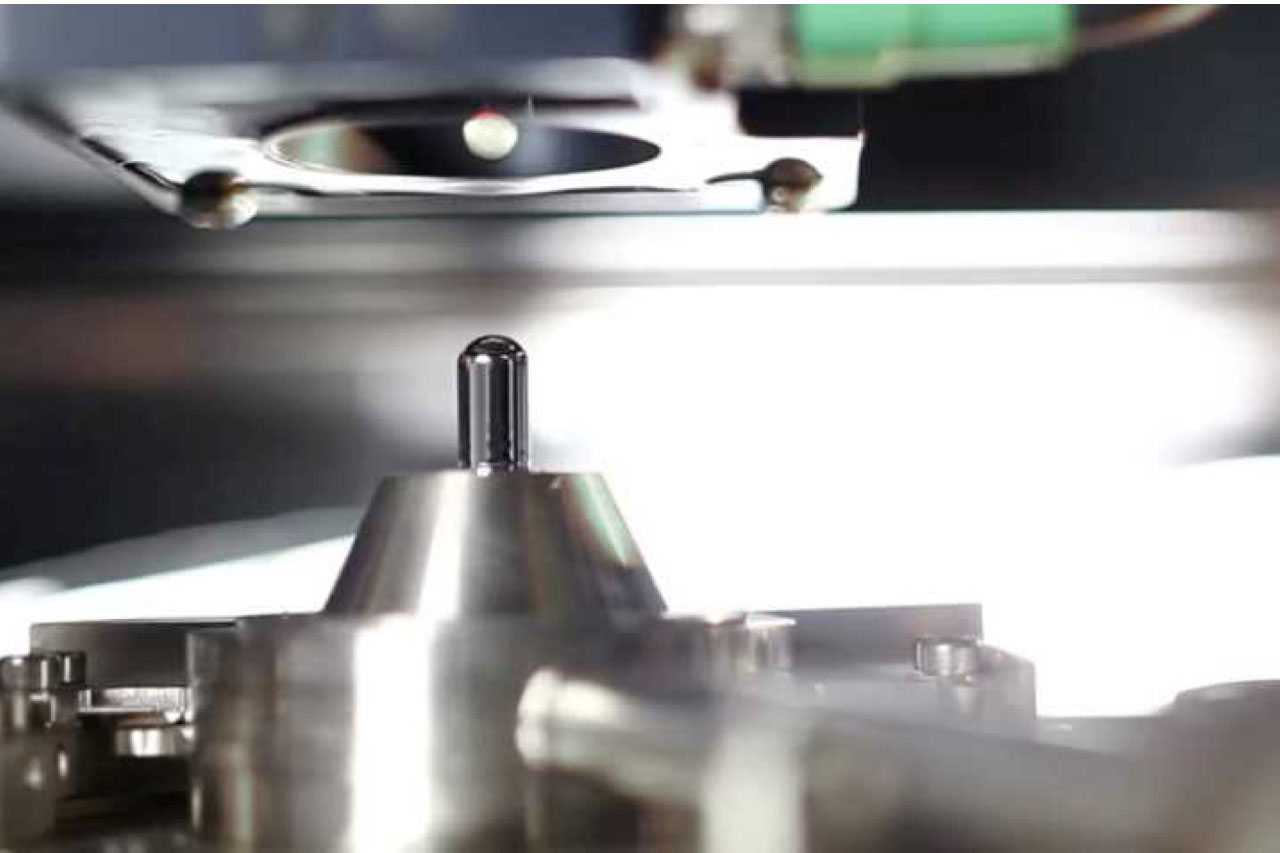
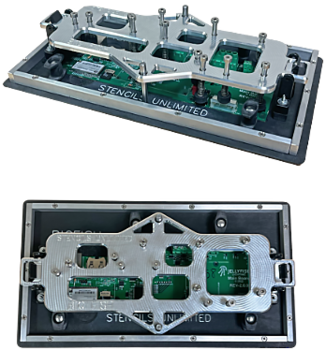
Equipment modularity enhances adaptability, with interchangeable pallets securing boards of different sizes. Inline configurations link to upstream SMT lines, while offline setups suit prototyping. Vision systems verify joint quality post-soldering, flagging anomalies for immediate correction.
Optimizing Selective Soldering for Low Volume Production
Optimizing selective soldering for low volume production hinges on minimizing setup times and maximizing repeatability across diverse boards. Engineers start by standardizing pallet designs with quick-release fixtures, allowing sub-10-minute changeovers between jobs. Fiducial-based alignment automates positioning, reducing manual tweaks for boards up to 500x500mm.
Reducing changeover time in selective soldering involves pre-programmed nozzle recipes and flux patterns stored in machine software. Operators select profiles via drag-and-drop interfaces, cutting programming from hours to minutes. Modular fluxers with multiple heads handle varying deposition volumes, while shared preheat zones maintain efficiency without cooldowns.
Process controls like closed-loop temperature regulation and real-time nitrogen flow monitoring ensure consistency. For low volumes, dual-lane systems process two boards simultaneously, doubling throughput without added footprint. Validation through cross-section analysis confirms hole fill exceeds 75%, aligning with industry benchmarks.
Troubleshooting common issues enhances optimization. Excessive dross buildup signals improper drag speed; adjusting to 10-20mm/s resolves it. Solder balls under preheat indicate flux residue; optimizing drop height to 0.5-1mm prevents this. These adjustments, rooted in thermal dynamics, sustain yields above 98% in high-mix runs.
Selective Soldering Equipment for Flexible Manufacturing
Selective soldering equipment for flexible manufacturing features scalable architectures, from standalone units to fully integrated lines with pick-and-place feeders. Robotic arms transfer pallets between modules, enabling 24/7 operation with minimal intervention. Multi-zone preheaters accommodate thick boards (up to 6mm) or those with heat-sensitive components, using IR or convection for uniform profiles.
Software integration with MES systems schedules jobs based on mix complexity, prioritizing quick setups. High-mix facilities leverage twin-pot solder baths for lead-free and tin-lead processes, avoiding contamination. Vertical soldering options handle tall components without bridging risks.
Key to flexibility is nozzle versatility: conical for single pins, U-shaped for rows, and custom for odd forms. Auto-clean cycles between cycles purge residues, extending uptime. Energy-efficient designs with quick-ramp heaters support sporadic runs, reducing operational costs.
Case Study: Selective Soldering in High-Mix Environments
In a prototypical high-mix scenario, a facility producing 50-200 units per design daily faced bottlenecks with mixed technology PCBs featuring 20% through-hole content. Implementing selective soldering reduced full rework from 15% to under 2% by isolating soldering to edge connectors and power pins. Engineers optimized flux patterns for 0.8mm pitch leads, achieving 100% hole fill via adjusted immersion depths.
Changeover times dropped from 45 to 8 minutes through pallet standardization and recipe libraries. Preheating to 120°C prevented warpage on 1.6mm FR-4 boards, while nitrogen at 45 L/min ensured oxide-free joints. Yield improvements stemmed from vision inspection rejecting 0.5% defects inline.
Troubleshooting focused on solder icicles from dwell inconsistencies; shortening to 3 seconds with height mapping resolved it. This setup scaled to 10 designs weekly, demonstrating selective soldering's prowess in dynamic production. Lessons emphasized simulation for thermal gradients, upholding IPC standards throughout.
Conclusion
Mastering high-mix PCB assembly through selective soldering equipment unlocks efficiency and precision for electrical engineers. From understanding flux dynamics to streamlining changeovers, these systems address the core challenges of mixed technology boards and low-volume runs. Practical optimizations like modular pallets and automated controls not only boost throughput but also ensure compliance with J-STD-001 and IPC-A-610. As manufacturing evolves toward greater flexibility, investing in adaptable selective soldering will define competitive edges. Engineers equipped with these insights can drive reliable, high-yield processes tailored to demanding applications.
FAQs
Q1: What makes selective soldering ideal for mixed technology PCBs?
A1: Selective soldering targets through-hole components post-SMT reflow, avoiding heat damage to fine-pitch surface-mount parts. It uses precise nozzles and flux drops for pitches as low as 0.6mm, ensuring wetting without bridging. In high-mix settings, this preserves board integrity across diverse designs, aligning with IPC J-STD-001 for joint quality.
Q2: How can engineers optimize selective soldering for low volume production?
A2: Focus on quick-setup pallets and pre-stored programs to cut changeover times below 10 minutes. Standardize fiducials for auto-alignment and use dual preheat zones for varying board thicknesses. Real-time monitoring of immersion parameters maintains consistency, supporting flexible runs with minimal downtime.
Q3: What strategies reduce changeover time in selective soldering?
A3: Employ modular nozzles with auto-change mechanisms and recipe databases for instant profile swaps. Quick-release fixtures and vision-guided positioning eliminate manual adjustments. Cleaning cycles integrated into software further streamline transitions between high-mix jobs.
Q4: In a case study selective soldering high mix scenario, what yields can be expected?
A4: High-mix case studies show yields exceeding 98% after optimizing preheat and dwell times. Addressing issues like icicles via speed controls and nitrogen use ensures reliability. Results depend on board complexity but highlight the process's scalability for low-volume flexibility.
References
IPC J-STD-001G — Requirements for Soldered Electrical and Electronic Assemblies. IPC, 2018
IPC-A-610H — Acceptability of Electronic Assemblies. IPC, 2019