Introduction
In electronics assembly, selecting the appropriate flux is crucial for achieving reliable solder joints and minimizing defects during PCB manufacturing. Flux removes oxides, prevents re-oxidation, and improves wetting, but the choice between no-clean flux and water-soluble flux significantly impacts your process flow and end-product reliability. Engineers often face challenges like flux residue buildup, which can lead to issues such as electrochemical migration or short circuits if not managed properly. This article provides a detailed flux comparison, focusing on PCB cleaning requirements and practical considerations for your projects. By understanding the differences, you can optimize your assembly line for efficiency while adhering to industry standards.
Understanding Flux in PCB Assembly
Flux is an essential chemical agent used in soldering to clean metal surfaces and facilitate molten solder flow. No-clean flux is formulated to leave behind minimal, non-corrosive residues that do not require post-soldering cleaning in most applications. Water-soluble flux, on the other hand, contains highly active ingredients that excel at oxide removal but produce residues that are water-rinsable yet potentially corrosive if left uncleaned. The decision hinges on your assembly environment, component sensitivity, and cleanliness specifications. In high-volume electronics assembly, flux choice affects throughput, as no-clean options streamline processes by eliminating dedicated cleaning steps.
These fluxes are classified under standards like IPC J-STD-004, which defines categories such as OR (organic rosin) for no-clean and WS (water-soluble) based on activity and residue behavior. Engineers must evaluate flux performance through metrics like spread tests and corrosion evaluations to ensure compatibility with lead-free solders common in modern PCBs.
Key Differences in Flux Composition and Behavior
No-clean flux typically relies on low-solid-content formulations with rosin or synthetic activators that activate at soldering temperatures and deactivate afterward, leaving benign, non-ionic residues. These residues are often tack-free and transparent, reducing visual defects under IPC-A-610 acceptability criteria. Water-soluble flux uses stronger organic acids or halides, providing superior cleaning on heavily oxidized surfaces or high-temperature lead-free processes, but its residues are hygroscopic and conductive when hydrated.
During reflow or wave soldering, no-clean flux volatilizes more completely, minimizing flux residue on the board. Water-soluble flux may leave thicker films that demand thorough rinsing to prevent issues like dendritic growth. Troubleshooting tip: If you notice incomplete wetting with no-clean flux on difficult-to-solder alloys, switching to water-soluble might resolve it, but always verify residue removal efficacy first.
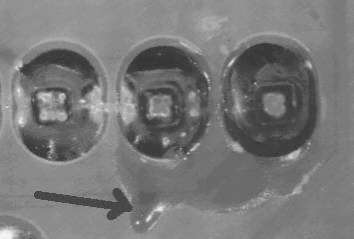
The thermal stability of water-soluble flux often outperforms no-clean in demanding profiles, yet it requires precise process controls to avoid over-activation. In contrast, no-clean flux offers better compatibility with conformal coatings applied directly post-assembly.
Advantages and Disadvantages: A Flux Comparison
No-clean flux shines in cost-sensitive, high-throughput electronics assembly by eliminating cleaning equipment and reducing cycle times. Its residues pose low risk of corrosion or electromigration in Class 2 assemblies per IPC J-STD-001 guidelines, making it ideal for consumer electronics. However, in humid environments or high-voltage designs, trace activators might ionize, necessitating occasional verification testing.
Water-soluble flux provides aggressive cleaning power, ensuring pristine joints on multilayer PCBs with fine-pitch components. It excels in applications requiring zero residue, such as aerospace or medical devices, where even benign residues could compromise performance. Drawbacks include mandatory PCB cleaning steps, which add water treatment, drying, and inspection overhead, potentially increasing defect rates if rinsing is incomplete.
Aspect — Residue: No-clean flux — Benign, non-clean required; Water-soluble flux — Corrosive, must clean.
Aspect — Activity: No-clean flux — Moderate; Water-soluble flux — High.
Aspect — Process Cost: No-clean flux — Lower; Water-soluble flux — Higher due to cleaning.
Aspect — Reliability: No-clean flux — Good for most apps; Water-soluble flux — Excellent post-clean.
Aspect — Best For: No-clean flux — Volume production; Water-soluble flux — High-rel assemblies.
This table summarizes the flux comparison for quick reference during material selection.
PCB Cleaning Considerations for Each Flux Type
For no-clean flux, PCB cleaning is optional but recommended in troubleshooting scenarios like residue bridging under components or after multiple rework cycles. Ultrasonic or vapor degreasing can remove stubborn flux residue without damaging boards, but always test for compatibility. Standards like IPC J-STD-001 emphasize no visible residue or contamination post-process for higher classes.
Water-soluble flux demands rigorous PCB cleaning protocols, typically involving deionized water sprays, followed by drying to prevent water spots or hydrolysis. Incomplete cleaning leads to flux residue-induced failures, such as increased leakage currents. Engineers should monitor rinse water conductivity to ensure residues below 2 micrograms per square centimeter sodium chloride equivalence.
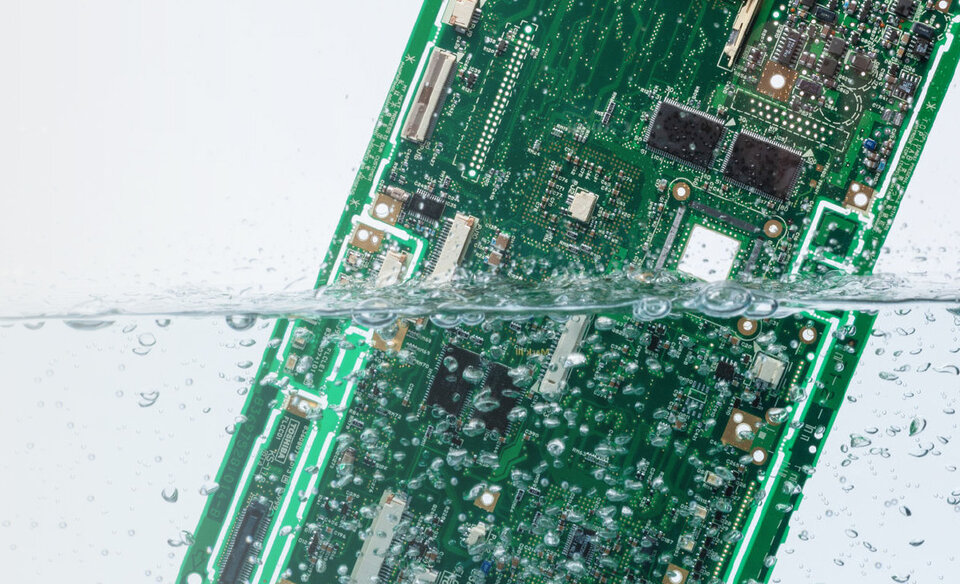
In both cases, ionic contamination testing via ROSE (Resistivity of Solvent Extract) helps quantify flux residue levels, guiding process tweaks.
When to Choose No-Clean Flux
Opt for no-clean flux in electronics assembly lines prioritizing speed and simplicity, such as assembling smartphones or automotive infotainment systems. It reduces handling risks and supports just-in-time manufacturing. If your PCBs undergo conformal coating immediately after soldering, no-clean minimizes interference with adhesion.
Troubleshooting common issues: If SIR (surface insulation resistance) tests show degradation, inspect for flux residue hotspots via optical inspection or dye penetrant methods. For lead-free wave soldering, select low-voiding no-clean formulations to maintain joint integrity.
When to Choose Water-Soluble Flux
Select water-soluble flux for projects with stringent cleanliness demands, like RF modules or power supplies where flux residue could cause arcing. Its superior oxide removal aids soldering on ENIG or OSP finishes prone to challenges. Post-clean verification ensures compliance with Class 3 requirements.
Practical tip: Implement inline conductivity monitoring during PCB cleaning to catch flux residue carryover early. This flux type pairs well with automated aqueous cleaning systems for consistent results.
Best Practices for Flux Implementation and Troubleshooting
Always qualify fluxes via bell jar or dip-and-look tests before full production to predict wetting and flux residue behavior. Maintain precise applicator temperatures to avoid flux splatter, which complicates PCB cleaning. For mixed-use lines, segregate no-clean and water-soluble processes to prevent cross-contamination.
In rework scenarios, neutralize water-soluble residues promptly to safeguard nearby components. Document flux performance data, including activation temperatures and post-reflow appearance, for continuous improvement. Adhering to IPC standards ensures your electronics assembly meets reliability thresholds.
Conclusion
Choosing between no-clean flux and water-soluble flux boils down to balancing activity, residue management, and process economics in your PCB project. No-clean offers efficiency for standard applications, while water-soluble ensures ultimate cleanliness for critical uses. Conduct flux comparison trials tailored to your soldering profile and perform routine flux residue assessments to avoid field failures. By integrating these insights, engineers can enhance yield and longevity in electronics assembly.
FAQs
Q1: What is the main difference between no-clean flux and water-soluble flux in PCB assembly?
A1: No-clean flux leaves non-corrosive residues that typically do not require PCB cleaning, streamlining the process for high-volume production. Water-soluble flux provides stronger cleaning but mandates thorough water rinsing to remove potentially harmful flux residue. Choose based on your reliability needs and cleaning capabilities, ensuring compliance with standards like IPC J-STD-001. This flux comparison helps optimize solder joint quality.
Q2: When should I perform PCB cleaning after using no-clean flux?
A2: PCB cleaning with no-clean flux is usually unnecessary, but consider it for high-reliability assemblies or if flux residue causes visual defects or test failures. Use solvent or aqueous methods cautiously to avoid residue redistribution. Verify cleanliness via ionic testing to confirm no impact on insulation resistance. This practice prevents long-term issues in humid environments.
Q3: How does flux residue affect electronics assembly reliability?
A3: Flux residue from water-soluble flux can lead to corrosion or electromigration if not cleaned, while no-clean residues are designed to be inert. Poor management impacts high-voltage or dense boards most severely. Regular inspection and process controls maintain performance per IPC-A-610 criteria. Prioritize flux selection matching your assembly class.
Q4: Can I switch from water-soluble to no-clean flux mid-project?
A4: Switching requires requalification, as no-clean flux may underperform on oxidized surfaces needing aggressive cleaning. Test solderability and flux residue levels first to avoid defects. Update PCB cleaning protocols accordingly for seamless transition. This ensures consistent electronics assembly outcomes.
References
IPC J-STD-001 — Requirements for Soldered Electrical and Electronic Assemblies. IPC, 2020
IPC-A-610 — Acceptability of Electronic Assemblies. IPC, 2017
IPC J-STD-004 — Requirements for Soldering Fluxes and Soldering Pastes. IPC, 2011