Introduction
In printed circuit board (PCB) manufacturing and assembly, maintaining pristine surfaces is crucial for achieving reliable electrical connections and long-term performance. Contaminants such as flux residues, solder paste remnants, and particulates can compromise solder joints, leading to failures like corrosion or short circuits. PCB cleaning equipment plays a pivotal role in the production process, particularly after soldering operations where residues are most prevalent. Electrical engineers must select appropriate cleaning systems to meet stringent quality requirements while optimizing throughput in high-volume environments. This article explores key types of PCB cleaning equipment, their mechanisms, and best practices for removing flux residue from PCBs and ensuring post-solder cleanliness. By understanding these systems, engineers can enhance assembly reliability and reduce field failures.
Why PCB Cleaning Matters in Assembly Processes
Flux residues left after soldering can initiate electrochemical migration, dendritic growth, or reduced insulation resistance, all of which threaten circuit integrity. Industry standards emphasize cleanliness to prevent these issues, especially in high-reliability applications like aerospace and medical devices. Post-solder cleaning removes activated flux components that become hygroscopic, attracting moisture and accelerating degradation. Without proper cleaning, even no-clean fluxes may leave ionic contaminants detectable through testing methods outlined in relevant specifications. Factory-driven processes integrate cleaning to comply with performance criteria, ensuring boards pass ionic contamination tests and visual inspections. Ultimately, effective cleaning directly correlates with extended mean time between failures (MTBF) in deployed electronics.
Common Contaminants and Their Impact on PCB Reliability
PCBs encounter various contaminants during fabrication and assembly, including rosin-based fluxes, water-soluble pastes, oils from handling, and airborne particulates. Flux residues, in particular, consist of activators, solvents, and rosins that solidify post-reflow, potentially bridging fine-pitch components. These residues promote corrosion under humid conditions or high bias voltages, leading to intermittent failures. Particulates like solder balls can cause mechanical shorts, while oils reduce wettability in subsequent conformal coating applications. Engineers must address these through targeted cleaning to maintain signal integrity and prevent parametric drifts. Standard-aligned inspections verify residue levels, guiding the need for aggressive cleaning protocols.
Technical Principles of PCB Cleaning Equipment
PCB cleaning equipment operates on principles like mechanical agitation, chemical dissolution, and rinsing to dislodge and remove contaminants. PCB ultrasonic cleaners leverage cavitation bubbles generated by high-frequency sound waves in a cleaning solution, imploding to create micro-jets that scrub surfaces without damaging delicate traces. These systems excel at penetrating under low-profile components, removing flux residue from PCBs efficiently in batch or inline setups. Frequency selection, typically 25-40 kHz for general use or higher for finer cleaning, balances efficacy and component safety. Solution chemistry, often mildly alkaline or neutral, enhances residue solubility while minimizing corrosion risks on metals like copper and tin. Temperature control in these baths optimizes viscosity and reaction rates, ensuring uniform cleaning across board stacks.
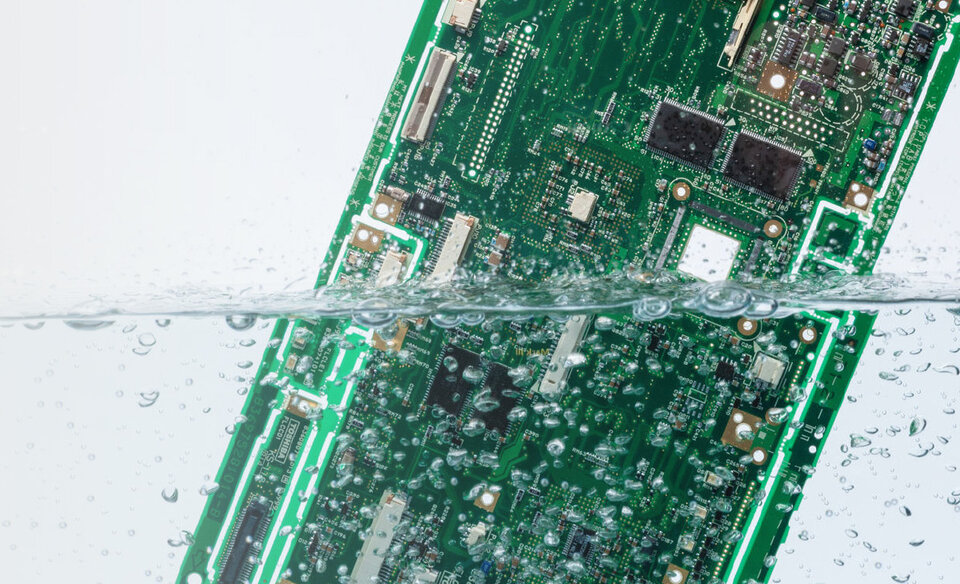
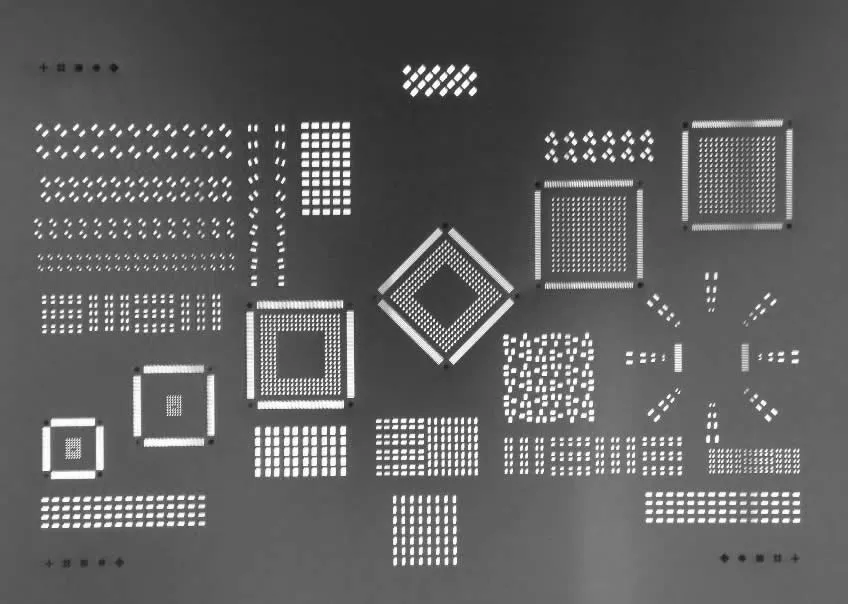
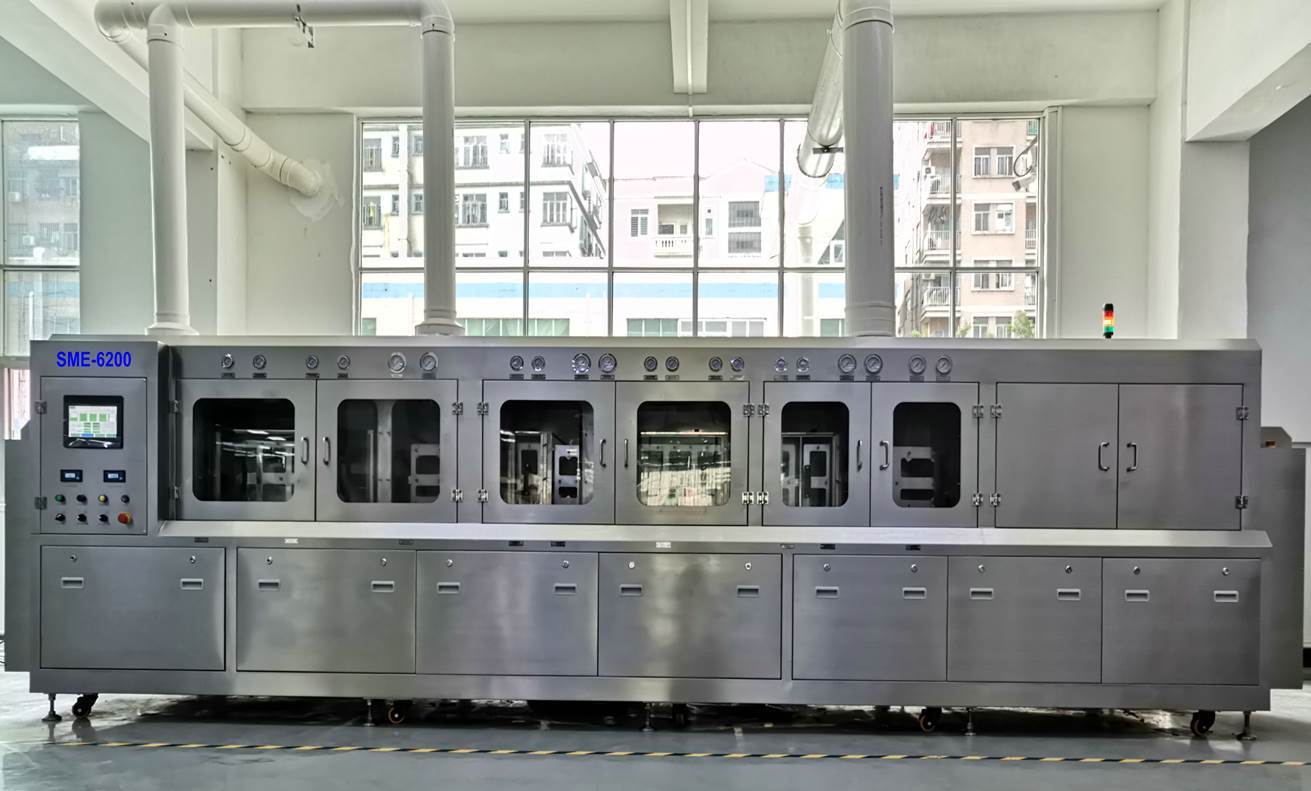
Spray-in-air systems direct pressurized cleaning fluids through nozzles, ideal for post-solder cleaning where targeted impingement dislodges heavy residues from vias and pads. These setups use deionized water or solvent mixtures, followed by hot air drying to prevent water spots. PCB stencil cleaners employ similar spray or immersion techniques but focus on apertures, preventing paste buildup that affects print accuracy. Deionized water cleaning systems, with resistivity above 1 MΩ·cm, rinse away water-soluble fluxes without leaving mineral deposits. Rinsing cascades ensure contaminant dilution, while conductivity monitoring confirms cleanliness thresholds. Each mechanism addresses specific residue types, with engineers selecting based on flux chemistry and component density.
PCB Ultrasonic Cleaners: In-Depth Mechanisms and Applications
PCB ultrasonic cleaners stand out for their ability to achieve consistent results on complex assemblies. The cavitation process generates localized pressures exceeding 1000 atm, effectively blasting away tenacious flux residues without mechanical contact. Engineers configure power levels, typically 0.3-0.5 W/cm2, to avoid resonance damage to crystals in components like quartz oscillators. Cleaning cycles last 3-10 minutes, depending on residue load, with agitation preventing redeposition. Post-clean verification involves ROSE testing or ion chromatography to quantify ionic contaminants. In factory settings, these cleaners integrate into lines for high-throughput post-solder cleaning, supporting compliance with IPC J-STD-001 requirements for soldered assemblies.
Integration with filtration systems recirculates solutions, extending bath life and maintaining consistent performance. For multilayer boards, vertical orientation maximizes solution flow through vias. Engineers monitor parameters like degassing time to eliminate air bubbles that could shield contaminants. This equipment proves versatile for both no-clean and rosin flux removal, adapting to evolving assembly challenges.
PCB Stencil Cleaners and Deionized Water Systems
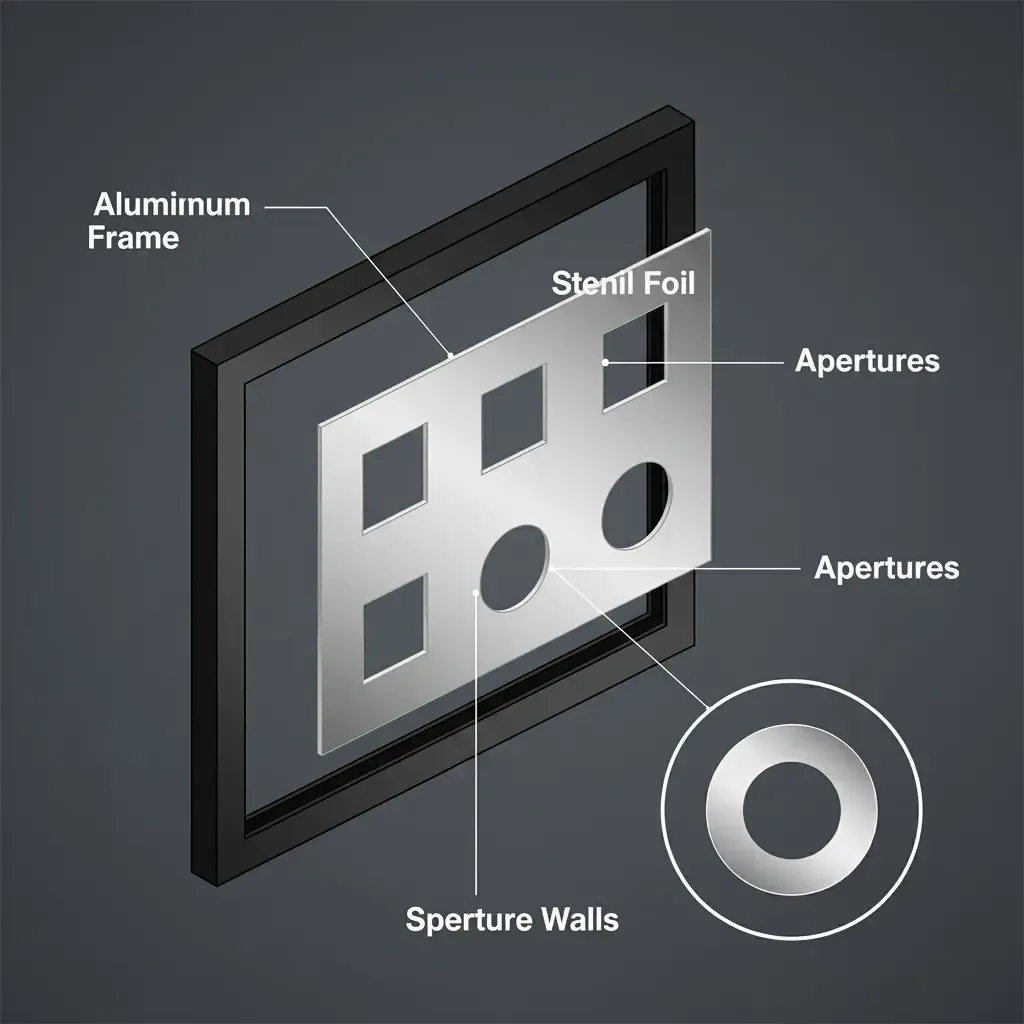
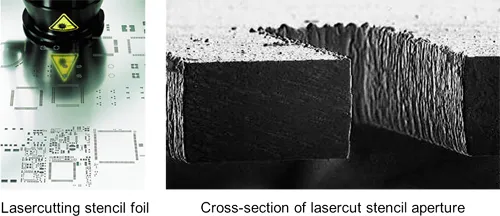
Stencil printers demand frequent cleaning to maintain deposit volume consistency, where PCB stencil cleaners use high-velocity sprays or ultrasonic immersion to clear solder paste from apertures. Understencil wipe systems complement these, employing paper or fabric saturated with solvents for dry-off prevention. These cleaners operate in automated cycles, minimizing operator intervention and downtime in surface-mount technology (SMT) lines. Residue analysis guides cleaner selection, ensuring paste release without stencil warpage.
PCB deionized water cleaning systems form the backbone of aqueous processes, producing ultra-pure water via mixed-bed ion exchange or reverse osmosis. These systems cascade rinses, with final-stage resistivity ensuring no ionic carryover. Closed-loop designs recycle water after deionization, promoting sustainability in high-volume factories. Post-rinse drying via forced convection or vacuum prevents spotting on low-standoff components. Engineers validate these systems through process control charts, aligning with IPC-5704 cleanliness requirements for assembled boards.
Best Practices for Removing Flux Residue from PCBs
Selecting the right equipment starts with flux characterization via resistivity of solvent extract (ROSE) or surface insulation resistance (SIR) testing. For water-soluble fluxes, prioritize PCB deionized water cleaning systems followed by thorough drying to avoid hydrolysis. Ultrasonic cleaners suit rosin fluxes, with chemistry matched to activation levels (e.g., RMA or OR). Implement inline monitoring of rinse water conductivity, targeting below 0.5 μS/cm for acceptance. Stack boards with spacers to ensure solution penetration, and limit exposure times to prevent etchant attack on terminations. Factory protocols include predrying to volatilize solvents, reducing cleaning demands.
Post-solder cleaning sequences involve defluxing, rinsing, and drying in sequence, with dwell times optimized per equipment specs. Validate processes using IPC-TM-650 methods for residue quantification. Train operators on handling to avoid recontamination, and schedule preventive maintenance on pumps and filters. These practices ensure reliable connections, minimizing defects in high-density interconnects.
Troubleshooting Common Cleaning Challenges
Incomplete flux removal often stems from inadequate cavitation in ultrasonic systems, addressed by increasing frequency or solution temperature. Shadowing under components requires angled sprays or higher pressures in inline cleaners. Water residues post-DI cleaning indicate insufficient drying capacity; upgrade to infrared or vacuum dryers. Stencil clogging from hardened paste calls for heated solvents in PCB stencil cleaners. Engineers log process data to identify trends, adjusting chemistries proactively. Adhering to guidelines like IPC-CH-65 prevents recurrence, sustaining yield rates.
Conclusion
PCB cleaning equipment is indispensable for safeguarding connections against contaminants that undermine reliability. From PCB ultrasonic cleaners harnessing cavitation to PCB deionized water systems ensuring purity, these tools enable precise post-solder cleaning and flux residue removal. Factory-driven best practices, aligned with industry standards, optimize these processes for efficiency and compliance. Electrical engineers benefit from integrating monitoring and validation to achieve consistent results. Prioritizing cleaning elevates assembly quality, supporting robust electronics in demanding environments.
FAQs
Q1: What are the benefits of using PCB ultrasonic cleaners for removing flux residue from PCBs?
A1: PCB ultrasonic cleaners provide thorough cleaning through cavitation, reaching under components where sprays may fail. They reduce cycle times in batch processing while minimizing mechanical damage risks. Engineers achieve low ionic residues, meeting standards like IPC J-STD-001. Proper frequency and power settings ensure compatibility with fine-pitch assemblies, enhancing reliability without excessive handling.
Q2: How do PCB stencil cleaners improve SMT process efficiency?
A2: PCB stencil cleaners maintain aperture cleanliness, preventing paste smearing and volume variations during printing. Automated spray or ultrasonic methods clear residues quickly, reducing downtime between prints. Consistent stencil performance boosts first-pass yields in high-volume lines. Engineers select chemistries based on paste type for optimal release and longevity.
Q3: Why choose PCB deionized water cleaning systems for post-solder cleaning?
A3: PCB deionized water cleaning systems remove water-soluble fluxes without mineral deposits, using high-resistivity rinses for purity. Cascading stages dilute contaminants effectively, supporting closed-loop sustainability. They comply with IPC-5704 by verifying low conductivity post-process. Drying integration prevents spotting on dense boards.
Q4: What factors influence the choice of cleaning equipment for flux residue removal?
A4: Flux chemistry, component standoff, and volume dictate selection, with ultrasonic for robust cleaning and sprays for speed. Standards like IPC-CH-65 guide process validation. Engineers balance efficacy, throughput, and cost through pilot testing.
References
IPC J-STD-001G — Requirements for Soldered Electrical and Electronic Assemblies. IPC, 2017
IPC-5704 — Cleanliness Requirements for Assembled PCBs. IPC
IPC-CH-65B — Guidelines for Cleaning of Printed Boards and Assemblies. IPC, 2011