What Are Surface-Mount Device (SMD) Resistors?
SMD resistors are miniature, rectangular electronic components integral to surface-mount technology (SMT). Their primary function is to regulate electrical current flow within a circuit. Unlike older, through-hole resistors that feature wire leads, SMD resistors are directly soldered onto the surface of printed circuit boards (PCBs). This design principle makes them exceptionally suitable for contemporary electronics, which prioritize compact form factors and automated assembly processes.
These resistors are extensively adopted due to their inherent ability to conserve board space, streamline production expenses, and seamlessly integrate into high-speed manufacturing lines. Whether one is involved in the development of a cutting-edge smartphone or a sophisticated medical instrument, a thorough understanding of SMD resistors is crucial for engineering efficient and dependable electronic circuits.

Decoding SMD Resistor Dimensions
A fundamental aspect of working with SMD resistors is comprehending their standardized sizing system. SMD resistor sizes are denoted by a numerical code that corresponds to their physical length and width, expressed in either inches or millimeters. Widely used dimensions, such as the 0603 and 0805 packages, are ubiquitous in electronic design. Let's delve into the significance of these numerical designations and why physical size plays a critical role.
Common SMD Resistor Package Sizes
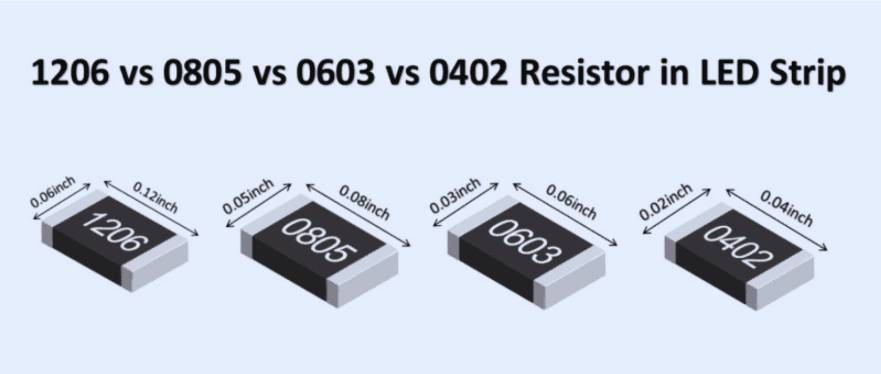
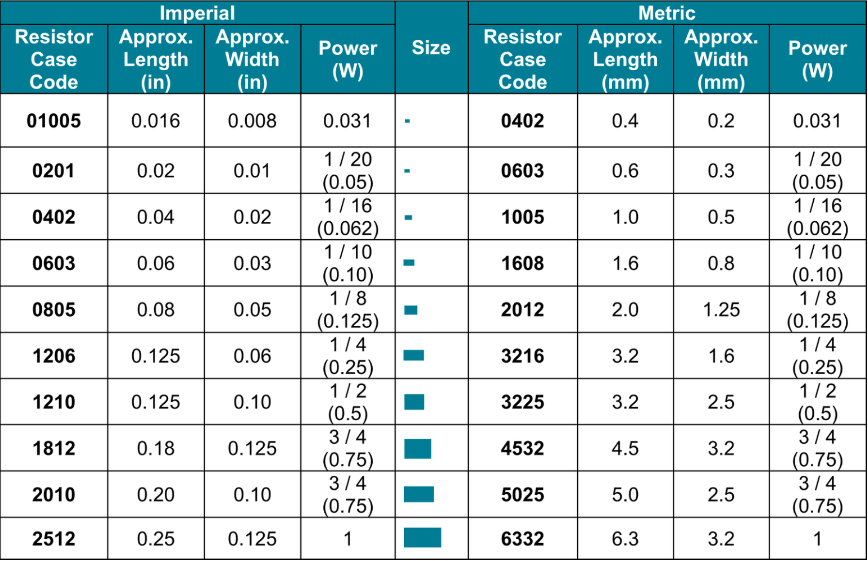
The size of an SMD resistor is typically identified by a four-digit code. In this code, the initial two digits signify the length, and the subsequent two digits denote the width, with measurements rendered in hundredths of an inch. Here’s an overview of the most frequently encountered sizes:
● 0603 Resistor: Measuring 0.06 by 0.03 inches (or 1.6 mm by 0.8 mm), this is among the smallest commonly utilized sizes. It is ideally suited for highly compact designs, such as wearable technology and mobile devices, typically handling lower power dissipation around 0.1 watts (W).
● 0805 Resistor: With dimensions of 0.08 by 0.05 inches (or 2.0 mm by 1.25 mm), this package is slightly larger than the 0603. It strikes an excellent balance between compactness and ease of manual handling, often rated for power between 0.125W and 0.25W, making it a staple in consumer electronics.
● 0402 Resistor: This minuscule component measures 0.04 by 0.02 inches (or 1.0 mm by 0.5 mm). It is employed in applications demanding extreme miniaturization but can present challenges for manual assembly. Its typical power rating is approximately 0.063W.
● 1206 Resistor: A larger package measuring 0.12 by 0.06 inches (or 3.2 mm by 1.6 mm). This size can accommodate greater power dissipation, frequently rated between 0.25W and 0.5W, making it suitable for applications requiring higher thermal management.
The selection of the appropriate SMD resistor size hinges on the spatial constraints of your project and its specific power handling requirements. Smaller sizes like 0603 conserve board real estate but are limited in power capacity, whereas larger sizes such as 1206 are preferable for applications demanding higher wattage.
The Importance of Resistor Size in Design
The physical size of an SMD resistor extends its impact beyond just the mechanical layout of your HDI PCB; it also influences the circuit's overall performance characteristics. Smaller resistors facilitate denser component packing, a crucial advantage in devices like smartphones where space is a premium. However, these smaller components can be more difficult to solder manually and typically possess lower power dissipation capabilities. Conversely, larger resistors, while easier to manipulate during assembly, occupy more board space, which might be prohibitive for highly compact designs.
Interpreting SMD Resistor Codes
Unlike their through-hole counterparts, which use a system of color bands, SMD resistors convey their resistance values through numerical or alphanumeric codes printed directly on their surface. Proficiently understanding these SMD resistor markings is vital for correct component selection and for effective circuit troubleshooting.
Three- and Four-Digit Coding Systems
Most SMD resistors utilize either a three-digit or a four-digit code to denote their resistance value:
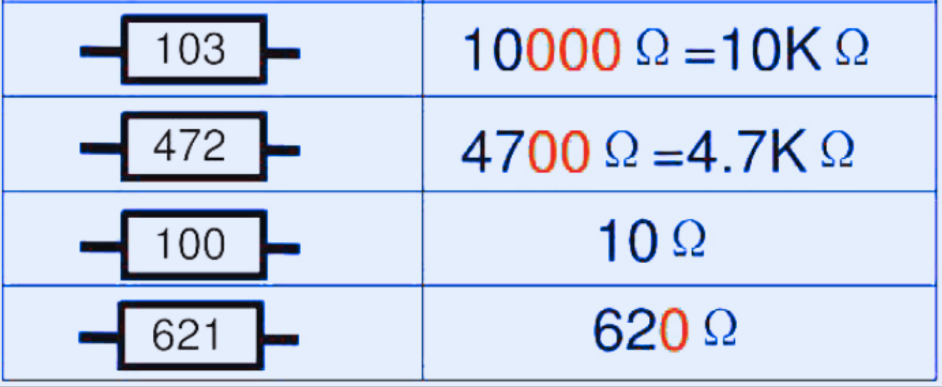
● Three-Digit Code: In this format, the initial two digits represent the significant figures of the resistance, and the third digit functions as a multiplier, indicating the number of zeros to append. For example, a marking of "103" signifies 10 followed by three zeros, equating to 10,000 ohms (10 kΩ).
● Four-Digit Code: This system is similar to the three-digit code but incorporates an additional digit, typically for higher precision. For instance, "1001" indicates 100 followed by a single zero, resulting in 1,000 ohms (1 kΩ).
These markings are often quite small and located on the top surface of the resistor. Consequently, a magnifying tool or careful reference to the component's datasheet may be necessary for accurate interpretation.
EIA-96 Coding for Precision Applications
For SMD resistors requiring higher precision, the EIA-96 code is frequently employed. This system combines a two-digit number with a single letter. The two digits correspond to a specific base value derived from a standardized table, while the accompanying letter denotes the multiplier. For example, a marking of "01B" might translate to a resistance of 100 ohms. This system is less common than the numerical codes but is essential for applications demanding high accuracy.
Understanding SMD Resistor Tolerance
SMD resistor tolerance quantifies the permissible deviation of the actual resistance value from its stated or marked value. This deviation is typically expressed as a percentage. For illustration, a 10 kΩ resistor specified with a ±1% tolerance will have an actual resistance that falls anywhere between 9.9 kΩ and 10.1 kΩ.
Standard Tolerance Values
● ±1%: This represents high precision and is commonly specified for sensitive circuits found in medical devices or advanced measurement equipment where exact resistance is critical.
● ±5%: This is a standard tolerance for general-purpose applications where slight variations in resistance do not significantly impact circuit performance.
● ±10%: Less frequently encountered, this tolerance is typically reserved for low-cost or non-critical designs where a wide range of variation is acceptable.
Tolerance is a crucial parameter when designing circuits that demand precise control over voltage or current. Always verify the tolerance rating within the component's datasheet to ensure it aligns with your project's performance requirements.
SMD Resistor Wattage: Power Handling Capability
The wattage rating of an SMD resistor indicates the maximum amount of power it can safely dissipate without incurring damage due to overheating or catastrophic failure. This metric is a vital consideration in circuit design, as exceeding the specified wattage can lead to the resistor burning out.
Typical Wattage Ratings by Package Size
● 0402: Generally rated around 0.063W, making it suitable for very low-power applications.
● 0603 Resistor: Typically handles up to 0.1W, utilized in compact, low-to-medium power circuits.
● 0805 Resistor: Often rated between 0.125W and 0.25W, providing a versatile balance for a broad spectrum of designs.
● 1206 Resistor: Capable of handling 0.25W to 0.5W, making it suitable for applications with higher power dissipation needs.
To accurately determine the necessary wattage, use the formulas P = I²R (power equals current squared multiplied by resistance) or P = V²/R (power equals voltage squared divided by resistance). Always select a resistor with a wattage rating that comfortably exceeds the calculated value to ensure operational safety and enhance overall reliability.
Practical Uses of SMD Resistors
SMD resistors are indispensable across a broad spectrum of industries, valued for their miniature size, inherent reliability, and seamless compatibility with automated PCB assembly process. They play a crucial role in various applications:
Consumer Electronics
In everyday devices such as smartphones, tablets, and laptop computers, SMD resistors—particularly the 0603 and 0805 sizes—are fundamental. They manage power distribution, provide essential circuit protection, and facilitate signal control. Their compact footprint is vital for achieving the high-density component layouts demanded by these space-constrained gadgets.
Automotive Systems
Modern vehicles are increasingly reliant on sophisticated electronic systems for everything from engine management to advanced infotainment. SMD resistors are integrated into sensors, control modules, and LED lighting circuits. Here, their durability and precision (often with ±1% tolerance) are essential for maintaining consistent performance under the demanding and often harsh conditions of an automotive environment.
Medical Devices
In precision medical equipment, including heart monitors and diagnostic instruments, SMD resistors deliver the accuracy required for reliable and consistent measurements. Miniature sizes such as 0402 and 0603 are commonly employed in wearable health devices, where spatial limitations are a critical design factor.
Industrial Automation
Within the realm of robotics and factory automation, SMD resistors are integral components in various control circuits and power management systems. Their capacity to accommodate diverse power levels, when selected with appropriate wattage ratings, makes them highly versatile for robust industrial applications.
Advice for Working with SMD Resistors
Engaging with SMD resistors can present certain challenges, particularly for those new to electronics assembly. Here are some practical recommendations to facilitate a successful and efficient workflow:
Essential Tooling
Invest in a quality soldering iron equipped with a fine tip, or consider a hot air rework station, for precise and controlled soldering operations. Fine-tipped tweezers are absolutely essential for accurately handling the minuscule dimensions of components like 0603 and 0402 resistors.
Meticulous Marking Verification
Always use a magnifying glass to carefully double-check SMD resistor markings. Furthermore, cross-reference these markings with the component's official datasheet to prevent inadvertent use of an incorrect resistance value.
Matching Specifications to Needs
Ensure that the resistor's tolerance and wattage ratings are meticulously matched to the specific requirements of your circuit. This crucial step helps prevent component failures due to operational stress or thermal overload.
Practicing Techniques
If you are new to SMD soldering, dedicate time to practice on scrap PCBs. This builds confidence and refines your technique before you proceed to work on your actual project's critical components.
Conclusion: Mastering SMD Resistors for Optimal Electronic Design
SMD resistors form the fundamental backbone of contemporary electronics, offering a compact and highly efficient means of regulating current and voltage within circuits. By gaining a comprehensive understanding of SMD resistor sizes, such as the widely used 0603 and 0805 packages, effectively decoding their surface markings, and carefully considering crucial parameters like tolerance and wattage, designers can make informed component selections for their projects. Whether involved in the creation of consumer gadgets, sophisticated automotive systems, or precision medical devices, these minuscule components play an outsized role in ensuring both the functionality and long-term reliability of electronic designs.
Armed with the insights from this guide, you now possess a robust foundation for effectively working with SMD resistors. Continue to experiment, always consult datasheets for specific component details, and leverage the appropriate tools to successfully bring your electronic design concepts to fruition. AIVON, a professional online PCB manufacturer, are dedicated to supporting your innovative journey with high-quality PCB solutions meticulously tailored to your unique requirements.