Introduction
In surface mount technology assembly, stencils play a critical role in applying solder paste precisely to PCB pads. The choice of stencil material directly influences print quality, defect rates, and overall production efficiency. Engineers often face challenges like insufficient paste release or aperture wear, which can trace back to material properties. This article explores stencil material comparison, focusing on stainless steel and nickel options, to help you select the best fit for your PCB assembly needs. Understanding stencil material properties ensures consistent yields and minimizes troubleshooting downtime. Key factors such as durability and cost guide practical decisions in high-volume or fine-pitch applications.
Understanding SMT Stencils and Material Importance
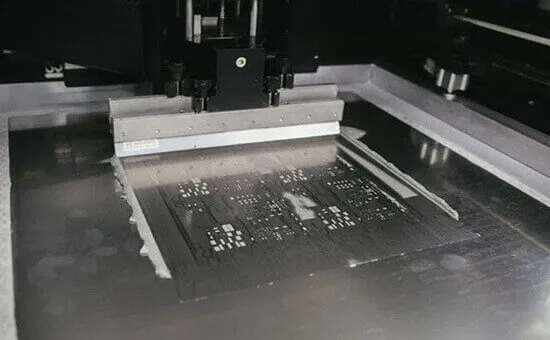
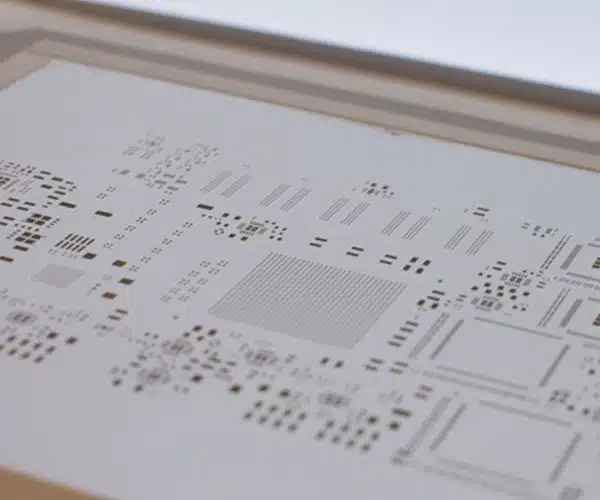
SMT stencils are thin metal foils with laser-cut or electroformed apertures that align with PCB pad patterns. During printing, squeegee blades force solder paste through these openings, depositing controlled volumes onto pads for reflow soldering. Material selection affects aperture wall quality, paste transfer efficiency, and stencil lifespan under repeated cycles. Poor material choices lead to common issues like bridging, insufficient deposits, or tombstoning in subsequent reflow. IPC-7525 provides guidelines on stencil fabrication, emphasizing material suitability for design rules and process parameters. For electric engineers, matching material to component pitch and paste type optimizes first-pass yields.
Stainless steel dominates due to its balance of performance and availability, while nickel serves specialized roles. Engineers must evaluate production volume, feature sizes below 0.3 mm, and cleaning frequency when deciding. Material thickness typically ranges from 0.1 mm to 0.15 mm, influencing paste volume calculations. Troubleshooting tip: inspect aperture cross-sections microscopically to verify sidewall taper, which impacts release. Proper material alignment with process controls reduces variability in high-mix environments.
Key Stencil Material Properties
Stencil material properties determine how well the stencil performs in paste printing, cleaning, and storage. Surface finish affects solder paste release, with smoother walls minimizing residue buildup and skips. Hardness resists deformation from squeegee pressure, while thermal stability prevents warping during heated reflow inspections. Corrosion resistance ensures longevity in humid or chemical-cleaning environments. Thickness uniformity across the foil supports consistent gasketing against the PCB surface.
Stainless steel offers robust mechanical strength and etch resistance, making it ideal for standard laser-cutting processes. Nickel electroforms provide superior sidewall smoothness due to the plating process, enhancing fine-pitch printing. Flexibility influences handling, with thinner nickel foils reducing stress cracks over time. Engineers should consider coefficient of friction, as lower values in nickel improve squeegee glide and reduce wear. These properties directly tie into stencil durability, where repeated prints test material integrity.
Stainless Steel Stencils: Strengths and Applications
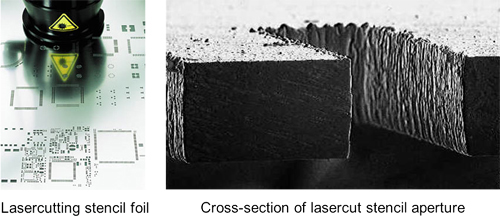
Stainless steel stencils, typically laser-cut from full-hard grades, excel in high-volume production with pitches above 0.4 mm. Their durability stems from high tensile strength, allowing thousands of prints before significant wear. Laser cutting achieves precise apertures with minimal taper, suitable for type 3 solder pastes. Corrosion resistance withstands ultrasonic cleaning solvents without degradation. Cost-effectiveness makes them a default choice for prototyping and mid-volume runs.
However, stainless steel's rougher surface finish compared to electroformed options can lead to paste retention in ultra-fine features. Polishing or electropolishing mitigates this, improving release by 10-20% in tests, though it adds steps. Troubleshooting wear involves monitoring squeegee marks on the print side. For assemblies with QFNs or larger BGAs, stainless steel provides reliable volume control per IPC-7525 recommendations. Maintenance like plasma cleaning extends life, addressing common delamination issues.
Nickel Stencils: Precision for Fine-Pitch Challenges
Electroformed nickel stencils form through plating onto a photoresist-patterned mandrel, yielding near-vertical aperture walls. This process delivers exceptional smoothness, ideal for pitches under 0.3 mm and 01005 components. Lower friction reduces squeegee drag, minimizing defects like bridging in high-density boards. Nickel’s hardness surpasses equivalent stainless steel thicknesses, enhancing stencil durability in aggressive printing cycles.
Flexibility aids conformal contact on warped PCBs, a frequent troubleshooting target. Paste release improves due to the material's anti-stick properties, reducing under-stencil wipes. Drawbacks include higher fabrication costs and potential brittleness in thicker foils. Engineers favor nickel for prototypes with micro BGAs, where precision outweighs expense. Storage requires humidity control to prevent oxidation, unlike more forgiving stainless steel.
Stencil Material Comparison: Stainless Steel vs Nickel
Stainless steel stencil vs nickel stencil debates center on trade-offs in precision, cost, and use cases. Stainless steel wins on affordability and robustness for general SMT, supporting rapid laser-cut turnaround. Nickel shines in stencil material comparison for fine features, with smoother walls boosting transfer efficiency by cleaner release. Durability metrics show both handle 50,000+ prints, but nickel resists abrasion better in high-speed lines.
- Surface Finish — Stainless Steel: Good (post-polish excellent); Nickel (Electroformed): Excellent (inherent smoothness)
- Durability — Stainless Steel: High, long lifespan; Nickel: High, superior abrasion resistance
- Cost — Stainless Steel: Lower initial and per-print; Nickel: Higher, justified for fine-pitch
- Best For — Stainless Steel: Standard pitch, high volume; Nickel: Ultra-fine pitch, prototypes
- Fabrication — Stainless Steel: Laser-cut, etched; Nickel: Electroforming
This stencil material comparison highlights stainless steel's versatility versus nickel's specialization. Engineers troubleshoot by matching to pitch: use nickel below 0.25 mm to avoid skips.
Factors Affecting Stencil Durability
Stencil durability hinges on material resilience to mechanical, chemical, and thermal stresses. Squeegee pressure causes sidewall rounding over cycles, worsening with harder pastes. Cleaning aggressiveness accelerates pitting, so material corrosion resistance matters. Proper tensioning in frameless designs prevents foil fatigue. IPC-7525 outlines aperture design to distribute stress evenly.
High-speed printing amplifies wear, favoring harder nickel for endurance. Storage conditions like dry nitrogen purge extend life by curbing oxidation. Troubleshooting degraded stencils involves profilometry to measure wall erosion. Coatings like nano-layers enhance both materials without altering core properties. Volume production demands durability focus to cut replacement costs.
Stencil Cost Analysis: Balancing Investment and ROI
Stencil cost analysis reveals stainless steel's edge at 40-60% lower fabrication expense than nickel. Laser-cutting speeds production, suiting low-mix runs. Nickel justifies premium pricing through fewer defects in fine-pitch, yielding higher ROI via reduced rework. Lifecycle costs factor print volume: stainless steel amortizes quickly in thousands of boards.
Framing adds 20-30% upfront but enables reuse across jobs. Engineers calculate breakeven by defect savings; nickel pays off in <500-board fine-pitch lots. Maintenance investments like polishing lower total ownership costs. Practical tip: prototype with nickel, scale to stainless steel for cost optimization.
Best Practices for Material Selection and Use
Select materials based on pitch, paste rheology, and throughput. For 0.5 mm+ pitch, stainless steel suffices; drop to nickel for tighter geometries. Validate with print tests measuring volume transfer efficiency. Follow IPC-7525 for aperture reductions on fiducials and vias. Tension frameless stencils to 20-25 N/cm for optimal gasketing.
Troubleshoot release issues by alternating squeegee directions and pressures. Clean every 10-20 prints, using non-abrasive media. Store vertically in sealed bags to avoid dust. Hybrid approaches, like nickel-plated stainless steel, blend benefits selectively. Document performance metrics to refine choices across projects.
Conclusion
Choosing the right stencil material optimizes PCB assembly by aligning properties with process demands. Stainless steel offers cost-effective durability for standard applications, while nickel excels in precision for challenging fine-pitch tasks. Through stencil material comparison, engineers balance stencil material properties, durability, and cost analysis for superior yields. Adhering to guidelines like IPC-7525 ensures reliable performance. Practical troubleshooting and best practices extend stencil life, minimizing downtime. Invest time in selection to streamline your SMT workflow.
FAQs
Q1: What is the main difference in stencil material properties between stainless steel and nickel?
A1: Stainless steel provides high mechanical strength and affordability for general use, with good corrosion resistance after polishing. Nickel electroforms offer smoother aperture walls and lower friction for better paste release in fine-pitch designs. Durability remains strong in both, but nickel resists abrasion longer under high-speed printing. Choose based on component density to avoid defects like bridging.
Q2: How does stencil durability impact PCB assembly costs?
A2: Higher durability reduces replacement frequency and downtime, lowering overall stencil cost analysis. Stainless steel handles high volumes economically, while nickel extends life in precision runs despite higher upfront costs. Factors like cleaning and tensioning preserve integrity. Monitor wear to predict failures and maintain yields.
Q3: When should I opt for nickel over stainless steel in stencil material comparison?
A3: Select nickel for pitches under 0.3 mm or ultra-fine features needing superior release. Stainless steel suits broader applications with cost savings. Test both in your process for volume transfer. Nickel troubleshooting shines in high-density boards prone to skips.
Q4: What role do standards play in stencil material selection?
A4: Standards like IPC-7525 guide aperture design and fabrication tolerances for materials. They ensure compatibility with SMT processes, aiding stencil durability. Reference them for thickness and reduction rules to match your assembly needs reliably.
References
IPC-7525C — Stencil Design Guidelines. IPC, 2021
IPC-7525B — Stencil Design Guidelines. IPC, 2011